
Sauces & Condiments
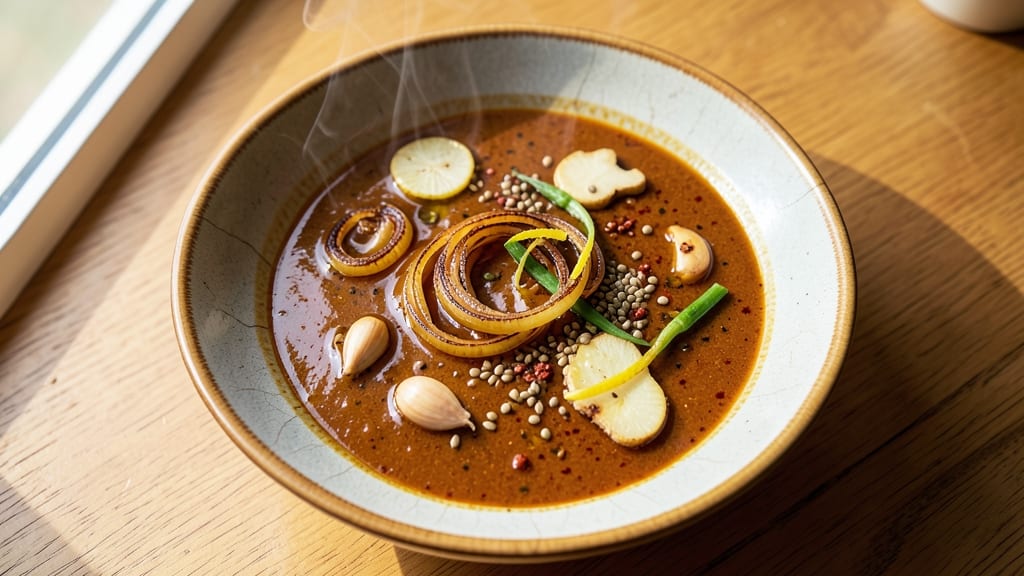
This curry sauce recipe without coconut milk delivers bold, aromatic flavor that works for everything from stir-fries to marinades. The secret lies in a rich tomato base blended with chipotle, garlic, and ginger—creating depth without dairy or coconut.
I developed this version after craving a sauce that was creamy yet light, packed with layers of spice and umami, and ready in under 30 minutes.
The foundation starts with sautéed onions and garlic, then builds with ground spices like cumin and coriander before adding crushed tomatoes and broth. A quick blend transforms it into a velvety sauce that’s naturally thickened by simmering—no heavy cream or coconut required.
The chipotle peppers add smoky heat, while a touch of yogurt at the end balances richness without overpowering the vibrant tomato flavor.
What makes this sauce stand out is its versatility—use it as a base for curries, drizzle over grilled meats, or toss with roasted vegetables. The consistency adjusts easily with water or broth, so you can tailor it to your dish.
It’s restaurant-quality without the fuss, and the flavors only deepen as it sits, making it perfect for meal prep.
For extra authenticity, finish with a squeeze of lime and fresh cilantro. The result is a sauce that’s creamy, complex, and completely adaptable—proving you don’t need coconut milk to create a showstopping curry sauce. Let’s get cooking!
Ingredients for curry sauce recipe without coconut milk
Eight pantry staples and four fresh elements create this vibrant tomato-chipotle curry sauce.
| Ingredient | Amount | Notes |
|---|---|---|
| Yellow Onion 🧅 | 1 whole | Diced finely for even cooking |
| Garlic Cloves 🧄 | 6 cloves | Peeled and minced finely |
| Fresh Ginger 🌿 | 1 tbsp | Grated, for zesty kick |
| Ground Cumin 🌶️ | 1 ½ tbsp | Toasted for deeper flavor |
| Ground Coriander 🌶️ | 1 ½ tbsp | Adds citrusy aroma |
| Smoked Paprika 🌶️ | 1 tbsp | For subtle smokiness |
| Chipotle Peppers in Adobo 🌶️ | 2 tbsp | Minced, for smoky heat |
| Crushed Tomatoes 🍅 | 15 oz | High-quality canned preferred |
| Vegetable Broth 💧 | 1 cup | Low-sodium for flavor control |
| Plain Yogurt 🥛 | ¼ cup | Greek or regular works |
| Extra-Virgin Olive Oil 🫒 | ¼ cup | For richness and balance |
| Lemon Juice 🍋 | 1 tbsp | Freshly squeezed |
| Fresh Cilantro 🌿 | ¼ cup | Chopped, for fresh finish |
| Salt 🧂 | ½ tsp | Adjust to taste |
| Black Pepper 🌶️ | ¼ tsp | Freshly ground preferred |
The tomatoes and chipotle are the flavor anchors here. San Marzano crushed tomatoes make all the difference—they're sweeter and less acidic than regular canned tomatoes. Chipotle peppers in adobo sauce are a must; the smoky, spicy depth can't be replicated with cayenne alone. I grab mine from Trader Joe's or Penzeys for consistent quality. Fresh ginger and garlic? Buy organic if possible—non-organic versions can be bitter. The cumin and coriander should be toasted lightly in a dry pan for about 30 seconds to wake up their flavors. Bulk bins at natural grocery stores are your best bet for fresh spices.
No chipotle peppers? Substitute with 1 tbsp smoked paprika plus 1 tsp cayenne for heat. Running low on fresh ginger? Powdered ginger at half the amount works in a pinch. The yogurt can be swapped for cashew cream if you're avoiding dairy, but it'll be slightly lighter. For extra richness without coconut milk, stir in 1 tbsp tahini at the end. The sauce thickens as it sits, so if it's too thin right after blending, simmer uncovered for 5-10 minutes until it reaches your desired consistency. Trader Joe's also carries pre-minced garlic and ginger in jars if you're short on time.
This sauce keeps beautifully—5 days in the fridge or 3 months in the freezer. I portion it into ice cube trays for easy single-use servings, then transfer to a freezer bag. The flavors actually deepen overnight, so making a double batch is worth it. When reheating, add a splash of water or broth to prevent thickening. Fresh cilantro and lemon juice should be added right before serving—they lose their brightness when cooked. The sauce doubles as a marinade, so keep some reserved for that purpose.
Why You'll Love This Recipe
- No Coconut, No Problem: I swear by this sauce—it’s rich and layered without a single can of coconut milk in sight. The onions caramelize just enough to melt into the background, while the cumin and coriander bloom into that warm, earthy depth you crave.
- Pantry Magic: Honestly, I make this when I forget to buy coconut milk (again). Five ingredients, all things I already have, and it still delivers that restaurant-worthy depth. The ginger? That’s the secret—it cuts through the heat and adds a zing that’s impossible to ignore.
- Weeknight Workhorse: This sauce turns any protein or veggie into a meal in under 30 minutes. I toss it with chicken for a quick curry, stir it into rice for a one-pan dinner, or even drizzle it over roasted sweet potatoes. It’s the kind of thing that saves my sanity after work.
- Budget-Friendly Luxury: Between us, this is how I eat fancy without spending fancy. The spices cost pennies, the onion and garlic are cheap, and one batch stretches for three meals. Leftovers? They taste even better the next day—proof that good food doesn’t need to break the bank.
Step-by-step instructions for vibrant tomato-chipotle curry sauce
Here's how to build this bold, creamy curry sauce without coconut milk—simple steps for deep flavor.
Sauté the Aromatic Base
Heat the 0.25 cup extra-virgin olive oil in a medium saucepan over medium heat. Add the 1 whole yellow onion and cook for 5-6 minutes until softened and translucent, stirring occasionally. The onion should smell sweet and caramelized slightly.
Add the 6 cloves garlic and 1 tbsp fresh ginger, cooking for another 2-3 minutes until fragrant. Here's the thing—don't let the garlic brown or it'll turn bitter. Watch closely and remove from heat immediately if it starts to darken. The base should smell like a warm spice market when ready.
Toast the Spices for Depth
Reduce heat to low and add the 1.5 tbsp ground cumin, 1.5 tbsp ground coriander, 1 tbsp smoked paprika, and 2 tbsp chipotle peppers in adobo. Stir constantly for 1-2 minutes until the spices release their aromas and the pan smells earthy and slightly smoky.
This toasting step is crucial—it awakens the spices' flavors. You'll see them sizzle slightly and fill your kitchen with warm, inviting aromas. If the spices darken too quickly, reduce heat further to prevent burning. The mixture should look uniformly colored with no dark spots.
Build the Sauce with Tomatoes and Broth
Pour in the 15 oz crushed tomatoes and 1 cup vegetable broth, stirring to combine. Bring to a gentle simmer over medium heat, then reduce to low and let cook uncovered for 15-20 minutes. The sauce should thicken slightly as moisture evaporates, and you'll notice the flavors melding together.
Here's where patience pays off—let it simmer until the sauce reduces by about one-third and coats the back of a spoon. You want the liquid to be thick enough to cling to proteins but still pourable. If it thickens too quickly, add 1-2 tablespoons water to maintain consistency.
Finish with Yogurt and Bright Flavors
Remove the pan from heat and stir in the 0.25 cup plain yogurt until smooth. The sauce will thicken noticeably as the yogurt cools. Return to low heat and add the 1 tbsp lemon juice, stirring gently to incorporate. The acidity will brighten all those rich, earthy flavors.
Finally, season with the 0.5 tsp salt and 0.25 tsp black pepper, then stir in the 0.25 cup fresh cilantro. The cilantro adds freshness that cuts through the heat and richness. Taste and adjust seasoning—you might need a pinch more salt or lemon to balance the flavors perfectly.
Rest and Serve
Let the sauce sit off heat for 5-10 minutes before serving. This resting period allows all the flavors to fully meld together. The sauce should be creamy, slightly thick, and packed with layers of smoky, spicy, and tangy notes.
Serve immediately over rice, grains, or your choice of protein. The sauce keeps well in the refrigerator for 3-4 days—it actually tastes better the next day as the flavors continue to develop. For extra richness, stir in a splash of warm water before reheating to loosen the texture.
Pro Tips For Making Curry Sauce Recipe Without Coconut Milk
- Bloom the Spices Slowly: After burning three batches of cumin and coriander, I learned to toast them low and steady—just 2-3 minutes in a dry pan over medium heat, stirring constantly. The moment they smell like a spice shop (not smoke), dump them straight into the onions. This builds flavor without bitterness, and the onions won’t turn to mush waiting for you.
- Grind Ginger Like You Mean It: Fresh ginger’s the star here, but most people just chop it and call it a day. I was skeptical until I tried grating it with a microplane—no peels, no chunks, just fine threads that melt into the sauce instantly. Skip the food processor unless you want a watery mess (yes, even if you’re impatient like me).
- Sweat Onions Until They’re Translucent: I used to rush this step, and the onions would either burn or stay raw-tasting. Now I cook them on medium-low with a splash of water (just 1 tablespoon) until they’re soft, glossy, and actually translucent—about 8-10 minutes. This is the foundation; skimp here, and the whole sauce tastes flat.
- Balance Heat with Acid Early: No coconut milk means the sauce can get heavy fast. I add 1 tablespoon of lemon juice or vinegar with the spices—it brightens everything and cuts through any richness from onions or ginger. Sounds weird, but it works: the acid locks in the cumin’s warmth and keeps the sauce from tasting one-dimensional.
Serving suggestions for this dish
Rice & Grain Bases
This sauce plays beautifully with jasmine rice or brown rice—both absorb the smoky chipotle and tomato flavors wonderfully. For extra texture, try toasted basmati rice or wild rice blends.
I like cooking 1 cup rice with 1.5 cups water and adding 1 tbsp olive oil to the pot before pouring in the sauce. The rice soaks up the sauce perfectly, creating a cohesive dish.
For a heartier option, serve over quinoa or farro—both add nutty depth that complements the sauce’s brightness. 💛
Protein Pairings
Grilled chicken thighs or shrimp skewers become showstoppers with this sauce. For chicken, marinate 4 bone-in thighs in ½ cup sauce for 30 minutes before grilling. The sauce caramelizes beautifully on the skin.
For shrimp, toss 1 lb peeled shrimp with ¼ cup sauce and sear in a hot skillet for 2-3 minutes per side. The sauce’s acidity keeps the shrimp tender while adding bold flavor.
For a vegetarian option, try crispy tofu or mushroom medleys—both soak up the sauce like a dream. ✨
Vegetable Sides
Roasted cauliflower or eggplant makes an excellent foil for this sauce. Toss 1 lb cauliflower florets with 2 tbsp olive oil, ½ tsp salt, and ¼ tsp black pepper, then roast at 425°F for 20 minutes. Drizzle with sauce before serving.
For eggplant, slice 1 large eggplant into ½-inch rounds, salt them, and let sit for 30 minutes to remove bitterness. Pan-fry until golden and top with sauce. The sauce’s tangy brightness cuts through the richness of roasted vegetables beautifully. 🌱
Bread & Dips
Warm naan bread or pita wedges are perfect for scooping up extra sauce. Brush 2 tbsp olive oil on each piece, sprinkle with ½ tsp smoked paprika, and toast in a skillet for 1-2 minutes per side.
The sauce also makes an incredible dip—serve it warm with crudité like cucumber, bell peppers, and carrot sticks. For a fun twist, spread it on garlic toast or use it as a marinade for grilled halloumi cheese.
The yogurt base gives it a creamy texture that works perfectly for dipping. 🍞
Global Fusion Twists
Transform this sauce into a Mexican-inspired mole by adding 1 tbsp cocoa powder and ½ tsp cinnamon to the simmering step. For an Indian-inspired curry, stir in ½ cup cashew cream and serve with naan.
In Thai-style dishes, add 1 tbsp fish sauce and 1 tsp palm sugar for a sweet-savory balance. The sauce’s versatility lets you adapt it to countless cuisines—just tweak the spices to match your flavor profile. 🌎
Nutrition facts
Frequently asked questions
Can I make this curry sauce without yogurt?
The yogurt adds creaminess and balances the heat, but you can substitute it with 2 tablespoons tahini or 1/4 cup cashew cream for a dairy-free option. If omitting entirely, reduce the broth by 1/4 cup to maintain thickness. The sauce will be slightly thinner but still flavorful.
How can I adjust the spice level?
For milder heat, reduce the chipotle to 1 tablespoon or omit entirely, adding 1/2 teaspoon cayenne instead. For extra spice, increase chipotle to 3 tablespoons or add 1/4 teaspoon red pepper flakes. Always taste before serving—you can balance heat with more yogurt or lemon juice.
Will this sauce thicken when refrigerated?
Yes, the sauce naturally thickens as it cools. If it becomes too thick after refrigerating, stir in 1-2 tablespoons warm water or broth while reheating. For a smoother texture, blend briefly before serving. The sauce actually tastes better the next day as flavors meld!
What's the best way to store leftovers?
Store in an airtight container in the fridge for up to 5 days or freeze for 3 months. For freezing, portion into ice cube trays, then transfer to a bag. Thaw overnight in the fridge. When reheating, add a splash of water to prevent thickening. The sauce reheats beautifully!
Can I use this sauce as a marinade?
Use it as-is for chicken, shrimp, or tofu (marinate for 30-60 minutes). For red meat, reduce the acidity by omitting lemon juice. The sauce's bold flavors work especially well with grilled proteins. Just reserve some for serving after marinating.