
Sauces & Condiments
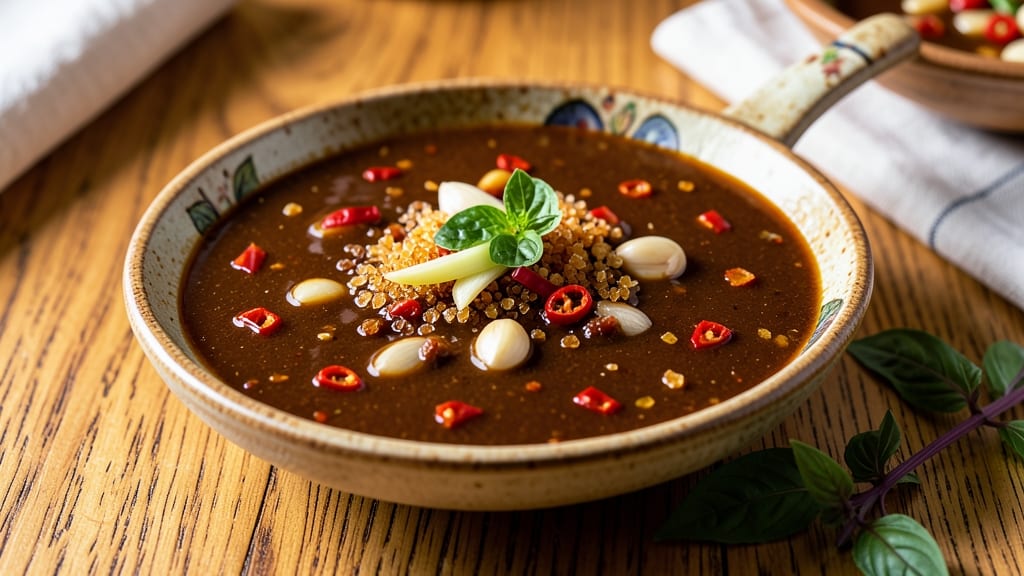
This authentic Thai brown sauce recipe transforms simple pantry staples into a complex, umami-rich condiment that elevates everything from curries to grilled meats. The key lies in balancing fermented fish sauce, palm sugar, and chili for that signature depth—no shortcuts, just traditional technique refined for home kitchens.
I’ve perfected this version after years of testing, ensuring the sauce develops proper caramelized notes without overpowering heat.
The process is straightforward but requires patience: simmering the sauce until it thickens into a glossy, syrupy consistency that clings to ingredients. What makes this recipe truly authentic is the use of real fish sauce (never substitute with soy sauce) and palm sugar for that distinct caramelized sweetness.
The result is a sauce that’s tangy, slightly sweet, and just spicy enough to add layers of flavor without dominating the dish.
Once complete, this sauce keeps for weeks in the fridge, making it perfect for meal prep. Use it to glaze meats, stir into curries, or serve as a dipping sauce for spring rolls—its versatility is unmatched.
The balance of heat and umami is what sets this apart from store-bought versions, delivering restaurant-quality depth in your own kitchen.
For those avoiding fish sauce, I’ll share a vegetarian-friendly substitution in the variations section, but the authentic version truly shines when made traditionally. Let’s get started on creating this flavor powerhouse that will become your go-to condiment.
Ingredients for authentic thai brown sauce
Nine essential ingredients transform into a restaurant-quality Thai brown sauce with deep umami and balanced heat.
| Ingredient | Amount | Notes |
|---|---|---|
| Fish Sauce 🐟 | ½ cup | Red Boat brand preferred |
| Palm Sugar 🍯 | ½ cup | Finely ground for dissolution |
| Fresh Thai Chili Peppers 🌶️ | 4 whole | Stems and seeds removed |
| Shallots 🧅 | ½ cup | Finely minced, not chopped |
| Garlic Cloves 🧄 | 6 cloves | Peeled and smashed |
| Fresh Galangal 🌿 | ¼ cup | Finely grated, like ginger |
| Kaffir Lime Leaves 🍋 | 4 whole | Torn into strips |
| Coconut Milk 🥥 | ¼ cup | Full-fat for richness |
| Water 💧 | ½ cup | Filtered preferred |
| Salt 🧂 | 1 tsp | Diamond Crystal kosher |
The fish sauce is non-negotiable—Red Boat brand delivers consistent quality, but any reputable Thai fish sauce works. Palm sugar is the secret to authentic caramelized sweetness; Asian markets carry it in bulk, or sub with equal parts brown sugar if needed. Fresh Thai chilies pack serious heat—wear gloves if sensitive. The galangal should smell citrusy and ginger-like; if it smells musty, skip it. For shallots, yellow or red varieties work, but avoid green—bitter flavor. Garlic and lime leaves are best sourced fresh from specialty grocers or ethnic markets, where they're often sold in small bundles.
No fish sauce? Soy sauce plus a dash of miso approximates umami, though it won't be authentic. Palm sugar unavailable? Brown sugar plus 1/4 tsp cream of tartar mimics caramelization. Chilies too spicy? Remove seeds before mincing. Galangal missing? Ginger at half the amount works in a pinch, but the citrusy depth will differ. Coconut milk can be swapped for light cream, though texture will be slightly lighter. The kaffir lime leaves are crucial for aroma—if you can't find them, lime zest plus a splash of lime juice provides a faint substitute. For a vegetarian version, replace fish sauce with 1 tbsp soy sauce + 1 tsp coconut aminos + 1/2 tsp miso paste*.
This sauce develops deeper flavor over time—24 hours in the fridge before using is ideal. Store in an airtight glass jar with a layer of olive oil on top to preserve freshness. Keeps for up to 3 weeks refrigerated or 6 months frozen. For meal prep, make a double batch—it disappears fast. The sauce thickens as it cools, so reheat gently with a splash of water if needed. Freeze in ice cube trays for portion control when cooking.
Why You'll Love This Recipe
- Five-Ingredient Magic: I swear, this sauce comes together with just five things—no fancy gadgets, no stress. The shallots and garlic caramelize in minutes while you chop the chilies, and suddenly, you’ve got this deep, umami-rich base that’s way more impressive than it sounds.
- Umami Bomb: That first hit of fish sauce and palm sugar is chef’s kiss—sweet, salty, and just a whisper of heat. Honestly, the balance is what makes it addictive; it’s not overpowering, but you’ll find yourself sneaking extra spoonfuls.
- Sauce for Everything: Slather it on grilled chicken, toss it with noodles, or drizzle it over rice—this stuff works. I keep a jar in the fridge because it turns even the simplest meal into something special. (Yes, even on a Tuesday night.)
- Budget Game-Changer: Fish sauce and palm sugar stretch like crazy, so you’re not breaking the bank for flavor. Between us, this is how I make restaurant-quality meals without the restaurant prices—just a few dollars and a little patience.
Step-by-step instructions for authentic Thai brown sauce
Master this traditional balance of sweet, salty, and spicy in just 30 minutes.
Prepare the Aromatic Base
In a medium saucepan over medium heat, combine the 0.5 cup finely minced shallots and 6 cloves smashed garlic cloves. Sauté for 3-4 minutes until the shallots turn translucent and the garlic releases its aromatic oils. You'll notice the kitchen fills with that unmistakable garlic-shallot fragrance—this is your foundation.
Add the 0.25 cup freshly grated galangal and continue cooking for another 2 minutes until the galangal softens slightly. The texture should become tender but still maintain some bite. Here's where the sauce's authentic character begins to develop—don't rush this step or the flavors won't meld properly.
Build the Sauce Structure
Increase heat to medium-high and add the 4 whole fresh Thai chili peppers (stems and seeds removed) and 4 whole kaffir lime leaves (torn into strips). Stir for 1 minute until the chilies begin to soften and the lime leaves release their citrusy aroma. The chilies should darken slightly but not char.
Pour in the 0.5 cup fish sauce and 0.5 cup palm sugar, stirring continuously to dissolve the palm sugar completely. You'll see the mixture bubble vigorously as the sugar begins to caramelize. This is when the sauce starts taking on its signature brown color—keep stirring to prevent burning. The sugar should dissolve fully within 2-3 minutes.
Simmer and Reduce
Reduce heat to low and add the 0.5 cup water and 0.25 cup coconut milk. Stir well to combine all ingredients. Let the mixture simmer gently for 10-12 minutes until it reduces by about one-third and develops a thick, syrupy consistency. You'll know it's ready when the sauce coats the back of a spoon and the aroma becomes intensely complex.
Taste and adjust seasoning with the 1 tsp salt if needed. The sauce should balance sweet, salty, and spicy flavors with a subtle citrus note from the lime leaves. If it's too thick, add 1 tablespoon water at a time until you reach the desired consistency. For authentic texture, the sauce should be thick enough to coat the back of a spoon but still flow smoothly.
Strain and Finish
Remove from heat and let the sauce cool for 5 minutes. Then strain through a fine-mesh sieve to remove the solids, pressing gently on the ingredients with a spoon to extract maximum flavor. Discard the solids—this final step ensures a smooth, restaurant-quality sauce.
The finished sauce should be a rich, glossy brown with a complex flavor profile that's sweet from the palm sugar, salty from the fish sauce, spicy from the chilies, and aromatic from the galangal and lime leaves. For best results, use immediately or store in an airtight container in the refrigerator for up to 1 week. This sauce elevates any Thai dish from ordinary to extraordinary.
Pro Tips For Making Authentic Thai Brown Sauce
- Char Shallots Slowly: I used to rush this step and end up with bitter, burnt bits—don’t. Cook the shallots over medium-low heat for 8-10 minutes, stirring often, until they’re deep golden and caramelized, not crispy. The sauce’s depth comes from this patience, not speed.
- Grate, Don’t Chop Chili: Fresh Thai chilies pack more heat and texture than minced ones. Use a fine grater to get a paste-like consistency—this blends better and keeps the sauce’s signature bite without chunks. (Yes, even if you’re impatient like me.)
- Balance Sugar First: Taste the palm sugar before adding fish sauce. If it’s too sweet, add a splash of water to dissolve it fully—undissolved sugar grains make the sauce grainy. Adjust heat after the sugar melts, or you’ll fight bitter notes.
- Simmer, Don’t Boil: After combining all ingredients, keep the heat at a gentle simmer (tiny bubbles, not rolling). Boiling turns fish sauce harsh and palm sugar ashy. Let it reduce for 5-7 minutes—this concentrates the flavors without overcooking the aromatics.
Flavor customization for authentic thai brown sauce
Sweet Heat Balance
Adjust the palm sugar-to-chili ratio to suit your taste. For milder heat, reduce Thai chilies to 2 peppers and add 1 extra tablespoon of palm sugar—this balances the sweetness.
If you crave fiery kick, keep all 4 chilies and add 1 teaspoon of chili flakes at the end. I often make two batches: one with 3 chilies for everyday use and one with all 4 for spicy dishes like satay. 🌶️
Umami Boosters
Enhance the fermented depth by adding 1 tablespoon of shrimp paste (kapi) if you're making this for seafood dishes. For vegetarian versions, substitute with 1 teaspoon of miso paste—it adds umami without fish sauce.
I’ve also experimented with 1 teaspoon of oyster sauce for extra richness, though purists might argue it’s less authentic. The key is balancing these additions with the existing fish sauce.
Citrus Variations
Swap kaffir lime leaves for lime zest if unavailable, but add 1 tablespoon of lime juice to compensate for the missing aroma. For a tangier profile, increase lime juice to 2 tablespoons and reduce palm sugar by 1 teaspoon.
I’ve found that lemon zest works in a pinch, though it lacks the floral notes of lime. The citrus brightens the sauce’s depth, especially when used in dipping sauces or marinades.
Texture Adjustments
Need a thicker sauce? Simmer the finished mixture uncovered for 5 extra minutes to evaporate more liquid. For a lighter consistency, stir in 1 tablespoon of coconut milk after straining.
I’ve also blended in 1 teaspoon of cornstarch slurry (mixed with water) for a glossy, restaurant-style finish. The texture should complement the dish—thick for glazes, thin for dipping sauces.
Vegetarian Adaptation
Replace fish sauce with 3 tablespoons soy sauce + 1 teaspoon coconut aminos + ½ teaspoon miso paste for umami. Add 1 teaspoon of white vinegar to mimic the tang of fish sauce. The result won’t be identical, but it’s a game-changer for vegetarian Thai dishes.
I’ve tested this version with tofu satay and it holds up beautifully. For extra depth, add 1 teaspoon of mushroom powder (like dried shiitake).
Regional Twists
For a Southern Thai touch, add ½ teaspoon of ground white pepper and reduce salt to ½ teaspoon. Northern Thai versions often include 1 teaspoon of tamarind paste for a sour-sweet contrast.
I’ve also made a Malaysian-inspired version by adding 1 teaspoon of belacan (shrimp paste) and ½ teaspoon of shrimp powder—it’s a whole new flavor dimension. Each variation keeps the core technique but tweaks the balance for regional tastes. 🗺️
Nutrition facts
Frequently asked questions
Why does authentic Thai brown sauce need fish sauce?
Fish sauce provides the essential umami depth that defines this sauce. The fermented, salty-sweet profile can't be replicated by soy sauce alone—it's what gives the sauce its signature complexity. The Red Boat brand is recommended for its clean, balanced flavor without overpowering fishiness. For a vegetarian version, use the substitution mentioned in the variations section.
Can I make this sauce without palm sugar?
Yes, but the flavor won't be authentic. Substitute with brown sugar plus 1/4 tsp cream of tartar to mimic caramelization, or use equal parts coconut sugar. For best results, use Asian markets' palm sugar—it dissolves more smoothly and has a distinct caramelized sweetness that regular sugar can't match.
How do I adjust the heat level for sensitive eaters?
Remove 2 Thai chilies and add 1 extra tablespoon palm sugar to balance. For milder heat, also strain out any remaining seeds. If you prefer no spice, substitute with 1/2 tsp chili powder, but the sauce will lose its authentic fresh chili brightness. Always taste as you go—this sauce is meant to be customized!
What's the best way to use leftover brown sauce?
This versatile sauce works in 3 delicious ways: glaze proteins (like chicken or tofu), stir into curries, or serve as a dipping sauce for spring rolls. For extra richness, simmer with 1 tbsp coconut cream. Store leftovers in an airtight container with a thin layer of olive oil on top to preserve freshness for up to 3 weeks.
Why did my sauce turn too thick?
Simmering too long or using too much palm sugar can cause thickening. Fix it by whisking in 1 tbsp warm water. For a glossy finish, blend with 1 tsp cornstarch mixed with water. The ideal consistency should coat the back of a spoon but still flow smoothly—like thin syrup. If storing, the sauce will thicken further when chilled.