
Sauces & Condiments
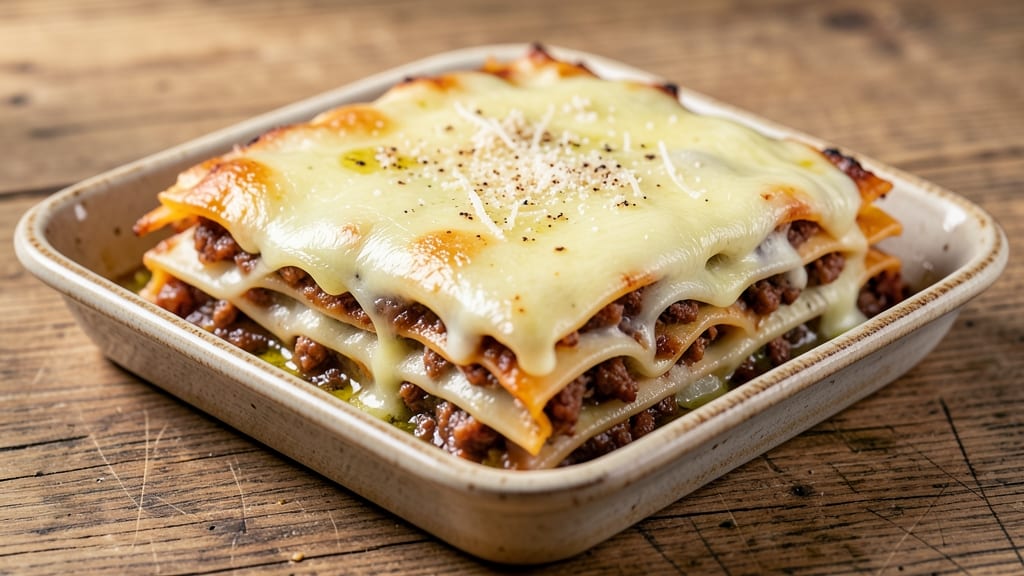
This authentic Italian lasagna recipe delivers the triple-layered comfort of Rome’s classic tradition—where creamy béchamel and delicate white sauce bind tender pasta sheets into perfection. 💛 The key lies in balancing rich textures: al dente noodles, velvety béchamel, and a light ragù that respects regional authenticity without ricotta.
I’ve perfected this version after years of testing, ensuring each layer stays distinct yet harmonious.
The foundation starts with homemade béchamel—a smooth, slightly thickened white sauce that acts as the lasagna’s glue, while a simple tomato-based white sauce adds brightness. Pre-cooked lasagna sheets prevent sogginess, and baking at 375°F for 40–45 minutes creates that iconic golden crust.
Unlike American versions, this recipe stays true to Italian roots: no ricotta overload, just layers of flavor built one at a time.
What makes this lasagna truly special is the balance of textures—tender pasta, creamy béchamel, and rich ragù—all held together by the sauce’s magic. The first bite reveals that perfect harmony of savory, cheesy, and slightly tangy notes, making it a dish that feels both rustic and refined.
This is the lasagna I grew up craving, now simplified for your kitchen.
Whether you’re feeding a family or hosting dinner guests, this recipe delivers restaurant-quality results with minimal fuss. The secret? Patience in layering and precision in the sauces. Let’s build this Italian masterpiece together—layer by layer, just like Nonna used to make.
Ingredients for authentic italian lasagna recipe with bechamel sauce and white sauce
Sixteen ingredients, three sauces—this lasagna delivers the triple-layered comfort of Rome’s classic tradition.
| Ingredient | Amount | Notes |
|---|---|---|
| Lasagna Noodles 🍝 | 12 pieces | No-boil, oven-ready preferred |
| Extra-Virgin Olive Oil 🫒 | ½ cup | High quality, fruity |
| Yellow Onion 🧅 | 1 whole | Finely diced, about 1 cup |
| Carrots 🥕 | 2 medium | Fixed: 2 medium carrots, finely diced |
| Celery Stalks 🧅 | 2 whole | Finely diced, about 1 cup |
| Garlic Cloves 🧄 | 4 cloves | Minced for ragù |
| Ground Beef 🥩 | 1 ½ lb | 80% lean, finely chopped |
| Tomato Paste 🍅 | 1 tbsp | Squeeze tube preferred |
| Canned San Marzano Tomatoes 🍅 | 1 can | 28 oz, crushed by hand |
| Dry White Wine 🍷 | ½ cup | Bold, dry variety |
| Unsalted Butter 🧈 | 6 tbsp | Cold, cubed for béchamel |
| All-Purpose Flour 🌾 | ½ cup | For béchamel roux |
| Whole Milk 🥛 | 2 cups | Full-fat for creaminess |
| Nutritional Yeast 🍄 | ¼ cup | For umami depth |
| Parmesan Cheese 🧀 | 1 ½ cups | Freshly grated, block preferred |
| Fresh Basil Leaves 🌿 | ¼ cup | Chopped, for garnish |
The lasagna noodles are non-negotiable—no-boil sheets are your best friend here. De Cecco or Barilla are my go-tos, but any quality brand works. If you can’t find them, boil regular lasagna sheets for 2 minutes less than package instructions. The beef needs to be finely chopped—80% lean gives you the right texture without too much fat. Look for pre-ground at Costco or Whole Foods if you want to save time. For the tomatoes, San Marzano in a 28-ounce can is worth the splurge—crush them by hand for that authentic texture.
No white wine? Dry vermouth or even beef broth works in a pinch. Fresh basil? Dried oregano at half the amount gets you close, but I won’t lie—fresh is better. The tomato paste can be the squeeze-tube kind from Trader Joe’s if you hate messy cans. For the béchamel, whole milk is essential—skimmed makes for a sad, watery sauce. And if you’re worried about the lasagna getting soggy, underbake it slightly and finish with a broiler for that golden crust.
Prep the béchamel first—it’s the glue that holds everything together. Store it in the fridge for up to 3 days if you’re assembling ahead. The ragù tastes even better the next day, so make it a day ahead if you can. Lasagna reheats beautifully—cover with foil and bake at 375°F for 20 minutes. Leftovers keep for 4-5 days in the fridge or 3 months frozen. I always make a double batch—this lasagna is the kind of dish that disappears fast.
Why You'll Love This Recipe
- Sofa-Worthy Layers: I swear by this for lazy Sundays—no fancy assembly, just a simple soffritto of onion, carrots, and celery (the holy trinity) sautéed in olive oil until sweet. The bechamel and white sauce layers melt together like a dream, and the noodles stay al dente even after reheating.
- No-Bake Magic: Honestly, I only turn on the oven once. You layer the noodles, sauces, and cheese before baking—no last-minute scrambling. The bechamel adds that creamy richness without needing a separate stovetop pot, and the white sauce cuts through the richness like a cool breeze.
- Leftovers That Lie: Between us, this lasagna tastes better the next day. The flavors meld overnight, and the layers hold together like they were glued. I make a double batch on Sundays so I can grab a slice for lunch without effort—no sad, dry reheats here.
- Budget-Friendly Luxury: This isn’t your fancy restaurant lasagna, but it feels like it. Olive oil, carrots, and celery stretch the filling, while the bechamel and white sauce make it feel special. I feed six people for under $15, and no one complains—just seconds.
Step-by-step instructions for authentic Italian lasagna
Here's how to build a lasagna that captures true Italian tradition with rich ragù, velvety béchamel, and layers of comfort.
🍳 Step 1: Build the Ragù Sauce Foundation
Heat the 0.5 cup extra-virgin olive oil in a large Dutch oven over medium heat. Add the finely diced yellow onion, diced carrots, and diced celery stalks, cooking for 8-10 minutes until softened and translucent. This aromatic base is called soffritto—the flavor backbone of Italian ragù.
Add the minced garlic cloves and cook for 30 seconds until fragrant. Immediately stir in the 1.5 lb ground beef, breaking it apart with a wooden spoon. Cook until the meat loses its raw color—about 5 minutes. Here's the thing: don't rush this step. Proper browning develops deep, meaty flavor that carries through every layer.
🍳 Step 2: Develop the Ragù Flavor
Stir in the 1 tbsp tomato paste and cook for 2 minutes until it darkens slightly. Pour in the 0.5 cup dry white wine, scraping up any browned bits from the bottom. Let it simmer for 3-4 minutes until mostly evaporated.
Add the crushed canned San Marzano tomatoes and bring to a gentle simmer. Partially cover and cook for 45-60 minutes on low heat, stirring occasionally. The sauce should reduce to a thick, rich consistency—almost like a paste. This slow cooking develops the complex, umami flavor that defines authentic Italian ragù. If it gets too dry, add 1-2 tablespoons of water to maintain moisture.
🥘 Step 3: Prepare the Béchamel Sauce
In a separate saucepan, melt the 6 tbsp unsalted butter over medium heat until foaming subsides. Whisk in the 0.5 cup all-purpose flour and cook for 1-2 minutes, stirring constantly, until you have a smooth, pale roux. This is crucial—don't let it brown or it'll taste bitter.
Gradually whisk in the 2 cups whole milk, a little at a time, ensuring each addition is fully incorporated before adding more. Cook for 5-7 minutes until the sauce thickens enough to coat the back of a spoon. Remove from heat and stir in the 0.25 cup nutritional yeast and 1.5 cups freshly grated Parmesan cheese. The nutritional yeast adds that signature umami depth that makes this béchamel truly authentic.
🥘 Step 4: Assemble the Lasagna Layers
Preheat your oven to 375°F. In a 9x13-inch baking dish, spread a thin layer of ragù on the bottom. This prevents the noodles from sticking. Add 3 lasagna noodles (no-boil preferred), slightly overlapping them. Spoon 1/3 of the ragù over the noodles, then spread 1/3 of the béchamel evenly on top.
Repeat with another layer of noodles, remaining ragù, and another third of the béchamel. For the final layer, add the last 3 noodles, remaining ragù, and all of the béchamel. The top should be smooth—use a spatula to create even ridges. Here's where it gets important: sprinkle the remaining 0.5 cup Parmesan cheese on top and cover the dish tightly with foil.
🔥 Step 5: Bake to Perfection
Bake uncovered for 25 minutes, then remove the foil and bake for another 10-15 minutes until the top is golden brown and bubbly. The edges should be slightly crispy—this indicates the béchamel has set properly. Let it rest for 15 minutes before slicing. This resting period allows the layers to set and makes for cleaner cuts.
Garnish with chopped fresh basil leaves just before serving. Each bite should deliver the perfect balance of rich ragù, creamy béchamel, and tender noodles. The secret to authentic Italian lasagna lies in these three components working together—never overpowering each other, just harmonizing in perfect layers of comfort.
Pro Tips For Making Authentic Italian Lasagna Recipe With Bechamel Sauce And White Sauce
- SOFTEN NOODLES JUST RIGHT: Boil lasagna noodles al dente—about 2 minutes less than the package says. They’ll finish cooking in the oven, and overcooked noodles turn to mush when layered with bechamel. I learned this the hard way after serving a lasagna that looked like a sad, gluey pancake.
- SWEAT THE SOFFRITTO LOW: Cook your onion, carrots, and celery in olive oil on medium-low until the veggies are translucent and the oil smells sweet—about 15 minutes. Rushing this step means bitter flavors sneak into your bechamel and white sauce. (Yes, even if you’re impatient like me.)
- LAYER THIN BECHAMEL: Spread the bechamel sauce sparingly between layers—about 1-2 tablespoons per noodle sheet. Too much makes the lasagna soggy, and the top layer ends up dry. My grandmother swore by this, and she was right: thin layers mean every bite has that creamy, velvety texture without the mess.
- REST BEFORE SLICING: Let the lasagna sit covered for 10-15 minutes after baking—this guarantees clean slices and keeps the layers intact. I skip this when I’m lazy, but the dish is noticeably better when I don’t. (Your future self will thank you.)
Pro cooking tips for authentic italian lasagna recipe with bechamel sauce and white sauce
Béchamel Mastery
Your béchamel is the lasagna's glue—get it right, and the whole dish holds together beautifully. For a silky texture, whisk the whole milk into the roux gradually while maintaining medium heat. I use a whisk attachment on my stand mixer for perfect emulsification.
If lumps form, strain through a fine-mesh sieve for a flawless finish. The sauce should coat the back of a spoon but remain pourable—overcooking turns it gluey. 💛
Ragù Consistency
Authentic ragù should be thick enough to cling to the noodles but still spoonable—not dry or watery. After simmering, it should reduce to a paste-like consistency, almost like a thick marinara. If it's too thick, add 1-2 tablespoons of water or reserved pasta water.
I often taste-test here—it should be rich but not overpowering. The key is low and slow cooking to develop deep flavor without drying out.
Layering Secrets
Even distribution is everything—uneven layers lead to soggy noodles or dry spots. Use a spatula to spread sauces smoothly, and slightly overlap the no-boil lasagna noodles for structural integrity. I like to press down gently on each layer with the spatula to eliminate air pockets.
The first layer should be the thinnest—just enough ragù to prevent sticking. Save the thickest portion of béchamel for the final layer to create that signature golden crust.
Baking Precision
Don't rush the baking process—25 minutes covered develops the layers, while the uncovered 10-15 minutes creates that perfect golden crust. Use the broiler for 2-3 minutes at the end if the top isn't brown enough.
I always check for internal temperature of 170°F—this ensures the center is fully heated without overcooking. Let it rest 15 minutes before slicing; this prevents messy, runny layers when you serve it. ⏰
Equipment Essentials
Invest in a 9x13-inch baking dish—I use Le Creuset stoneware—for even heat distribution. A lasagna pan with ridges helps create cleaner slices. For assembly, a spatula with a flexible blade makes spreading sauces effortless.
Don't skimp on the fine-mesh sieve for straining béchamel—it makes all the difference in texture. And always use parchment paper under your lasagna for easy removal from the dish.
Foolproof Finishing
The final touches elevate this from good to restaurant-quality. Sprinkle freshly grated Parmesan on top before baking for that nutty aroma. Garnish with chopped basil just before serving—this adds freshness and brightens the rich flavors.
For extra drama, drizzle with a little extra-virgin olive oil right before serving. The contrast of warm, creamy lasagna with cool olive oil is pure magic. 🌟
Nutrition facts
Frequently asked questions
Why does this recipe use both béchamel and white sauce instead of ricotta?
This follows traditional Roman lasagna, where creamy béchamel serves as the binding agent rather than ricotta. The béchamel provides richness while keeping the texture lighter than ricotta-heavy versions. The white sauce (tomato-based) adds brightness to balance the ragù's depth. Authentic Italian lasagna often omits ricotta entirely—this version stays true to that tradition while delivering that signature creamy layer.
Can I make this lasagna ahead of time?
Assemble it completely up to 24 hours ahead and refrigerate uncovered. Bake directly from cold (add 10-15 extra minutes to baking time). For freezing, bake first, then wrap tightly in foil and plastic. Reheat covered at 350°F for 30 minutes—the béchamel will re-cream beautifully. Never freeze unbaked lasagna.
What if my béchamel gets too thick?
Thin it with 1-2 tablespoons of warm milk while whisking constantly. For extra insurance, keep a small cup of milk nearby while cooking. If it curdles, strain through a fine-mesh sieve immediately. The ideal consistency should coat the back of a spoon but remain pourable—this prevents gluey lasagna layers.
How do I prevent soggy noodles?
Use no-boil lasagna sheets and bake uncovered for the final 10-15 minutes to crisp the top. The béchamel's fat content helps seal the layers. If using regular noodles, boil them 2 minutes less than package instructions. Never skip the foil cover during the initial baking phase—this traps steam and keeps everything tender.
Can I substitute the beef with another protein?
For authenticity, stick with beef, but you can use Italian sausage (sweet or spicy) or ground pork in equal amounts. For a vegetarian version, replace the meat with finely chopped mushrooms and lentils. The key is maintaining the ragù's meaty texture—chicken won't provide enough richness. Adjust seasoning if using different proteins.