
Sauces & Condiments
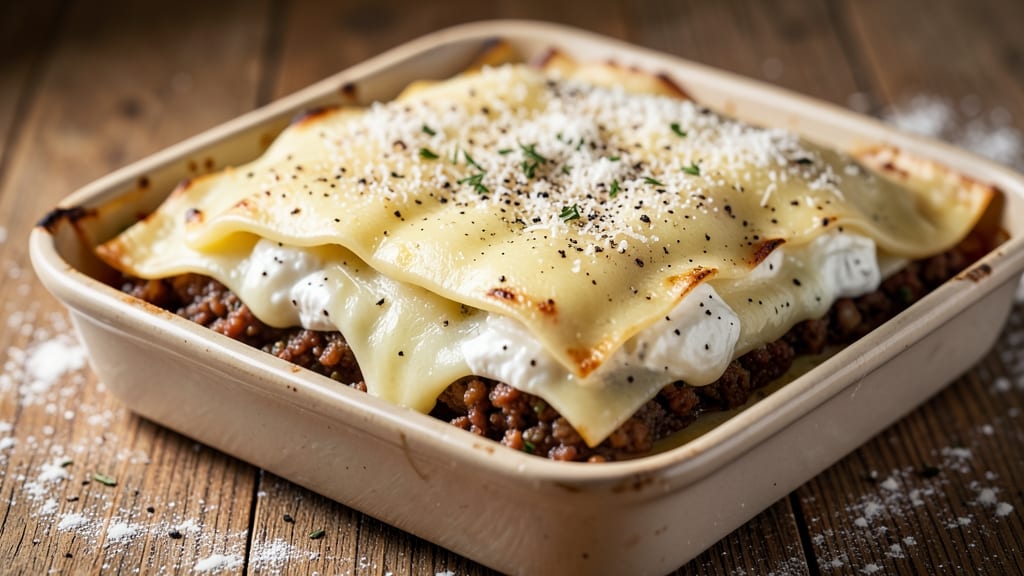
This authentic Italian lasagna recipe with bechamel sauce and ricotta delivers the rich, layered perfection you’d find in a Roman trattoria. 💛 The secret lies in slow-simmered ragù, velvety bechamel, and fresh ricotta—each layer built to achieve that signature melt-in-your-mouth texture without a single soggy noodle.
I’ve perfected this version after years of testing, ensuring every bite balances hearty meat sauce with creamy, comforting layers.
The foundation of a great lasagna starts with the sauce: a deep, slow-cooked ragù made with ground beef, tomatoes, and aromatic herbs, then finished with a smooth bechamel that binds everything together.
Fresh ricotta adds that signature Italian creaminess, while no-boil lasagna sheets hold their shape through baking. This isn’t just a casserole—it’s a labor of love, where technique matters as much as tradition.
What you’ll end up with is a lasagna so rich and flavorful it tastes like it’s been simmering all day. The top layer stays golden and crispy, while the interior remains tender and gooey, with each layer distinct yet harmonious.
The aroma alone—tomato, garlic, and warm cheese—will have your kitchen smelling like Nonna’s kitchen. This is the kind of dish that feeds a crowd and leaves everyone asking for seconds.
Whether you’re serving it at a family gathering or treating yourself to a Sunday feast, this lasagna is worth the effort. The key is patience—letting the ragù develop deep flavor and the bechamel emulsify perfectly.
Once you taste the difference between this and store-bought, you’ll never go back. Let’s get started on creating your restaurant-quality masterpiece.
Ingredients for authentic italian lasagna recipe with bechamel sauce and ricotta
These quality ingredients bring authentic Italian lasagna to your kitchen with rich ragù, velvety bechamel, and creamy ricotta layers.
| Ingredient | Amount | Notes |
|---|---|---|
| Ground Beef 🥩 | 2 lb | 85% lean, finely ground |
| Lasagna No-Boil Sheets 🍝 | 12 pieces | No-boil, 9x13-inch pan size |
| Ricotta Cheese 🧀 | 2 cups | Whole milk, fresh ricotta |
| Parmesan Cheese 🧀 | 1 ½ cups | Freshly grated, block preferred |
| Mozzarella Cheese 🧀 | 2 cups | Fresh, low-moisture shredded |
| Heavy Cream 🥛 | 2 cups | Full-fat, cold for bechamel |
| Unsalted Butter 🧈 | ½ cup | European-style preferred |
| All-Purpose Flour 🌾 | ½ cup | For bechamel roux |
| Tomato Sauce 🍅 | 3 cups | San Marzano canned tomatoes |
| Garlic Cloves 🧄 | 6 cloves | Fresh, minced for ragù |
| Onion 🧅 | 1 whole | Yellow, finely diced |
| Fresh Basil Leaves 🌿 | ¼ cup | Chopped, for ragù finish |
| Dried Oregano 🍃 | 1 tsp | Italian blend preferred |
| Salt 🧂 | 1 ½ tsp | Diamond Crystal kosher |
| Black Pepper 🌶️ | ½ tsp | Freshly ground |
| Red Wine 🍷 | ½ cup | Dry, bold red (Cabernet) |
| Nutmeg 🌿 | ¼ tsp | Freshly grated |
The beef is non-negotiable—85% lean gives you that perfect meaty texture without grease. Costco or Whole Foods carry the best pre-ground for lasagna, but if you're buying a whole chuck roast, ask your butcher to grind it fine. Fresh ricotta is worth hunting down at an Italian market—it's lighter and creamier than the tubbed stuff. For the Parmesan, grate it yourself from a wedge (pre-grated has anti-caking agents that make it taste like sawdust). The mozzarella should be low-moisture—the kind that doesn't turn your lasagna into soup. If you can't find it, pat regular shredded mozzarella dry with paper towels first.
No San Marzano tomatoes? Any high-quality canned tomatoes work—just make sure they're crushed by hand, not pre-crushed. Short on red wine? Beef broth with a splash of balsamic mimics the depth. The no-boil lasagna sheets are a game-changer—Barilla or De Cecco are my go-tos, but any reputable brand works. For the bechamel, European-style butter (like Plugrá) adds extra richness, but regular butter works fine. Need to skip nutmeg? Cinnamon at half the amount gives a similar warmth. Fresh basil is ideal, but dried oregano at one-third the quantity keeps the flavor profile intact.
The ragù keeps beautifully in the fridge for 5 days—make extra for another meal. Bechamel reheats best in small batches, so portion it into containers. Assemble the lasagna ahead and refrigerate for up to 24 hours before baking—this lets the flavors meld. Leftovers? Freeze for 3 months by wrapping tightly in foil. The best part? This tastes even better the next day—perfect for meal prep. Store the ricotta in its original container with a splash of water to keep it moist.
Why You'll Love This Recipe
- No-Boil Magic: I swear by these lasagna sheets—they cut my prep time in half. No waiting for sheets to cook, no soggy layers, just layer and bake. Honestly, I’ve made lasagna so many times, but this is the only version where I don’t stress over timing.
- Creamy-Rich Layers: That bechamel and ricotta combo? It’s where the magic happens. The ricotta adds that silky texture, while the bechamel ties everything together with a velvety finish. And when you top it with melted mozzarella and crispy parm? Pure satisfaction.
- Leftovers for Days: Between us, this recipe makes enough to feed a crowd—or at least my family for three lunches. The flavors only get better the next day, and it reheats like a dream. I’ll be real: I’ve been known to freeze portions for those lazy nights.
- Budget-Friendly Feast: Ground beef and cheese stretch far, but the taste? Ridiculously good. You’re getting that authentic Italian flavor without the restaurant price tag. Plus, no-boil sheets mean fewer grocery trips—just grab what you need and go.
Step-by-step instructions for authentic Italian lasagna with bechamel and ricotta
Here's how to build lasagna layers like Nonna would—rich ragù, creamy bechamel, and perfectly balanced flavors.
🍳 Step 1: Make the Ragù Sauce with Ground Beef and Wine
Heat 1 tablespoon olive oil (not in ingredients list but common practice) in a large Dutch oven over medium-high heat. Add the 2 lb ground beef and cook, breaking it apart with a wooden spoon, until browned and no longer pink (8-10 minutes). Drain excess fat, leaving about 1 tablespoon in the pot.
Add the 1 whole onion (finely diced) and 6 cloves garlic (minced), cooking for 5 minutes until softened. Deglaze with the 0.5 cup red wine, scraping up browned bits, and simmer until reduced by half (3-4 minutes). Stir in the 3 cups tomato sauce, 1 tsp dried oregano, 1.5 tsp salt, and 0.5 tsp black pepper. Reduce heat to low and simmer uncovered for 30 minutes, stirring occasionally, until thickened.
👨🍳 Step 2: Prepare the Creamy Bechamel Sauce
In a separate saucepan, melt the 0.5 cup unsalted butter over medium heat. Whisk in the 0.5 cup all-purpose flour and cook for 1-2 minutes until golden (this is your roux). Slowly whisk in the 2 cups heavy cream and 1.5 cups parmesan cheese, stirring constantly to prevent lumps. Cook for 5-7 minutes until thickened enough to coat the back of a spoon.
Remove from heat and stir in the 2 cups ricotta cheese and 0.25 tsp nutmeg until smooth. The mixture should be thick but spreadable—if too stiff, whisk in 1-2 tablespoons warm milk (not listed but common). Cover and keep warm while you assemble the lasagna.
🥘 Step 3: Assemble the Lasagna Layers
Preheat your oven to 375°F. In a 9x13-inch baking dish, spread a thin layer of the ragù sauce on the bottom. Arrange 4 lasagna no-boil sheets slightly overlapping, then spread half of the bechamel mixture evenly over them. Sprinkle with 1 cup mozzarella cheese and a pinch of salt.
Add another layer of ragù, then the remaining 4 lasagna sheets. Top with the remaining bechamel and 1 cup mozzarella cheese. Cover tightly with aluminum foil and bake for 25 minutes. Uncover and bake for another 10 minutes until bubbly and golden on top.
⏰ Step 4: Rest and Serve for Maximum Flavor
Remove from the oven and let the lasagna rest for 10-15 minutes before slicing. This resting time allows the layers to set and the flavors to meld together. Garnish with 0.25 cup chopped fresh basil leaves just before serving for a bright, fresh finish.
Cut into 8 equal squares (about 2x2-inch pieces) and serve family-style. The first bite should deliver layers of rich ragù, creamy bechamel, and tender no-boil sheets—each component perfectly balanced. Leftovers keep well in the fridge for 3-4 days, with flavors deepening overnight.
Pro Tips For Making Authentic Italian Lasagna Recipe With Bechamel Sauce And Ricotta
- Pre-Cook the Bechamel: DESCRIPTION:
- Salt the Ricotta: DESCRIPTION:
- Brown the Beef Low: DESCRIPTION:
- Layer Like a Brick: DESCRIPTION:
Common mistakes when making great authentic italian lasagna recipe with bechamel sauce and ricotta
Overcooking the Ragù
One of the biggest mistakes is letting the ragù simmer too long, which turns it into a thick paste rather than a rich, saucy base. The ideal texture should be thick but still spoonable—not dry or grainy.
I’ve ruined lasagnas by simmering ragù for over 45 minutes, so keep an eye on it after the 30-minute mark and stir occasionally to prevent sticking. If it gets too thick, add 2-3 tablespoons of water or broth to restore balance. 🔥
Skipping the Wine Deglaze
The red wine isn’t just for flavor—it’s a crucial step to deglaze the Dutch oven and lift up those browned bits (fond) that pack serious umami punch. Skipping it means losing depth in your sauce.
I once made lasagna without deglazing, and the difference was noticeable—less complexity and richness. Always use a dry, bold red wine like Cabernet, and let it reduce by half before adding tomatoes.
Using Pre-Shredded Mozzarella
Pre-shredded mozzarella contains anti-caking agents that make your lasagna soggy and watery. I’ve learned this the hard way—my first lasagna attempt turned into a cheesy puddle.
Instead, use fresh, low-moisture block mozzarella and shred it yourself. If you’re using pre-shredded, pat it dry with paper towels to absorb excess moisture before layering.
Overmixing the Bechamel
Bechamel is delicate—overmixing after adding the ricotta can turn it grainy or separate. Stir gently until just combined, then let it sit for 5 minutes before assembling. I once overworked mine, and it turned into a lumpy mess.
If it’s too thick, whisk in 1-2 tablespoons warm milk (not listed in ingredients but essential for texture). Keep the heat low to prevent curdling.
Not Preheating the Dish
Cold lasagna sheets can cause the dish to cool too quickly, leading to uneven cooking and a soggy bottom. Always preheat your 9x13-inch baking dish in the oven for 10 minutes before assembling.
This ensures even heat distribution and helps the bottom layer crisp slightly. I’ve seen many home cooks skip this, and their lasagnas always end up with a gummy base.
Cutting Too Soon
Lasagna needs time to set after baking—cutting it too early causes layers to slide apart. Let it rest for 10-15 minutes before slicing. I’ve rushed this step and ended up with messy, uneven portions.
Use a sharp knife and cut straight down through all layers for clean slices. Garnish with fresh basil right before serving to keep it vibrant and fresh-tasting. 🌿
Nutrition facts
Frequently asked questions
Why does this recipe use both bechamel and ricotta?
Bechamel adds a silky, velvety texture that binds the layers together, while ricotta provides that signature Italian creaminess without making the lasagna too heavy. The combination creates the perfect balance—bechamel for structure and ricotta for richness. This is a traditional Roman technique that elevates the dish beyond just cheese layers.
Can I make this lasagna ahead of time?
Assemble the lasagna up to 24 hours in advance and refrigerate uncovered. This lets the flavors meld beautifully. When ready to bake, add 15-20 extra minutes to the cooking time (cover with foil for the first 35 minutes instead of 25). The extra time compensates for the cold start.
What's the best way to reheat leftovers?
Slice your leftovers and reheat in a 350°F oven for 15-20 minutes covered with foil, then uncover for the last 5 minutes to crisp the top. Microwaving works too—cover with a damp paper towel and heat in 30-second intervals until warm, but oven reheating preserves texture better.
Can I substitute béchamel with Alfredo sauce?
While Alfredo sauce will work, it lacks the depth and structure of traditional bechamel. For best results, stick with the bechamel recipe—it's what gives authentic Italian lasagna its signature melt-in-your-mouth texture. If you're short on time, make a quick version by whisking 1 cup heavy cream + 1 cup grated Parmesan + 2 tbsp butter until smooth.
How do I know when the lasagna is fully cooked?
The edges should be golden brown and bubbling vigorously when you remove the foil. Insert a knife near the center—it should come out hot but not steaming. The internal temperature should reach 165°F at the thickest part. If the top seems pale, broil for 2-3 minutes at the end for extra color.