
Sauces & Condiments
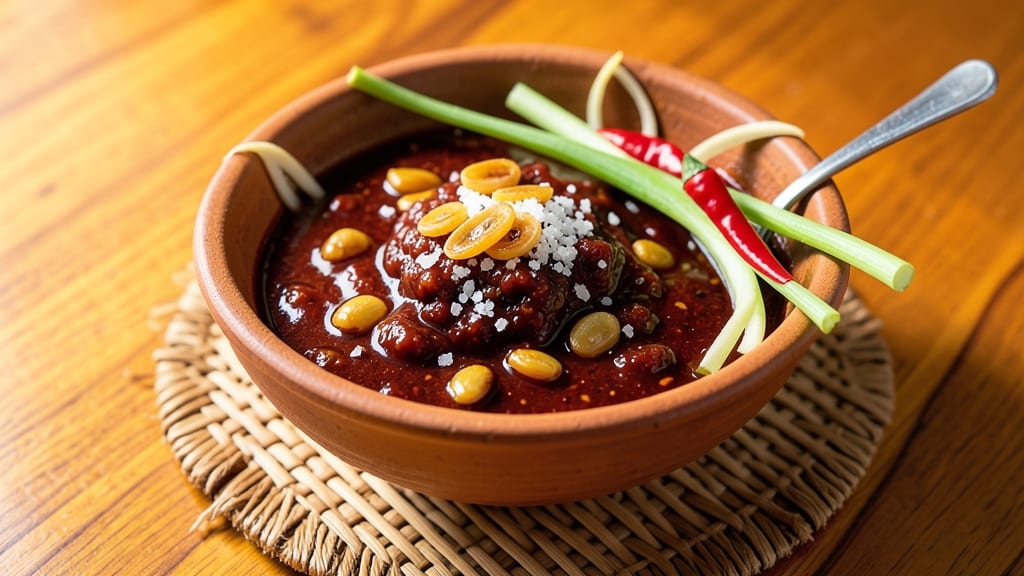
This Balinese sauce recipe transforms ordinary dishes into vibrant, aromatic masterpieces with just a few simple ingredients and a 15-minute active prep time. The combination of sweet, tangy, and umami flavors creates a glaze that elevates grilled meats, rice dishes, and even roasted vegetables to restaurant-quality levels.
What makes this sauce special is its balance—sweet from palm sugar, tangy from tamarind, and rich from fermented shrimp paste, all blended into a smooth, versatile condiment.
The sauce begins with a fragrant base of shallots, garlic, and ginger, gently fried until golden for maximum flavor development. Adding palm sugar and tamarind creates that signature sweet-tangy profile, while coconut milk and fermented shrimp paste (terasi) add depth.
The result is a glossy, aromatic sauce that clings beautifully to grilled chicken, pork, or even steamed rice, turning simple meals into something extraordinary.
What sets this Balinese sauce apart is its versatility—use it as a glaze for skewered meats, a drizzle over noodles, or a flavorful accompaniment to rice dishes. The sauce keeps well in the refrigerator for up to 5 days, making it perfect for meal prep or entertaining.
Each batch delivers bold, complex flavors that transport you straight to Bali with every spoonful.
For best results, let the sauce sit for 30 minutes before using to allow the flavors to meld fully. This simple yet sophisticated sauce is a game-changer for anyone looking to add authentic Balinese flavor to their cooking repertoire. Let’s make it!
Ingredients for balinese sauce
Nine essential ingredients blend into a vibrant Balinese sauce perfect for grilling and rice dishes.
| Ingredient | Amount | Notes |
|---|---|---|
| Shallots 🧅 | ½ cup | Finely minced for aromatic base |
| Garlic Cloves 🧄 | 6 cloves | Peeled and minced finely |
| Fresh Ginger 🌿 | 2 tbsp | Finely grated, about 1 oz |
| Palm Sugar 🍯 | ¼ cup | Or substitute brown sugar |
| Tamarind Paste 🍈 | 2 tbsp | Adjust for desired tanginess |
| Fermented Shrimp Paste (Terasi) 🍤 | 1 tbsp | Or substitute fish sauce |
| Coconut Milk 🥥 | ½ cup | Full-fat for richness |
| Vegetable Oil 🫒 | 2 tbsp | For frying aromatics |
| Salt 🧂 | ½ tsp | Adjust to taste |
| Water 💧 | ½ cup | For thinning if needed |
The aromatic base—shallots, garlic, and ginger—needs proper prep. Fresh ginger should be peeled and grated, not chopped, for maximum flavor. Shallots are sweeter than onions, so don’t substitute. For terasi (fermented shrimp paste), Asian markets carry the best quality, but fish sauce works in a pinch. Palm sugar adds authentic sweetness—Trader Joe's or specialty stores carry it, but brown sugar works if you're in a hurry. The coconut milk should be full-fat for that rich, velvety texture.
No tamarind paste? Lemon juice or lime juice adds tang, though the flavor will differ slightly. Short on terasi? Fish sauce at half the amount delivers umami depth. The sauce thickens as it cools, so water can be added gradually if it becomes too thick. For a vegetarian version, omit terasi and use soy sauce or miso paste instead. The palm sugar can be swapped for white sugar or maple syrup, though the flavor profile shifts slightly—palm sugar's caramel notes are unique.
This sauce keeps beautifully in an airtight container in the fridge for 5 days, though it tastes best within the first 3 days. For longer storage, freeze in ice cube trays—perfect for single-use portions. Let it sit for 30 minutes before using to develop full flavor. The sauce thickens as it cools, so reheat gently with a splash of water if needed. Use within 3 months when frozen for peak freshness. It’s worth making extra—this sauce transforms simple meals into restaurant-quality dishes.
Why You'll Love This Recipe
- Here’s what sold me: that first bite of sweet-sour balance. The tamarind paste cuts through the richness of shallots and garlic while the palm sugar keeps it from being too sharp. It’s the kind of flavor that sticks with you—like a little burst of Bali in every spoonful.
- Five-Ingredient Magic: I swear by this—just shallots, garlic, ginger, a spoonful of palm sugar, and tamarind paste. That’s it. No fancy pantry trips, no last-minute ingredient panics. Honestly, my pantry always has these basics, and they transform into something special faster than you can say "dinner’s ready."
- Tamarind Tang Alert: Here’s what sold me: that first bite of sweet-sour balance. The tamarind paste cuts through the richness of shallots and garlic while the palm sugar keeps it from being too sharp. It’s the kind of flavor that sticks with you—like a little burst of Bali in every spoonful.
- Sauce for Everything: Between us, this sauce is my secret weapon for grilled fish, stir-fries, or even drizzled over rice. I’ve used it on weeknight dinners and weekend feasts, and it never lets me down. Not the prettiest, but the taste makes up for it every time.
Step-by-step instructions for Balinese sauce
This aromatic glaze balances sweetness, tang, and umami—perfect for enhancing grilled meats or rice dishes.
🍳 Step 1: Fry Aromatics Until Golden
Heat the 2 tablespoons vegetable oil in a medium saucepan over medium heat. Add the 0.5 cup finely minced shallots and cook for 3-4 minutes until softened and translucent. Add the 6 cloves minced garlic cloves and 2 tablespoons finely grated ginger, stirring constantly for 1-2 minutes until fragrant—this releases their essential oils and forms the sauce's aromatic foundation.
Watch the heat carefully—if the aromatics start to brown too quickly, reduce to medium-low. The goal is gentle cooking that develops flavor without burning. Once the garlic turns a pale golden color, you're ready for the next step. This initial frying creates the rich, complex base that carries through the entire sauce.
🍳 Step 2: Add Fermented Shrimp Paste and Sugar
Reduce the heat to low and add the 1 tablespoon fermented shrimp paste (terasi). Stir immediately to distribute it evenly—this potent ingredient adds deep umami flavor but requires quick incorporation to prevent burning. Cook for 1 minute until the paste darkens slightly and its aroma intensifies.
Next, add the 0.25 cup palm sugar and stir for 2-3 minutes until the sugar dissolves completely and the mixture becomes syrupy. You'll notice the sauce thicken slightly as the sugar caramelizes, creating a beautiful amber color. This is where the sauce develops its signature sweet-tangy balance—don't rush this step as proper caramelization is key to the final flavor.
🥘 Step 3: Build the Sauce with Tangy Elements
Increase heat to medium and add the 2 tablespoons tamarind paste and 0.5 cup coconut milk. Stir continuously for 3-4 minutes until the tamarind dissolves and the sauce begins to thicken. The tamarind provides the signature tangy brightness that cuts through the richness of the coconut milk.
Add the 0.5 cup water and 0.5 teaspoon salt, then bring to a gentle simmer. Let it cook uncovered for 5-7 minutes, stirring occasionally, until the sauce reduces by about 25% and coats the back of a spoon. You're looking for a consistency that's thick enough to glaze but still pourable—this ensures perfect adherence to grilled meats or rice.
⏰ Step 4: Finish and Adjust
Remove the sauce from heat and let it cool for 5 minutes—this allows flavors to meld without further reduction. Taste and adjust seasoning: if it needs more tang, add ½ teaspoon tamarind paste; if it needs sweetness, add 1 teaspoon palm sugar. The sauce should balance all elements—sweet, tangy, umami, and slightly salty.
For immediate use, strain through a fine-mesh sieve to remove any ginger or shallot bits if you prefer a smooth texture. For best results, let the sauce cool completely before storing in an airtight container in the refrigerator for up to 5 days. This resting period deepens the flavors, making each subsequent use even more vibrant. The sauce thickens as it cools, so you may need to thin with 1-2 tablespoons water before using.
Pro Tips For Making Balinese Sauce
- Fry Shallots Low and Slow: I learned this the hard way—blasting them on high heat turns them bitter. Instead, cook them over medium-low with a splash of water (just 1 tablespoon) to steam them gently until translucent and sweet. That golden aroma? That’s your reward for patience.
- Mince Ginger Like You Mean It: Skip the food processor—fresh ginger needs texture to release its flavor. Use a sharp knife and pound it first (yes, smash it against your cutting board) before mincing into tiny, even pieces. This makes a real difference in how well it blends with the shallots and garlic.
- Tamarind Paste: Mix First: That sticky paste clumps like glue. Before adding it to the pan, dissolve it in 2 tablespoons of warm water first—stir until completely smooth. No one wants to taste undissolved tamarind paste in their sauce. Trust the process.
- Palm Sugar: Toast It: I was skeptical until I tried it—lightly toasting the palm sugar in a dry pan for 30 seconds before adding it to the sauce deepens its caramel notes. Just watch it like a hawk so it doesn’t burn. Your sauce will taste richer for it.
Regional styles of this dish
Classic Sambal Matang
This traditional Balinese sambal variation uses chili peppers, shallots, and lime for a fiery, tangy kick. Unlike the sweet glaze in the recipe, sambal matang relies on fresh red chilies (or bird's eye chilies for extra heat) blended with lime juice and shrimp paste for depth.
I love adding a touch of roasted garlic for smoky complexity. Serve it alongside grilled meats or as a dip for rice cakes—it’s a staple in Balinese street food culture. 🌶️
Kecap Manis Glaze
For a sweeter, stickier sauce, try a kecap manis (Indonesian sweet soy sauce) glaze by simmering ½ cup kecap manis with ¼ cup coconut milk, 1 tbsp tamarind, and 1 tsp terasi. The result is a glossy, caramelized sauce perfect for satay skewers or roasted pork.
I often add 1 tsp grated ginger and 1 minced garlic clove to the pan before combining with kecap manis for extra layers of flavor. This version is less tangy but equally addictive. 🍯
Vegetarian Teriyaki Twist
Swap out the fermented shrimp paste for 1 tbsp soy sauce and 1 tsp miso paste to create a vegetarian-friendly version. The palm sugar and tamarind remain the same, but the umami comes from soy sauce instead of terasi.
This works beautifully with tofu skewers or grilled mushrooms. For extra richness, stir in 1 tbsp peanut butter at the end—it adds a creamy, nutty depth that pairs perfectly with the tangy-sweet balance. 🥜
Spicy Peanut Sauce
Blend ½ cup roasted peanuts, 1 tbsp chili flakes, 1 tbsp tamarind, and 2 tbsp coconut milk into a smooth paste, then simmer with 1 cup water and 2 tbsp palm sugar until thickened.
This spicy peanut sauce is a Balinese favorite for satay or noodle dishes. I like toasting the peanuts in a dry pan first for extra flavor—it makes all the difference. The result is a creamy, nutty, and slightly spicy sauce that clings to everything. 🥜🔥
Herbal Lime Drizzle
For a lighter, herb-forward variation, blend ½ cup lime juice, ¼ cup coconut milk, 2 tbsp palm sugar, and 1 tbsp chopped lemongrass (finely minced). Strain and drizzle over grilled fish or steamed vegetables for a refreshing, citrusy finish.
The lemongrass adds a bright, aromatic note that cuts through richness. This version is perfect for seafood lovers who want a lighter take on the classic sauce. 🍋✨
Nutrition facts
Frequently asked questions about Balinese sauce
Can I substitute palm sugar in this Balinese sauce?
Yes, you can! Use brown sugar or white sugar as substitutes, though palm sugar's caramel notes create a more authentic flavor. For a closer match, blend ½ cup brown sugar with 1 teaspoon molasses to replicate the depth. Adjust the amount slightly if your sugar is finer or coarser than palm sugar.
What's the best way to store leftover Balinese sauce?
Transfer the cooled sauce to an airtight container and store it in the refrigerator for up to 5 days. For longer storage, freeze in ice cube trays—thaw overnight in the fridge before using. The sauce thickens as it cools, so thin with 1-2 tablespoons water before reheating. Always let it come to room temperature before using to preserve texture.
Why does my Balinese sauce taste too salty?
This usually happens if the terasi (fermented shrimp paste) or fish sauce was added too generously. Start with ½ teaspoon less next time, or balance it by adding 1 teaspoon more palm sugar to counteract the saltiness. Taste as you go—you can always add more tamarind or coconut milk to adjust the flavor profile.
Can I make this sauce without coconut milk?
Replace the ½ cup coconut milk with ½ cup water for a lighter version, or use ½ cup Greek yogurt for creaminess. For extra richness, try ¼ cup coconut milk + ¼ cup water. The sauce will still develop its signature sweet-tangy balance, though the texture will be slightly different.
How can I use this sauce beyond grilled meats?
This versatile sauce works beautifully as a marinade for tofu or chicken skewers, a drizzle over steamed rice or noodles, or even a glaze for roasted vegetables. Try using it as a dipping sauce for spring rolls or as a flavorful addition to curries. The possibilities are endless—experiment with your favorite dishes!