
Sauces & Condiments
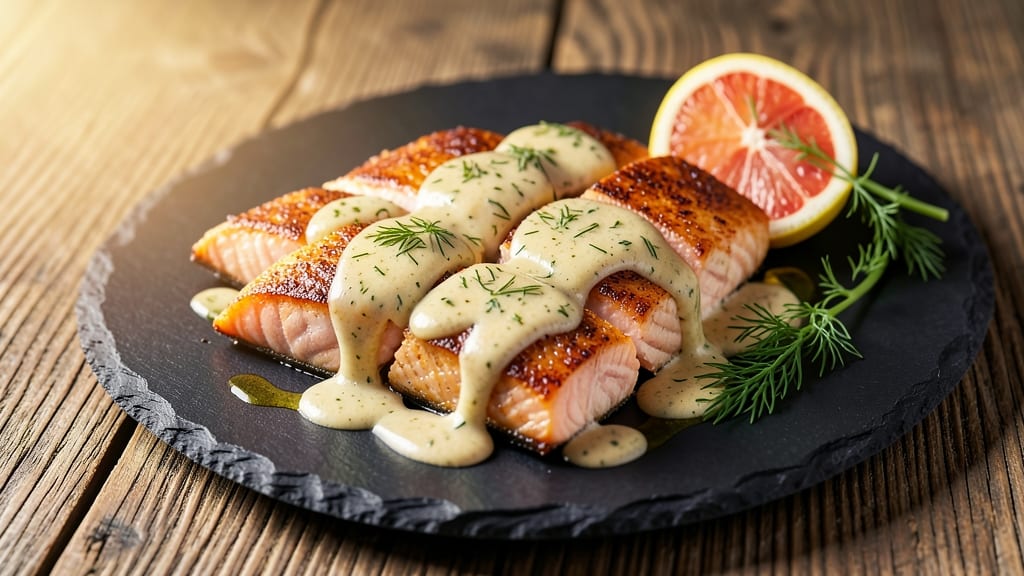
This baked salmon with mustard dill sauce delivers crispy skin and bright, herby flavors in a single, restaurant-quality dish. The secret lies in the sauce—a tangy mustard base balanced with fresh dill and cream—that clings perfectly to the flaky fish while enhancing its natural richness.
After years of perfecting this technique, I can confidently say this is one of those recipes that transforms a simple weeknight dinner into something special.
The magic happens in two parts: baking the salmon skin-side down on a high-heat rack for that coveted crispiness, then finishing it with the mustard dill sauce that adds layers of flavor without overpowering the delicate fish.
This isn't just another salmon recipe—it's a complete meal where every bite delivers a perfect balance of textures and tastes. The sauce, with its creamy yet tangy profile, cuts through the richness of the salmon while adding a fresh, garden-fresh brightness.
What you'll end up with is a plate that's as visually appealing as it is delicious: golden, crispy salmon skin contrasting with tender, flaky flesh, all blanketed in a vibrant green sauce that looks as good as it tastes.
The combination of mustard's sharpness and dill's freshness creates a flavor profile that's both sophisticated and approachable. This dish pairs beautifully with roasted vegetables or a simple side salad, making it perfect for both casual dinners and special occasions.
The best part? This recipe comes together in under 30 minutes with minimal prep, yet the results are undeniably impressive. Whether you're cooking for two or feeding a family, this baked salmon with mustard dill sauce is sure to become a regular on your dinner rotation.
Let's get started on creating this perfect dish.
Ingredients for baked salmon with mustard dill sauce
Bright flavors and crispy skin—here’s everything you need for restaurant-quality salmon at home.
| Ingredient | Amount | Notes |
|---|---|---|
| Salmon Fillets 🐟 | 4 pieces | Skin-on, center-cut, 6-8 oz each |
| Dijon Mustard 🍯 | 2 tbsp | High-quality for tangy flavor |
| Fresh Dill 🌿 | ½ cup | Chopped, stems removed |
| Heavy Cream 🥛 | ½ cup | Full-fat for creamy texture |
| Lemon Juice 🍋 | 1 tbsp | Freshly squeezed |
| Extra-Virgin Olive Oil 🫒 | 1 tbsp | For crispy skin |
| Garlic Cloves 🧄 | 2 cloves | Minced for sauce |
| Salt 🧂 | 1 ½ tsp | Kosher or sea salt |
| Black Pepper 🌶️ | ½ tsp | Freshly ground |
| Paprika 🌶️ | ½ tsp | Smoked for color |
| Butter 🧈 | 1 tbsp | Unsalted, softened |
| Fresh Lemon Wedges 🍋 | 2 whole | For garnish |
The salmon makes or breaks this dish. Center-cut fillets with skin are non-negotiable—they hold their shape better and give you that perfect crispy skin. Grab the thickest ones you can find at Whole Foods or your local seafood counter, and ask for them to be cut from the center of the fillet. If you're using frozen, thaw it overnight in the fridge—never under running water, or you'll end up with waterlogged fish. The skin should be intact and shiny, not dried out or dull. For extra insurance, pat the fillets dry with paper towels before baking—this helps the skin crisp up beautifully.
No Dijon mustard? Whole-grain mustard at half the amount works in a pinch, but the tang is key here. Fresh dill is ideal, but dried dill at one-third the amount gets you close—just don’t skip it. The heavy cream can be swapped for Greek yogurt or coconut cream for a lighter option, though the texture will shift slightly. If you’re out of lemon juice, white wine vinegar adds a similar brightness. For the butter, olive oil works too, but butter gives that extra richness. Pro tip: Toast your garlic cloves in olive oil for 30 seconds before mincing—it adds a nutty depth that takes the sauce to the next level.
This sauce keeps for 3 days in the fridge, but the salmon is best served fresh. Store the sauce in an airtight container with a thin layer of olive oil on top to preserve its vibrant color. The baked salmon reheats poorly, so plan to serve it immediately. If you’re prepping ahead, assemble the sauce components separately and mix just before serving. The crispy skin is best enjoyed right out of the oven—don’t let it sit, or it’ll lose its crunch. Garnish with fresh dill and lemon wedges right before serving for that restaurant-fresh look.
Why You'll Love This Recipe
- Foolproof Timing: I swear by the 20-minute rule—just season the salmon, drizzle the mustard-dill cream, and pop it in the oven. No hovering, no stress, and the salmon comes out flaky every single time.
- Tangy Creamy Magic: That bright Dijon and fresh dill cut through the richness of the cream, while the lemon juice keeps it from feeling heavy. Honestly, the sauce is the real star—smooth, herby, and just salty enough to make you lick the plate.
- Weeknight to Dinner Party: Same recipe for Tuesday takeout or Sunday guests—just double the batch. The sauce reheats beautifully, and the salmon holds together even when sliced cold for salads or wraps. (Yes, even on a Tuesday night.)
- Leftovers That Don’t Suck: Between us, most salmon leftovers taste sad. Not this one. The sauce clings to the flakes, and the lemon keeps it from drying out. I’ve eaten it cold, reheated, and even in grain bowls—still delicious. My secret weapon.
Step-by-step instructions for baked salmon with mustard dill sauce
Here's how to achieve perfectly crispy skin and a luscious herby sauce in one elegant dish.
Prepare the Salmon for Crispy Perfection
Preheat your oven to 425°F with a rack positioned in the middle position. Pat the 4 pieces salmon fillets completely dry with paper towels—this is non-negotiable for crispy skin. I mean press firmly, getting every last bit of moisture off those fillets. The drier they are, the better they'll brown.
Place the salmon skin-side down on a parchment-lined baking sheet. This might feel counterintuitive, but baking skin-side down first creates the crispy crust we want. Drizzle each fillet with 1 tablespoon extra-virgin olive oil and rub it evenly over the skin. Sprinkle each piece with ½ teaspoon salt, ¼ teaspoon black pepper, and ¼ teaspoon paprika, pressing gently so the seasoning sticks.
Bake the Salmon Until Golden and Flaky
Transfer the baking sheet to the preheated oven and bake for 8-10 minutes. You're looking for the skin to turn deep golden brown and crispy—almost like a thin cracker. Don't walk away during this time; check at 8 minutes and watch for that perfect color. If the skin isn't crispy enough after 10 minutes, return it to the oven for another 2-3 minutes.
Once the skin is beautifully crisp, use a thin metal spatula to carefully flip each fillet skin-side up. Return to the oven for 4-6 minutes until the salmon reaches an internal temperature of 145°F when measured at the thickest part. You'll know it's done when it flakes easily with a fork and the edges pull away cleanly from the skin.
Make the Tangy Mustard Dill Sauce
While the salmon finishes baking, make the sauce in the same skillet you'll use to serve it. Melt 1 tablespoon butter over medium heat, then add the 2 minced garlic cloves and cook for 30 seconds until fragrant—don't let it brown or it'll turn bitter. Add the 2 tablespoons Dijon mustard and stir for 1 minute until it's fully incorporated.
Pour in the ½ cup heavy cream and 1 tablespoon lemon juice, then bring to a gentle simmer. Reduce heat to low and stir in the ½ cup chopped fresh dill. Let it simmer for 2-3 minutes until slightly thickened. Taste and adjust seasoning with more salt or pepper if needed—this sauce should be bright, tangy, and herby.
Serve with Sauce and Fresh Lemon
Carefully transfer the baked salmon to a serving platter, skin-side up. Spoon the warm mustard dill sauce over each fillet, letting it cascade down the sides. The sauce should coat the salmon beautifully, creating a glossy finish. Garnish each piece with a fresh lemon wedge for both presentation and a final burst of citrus.
Serve immediately with the crispy salmon skin facing up—this is where all the magic happens. Each bite should deliver that perfect contrast of crispy skin, flaky flesh, and the bright, herby sauce. The lemon wedge isn't just for looks; squeeze it over your plate right before eating to enhance the flavors even more.
Pro Tips For Making Baked Salmon With Mustard Dill Sauce
- Preheat Pan, Not Just Oven: I learned this the hard way—salmon sticks to cold metal like a bad date. Slide your baking sheet onto the middle rack while the oven preheats, then turn it off and let the pan warm another 5 minutes. The salmon will release cleanly, and you’ll avoid the sad, gummy mess that happens when it clings like glue.
- Whisk the Mustard First: Heavy cream and Dijon mustard don’t play nice when dumped in raw. Whisk the mustard into a thin paste with a splash of lemon juice before adding cream—this prevents lumps like nothing else. I’ve seen smooth sauces turn into blobs, and trust me, you don’t want that.
- Don’t Overbake the Dill: Fresh dill wilts faster than a politician’s promises. Add it to the sauce after removing it from heat, or toss in whole sprigs during the last 2 minutes of salmon baking—just pull them out before serving. Overcooked dill tastes like sad salad, not bright, herby magic.
- Test with a Toothpick, Not Time: Salmon’s done when it flakes easily at the thickest part, not when the recipe says “12 minutes.” Use a toothpick—it should slide in and out with zero resistance. I’ve ruined perfectly good fish by eyeballing it, and you’ll thank me when yours stays moist, not rubbery.
Essential equipment for this dish
Must-Have Baking Tools
Your oven thermometer is the MVP for crispy salmon—set it to 425°F and verify it's accurate. I use a Thermoworks Thermapen because it's precise and fast. For even heat distribution, place your salmon on a perforated baking rack (like the OXO Good Grips model) instead of a sheet pan.
This ensures air circulates around the fillets for that perfect crisp. 🔥
Don't skip the parchment paper—it prevents sticking and makes cleanup a breeze. I recommend Reynolds Kitchens Parchment Paper because it's sturdy enough to handle the weight of the salmon without tearing. For flipping, use a thin metal fish spatula (like the Dexter-Russell brand) to avoid tearing the delicate skin.
Sauce Equipment Essentials
A 10-inch cast iron skillet (like the Lodge Pre-Seasoned) is perfect for making the sauce—it retains heat beautifully and adds a subtle iron note that complements the dill. If you don't have cast iron, a heavy stainless steel skillet works too.
For mincing garlic, I swear by a microplane—it gives you the finest texture without bruising the cloves. 🧄
Invest in a high-quality whisk (I use the OXO Good Grips balloon whisk) to emulsify the sauce smoothly. A small rubber spatula helps scrape up every last bit of flavor from the skillet.
For measuring liquids precisely, a liquid measuring cup with clear markings (like the Pyrex brand) ensures you get the right ratio of cream to mustard.
Budget-Friendly Alternatives
No fancy tools? No problem. A stainless steel sheet pan works fine for baking—just avoid nonstick pans, as they can make the skin soggy. For the sauce, a nonstick saucepan (like Cuisinart) prevents sticking and makes cleanup easier.
A sharp chef's knife and cutting board are all you need for prepping ingredients—no specialty tools required. 💡
For measuring, a standard measuring spoons set (like OXO Good Grips) is perfect for the mustard, salt, and pepper. If you don't have a whisk, a fork works in a pinch—just stir vigorously to combine the sauce.
The key is focus, not fancy equipment. Even with basic tools, you'll get restaurant-quality results.
Nutrition facts
Frequently asked questions
Why does the salmon need to bake skin-side down first?
Baking skin-side down creates that coveted crispy texture by allowing the skin to render its natural oils and brown evenly. The fat from the skin keeps the flesh moist while the high heat forms a cracker-like crust. Flipping it skin-side up later ensures the crispy skin stays intact and faces up for serving.
Can I use this sauce on other proteins besides salmon?
This mustard dill sauce works beautifully with cod, halibut, or even chicken breast. For fish, reduce baking time by 2-3 minutes to avoid overcooking. For chicken, bake at 375°F until internal temp reaches 165°F. The sauce's tangy brightness complements lean proteins perfectly.
What if my salmon skin isn't crispy after baking?
Check these three things:
- Your oven needs to be properly preheated to 425°F—use an oven thermometer to verify;
- The salmon must be completely dry before baking;
- Don't overcrowd the pan. If it's still soft, broil for 1-2 minutes on high heat with the door slightly open to create a stronger browning effect.
How can I make this sauce ahead of time?
Prepare the sauce components separately and store them in the fridge for up to 3 days. Keep the mustard, cream, and lemon juice in one container, and the dill and garlic in another. When ready to serve, simply combine and reheat gently. The sauce thickens as it cools, so you may need to add 1-2 teaspoons water when reheating.
What's the best way to serve this dish for a dinner party?
Garnish each salmon fillet with extra fresh dill, a lemon wedge, and a sprinkle of flaky sea salt. Serve with roasted asparagus or creamy mashed potatoes to balance the dish. For presentation, arrange the salmon on a platter with the sauce drizzled artistically around the edges. A simple white wine spritzer complements the herby flavors beautifully.