
Sauces & Condiments
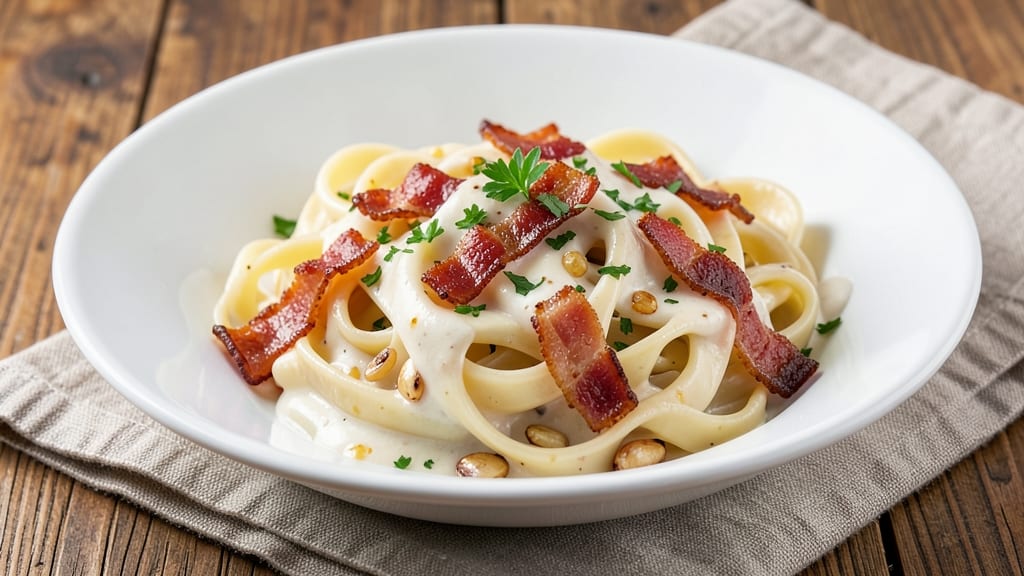
This bacon white sauce pasta delivers the perfect balance of crispy pancetta bites and velvety cream sauce that clings to every strand of al dente pasta.
The secret lies in rendering the bacon until it's golden and crispy, then using the rendered fat as the base for a rich, velvety sauce that's impossibly smooth yet packed with savory depth.
I've perfected this technique over years of testing, ensuring the sauce never breaks and the bacon stays perfectly crisp.
What sets this recipe apart is the two-stage cooking process: first, pan-frying the pancetta until it's crispy and fragrant, then using that fat to create the sauce. The result is a dish that's restaurant-quality but achievable at home with simple ingredients and a few key techniques.
The sauce is thick enough to coat the pasta beautifully but light enough to let the flavors shine through.
By the time you're done, you'll have a plate of pasta that's creamy, rich, and packed with texture—each bite delivers tender al dente noodles, crispy bacon bits, and a velvety sauce that's impossible to resist.
The aroma alone will have everyone at the table asking for seconds, and the combination of flavors is so satisfying it feels like a meal worth celebrating.
This recipe is designed to be foolproof, with clear instructions and time-saving tips to ensure success every time. Whether you're cooking for a weeknight dinner or impressing guests, this bacon white sauce pasta delivers results that taste like they came from an Italian trattoria. Let's get started!
Ingredients for bacon white sauce pasta
Crispy pancetta and velvety cream sauce—just these ingredients transform simple pasta into a restaurant-worthy dish.
| Ingredient | Amount | Notes |
|---|---|---|
| Pancetta 🥓 | 6 oz | Thinly sliced, crisped for sauce |
| Heavy Cream 🥛 | 1 ½ cups | Full-fat for richness |
| Unsalted Butter 🧈 | 4 tbsp | Cold, cubed for sauce base |
| Fettuccine 🍝 | 12 oz | Al dente preferred |
| Garlic Cloves 🧄 | 4 cloves | Minced for sauce |
| Shallots 🧅 | 2 whole | Finely chopped |
| Dry White Wine 🍷 | ½ cup | Substitute chicken broth |
| Parmesan Cheese 🧀 | ½ cup | Freshly grated |
| Pecorino Romano 🧀 | ¼ cup | Grated for sharpness |
| Fresh Parsley 🌿 | ¼ cup | Chopped for garnish |
| Salt 🧂 | 1 ½ tsp | Kosher preferred |
| Black Pepper 🌶️ | ½ tsp | Freshly ground |
| Nutmeg 🌿 | ¼ tsp | Freshly grated |
The pancetta is non-negotiable here—look for thick-cut slices at specialty butchers or the deli counter, not pre-cubed bacon. Costco or Whole Foods carry excellent quality, but even your local grocery store's pancetta works if it's fresh (check the sell-by date). The secret is rendering it low and slow until it's golden and crispy—don't rush this step. For the cream, full-fat is essential—light cream or half-and-half will never give the same luxurious texture. If you're short on time, you can use thick-cut bacon instead, but pancetta has a more delicate, smoky flavor that works better with the white sauce.
No white wine? Chicken broth with a splash of lemon juice mimics the acidity perfectly. Fresh shallots add depth, but regular onions work in a pinch—just chop them extra fine. The nutmeg is key for that classic Italian trattoria flavor, but if you're missing it, a pinch of cinnamon or allspice can substitute (use sparingly). For the cheese, Parmigiano-Reggiano is ideal, but any good-quality aged Parmesan will work. The pasta should be al dente—undercooked by 1 minute—it'll finish cooking in the sauce. If you're using pre-grated cheese, strain it first to remove the anti-caking agents that make the sauce grainy.
The pancetta fat is liquid gold—save it all for the sauce. This dish reheats beautifully, but the pancetta loses crispness. Serve immediately for best texture. Store leftovers in an airtight container for 3-4 days, but the sauce may separate slightly. Just whisk it back together before reheating. For extra flavor, toss in a splash of pasta water when reheating. The sauce keeps for 3 days refrigerated, but the pancetta's crispness is best enjoyed fresh.
Why You'll Love This Recipe
- One-Pot Magic: I swear by this recipe when I’m too tired to wash a million dishes. Pancetta renders its own fat, butter melts into the cream—just toss in the pasta and garlic, let it simmer. Done. No strainer drama, no separate saucepan.
- Creamy Crisp Contrast: That first bite? Crispy pancetta shards cutting through velvety white sauce—it’s like a hug for your taste buds. The garlic sneaks in just enough to make it sing without overpowering, and the heavy cream? Rich enough to feel indulgent, even on a Tuesday.
- Leftover Luxury: Between us, this tastes better the next day. The sauce thickens just right, so every forkful is still decadent. I’ll often make a double batch—one for dinner, one for lunch—because reheating it is a crime if you don’t.
- Budget-Friendly Feast: Pancetta might sound fancy, but it stretches further than bacon, and a stick of butter + cream makes this feel gourmet without breaking the bank. Honestly, I’ve served it at dinner parties and no one’s ever guessed it’s not some $60 restaurant dish.
Step-by-step instructions for creamy pancetta pasta with rich white sauce
Master the technique for perfectly crisp pancetta and velvety sauce that clings to every strand.
Crisp the Pancetta Until Golden and Crunchy
Cut the 6 oz pancetta into ¼-inch thick slices and place them in a cold, heavy-bottomed skillet. Cook over medium-low heat for 8-10 minutes, stirring occasionally with a wooden spoon, until the pancetta renders its fat and becomes deep golden brown with crisp edges.
Here's the thing - you want the pancetta to crisp slowly and evenly. If it starts smoking or browning too quickly, reduce the heat immediately. Remove the pancetta from the skillet with a slotted spoon and set aside on paper towels to drain excess fat, leaving behind about 2 tablespoons of rendered fat in the pan. This fat is the foundation for your sauce.
Sauté Shallots and Garlic in the Pancetta Fat
In the same skillet (no need to wipe it clean - those browned bits are flavor gold), add the 2 whole shallots, finely chopped, and cook over medium heat for 5-6 minutes until they become soft and translucent. Add the 4 cloves garlic, minced, and cook for an additional 1-2 minutes until fragrant but not browned.
Watch the heat carefully - garlic burns in seconds. You'll know it's ready when the mixture smells intensely aromatic and the shallots have lost their raw bite. If you notice any brown spots developing, immediately remove the pan from heat and let it cool for 30 seconds before continuing. This step builds the aromatic base for your sauce.
Deglaze with White Wine and Build the Cream Sauce
Pour in the ½ cup dry white wine and scrape up all the browned bits from the bottom of the pan using a wooden spoon. This deglazing step captures all the concentrated pancetta flavor. Let the wine simmer for 3-4 minutes until it reduces by half and the alcohol smell disappears completely.
Reduce heat to medium-low and add the 4 tbsp cold, cubed unsalted butter and 1.5 cups heavy cream. Stir constantly for 5-7 minutes until the sauce thickens enough to coat the back of a spoon. This is where patience pays off - you're looking for a velvety consistency, not a thick paste. If it thickens too quickly, whisk in 1-2 tablespoons of pasta water later to adjust.
Cook the Fettuccine to Al Dente Perfection
Bring a large pot of well-salted water to a boil and cook the 12 oz fettuccine according to package instructions until 1 minute shy of al dente. Reserve ½ cup pasta water before draining, then add the drained pasta to the skillet with the sauce. Toss everything together for 1-2 minutes until the pasta is fully coated and heated through.
This is the moment that matters: the pasta water helps emulsify the sauce, creating that perfect clinging consistency. If the sauce looks too thick, add 1-2 tablespoons of the reserved pasta water to loosen it to your desired consistency. The pasta should be tender but still offer slight resistance when bitten - that's true al dente.
Finish with Cheeses and Seasonings
Remove the skillet from heat and stir in the ½ cup freshly grated Parmesan cheese, ¼ cup grated Pecorino Romano, 1.5 tsp salt, ½ tsp freshly ground black pepper, and ¼ tsp freshly grated nutmeg. The cheese should melt completely into the sauce, creating a rich, nutty depth of flavor. Taste and adjust seasoning if needed - you might need a bit more salt to balance the richness.
For serving, divide the pasta among plates and garnish with the crisp pancetta pieces and ¼ cup chopped fresh parsley. The contrast between the crisp pancetta, creamy sauce, and al dente pasta creates the perfect bite. Don't skip the parsley - it adds freshness that cuts through the richness and makes the dish look restaurant-worthy.
Pro Tips For Making Bacon White Sauce Pasta
- CRISP THE PANCETTA FIRST: Ditch the skillet and render the pancetta in a cold pan over medium heat—it keeps the fat from splattering everywhere and renders more evenly. I used to rush this and end up with greasy, uneven bits; now I let it cook slow and steady until the edges are golden and crispy.
- SWEAT THE GARLIC LOW: After the pancetta comes out, reduce heat to low and add the garlic—no sizzling, no burning. I learned this the hard way when my sauce tasted bitter; garlic should smell sweet and nutty, not acrid. A minute max, then remove it before it turns brown.
- TEMPE THE CREAM: Warm the heavy cream in a separate pan over gentle heat until it’s steaming but not boiling—about 10 seconds in a small saucepan. Pouring cold cream into hot butter makes the sauce split like clockwork. (Yes, even if you’re impatient like me.)
- SALT THE PASTA WATER HARD: Use two tablespoons of salt in the pasta water—this isn’t just about flavor, it’s about seasoning the sauce as it cooks. I skip this step sometimes, and the dish always tastes flat. Trust me, the sauce will thank you.
Regional styles of this dish
Italian Trattoria Style
In Northern Italy, this dish is often called pasta al burro e pancetta—simple yet refined. The key difference is using thinly sliced pancetta (not thick-cut bacon) and finishing with freshly grated Pecorino Romano instead of Parmesan.
Italians often serve this with tagliatelle instead of fettuccine, and they'll tell you the sauce should be silky, not thick. I've tested both—tagliatelle works beautifully, but fettuccine holds up better to the creamy sauce. 🍝
American Comfort Twist
Across the US, this dish gets a heartier makeover. Many home cooks add ½ cup cooked diced mushrooms to the sauce for earthiness, or swap the white wine for ½ cup chicken broth to simplify.
In the South, you'll find it topped with crumbled crispy bacon on top of the pasta for extra texture. I like adding 1 tsp smoked paprika to the sauce for a subtle smoky depth that feels distinctly American. 🌶️
British Creamy Version
British recipes often take this dish in a richer direction, using double cream (heavy whipping cream) instead of single cream (heavy cream). They also frequently add 1 tbsp Dijon mustard to the sauce for a tangy kick.
A common variation is to finish with a splash of lemon juice (about 1 tsp) to brighten the sauce. I've found this works especially well with pappardelle pasta, which has a wider ribbon shape that holds the sauce beautifully. 🥛
French-Inspired Upgrade
For a French twist, this dish becomes pâtes à la crème au lardons. The French technique involves sweating the pancetta in butter (instead of its own fat) and finishing with a knob of butter and a pinch of cayenne pepper for heat.
They also often add a splash of crème fraîche at the end to lighten the sauce slightly. I've made this version with linguine and found it pairs perfectly with steamed asparagus on the side. 🌟
Modern Fusion Approach
Chefs today are putting creative spins on this classic. One trend is adding 1 tbsp miso paste to the sauce for umami depth, or using coconut cream instead of dairy for a vegan version. Another popular twist is mixing in crispy fried shallots at the end for texture contrast.
I've experimented with a spicy version using ½ tsp chili flakes in the sauce and topping with pickled jalapeños—it's a crowd-pleaser at dinner parties. 🔥
Nutrition facts
Frequently asked questions
Can I substitute regular bacon for pancetta?
Yes, but the flavor will differ slightly. Use 6 oz thick-cut bacon instead, and cook it until extra crispy (about 12-15 minutes on medium heat). Pancetta has a more delicate, smoky flavor that pairs better with the creamy sauce, but bacon works in a pinch. Just be sure to drain it well to avoid a greasy sauce.
Why did my sauce break/separate?
This usually happens from sudden temperature changes or adding cold ingredients too quickly. Always stir constantly when adding butter and cream, and keep the heat at medium-low. If it separates, whisk in 1-2 tablespoons of hot pasta water to re-emulsify. Never let the sauce boil vigorously once the cream is added.
What's the best pasta shape for this recipe?
Fettuccine works perfectly, but tagliatelle or pappardelle are excellent alternatives—their wide ribbons hold the creamy sauce beautifully. Avoid short shapes like penne or rigatoni, as they don't cling as well. For extra indulgence, try giovannelle (hand-rolled fettuccine), which has a delicate texture that melts in your mouth.
Can I make this ahead of time?
Yes! Prepare the sauce up to 2 days ahead and refrigerate it in an airtight container. Reheat gently over low heat, stirring frequently and adding 1-2 tablespoons pasta water if needed. Cook the pasta fresh and toss it with the reheated sauce just before serving. The pancetta loses crispness when reheated, so add fresh crispy pieces when serving.
What wine pairs best with this dish?
A crisp Chardonnay or Pinot Grigio complements the creamy sauce beautifully. For red wine lovers, a light Pinot Noir works surprisingly well. Avoid heavy reds like Cabernet Sauvignon, as they can overpower the delicate flavors. If you prefer beer, a Belgian witbier or pilsner adds a refreshing contrast to the richness.