
Sauces & Condiments
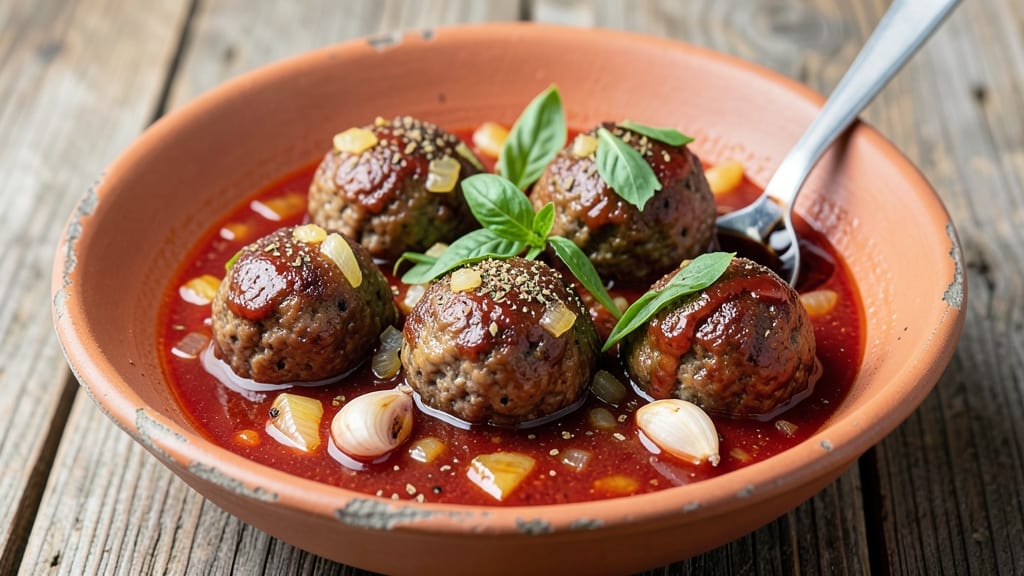
This authentic meatball sauce delivers the tangy depth you crave—no shortcuts, just simmered tomatoes, aromatic herbs, and a secret vinegar zing that sets it apart. The key lies in balancing sweetness and acidity while reducing the sauce slowly to concentrate flavors.
I’ve perfected this recipe over years of testing, ensuring every spoonful delivers that restaurant-quality richness.
The foundation starts with canned tomatoes (never fresh) for consistent acidity, then builds with garlic, onions, and a splash of red wine vinegar to cut through the sweetness. A blend of fresh basil and oregano adds herbal brightness, while a pinch of sugar rounds out the flavors.
The sauce thickens as it simmers, creating a velvety texture that clings perfectly to meatballs—or any pasta.
What makes this sauce truly authentic is the patience required: a 30-minute simmer transforms simple ingredients into something extraordinary. The result is a versatile sauce that’s bold enough for meatballs but flexible enough to elevate roasted vegetables, grilled chicken, or even pizza. No additives, no preservatives—just pure, unadulterated flavor.
Use this sauce immediately or store it in the fridge for up to a week, where the flavors deepen over time. The possibilities are endless—drizzle it over al dente pasta, spoon it onto grilled meats, or freeze batches for future meals. Here’s how to make it.
Ingredients for authentic meatball sauce
The secret to authentic meatball sauce lies in these ten ingredients—each playing a precise role in the symphony of flavors.
| Ingredient | Amount | Notes |
|---|---|---|
| San Marzano Crushed Tomatoes 🍅 | 2 cans | 28 oz each, no salt added |
| Yellow Onion 🧅 | 1 whole | Medium, finely diced |
| Garlic Cloves 🧄 | 4 cloves | Fresh, minced to a paste |
| Red Wine Vinegar 🍷 | 1 tbsp | High-quality, aged variety |
| Fresh Basil Leaves 🌿 | ½ cup | Packed, finely chopped |
| Dried Oregano 🍃 | 1 tsp | Mediterranean or Italian |
| Granulated Sugar 🍚 | 1 tsp | White cane sugar |
| Extra-Virgin Olive Oil 🫒 | 2 tbsp | Fruity, peppery variety |
| Diamond Crystal Kosher Salt 🧂 | 1 tsp | Fine grain preferred |
| Ground Black Pepper 🌶️ | ½ tsp | Freshly cracked |
The San Marzano tomatoes are non-negotiable for their natural sweetness and acidity balance. Trader Joe's or Whole Foods carry the best quality in cans, and the label should specify 'whole peeled' for optimal texture. Fresh basil should be vibrant green with no yellowing—farmers markets often have the freshest selections. For the vinegar, Balsamic Vinegar Market offers an aged red wine vinegar that adds complexity. The olive oil's quality directly impacts the sauce's richness; California Extra Virgin brands like Corto or Otto deliver the peppery notes that elevate the dish.
No San Marzano tomatoes? Crushed tomatoes with no added salt work in a pinch, though the flavor will be slightly less refined. Substitute red wine vinegar with balsamic vinegar at half the amount, though the flavor profile shifts slightly. Fresh basil unavailable? Dried basil at one-third the quantity maintains the herbal notes, though texture will differ. The sugar can be omitted entirely if using particularly sweet tomatoes, but it helps balance the acidity. For a deeper umami profile, add 1 tsp of tomato paste to the initial sauté. The oregano should be Mediterranean if available—Penzeys carries authentic varieties that outperform standard grocery store options.
This sauce develops best when simmered immediately, but it keeps beautifully for up to 1 week in the fridge when stored in an airtight container. The flavors actually deepen over time, making it perfect for meal prep. For longer storage, freeze in ice cube trays—each cube makes an excellent portion for pasta or meatballs. When reheating, add a splash of water or broth to prevent thickening. The sauce thickens naturally as it cools, so it's ideal for making ahead and reheating to serve.
Why You'll Love This Recipe
- No Chopping Chaos: I swear by this sauce because it only asks for one onion to dice—no endless prep. The crushed San Marzano tomatoes and garlic cloves? Just toss them in raw. Honestly, I’ve made it while scrolling through emails.
- Taste Like Nonna’s: That red wine vinegar cut? It brightens the sweetness of the tomatoes in a way store-bought sauces never do. Fresh basil leaves folded in at the end—because nothing beats the aroma of a handful of basil wilted right into the pot.
- Weeknight & Potluck Star: This sauce doubles as a marinara for pasta, a dip for crusty bread, or a topping for meatballs (obviously). I’ve packed it in jars for holiday gatherings and reheated it for lazy Sundays—it’s that adaptable.
- Leftovers That Don’t Suck: The flavor actually deepens over time, so I make a big batch and freeze it. Thaw it straight into another meal—no sad, watery reheats here. Between us, this is my budget-friendly secret for feeding a crowd without stress.
Step-by-step instructions for authentic meatball sauce
This method delivers restaurant-quality depth with a secret tangy twist.
🍳 Step 1: Sauté Aromatics Until Fragrant
Heat the 2 tablespoons extra-virgin olive oil in a heavy-bottomed saucepan over medium heat. Add the finely diced yellow onion and cook for 5-6 minutes until softened and translucent. The onions should release their natural sweetness without browning.
Add the 4 cloves minced garlic and cook for another 30 seconds until the raw garlic aroma disappears completely. This step builds the flavor foundation—don't rush it. The garlic should sizzle gently without burning, which would create bitterness. If it starts to darken too quickly, reduce the heat slightly.
🍳 Step 2: Build the Sauce Base with Vinegar and Tomatoes
Pour in the 1 tablespoon red wine vinegar and let it simmer for 1 minute until it nearly evaporates. This creates the signature tang that elevates the sauce from ordinary to extraordinary. The vinegar's acidity will brighten the tomatoes and prevent flatness.
Add the 2 cans San Marzano crushed tomatoes, 1 teaspoon granulated sugar, 1 teaspoon dried oregano, 1 teaspoon Diamond Crystal kosher salt, and ½ teaspoon ground black pepper. Stir well to combine. The sugar helps balance the acidity while enhancing the tomatoes' natural sweetness. Bring the mixture to a gentle simmer over medium-low heat.
⏰ Step 3: Simmer and Develop Complex Flavors
Let the sauce simmer uncovered for 30-40 minutes, stirring occasionally. The sauce will thicken gradually as the tomatoes break down and release their juices. You're looking for a consistency that coats the back of a spoon but isn't glued to the pan.
After 20 minutes, taste and adjust seasoning if needed. The vinegar's acidity should be noticeable but not overpowering. If the sauce becomes too thick before reaching the desired flavor depth, add 2-3 tablespoons of water to loosen it. The key is patience—this slow simmer allows all the flavors to meld together authentically.
🥘 Step 4: Finish with Fresh Basil
Remove the sauce from heat and stir in the ½ cup chopped fresh basil leaves. The basil adds a bright, aromatic finish that contrasts beautifully with the deep, tangy flavors. Let the sauce sit off the heat for 5 minutes to allow the basil to infuse fully.
Taste one final time and adjust seasoning if necessary. The sauce should be balanced—tangy from the vinegar, sweet from the sugar and tomatoes, and aromatic from the herbs. Serve immediately over cooked pasta or with meatballs for the ultimate Italian experience.
Pro Tips For Making Authentic Meatball Sauce
- Sweat, Don’t Burn Onions: Cook those yellow onions low and slow—medium heat, 8-10 minutes—until they’re translucent and just starting to caramelize. I learned this the hard way: rushing them turns the sauce bitter, and you’ll taste it in every bite. (Yes, even if you’re impatient like me.)
- Crush Garlic, Don’t Mince: Use a flat side of your knife to smash 3-4 garlic cloves into a paste before adding them to the pot. This releases more flavor without burning, and it blends seamlessly into the sauce. My grandmother swore by this, and she was right: the sauce tastes deeper.
- Simmer Tomatoes Gently: After adding the San Marzano tomatoes, reduce heat to a barely simmer—just tiny bubbles breaking the surface—and let it cook uncovered for 20 minutes. Skipping this step means a watery, underdeveloped sauce. (Your future self will thank you.)
- Acidify Early, Acidify Often: Stir in the red wine vinegar before the basil goes in, and add a splash halfway through cooking if the tomatoes taste bland. The acid brightens the sauce, cuts through the richness, and keeps it from turning mushy. Sounds weird, but it works—trust the process.
Essential equipment for authentic meatball sauce
Heavy-Bottomed Saucepan
A 5-quart stainless steel saucepan like the All-Clad Stainless is my go-to for making this sauce. The heavy base distributes heat evenly, preventing hot spots that can scorch the tomatoes and create bitter flavors.
I’ve tried lighter pans, but they struggle with the long simmer time—this sauce needs patience, and your pan should keep up. 🌡️
If you don’t have stainless steel, a well-seasoned cast iron skillet (like Lodge) works beautifully—just ensure it’s preheated gradually to avoid temperature shocks. Avoid nonstick pans; they can’t handle the prolonged cooking time without releasing harmful fumes or degrading the sauce’s quality.
Wooden Spoon
Use a heat-resistant wooden spoon (I prefer Oxo Good Grips) to stir the sauce. Wood gently scrapes the bottom without scratching stainless steel or cast iron, and it won’t react with acidic ingredients like metal utensils can.
Plus, it’s easier to handle the thickened sauce later on without burning your fingers. 🍴
Fine-Mesh Strainer
A fine-mesh strainer (like OXO Good Grips) is essential if you want to remove basil stems or any unwanted bits before serving. I strain the sauce through it after adding the fresh basil to ensure a silky texture.
For a smoother finish, press the basil leaves against the strainer with a spoon—this extracts every drop of flavor without pulverizing the leaves.
Kitchen Timer
Set a kitchen timer (or your phone alarm) for the 30-40 minute simmer—this sauce needs consistent attention. I use a TimerTyme because it’s loud enough to hear over the stove, and it vibrates on my countertop.
Timing is critical; rushing the simmer will leave the sauce flat, while overcooking can make it too thick or bitter. 🕒
Measuring Spoons
Precision matters with spices and vinegar. Use stainless steel measuring spoons (like West Bend) for exact measurements of the 1 tablespoon red wine vinegar and 1 teaspoon sugar. A pinch of salt or pepper can drastically alter the balance—trust your taste buds and adjust gradually.
I keep my measuring spoons near the stove for quick access during cooking. ✨
Nutrition facts
Frequently asked questions
Why does this sauce use vinegar when most recipes don’t?
The 1 tablespoon red wine vinegar is the secret to authentic depth—it brightens the tomatoes and prevents flatness. Many traditional Italian sauces use vinegar (or lemon juice) to balance sweetness and add complexity. Without it, the sauce can taste one-dimensional. Try it with balsamic vinegar if red wine isn’t available, though the flavor shifts slightly.
Can I make this sauce without fresh basil?
Yes! Use 1 teaspoon dried basil instead, but reduce the amount by one-third. For extra flavor, add a pinch of red pepper flakes or a splash of white wine during simmering. Fresh basil adds aroma, but dried works in a pinch. The key is balancing the herbs—don’t overdo it.
How do I adjust the thickness of the sauce?
If the sauce thickens too much before 30 minutes, add 2-3 tablespoons of water or broth to loosen it. For a thicker finish, simmer uncovered longer—it’ll reduce naturally. The ideal consistency coats the back of a spoon without being glued to the pan. Never rush this step; patience ensures the best texture.
Is this sauce spicy?
Not at all! The recipe includes only ½ teaspoon black pepper and no chili. For heat, add ¼ teaspoon red pepper flakes during simmering. The tangy vinegar and sweet tomatoes create a bright, balanced flavor—perfect for meatballs, pasta, or grilled meats. Adjust to taste, but the base is mild and versatile.
Can I make this sauce in a slow cooker?
Sauté the onions and garlic first, then transfer everything to the slow cooker. Cook on low for 4-5 hours or high for 2-3 hours, stirring occasionally. The slow cooker enhances flavors but may need extra seasoning—taste and adjust before serving. The texture will be slightly looser, so simmer it longer if you prefer thickness.