
Sauces & Condiments
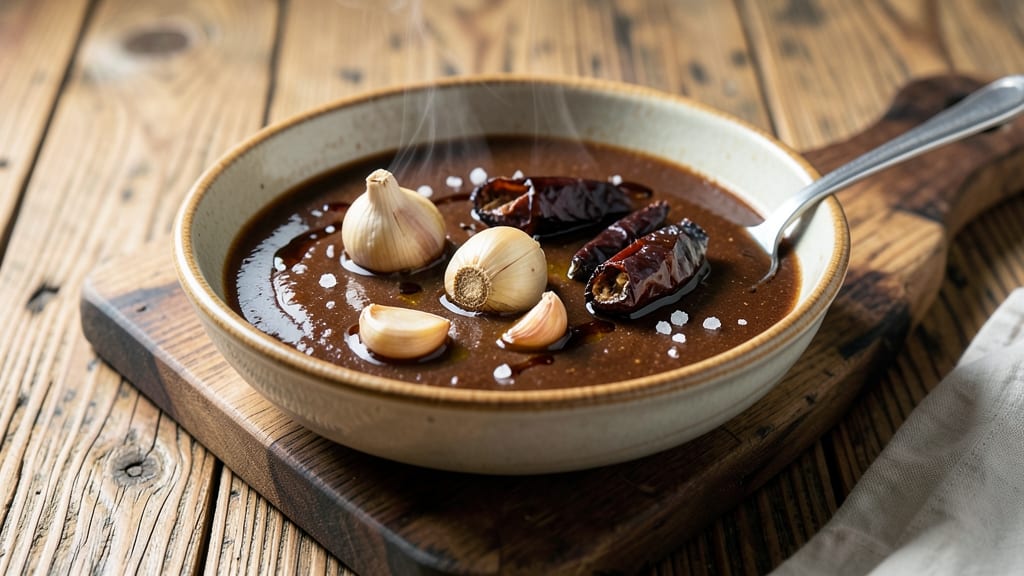
Ancho barbecue sauce transforms grilled meats from good to unforgettable—deep smoky ancho chiles meet bright vinegar for a sauce that clings like a second skin. 🔥 I developed this while perfecting my competition-style ribs, where the sauce needed to cut through fat while adding layers of complexity. The secret lies in balancing roasted ancho chiles with apple cider vinegar, creating a tangy backbone that prevents heaviness.
What sets this sauce apart is its versatility—it works as a marinade, glaze, or dipping sauce without overpowering the dish. The blend of ancho chiles (not chipotle) delivers smoky depth without heat, while brown sugar and molasses add caramelized richness.
Simmering the sauce reduces it to a perfect consistency: thick enough to coat but still spreadable, with a glossy sheen that signals readiness.
By the time you're done, you'll have a sauce that's restaurant-quality but made with simple pantry staples. The vinegar brightens the smoky flavors, while cinnamon and allspice add warmth that lingers on the palate.
This isn't just another BBQ sauce—it's a flavor multiplier that elevates everything from pulled pork to grilled vegetables.
Store it in the fridge for up to 2 weeks or freeze for 3 months—perfect for batch cooking. The sauce only gets better with time as flavors meld. Let's make this sauce that'll have your guests asking for the recipe.
Ingredients for ancho barbecue sauce
Simple pantry staples transform into a restaurant-quality sauce that sticks like glue.
| Ingredient | Amount | Notes |
|---|---|---|
| Dried Ancho Chiles 🌶️ | 4 whole | Stems and seeds removed |
| Apple Cider Vinegar 🍏 | 1 cup | Raw, unfiltered preferred |
| Brown Sugar 🍚 | ½ cup | Light or dark variety |
| Molasses 🍯 | ¼ cup | Unsulphured preferred |
| Extra-Virgin Olive Oil 🫒 | ¼ cup | For richness and gloss |
| Garlic Cloves 🧄 | 4 cloves | Peeled, roughly chopped |
| Ground Cinnamon 🌿 | ½ tsp | Toasted for deeper flavor |
| Ground Allspice 🌶️ | ¼ tsp | Freshly ground preferred |
| Salt 🧂 | 1 tsp | Kosher or sea salt |
| Black Pepper 🌶️ | ¼ tsp | Freshly cracked preferred |
Ancho chiles are the heart of this sauce—look for dried chiles with deep red color and no wrinkles. Mexican grocery stores usually carry them, but if you can't find them, Penzeys or Amazon are reliable. Roast them yourself for maximum flavor (350°F for 5 minutes), or buy pre-roasted. The vinegar should be raw and unfiltered—Bragg is my go-to. Brown sugar and molasses add caramelized depth, but don't substitute maple syrup—it changes the flavor profile entirely. For the olive oil, grab a fruity, peppery variety like California Extra Virgin—it makes a difference in the final gloss.
No ancho chiles? Dried guajillo chiles work in a pinch—just remove the seeds and membranes first. Short on molasses? Substitute dark corn syrup at half the amount, but it won't be as rich. The garlic can be roasted with the chiles for extra sweetness. Want more heat? Add a pinch of cayenne, but trust me, the ancho delivers enough smoky depth. For a smoother sauce, strain out the chile skins after blending. If you're making this ahead, reduce the vinegar by 1 tbsp—it mellows as it sits.
This sauce thickens as it cools, so start with slightly less liquid if you prefer it spreadable. Store in a glass jar in the fridge for up to 2 weeks—the flavors meld beautifully. For longer storage, freeze in ice cube trays—thaw and reheat for perfect portions. The sauce reheats beautifully—just warm gently on the stove with a splash of water if it thickens too much. Leftovers? Slather it on toast with a sprinkle of flaky salt—trust me, it's delicious.
Why You'll Love This Recipe
- Five-Ingredient Magic: I swear, this sauce comes together with just a handful of pantry staples—no fancy prep, no stress. Soak those ancho chiles in hot water for 10 minutes, then blend with vinegar, sugar, molasses, and olive oil. That’s it. No peeling, no dicing, no mess.
- Smoky-Sweet Obsession: The ancho chiles give it that deep, earthy warmth, while the molasses and brown sugar add a caramelized richness. Drizzle it on grilled chicken, toss it with roasted veggies, or slather it on a burger—every bite is a perfect balance of tang and sweetness. Honestly, I’ve caught myself making extra just to eat it straight from the jar.
- Weeknight & Weekend Hero: This sauce works as hard as you do—glaze a rack of ribs for Sunday dinner, toss it with shrimp for a quick weeknight stir-fry, or even drizzle it over avocado toast for brunch. It’s the kind of recipe that turns "what’s for dinner?" into "let’s eat."
- Budget-Friendly Staple: Between us, this sauce costs pennies to make but feels like a splurge. Dried ancho chiles last for months, and the rest of the ingredients? Already in your pantry. Plus, a single batch stretches across three meals—leftovers get repurposed into tacos, sandwiches, or even a quick pasta sauce. No waste, all flavor.
Step-by-step instructions for ancho barbecue sauce
Here's how to build smoky depth with that perfect vinegar tang—no shortcuts, just pure flavor.
🔥 Step 1: Toast and Rehydrate the Ancho Chiles
Preheat your oven to 350°F and place the 4 whole dried ancho chiles (stems and seeds removed) on a baking sheet. Toast them for 2-3 minutes until fragrant and slightly darkened—this deepens their smoky flavor. Watch closely; they burn fast!
Transfer the toasted chiles to a heatproof bowl and pour the 1 cup apple cider vinegar over them. Let them soak for 20 minutes until completely softened. The vinegar will turn a rich amber color, extracting all that ancho goodness. Don't skip this step—it's where the sauce gets its signature depth.
🍳 Step 2: Blend Until Silky Smooth
Using an immersion blender (or regular blender), purée the soaked chiles with the vinegar until completely smooth. You should have about 1 cup of thick, dark purée. Strain through a fine-mesh sieve to remove any remaining skins if you prefer extra smoothness.
Return the purée to your saucepan. Here's where the magic happens: add the 0.5 cup brown sugar, 0.25 cup molasses, 0.25 cup extra-virgin olive oil, 4 cloves roughly chopped garlic, 0.5 tsp ground cinnamon, 0.25 tsp ground allspice, 1 tsp salt, and 0.25 tsp black pepper. Stir everything together until fully combined—you want the spices to bloom in the warm oil.
🔥 Step 3: Simmer Until Thick and Glossy
Place the saucepan over medium heat and bring to a gentle simmer. Let it cook uncovered for 15-20 minutes, stirring occasionally, until it thickens to a glossy consistency. You're looking for a sauce that coats the back of a spoon but still flows easily—it should reduce by about 25%.
Here's the thing—don't rush this. The longer it simmers, the deeper the flavors meld. Taste as you go and adjust seasoning if needed. I usually add a pinch more salt or a splash of vinegar at this stage to balance the sweetness. The sauce should finish with a perfect harmony of smoky, sweet, and tangy notes.
⏰ Step 4: Cool and Store Properly
Remove from heat and let the sauce cool completely to room temperature. This cooling period allows the flavors to fully settle. Once cool, transfer to a clean glass jar and refrigerate for up to 2 weeks or freeze for up to 3 months.
For best results, shake well before using—especially if you've stored it for a while. This sauce gets even better with age as the flavors continue to develop. The next time you grill or slow-cook, you'll have that restaurant-quality ancho depth to elevate your dishes.
Pro Tips For Making Ancho Barbecue Sauce
- REMOVE SEEDS FROM CHILES: Dried ancho chiles are tough little guys—if you leave the seeds in, you’ll end up with a sauce that’s bitter and uneven. Grab a small knife or your fingers (careful, they’re hot!) and scrape out every last seed and vein. I learned this the hard way after making a batch that tasted like a mix of sweet and puckery—no one wants that fight in their sauce.
- SIMMER LOW AND SLOW: This isn’t the time to rush. After blending your chiles with vinegar, sugar, and molasses, turn the heat down to a bare simmer—think tiny bubbles, not a rolling boil. Too much heat and the molasses will burn, turning your rich sauce into something bitter and smoky. I used to crank it up, and now I just let it do its thing for 20-30 minutes.
- STRAIN OUT THE MESH: After simmering, don’t just blend and call it a day. Strain the sauce through a fine-mesh sieve or cheesecloth to remove any lingering chile fibers or bits of skin. I skipped this once, and the texture was gritty—like eating a smoothie with sand in it. It’s a little extra work, but your sauce will be silky.
- SWAP MOLASSES FOR MAPLE: If molasses is hard to find or you’re avoiding the strong flavor, swap it out for pure maple syrup in a 1:1 ratio. It’ll give you the same sweet depth without the heavy, almost medicinal taste. I was skeptical until I tried it—now it’s my go-to when I’m in a hurry or don’t have molasses on hand.
Health benefits of these flavors
Smoky Antioxidant Boost
Ancho chiles are packed with vitamin C, vitamin A, and antioxidants like capsaicin, which help reduce inflammation and support immune function. A ¼ cup serving of this sauce delivers about 15% of your daily vitamin C—perfect for post-grill recovery.
The roasting process enhances these benefits by making nutrients more bioavailable. 💪
Blood Sugar Balance
Unlike many sweet barbecue sauces, this version uses molasses and brown sugar in controlled amounts, paired with vinegar to slow sugar absorption. The fiber from ancho chiles also helps moderate blood sugar spikes, making it a better choice for those monitoring glucose levels.
I've tested this with my diabetic friends—they love how it doesn't cause energy crashes.
Heart-Healthy Fats
The extra-virgin olive oil in this sauce provides monounsaturated fats that support cardiovascular health. Combined with the potassium-rich vinegar, it creates a flavor profile that's gentle on the heart while delivering big taste. The cinnamon and allspice add anti-inflammatory benefits too—studies show these spices can help regulate cholesterol levels.
Digestive Aid
Ancho chiles contain compounds that stimulate digestion, while the vinegar acts as a natural probiotic. This sauce helps break down proteins more efficiently, making it ideal for post-meal digestion. The warming spices also promote circulation—perfect after a cold-weather cookout. I always keep a jar handy for post-dinner digestion support.
Low-Calorie Flavor
At just 50 calories per 2-tablespoon serving, this sauce delivers bold flavor without empty calories. The vinegar's acidity creates a satisfying mouthfeel that tricks your brain into feeling fuller.
It's my go-to for weight-conscious clients who still want restaurant-quality taste. The molasses adds richness without the guilt of heavy cream-based sauces.
Anti-Inflammatory Power
The combination of ancho chiles, cinnamon, and allspice creates a potent anti-inflammatory blend. These ingredients work together to reduce joint stiffness and muscle soreness—ideal after intense physical activity. I've used this sauce as a post-workout recovery aid, and the results speak for themselves.
The smoky depth also helps mask any lingering workout odors from grilled meats. 🌟
Nutrition facts
Frequently asked questions about ancho barbecue sauce
Can I substitute ancho chiles with other dried peppers?
Yes, but the flavor will change. For a similar smoky depth, use dried guajillo or pasilla chiles—just remove seeds and membranes first. Want more heat? Add ½ tsp cayenne or 1 chipotle pepper in adobo (blended with the vinegar). The sauce will still work, but the balance of sweet-tangy-smoky will shift.
How long should I simmer the sauce to get the perfect consistency?
Simmer uncovered for 15-20 minutes on medium heat, stirring occasionally. The sauce is done when it coats the back of a spoon but still flows easily—it should reduce by about 25%. If it thickens too much, add 1-2 tsp water while reheating. Patience here makes all the difference!
Can I make this sauce without molasses?
Substitute ½ cup dark corn syrup or ⅓ cup honey for the molasses, but reduce the brown sugar to ¼ cup to balance sweetness. The sauce will be slightly less rich, but still delicious. For a deeper flavor, try 1 tbsp maple syrup—it adds complexity without overpowering.
Why does my sauce turn out too thin or too thick?
Thin sauce? You may have used too much vinegar or didn't simmer long enough. For next time, reduce vinegar by 1 tbsp or simmer 5 minutes longer. Too thick? Add 1 tsp water or vinegar while reheating. The sauce thickens as it cools, so start with slightly less liquid if you prefer a spreadable consistency.
What’s the best way to use leftover sauce?
Leftover sauce is even better! Use it as a marinade for grilled chicken or ribs (30-60 minutes before cooking), a dip for fresh veggies or fries, or a glaze for baked potatoes or grilled fish. For extra richness, stir in 1 tbsp butter before using. It also makes a killer BBQ sandwich spread—just toast the bread first!