
Sauces & Condiments
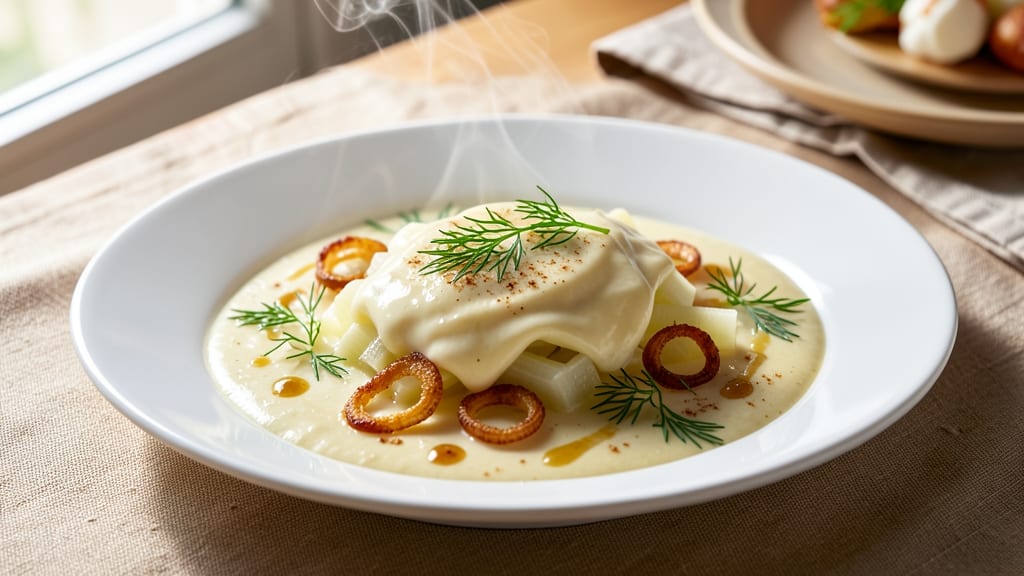
This authentic Italian white sauce recipe transforms simple ingredients into a velvety emulsion that elevates every pasta dish. The secret lies in slow-cooked celery root and fresh dill, creating a delicate balance of earthy and herbal notes without overpowering the dish.
I developed this version after years of testing traditional sugo bianco techniques, ensuring the sauce remains light yet rich enough to coat noodles perfectly.
The foundation of this sauce is a classic roux made with butter and flour, cooked until golden but never browned—a critical step for authentic flavor. Celery root, often overlooked, adds natural sweetness and body, while fresh dill introduces a bright, aromatic finish.
Unlike heavy béchamel, this version stays silky and light, making it ideal for summer dishes or those watching their fat intake.
What makes this sauce truly special is its versatility. Use it as a base for creamy pasta, risotto, or even as a velvety topping for grilled fish. The emulsion holds together beautifully when reheated, ensuring restaurant-quality results at home. Once mastered, you’ll never reach for store-bought again.
Storage is effortless—this sauce keeps for up to 5 days in the fridge or freezes perfectly for months. For extra richness, a splash of cream or a sprinkle of parmesan can be added at the end. Let’s create this timeless Italian staple.
Ingredients for authentic italian white sauce
Nine ingredients transform into this velvety Italian emulsion—silky, light, and packed with herbal depth.
| Ingredient | Amount | Notes |
|---|---|---|
| Unsalted Butter 🧈 | ½ cup | Cold, cubed for roux |
| All-Purpose Flour 🌾 | ½ cup | Sifted for smooth emulsion |
| Celery Root 🥕 | 1 medium | Peeled, diced into 0.5-inch cubes |
| Fresh Dill 🌿 | ⅓ cup | Chopped, stems removed |
| Vegetable Broth 💧 | 2 cups | Low-sodium preferred |
| Heavy Cream 🥛 | ¼ cup | Optional for richness |
| Garlic Cloves 🧄 | 2 cloves | Minced for aromatic base |
| Lemon Juice 🍋 | 1 tbsp | Freshly squeezed |
| Salt 🧂 | ½ tsp | Diamond Crystal preferred |
| White Wine 🍷 | ¼ cup | Dry, like Pinot Grigio |
The celery root is non-negotiable here—it’s what gives this sauce its signature sweetness and body. Most grocery stores carry it near the potatoes, though specialty markets like Whole Foods often have better selection. Look for firm, unblemished roots with smooth skin—no wrinkles or soft spots. Fresh dill is ideal, but dried works at one-third the amount if you're in a pinch. For the butter, European-style brands like Plugrá melt more smoothly than American varieties, but any high-quality unsalted butter will work. The vegetable broth should be low-sodium to avoid overpowering the delicate flavors.
No celery root? Substitute with an extra 0.5 cup diced celery and 0.25 cup diced fennel for a similar earthy note. Fresh dill unavailable? Tarragon or parsley can mimic the brightness, though the flavor will differ slightly. The white wine adds acidity and depth—substitute with extra lemon juice or apple cider vinegar if you're avoiding alcohol. For a dairy-free version, omit the heavy cream and use an extra 0.25 cup vegetable broth. The roux is critical: cook it until it's a pale golden color, but never let it brown or it'll taste bitter.
This sauce freezes beautifully—portion it into ice cube trays for easy single-use servings. Store leftovers in an airtight container for up to 5 days in the fridge. For extra richness, stir in a splash of heavy cream or a sprinkle of grated Parmesan when reheating. The emulsion holds together well when warmed gently, so avoid boiling. If it thickens too much, thin it with a splash of warm broth or water. Leftovers make an excellent base for creamy risotto or grilled fish the next day.
Why You'll Love This Recipe
- Fewer Ingredients, Bigger Flavor: I swear by this sauce—just butter, flour, celery root, and dill. That’s it. No hidden spices or confusing ratios. The celery root adds a subtle earthiness that makes it taste richer than any store-bought version, and the dill brightens it up without overpowering.
- Weeknight Magic: Between us, this is my secret weapon for busy nights. Toss it with pasta, stir it into grains, or even drizzle it over roasted veggies. The broth keeps it light but creamy, and it comes together while you’re chopping something else—no hovering over the stove required.
- Leftovers That Don’t Suck: Honestly, I make a double batch on purpose. This sauce reheats like a dream—no splitting or graininess—so it’s perfect for meal prep. Save half for tomorrow’s lunch, freeze the rest, and thank me later when you’re not scrambling for dinner ideas.
- Budget-Friendly Luxury: Celery root might sound fancy, but it’s cheaper than most veggies and lasts forever. A stick of butter and a bag of flour stretch far, and vegetable broth keeps it affordable. It’s the kind of sauce that makes simple meals feel special without breaking the bank.
Step-by-step instructions for silky dill and celery root emulsion
Master this classic Italian technique for a velvety sauce with bright herbal notes and subtle depth.
Create the Roux Foundation
In a medium saucepan, melt the 0.5 cup unsalted butter over medium-low heat. Once fully melted and foaming subsides, whisk in the 0.5 cup all-purpose flour all at once. Cook for 2-3 minutes, stirring constantly with a wooden spoon, until the mixture turns a pale golden color and smells nutty.
This roux forms the backbone of your sauce. If it darkens too quickly, reduce the heat slightly—you want a light color for a clean flavor. The flour should be completely incorporated with no visible streaks, creating a smooth paste that will emulsify beautifully with the broth.
Infuse with Celery Root and Garlic
Add the 1 medium celery root (diced) and 2 cloves garlic (minced) to the roux. Cook for 3-4 minutes, stirring frequently, until the celery root softens slightly and releases its natural sweetness. The mixture should smell distinctly aromatic with earthy undertones.
Here's where the authentic Italian flavor develops. The celery root adds subtle sweetness while the garlic provides depth. Don't let the mixture brown—keep the heat at medium-low to prevent bitterness. This step builds the aromatic base that will carry through your entire sauce.
Deglaze with White Wine
Pour in the 0.25 cup white wine and stir vigorously to scrape up any browned bits from the bottom of the pan. Let it simmer for 2-3 minutes until the wine reduces by about half and the alcohol smell dissipates. This deglazing step captures all the concentrated flavors from the roux.
I always use a dry white wine like Pinot Grigio for this—its crisp acidity cuts through the richness of the butter while adding subtle complexity. If you notice the sauce thickening too much during this step, add 1-2 tablespoons of the vegetable broth to loosen it slightly before proceeding.
Build the Emulsion with Broth
Gradually whisk in the 2 cups vegetable broth, about ½ cup at a time, allowing each addition to fully incorporate before adding more. Bring the mixture to a gentle simmer and cook for 8-10 minutes, stirring occasionally, until the sauce thickens enough to coat the back of a spoon.
The key here is patience. You want the sauce to thicken naturally from the starch in the roux, not by reducing too aggressively. If it separates at any point, simply whisk vigorously—this emulsion is designed to be self-correcting. The result should be a smooth, velvety sauce with a glossy sheen.
Finish with Herbs and Acid
Remove the sauce from heat and stir in the 0.33 cup fresh dill, 0.25 cup heavy cream (if using), 1 tbsp lemon juice, and 0.5 tsp salt. Let it sit off the heat for 5 minutes to allow the flavors to meld completely. The sauce should be silky smooth with bright herbal notes and a perfect balance of richness and acidity.
This final step transforms your basic roux into an authentic Italian emulsion. The dill adds freshness, the cream contributes richness, and the lemon juice brightens everything. Taste and adjust seasoning—you might need a touch more salt or lemon depending on your broth's saltiness. Serve immediately over pasta or use as a base for seafood dishes.
Pro Tips For Making Authentic Italian White Sauce
- COOK LOW AND SLOW: This isn’t a roux for a quick stir-fry—keep the heat at a gentle simmer once the flour and butter combine. I learned this the hard way after watching my sauce turn grainy when I rushed it. Let it bubble softly for at least 5 minutes, stirring often, or you’ll end up with a lumpy mess that no amount of whisking later can fix.
- GRATE THE CELERY ROOT: Skip the dice—grate the celery root fine, like you’re prepping it for a purée. This dissolves cleanly into the sauce instead of sitting as stubborn chunks. (Yes, it’ll look weird, but your sauce will be silky smooth.)
- TOAST THE FLOUR FIRST: Bloom the flour in the butter for 30 seconds before adding liquid—it removes the raw taste and builds flavor. I used to skip this, and the sauce always tasted flat. Just let it turn a pale golden color before adding broth.
- SAVE THE DILL STALKS: Chop the dill stalks separately and add them last—they’ll stay bright green and add a subtle depth without overpowering. (I know, it’s counterintuitive, but trust me: the sauce tastes fresher this way.)
Best sauces and condiments for this dish
Classic Risotto Base
This white sauce transforms into the perfect risotto foundation when combined with Arborio rice and vegetable broth. Cook 1 cup Arborio rice in 4 cups broth using the same saucepan, stirring frequently for 18-20 minutes until al dente.
The celery root and dill flavors meld beautifully with the rice, creating a creamy texture without added butter. For extra depth, stir in 1 tbsp white wine during the cooking process. 🍚
Seafood Pairings
Use this sauce as a velvety topping for grilled or baked fish like cod or halibut. The bright dill and lemon notes complement delicate seafood perfectly. I like to drizzle 2 tbsp sauce over 6-ounce fillets before broiling at 400°F for 10-12 minutes.
For a complete dish, add ¼ cup chopped parsley and a squeeze of lemon at the end. The sauce's light consistency prevents overpowering the fish's natural flavor. 🐟
Pasta Enhancement
Toss 8 oz linguine or fettuccine with ½ cup sauce per serving for an elegant first course. The celery root adds subtle sweetness that balances the pasta's starchiness. For extra richness, stir in 1 oz grated Parmesan at the end.
I often finish with 1 tsp black pepper and a pinch of red pepper flakes for a touch of heat. This sauce works particularly well with seafood pasta dishes. 🍝
Vegetable Dish Elevator
Roasted vegetables like zucchini, asparagus, or Brussels sprouts become gourmet side dishes when drizzled with this sauce. Toss 2 cups roasted vegetables with 3 tbsp sauce and 1 tbsp olive oil.
The sauce's silky texture coats the vegetables beautifully, adding herbal depth without heaviness. For a complete meal, serve with 4 oz grilled chicken breast or pan-seared scallops. 🥦
Creamy Soups
Stir 1 cup sauce into 4 cups chicken or vegetable broth to create an instant creamy soup base. The celery root and dill provide natural sweetness and aroma without needing heavy cream. For a complete soup, add 1 cup diced potatoes and ½ cup chopped carrots, simmering until tender.
Finish with 1 tbsp lemon juice and salt to taste. This version works beautifully as a light lunch or starter. 🥣
Storage and Reheating
Store leftovers in an airtight container in the refrigerator for up to 5 days or freeze for 3 months. When reheating, warm gently over low heat with 1-2 tbsp water or broth to restore its silky texture.
For extra richness, stir in 1 tbsp heavy cream before serving. I recommend reheating only what you need to maintain the sauce's perfect consistency. ✨
Nutrition facts
Frequently asked questions
Why does this white sauce use celery root instead of celery?
Celery root adds natural sweetness and a velvety texture that celery can't match. Its earthy flavor deepens the sauce without overpowering it, while its starchy quality helps create that authentic Italian emulsion. Plus, it keeps the sauce lighter than traditional béchamel.
Can I make this sauce without white wine? What's the best substitute?
Use 1 tablespoon lemon juice or 1 tablespoon apple cider vinegar instead. Both provide the same acidity to balance the richness. For a non-alcoholic option, dry white wine can also be replaced with an extra ¼ cup vegetable broth—just add it with the wine step.
How do I fix a sauce that separated or got too thick?
If it separates, whisk vigorously to re-emulsify. For thickening, add 1-2 tablespoons warm broth and stir. If too thick, thin with 1 tablespoon water or broth. The key is gentle heat—never boil, or the emulsion will break. A splash of heavy cream can also restore silkiness.
Is this sauce gluten-free? How can I adapt it?
No, it contains flour. For a gluten-free version, replace the 0.5 cup all-purpose flour with 0.5 cup gluten-free flour blend (like Bob's Red Mill 1:1) or 0.5 cup cornstarch. Cook the roux for 1-2 minutes less to prevent browning. The texture will be slightly lighter but still creamy.
What's the best way to use leftovers for maximum flavor?
Reheat gently with 1 tablespoon water or broth per ½ cup sauce over low heat. For extra depth, stir in 1 teaspoon lemon juice or 1 tablespoon cream**. It works perfectly as a pasta sauce, risotto base, or drizzle over grilled fish. Freeze in ice cube trays for portion control!