
Sauces & Condiments
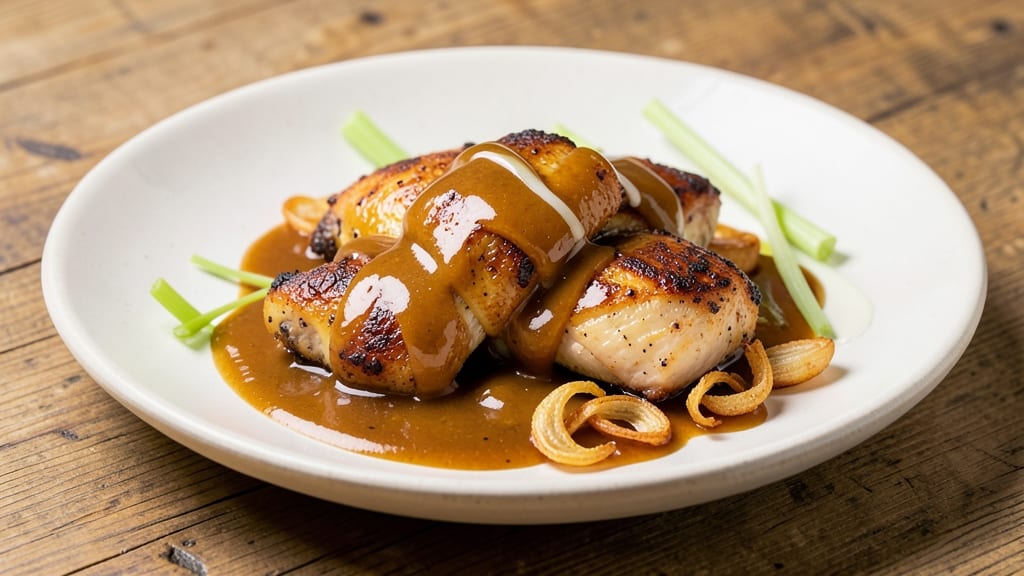
This au sauce recipe transforms simple ingredients into a velvety, celery-infused masterpiece with a subtle vinegar zing that elevates everything it touches. The foundation is a classic roux—equal parts butter and flour cooked to a rich, nutty brown—that forms the backbone of this timeless sauce.
What sets this version apart is the celery infusion, which adds depth without overpowering the delicate balance of cream, stock, and vinegar.
The process is methodical but straightforward: begin with the roux, then gradually whisk in warm stock to create a smooth emulsion. A splash of vinegar brightens the sauce, while a touch of Dijon mustard adds subtle complexity.
The result is a sauce that's rich yet refined, with just enough acidity to cut through richness and enhance flavors rather than overpower them.
Perfect for finishing roasted meats, drizzling over creamy pasta, or spooning alongside steamed vegetables, this au sauce delivers professional-quality results at home. The silky texture and balanced flavors make it a versatile addition to any meal, whether you're serving a special dinner or weeknight comfort food.
For added depth, consider infusing the stock with herbs or wine, or swap the celery for shallots for a different flavor profile. The possibilities are endless, but the core technique remains the same—build the roux, emulsify carefully, and finish with precision. This is sauce-making at its finest.
Ingredients for au sauce
Nine ingredients create a velvety, celery-infused masterpiece with refined depth and subtle acidity.
| Ingredient | Amount | Notes |
|---|---|---|
| Unsalted Butter 🧈 | ½ cup | Cold, cut into small cubes |
| All-Purpose Flour 🌾 | ½ cup | Sifted, Diamond Crystal preferred |
| Celery Stems 🧅 | 1 cup | Finely chopped, fresh preferred |
| Heavy Cream 🥛 | 1 cup | Full-fat for optimal richness |
| Chicken Stock 💧 | 2 cups | Homemade or high-quality store-bought |
| White Wine Vinegar 🍶 | 1 tbsp | Apple cider vinegar alternative |
| Dijon Mustard 🌿 | 1 tsp | Mild variety for subtle flavor |
| Salt 🧂 | ½ tsp | Diamond Crystal kosher salt |
| Black Pepper 🌶️ | ¼ tsp | Freshly ground for best flavor |
| Fresh Parsley 🌿 | 2 tbsp | Chopped, for garnish |
The butter and flour form the essential roux—cold butter prevents burning, while Diamond Crystal flour creates a smoother emulsion. For celery, fresh stems yield the best flavor, though frozen works in a pinch. High-quality chicken stock elevates the sauce, so avoid low-sodium or overly processed varieties. Whole Foods or Trader Joe's carry excellent options if you prefer convenience. The vinegar should be white wine vinegar for classic au sauce, though apple cider adds a fruity twist.
No heavy cream? Full-fat coconut milk replicates the richness, though texture may vary slightly. Substitute Dijon mustard with whole-grain mustard for a milder profile. Fresh parsley can be swapped for dried parsley at one-third the amount, though fresh garnishes better. For a deeper flavor, infuse the stock with a bay leaf and thyme while warming. The celery can be blanched and puréed for a smoother texture if preferred, though chopped celery adds delightful texture contrast.
Store in an airtight container with a thin layer of olive oil on top to preserve freshness for up to 5 days in the fridge. Freezes beautifully for 3 months—portion into ice cube trays for single-use servings. Reheat gently over low heat, whisking continuously to restore silky texture. Double the batch for meal prep; this sauce enhances roasted meats, pasta, and vegetables equally.
Why You'll Love This Recipe
- Pantry-Friendly Magic: I swear by this sauce because it uses exactly what I always have—no special trips to the store. Butter, flour, celery (even the scraps work), cream, and stock? That’s it. The roux builds flavor faster than you can say "dinner’s ready," and honestly? It’s the kind of recipe that makes me feel like a chef without the fuss.
- Velvet Smooth Richness: Here’s what sold me—the way the heavy cream and butter melt into that roux until it’s dangerously velvety. The celery adds this subtle, earthy depth that balances the creaminess, and the chicken stock? It’s the secret that keeps it from tasting too heavy. One spoonful and I’m hooked—no exaggeration.
- Weeknight to Holiday: Between us, this sauce is my go-to for everything from dumping over roasted chicken to drizzling on mashed potatoes. Need a last-minute dinner? Toss it with pasta. Hosting Thanksgiving? It’s the star of the gravy boat. I’ve even used it in casseroles—it’s that versatile, and it never lets me down.
- Leftovers That Taste Better: The best part? This sauce improves the next day. The flavors marry overnight, and reheating it is a breeze—just a splash of stock or cream to loosen it up. I make a double batch on Sundays because it stretches across lunches, dinners, and even sandwiches. Budget-friendly? Absolutely. Waste-free? Even better.
Step-by-step instructions for silky celery-infused cream sauce
This velvety sauce delivers restaurant-quality depth with celery's earthy notes and vinegar's bright contrast.
Create the Roux Foundation
In a medium saucepan, melt the 0.5 cup unsalted butter over medium heat. Once fully melted and foaming subsides, immediately whisk in the 0.5 cup all-purpose flour using a wire whisk. Cook for 1-2 minutes until the mixture turns a pale golden color—this is your roux, and it should smell nutty and toasted.
This step is critical: the roux forms the thickening base of your sauce. Watch carefully—if it darkens too quickly, reduce the heat slightly. You're aiming for a light, blond roux that will blend seamlessly into the sauce without adding bitterness. The celery stems will join next, so don't let the roux cook beyond this point.
Infuse the Celery and Deglaze
Add the 1 cup finely chopped celery stems to the roux and stir constantly for 2-3 minutes until the celery softens and releases its aromatic oils. This infusion is what gives the sauce its signature depth. Next, pour in the 2 cups chicken stock all at once, whisking vigorously to prevent lumps from forming.
Bring the mixture to a gentle simmer over medium-low heat, then reduce heat to maintain a steady bubble. Let it cook uncovered for 8-10 minutes, stirring occasionally, until the sauce thickens enough to coat the back of a spoon. This simmering process allows the celery's flavors to meld completely with the stock.
Build the Creamy Base
Lower the heat to low and gradually whisk in the 1 cup heavy cream in a slow, steady stream. The sauce will thicken noticeably as the cream incorporates. Stir in the 1 tbsp white wine vinegar, 1 tsp Dijon mustard, 0.5 tsp salt, and 0.25 tsp black pepper, ensuring everything is fully combined.
Continue simmering for another 5-7 minutes until the sauce reaches your desired consistency—it should coat a spoon but still flow smoothly. Here's where the vinegar works its magic: it brightens the flavors without overpowering the celery's earthiness. Taste and adjust seasoning if needed, remembering that the parsley garnish will add freshness later.
Finish and Garnish
Remove the sauce from heat and let it rest for 2-3 minutes to allow the flavors to settle. This resting period is crucial for developing the sauce's final texture and depth. Before serving, stir in the 2 tbsp chopped fresh parsley, which adds a vibrant contrast to the rich, creamy base.
The sauce should now be silky smooth with a velvety finish. If it's too thick, thin with a splash of warm chicken stock. For optimal results, serve immediately over grilled meats, fish, or crusty bread. This sauce keeps well in the refrigerator for up to 3 days, though it's best enjoyed fresh when its flavors are at their peak.
Pro Tips For Making Au Sauce
- Cook the roux low and slow: I learned this the hard way—blasting that butter and flour on high turns it into glue. Keep the heat at a gentle simmer (you should see tiny bubbles, not brown specks) for at least 5 minutes. This builds flavor without burning, and your sauce won’t taste like flour paste.
- Sweat the celery first: Don’t just toss chopped celery into the pot raw—it’ll turn mushy and bitter. Instead, melt the butter, add the celery, and cook it for 3-4 minutes until just softened and fragrant. This step keeps the sauce from getting grainy.
- Temper the cream carefully: Pouring cold heavy cream into a hot roux? That’s a fast track to scrambled sauce. Warm the cream separately until it’s just steaming, then whisk it in slowly. Your sauce will thicken smoothly instead of curdling like a science experiment gone wrong.
- Season in layers, not all at once: Salt the stock and cream as you go—add half the salt with the stock, the rest after the cream comes in. Taste as you build the sauce, adjusting gradually. Dumping all the salt at once makes it impossible to fix if you overdo it (and trust me, you will).
Regional styles of this au sauce
Classic French Au Sauce
The original au sauce, or sauce au beurre, is a rich, velvety brown sauce traditionally made with a roux, stock, and butter. In classic French cuisine, this sauce often incorporates meat drippings from roasted poultry or veal, creating a deep, savory flavor.
The key is achieving a perfect blond roux—cooked just until it smells nutty but not browned. French chefs often finish with a touch of cognac or white wine to brighten the sauce before adding cream. 🥖
British Parsnip Sauce
In British cuisine, au sauce takes on a sweeter, root vegetable twist with parsnip purée replacing celery. The sauce is often thickened with butter and flour, then finished with a splash of lemon juice or white wine vinegar for acidity.
This version pairs beautifully with roasted lamb or beef, offering a subtle sweetness that balances rich meats. I’ve made this with homemade parsnip purée for a smoother texture, but canned works in a pinch.
German Celery Root Variation
German Kartoffelpüree (mashed potatoes) meets au sauce in this hearty adaptation, where celeriac (celery root) is puréed and folded into the sauce. The Germans often use sour cream instead of heavy cream for a tangier finish, and finish with fresh dill for a bright herbal note.
This version is perfect for serving with roast pork or sausages, offering a creamy, earthy contrast. The celeriac adds a subtle nuttiness that deepens the sauce’s complexity.
Italian Creamy Celery Sauce
Italian cooks often transform au sauce into a lighter, herb-infused sauce by adding fresh basil or parsley at the end. The Italians might also incorporate grated Parmesan into the roux for a cheesy depth, creating a sauce that’s richer without being heavy.
This version is ideal for drizzling over pasta with chicken or grilled vegetables. The Italians also love to finish with a sprinkle of black pepper and a pinch of nutmeg for warmth.
Modern Fusion Twist
For a contemporary take, try infusing the stock with smoked paprika or liquid smoke for a smoky depth, then finish with a drizzle of honey to balance the richness. This fusion version works wonderfully with grilled steak or roasted squash.
I’ve also experimented with adding miso paste for umami, creating a sauce that bridges Japanese and French techniques. The possibilities are endless—just keep the core roux and emulsification techniques intact! 🌟
Nutrition facts
Frequently asked questions
Can I substitute heavy cream with something lighter?
Yes! For a lighter version, replace the heavy cream with 1 cup whole milk combined with 1 tablespoon cornstarch (mixed into a slurry). Simmer for an extra 2-3 minutes to thicken properly. The texture will be slightly thinner but still rich. For a dairy-free option, use 1 cup full-fat coconut milk—just whisk in the cornstarch slurry first to prevent curdling.
What's the secret to getting the perfect blond roux?
Patience and attention are key! Cook the butter and flour over medium heat on a smooth, flat-bottomed pan. Stir constantly with a wire whisk to prevent burning—aim for a color between pale yellow and light tan (1-2 minutes max). If it darkens too quickly, reduce the heat slightly. The roux should smell nutty, not burnt, and coat the back of a spoon when done.
Can I make this sauce ahead of time?
This sauce actually tastes better the next day as flavors meld. Store in an airtight container with a thin layer of olive oil on top to preserve freshness. Reheat gently over low heat, whisking constantly to restore its silky texture. For longer storage, freeze in ice cube trays—thaw and reheat as needed. The sauce keeps for 5 days in the fridge or 3 months in the freezer.
What are the best dishes to serve with this celery-infused sauce?
This versatile sauce elevates everything! Try it over roasted chicken or duck breast, drizzled on creamy pasta, or spooned alongside steamed asparagus. It also works beautifully with fish fillets (like cod or halibut) or even as a dip for crusty bread. For a modern twist, use it as a glaze for grilled vegetables or as a topping for mashed potatoes. The celery infusion adds depth to any dish!
Why did my sauce turn grainy or separate?
This usually happens from one of three issues: adding cold liquids too quickly, overcooking the roux, or not whisking enough when incorporating the cream. To fix it, whisk vigorously while reheating over low heat—the sauce should smooth out as it warms. For prevention, always whisk in the cream and stock gradually, and keep heat at medium-low. If it still separates, stir in 1 teaspoon cornstarch mixed with 1 tablespoon cold water to restore thickness.