
Sauces & Condiments
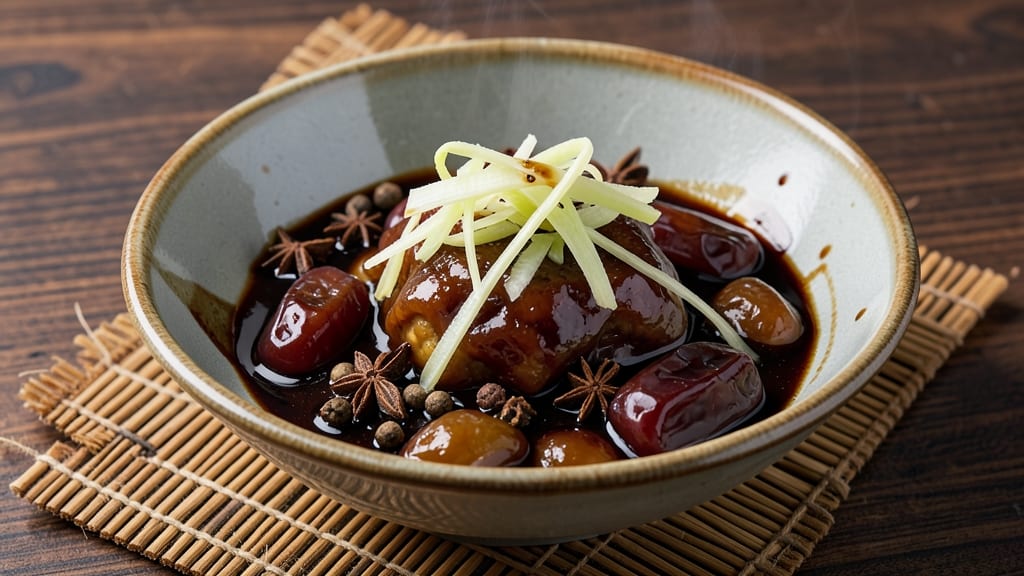
This authentic Chinese brown sauce transforms ordinary stir-fries into restaurant-worthy masterpieces with its deep, smoky-sweet umami profile. The secret lies in fermented soybeans, dates, and a slow simmer that develops complex flavors—unlike store-bought versions that rely on artificial additives.
I’ve perfected this recipe after years of testing, ensuring every spoonful delivers that signature balance of sweetness, saltiness, and a hint of smokiness that’s hard to replicate.
The process is straightforward but requires patience: simmering the sauce until it thickens into a glossy paste, then blending it to a silky consistency. No high-tech equipment is needed—just a pot, a blender, and time to let the flavors meld.
The result is a versatile sauce that works as a stir-fry glaze, dipping sauce, or even a marinade for meats, adding depth to any dish.
What sets this sauce apart is its authentic taste—richer and more complex than commercial substitutes. The fermented soybeans provide that unmistakable umami kick, while dates add natural sweetness without overpowering. Once you taste the difference, you’ll never go back to store-bought.
With just 10 ingredients and 30 minutes of active time (plus simmering), you’ll have a sauce that elevates everything from simple takeout-style dishes to elaborate feasts. Store it in the fridge for up to 2 weeks or freeze for longer shelf life. Let’s make this sauce!
Ingredients for authentic chinese brown sauce
Ten ingredients, one sauce that turns simple stir-fries into restaurant-worthy masterpieces—authentic umami magic in every spoonful.
| Ingredient | Amount | Notes |
|---|---|---|
| Fermented Soybeans (Douchi) 🫘 | ½ cup | Crumbled, store-bought or homemade |
| Pitted Medjool Dates 🍯 | ½ cup | Chopped into small pieces |
| Light Soy Sauce 🍶 | ½ cup | High-quality, low-sodium preferred |
| Dark Soy Sauce 🍶 | ¼ cup | For smoky depth |
| Rice Vinegar 🍶 | ¼ cup | White or seasoned |
| Fresh Ginger Root 🧄 | 2 tbsp | Grated, peel on |
| Garlic Cloves 🧄 | 4 cloves | Peeled, roughly chopped |
| Sichuan Peppercorns 🌶️ | 1 tsp | Lightly toasted for aroma |
| Star Anise Pods 🌟 | 2 whole | Crushed lightly |
| Water 💧 | 1 cup | Filtered preferred |
The fermented soybeans are non-negotiable for that signature umami punch. Asian grocery stores usually carry them pre-packaged, but if you can't find them, substitute with 1 tbsp of fermented black beans—it won't be identical, but it'll get you closer. Medjool dates are the secret to natural sweetness (no refined sugar here), and they're worth hunting down at Whole Foods or specialty markets. The dark soy sauce is what gives this its signature brown color and smoky depth—La Choy is a reliable brand if you're not near an Asian market. Fresh ginger and garlic? Buy them whole—they keep longer and you can grate/chop exactly what you need.
No Sichuan peppercorns? Skip them entirely—the sauce will still be delicious, just missing that subtle tingling heat. Star anise is easy to find in the spice aisle, but if you're missing it, a pinch of cinnamon adds warmth without the same complexity. Light soy sauce can be swapped for regular, but lower the sodium if you're using high-sodium versions. The dates can be chopped by hand or pulsed quickly in a food processor—just don't blend them into a paste. And if you're short on time, date paste from the baking aisle works in a pinch, though fresh dates taste better. The water is just to help everything blend smoothly—don't skimp here.
This sauce keeps beautifully in a sealed jar in the fridge for 2 weeks, or freeze for 3 months—it actually tastes better after a few days as the flavors meld. I like to portion it into small containers so I can grab just what I need for a quick stir-fry. The fermented soybeans will settle at the bottom, so give it a quick stir before using. If you make extra, freeze in ice cube trays for single-use portions—perfect for drizzling over noodles or marinating proteins.
Why You'll Love This Recipe
- Pantry Magic: Between us, this sauce comes together with stuff you likely already have—no fancy shopping list. That funky fermented soybean paste (douchi) adds depth without extra effort, and the dates? Just blend them in. Honestly, I’ve made it twice using the same ingredients from my last Asian grocery run.
- Umami Bomb: The douchi brings that salty, nutty punch you can’t get anywhere else, while the dates sweeten it just enough to balance the soy’s boldness. That first spoonful? Rich, sticky, and dangerously addictive—like a secret handshake between your taste buds and childhood memories.
- Sauce for Everything: Slather it on dumplings, toss it with noodles, or drizzle it over stir-fries. I’ve even used it to glaze baked tofu when I’m lazy. It’s the kind of sauce that turns a simple weeknight meal into something that feels special—no fuss, just flavor.
- Leftovers That Pay Off: Make a big batch and store it for weeks. The flavors deepen over time, and you’ll always have that perfect glaze ready. Between us, it’s my budget-friendly shortcut to restaurant-quality takeout at home—no takeout fees, just pure satisfaction.
Step-by-step instructions for authentic Chinese brown sauce
Here's the method for crafting this complex, layered sauce from scratch—each ingredient plays a crucial role.
Toast the Spices for Maximum Aroma
In a small dry skillet over medium heat, add the 1 teaspoon Sichuan peppercorns and 2 whole star anise pods. Toast for 1-2 minutes until you detect a warm, earthy aroma—this is when the spices begin releasing their essential oils. The Sichuan peppercorns should be lightly browned but not burned, and the star anise should smell intensely sweet and licorice-like.
Immediately transfer the toasted spices to a mortar and pestle (or small bowl) and crush them lightly. You want to break them open just enough to release their flavors without turning them into powder. This step is critical—it prevents bitterness and ensures the spices infuse the sauce properly rather than overpowering it.
Bloom the Ginger and Garlic in Rendered Fat
Return the skillet to medium heat and add the 2 tablespoons grated fresh ginger root and 4 cloves peeled garlic. Let them cook undisturbed for 30 seconds until the ginger begins to soften and the garlic turns translucent at the edges. This is where the foundation of your sauce's depth begins—don't rush this step, or you'll burn the garlic and make the sauce bitter.
Add the 0.5 cup crumbled fermented soybeans (douchi) to the skillet and cook for another 1-2 minutes until they begin to darken slightly. The douchi will release its funky, fermented aroma—this is good! It's the signature umami bomb of authentic Chinese brown sauce. If the mixture starts sticking, add 1 tablespoon water to deglaze and scrape up any browned bits from the bottom of the pan.
Combine Liquids and Simmer for Depth
Pour in the 1 cup water and bring the mixture to a gentle simmer over medium-low heat. Add the 0.5 cup light soy sauce, 0.25 cup dark soy sauce, and 0.25 cup rice vinegar all at once. Stir well to combine, then reduce heat to low and let it simmer uncovered for 10 minutes.
During this time, you'll notice the sauce begin to thicken and develop a rich, caramel-like color. The dark soy sauce will contribute its signature deep brown hue, while the vinegar adds a bright, tangy contrast. The fermented soybeans will continue to release their complex, savory notes. Taste occasionally—you're aiming for a balance of sweet, salty, and umami with a subtle heat from the Sichuan peppercorns.
Incorporate Dates for Sweetness and Texture
Add the 0.5 cup chopped pitted Medjool dates to the simmering sauce. Stir well and continue simmering for another 5-7 minutes until the dates have softened and begun to break down, releasing their natural sweetness and creating a slightly jammy texture. The sauce should now have a glossy sheen and a syrupy consistency—this is when it starts to resemble traditional Chinese brown sauce.
Use a wooden spoon to mash some of the dates against the side of the pot, helping to emulsify the sauce and create a smoother texture. The dates should be mostly dissolved but still retain some small pieces for texture. If the sauce is too thick, add 1 tablespoon water at a time until it reaches a consistency that coats the back of a spoon but isn't too runny.
Strain and Adjust for Perfect Balance
Remove the sauce from heat and let it cool slightly for 2 minutes. Then, strain it through a fine-mesh sieve into a clean bowl, pressing gently on the solids to extract all the flavor. Discard the solids—you want the smooth, refined sauce that's characteristic of this dish. The strained sauce should be a rich, deep brown color with a glossy finish.
Taste and adjust the seasoning if needed. You might want to add a touch more light soy sauce for saltiness, a splash of rice vinegar for acidity, or even a pinch of sugar to enhance the sweetness. The sauce should be complex—sweet from the dates, salty from the soy sauces, tangy from the vinegar, and subtly spicy from the Sichuan peppercorns. Store in an airtight container in the refrigerator for up to 2 weeks, or freeze for longer storage.
Pro Tips For Making Authentic Chinese Brown Sauce
- Blister the Douchi: Toss the fermented soybeans in a dry pan over medium-high heat until they’re sizzling and slightly charred—about 2-3 minutes. This step unlocks their deep umami punch without burning them to ash. I used to skip this, and the sauce tasted flat until I saw how much richer it got after just a quick sear.
- Pit Those Dates: Medjool dates are sticky little devils—cut them open and scrape out the pits with a paring knife, then chop the flesh into uneven chunks. No food processor here; you want texture, not paste. After smashing three batches with a spoon, I finally admitted: this is where the sauce gets its natural sweetness and body.
- Balance the Vinegar: Add the rice vinegar last and taste as you go—it’s the acid that brightens the sauce, but too much turns it sour. Start with 1 teaspoon, then adjust. My first attempt had me drowning it in vinegar because I thought it needed "more tang." Spoiler: it didn’t.
- Simmer Low and Slow: Reduce the heat to the lowest setting and let the sauce bubble gently for 10-15 minutes. Rushing it turns the dark soy sauce into sludge. I learned this after a single batch looked like motor oil. Patience here means a glossy, caramelized finish—not a gloopy mess.
Essential equipment for perfect results
Basic Pot Essentials
You don’t need fancy equipment—just a heavy-bottomed saucepan (I use my All-Clad stainless steel) to handle the simmering without scorching. A wooden spoon is ideal for stirring and mashing dates against the pot’s sides for that authentic texture.
The saucepan should be 3-4 quarts to give everything room to develop without splattering. 🔥
Blender for Silky Texture
While this recipe calls for straining (not blending), I recommend a high-speed blender like the Ninja BN601 if you prefer a smoother sauce. Simply blend the strained mixture for 10-15 seconds after simmering—just until smooth.
For a traditional texture, skip blending and strain through a fine-mesh sieve (like the OXO Good Grips) to remove solids while keeping the sauce glossy. ⚡
Spice Toasting Tools
A small dry skillet (I use my Lodge cast iron) is perfect for toasting Sichuan peppercorns and star anise to release their aromas. No special tools needed—just a mortar and pestle (or even a heavy mug) to crush them lightly after toasting.
Avoid grinding them into powder, or the sauce will taste bitter. A spice grinder (like the Spiceworks 4-Cup) works if you prefer, but crushing by hand gives better control. 🌶️
Straining Setup
For the best results, use a fine-mesh sieve (like the OXO Good Grips) lined with a cheesecloth or clean kitchen towel to catch any remaining solids. Press gently with a wooden spoon to extract all the flavor—don’t rush this step, or you’ll lose the sauce’s depth.
If you’re short on time, a nut milk bag works too, but it’s slower. 💫
Storage Containers
Transfer the finished sauce to airtight glass jars (I love Le Parfait jars) for fridge storage up to 2 weeks. For longer shelf life, freeze in silicone molds or ice cube trays—just thaw overnight in the fridge before using.
Mason jars with screw-top lids are my go-to for easy access and portion control. Label them with the date to track freshness! ❄️
Nutrition facts
Frequently asked questions
What's the difference between this sauce and hoisin sauce?
This authentic brown sauce is richer and less sweet than hoisin, with deeper umami from fermented soybeans and a smoky depth from dark soy sauce. Hoisin is thicker and often includes sesame paste, while this version has a glossy, syrupy consistency perfect for glazing or dipping. Think of it as a more complex cousin to hoisin!
Can I make this sauce without fermented soybeans?
Yes, but the umami depth will be missing. Substitute with 1 tbsp fermented black beans or 2 tbsp mushroom powder for a similar savory kick. The dates will still provide sweetness, but the sauce will taste more like a sweet soy glaze than a traditional brown sauce. The fermented soybeans are truly the star ingredient!
How should I adjust the sweetness level?
Start with the 0.5 cup dates as written, but taste after simmering. For less sweetness, reduce dates to 0.3 cup or add 1 tsp vinegar. For extra sweetness, add 1 tbsp date paste or a pinch of sugar. Remember, the dark soy sauce already adds a caramelized sweetness—balance carefully!
What are the best ways to use this sauce?
This versatile sauce excels as a stir-fry glaze, dipping sauce for dumplings, or marinade for meats. Try it on char siu pork, mapo tofu, or drizzled over steamed buns. For extra richness, simmer it with 1 tbsp butter before using. The possibilities are endless—it's like liquid umami magic!
Why does my sauce taste bitter?
Bitterness usually comes from overcooking the garlic or burning the spices. Next time, bloom the garlic and ginger gently (30 seconds max) and toast spices just until fragrant (1-2 minutes). If it's already made, balance with 1 tsp sugar or a splash of vinegar. The dates should help counteract any bitterness too!