
Sauces & Condiments
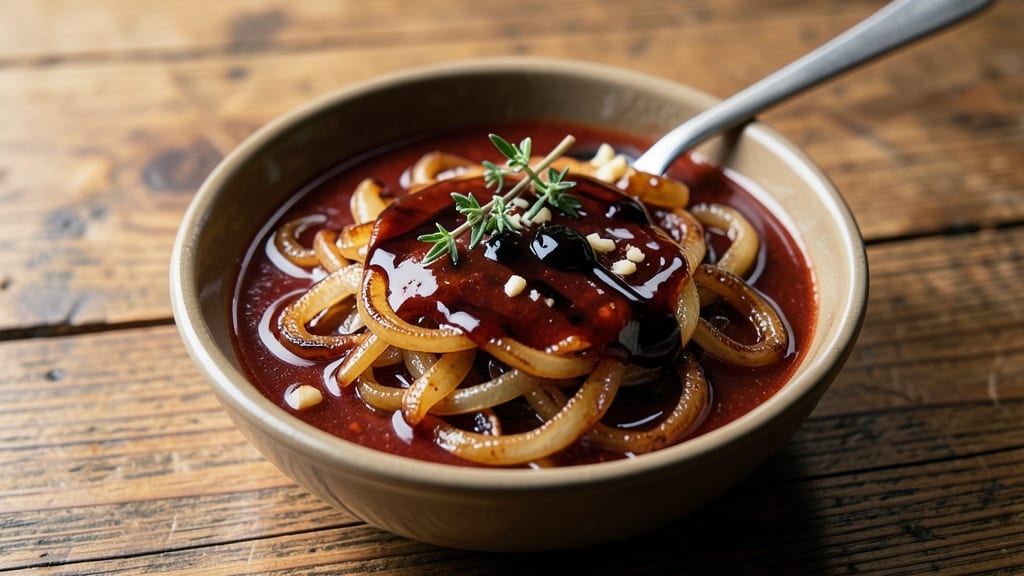
This au jus sauce recipe without drippings delivers restaurant-quality depth using just broth, aromatics, and a few key techniques. The secret lies in caramelizing onions and garlic until they're rich and golden—this builds umami that transforms simple ingredients into something extraordinary. I perfected this method after realizing that even without meat drippings, you can achieve that same velvety, flavor-packed sauce that elevates any protein.
The process is straightforward but precise: simmer the base, reduce it until syrupy, then strain for smoothness. You'll end up with a sauce that's rich enough to coat roasted meats or potatoes, yet light enough to drizzle over grilled vegetables.
The beauty of this recipe is its versatility—it works equally well with beef, pork, or even as a base for mushrooms or tofu dishes.
What makes this sauce truly special is how it develops flavor through reduction. As the liquid reduces, the aromatics concentrate, creating layers of depth that make every bite taste more substantial.
The result is a glossy, aromatic sauce that's perfect for serving immediately or storing for up to a week in the refrigerator.
This method also eliminates the need for messy drippings—no straining meat or dealing with fat separation. Instead, you're working with clean, vibrant flavors that come together in just 30 minutes.
Whether you're prepping for a holiday meal or a simple weeknight dinner, this sauce will become your new go-to for adding professional-level flavor with minimal effort.
Ingredients for au jus sauce recipe without drippings
Eight pantry staples transform into velvety umami sauce with just 30 minutes of caramelized magic.
| Ingredient | Amount | Notes |
|---|---|---|
| Yellow Onions 🧅 | 1 whole | Thinly sliced for even caramelization |
| Garlic Cloves 🧄 | 4 cloves | Minced for aromatic depth |
| Beef Broth 💧 | 4 cups | Low-sodium preferred for balance |
| Red Wine 🍷 | ½ cup | Bold dry red like Cabernet |
| Tomato Paste 🍅 | 1 tbsp | Squeeze tube works perfectly |
| Balsamic Vinegar 🍶 | 1 tbsp | Adds tangy complexity |
| Dijon Mustard 🌶️ | 1 tsp | For subtle depth of flavor |
| Fresh Thyme 🌿 | ¼ cup | Leaves only, finely chopped |
| Olive Oil 🫒 | 2 tbsp | Extra-virgin for richness |
| Salt 🧂 | 1 tsp | Kosher or sea salt |
| Black Pepper 🌶️ | ½ tsp | Freshly ground for heat |
The onions and garlic are where flavor magic happens. Yellow onions work best here—their sweetness caramelizes beautifully. Grab the vidalia or sweet onions if you want extra sweetness, but regular yellows are perfect. For garlic, freshly minced cloves release more flavor than pre-minced. I always use Trader Joe's for their pre-minced garlic in a jar—it's prepped and ready, no chopping. The beef broth? Low-sodium is key unless you're okay with adjusting salt later. Homemade is ideal, but Pacific Foods or Swanson low-sodium cubes work in a pinch.
No red wine? Dry sherry or extra beef broth with a splash of balsamic keeps the depth. Fresh thyme is ideal, but dried at one-third the amount works if that's what you've got. The tomato paste can be that squeeze tube from Trader Joe's—it's perfect for small amounts and lasts forever. Want more richness? Add a splash of soy sauce (just 1 tsp) for umami without overpowering. The Dijon mustard is non-negotiable though—it adds that subtle complexity that separates homemade from store-bought. If you're missing it, whole-grain mustard thinned with a bit of water gets you close.
This sauce tastes even better the next day as flavors meld. Store in an airtight container in the fridge for up to 1 week. For longer storage, freeze in ice cube trays—just pop out what you need. The caramelized onions keep well too, so make a double batch if you're planning to use them again. Reheat gently on the stove, stirring occasionally. If it thickens too much, just add a splash of water or broth. Perfect for drizzling, dipping, or tossing—just don't boil it or it'll break.
Why You'll Love This Recipe
- No Drippings, No Stress: I swear by this method—just onions, garlic, and a splash of red wine simmering in broth. No messy pans, no waiting for meat to render, and honestly, the flavor’s just as rich.
- Wine-Infused Depth: That red wine isn’t just for show—it melts into the tomato paste and broth like a secret weapon. One sip and you’ll forget it’s not drippings; it’s better.
- Weeknight & Potluck Star: Slather it on grilled steak, toss it with roasted potatoes, or serve it alongside sandwiches. Between us, I’ve used this for everything from Taco Tuesday to holiday leftovers—no one ever questions it.
- Budget-Friendly Luxury: You’re getting restaurant-quality richness without the price tag. A bottle of wine, a can of broth, and a few pantry staples stretch to feed four for half the cost of takeout. (Yes, even on a Tuesday night.)
Step-by-step instructions for pan-roasted umami au jus
This method builds rich, deep flavor from scratch without relying on meat drippings.
Develop the Aromatic Base
Heat the 2 tablespoons olive oil in a large skillet over medium heat. Add the 1 whole yellow onions, sliced thinly, and cook for 8-10 minutes until softened and beginning to caramelize at the edges. You'll see the onions transform from pale to golden brown—this is where the sweetness develops.
Push the onions to one side of the pan and add the 4 cloves garlic cloves, minced. Cook for 30 seconds until fragrant—don't let it brown or it'll turn bitter. Here's the thing: you want those garlic cloves to perfume the pan without dominating the flavor.
Build the Flavor Foundation
Stir in the 1 tablespoon tomato paste and cook for 1 minute until it darkens slightly and loses its raw taste. This step forms the base for your sauce's depth. Add the 1 tablespoon balsamic vinegar and 1 teaspoon Dijon mustard, stirring to combine completely.
Pour in the 0.5 cup red wine and let it simmer for 2-3 minutes until reduced by half. This reduction concentrates the wine's flavor and removes the alcohol's sharpness. You're creating a flavorful liquid that will serve as the sauce's backbone.
Develop the Umami Depth
Add the 4 cups beef broth and bring to a gentle simmer. Stir in the 0.25 cup fresh thyme leaves, 1 teaspoon salt, and 0.5 teaspoon black pepper. Let the sauce simmer uncovered for 15-20 minutes until reduced by about one-third—this intensifies the flavors dramatically.
Here's where it gets good: the thyme should be fully infused but not mushy. Taste and adjust seasoning—you might need a bit more salt to balance the acidity from the balsamic. The sauce should coat the back of a spoon with a velvety texture.
Finish and Strain
Remove the pan from heat and let it cool slightly for 2 minutes. Strain the sauce through a fine-mesh sieve into a clean bowl, pressing gently on the solids to extract maximum flavor. This step ensures a silky texture without any herb bits.
Return the strained sauce to the pan and simmer gently for 3-5 minutes to evaporate any excess liquid and achieve your desired consistency. For a glossy finish, stir in an extra 1 teaspoon olive oil. This sauce should be rich enough to coat meat beautifully but still flow freely.
Pro Tips For Making Au Jus Sauce Recipe Without Drippings
- DEGLAZE AGGRESSIVELY: Use a wooden spoon to scrape every last bit of browned bits off the pan—don’t just splash liquid in and stir once. Those bits are pure flavor, and lazy scraping means you’re losing half the depth of your sauce. I used to rush this, and the result was always flat.
- SWEAT THE ONIONS LOW: Turn that heat down to medium-low and cover the pan for 8-10 minutes after adding the onions. You want them translucent, not golden—this stops them from burning while you’re distracted by the garlic or wine. Burnt onions turn your sauce bitter, and no one’s got time for that.
- RED WINE FIRST: Pour the wine in before the tomato paste, then simmer for 3-4 minutes to let the alcohol cook off. Adding it last just means you’re drinking more than your sauce is. My grandmother swore by this, and she was right: the sauce tastes richer, not sharp or boozy.
- STRAIN IT CLEVER: After simmering, strain the sauce through a fine-mesh sieve lined with cheesecloth—don’t just use a regular strainer. This catches all the tiny bits that make the texture silky, not grainy. It’s an extra 30 seconds, but the difference is noticeable, especially if you’re serving it over steak.
Health benefits of this recipe
Rich Umami Boost
This au jus sauce packs a serious umami punch from caramelized onions and garlic, which develop deep, savory flavors during cooking. The tomato paste and red wine add layers of complexity, while the Dijon mustard provides subtle depth that elevates the overall taste profile.
The result is a sauce that feels luxurious without relying on meat drippings—perfect for adding restaurant-quality richness to any dish. 💫
Balanced Flavor Profile
The combination of balsamic vinegar and fresh thyme creates a harmonious balance between tangy and herbal notes. The acidity from the vinegar brightens the sauce, while the thyme adds an earthy aroma that complements the umami base.
This balance makes the sauce versatile enough to pair with everything from roasted meats to grilled vegetables. I've found it works especially well with pan-seared chicken thighs or roasted Brussels sprouts.
Low-Sodium Advantage
Using low-sodium beef broth gives you better control over the final seasoning, making this sauce ideal for heart-healthy diets. The kosher salt allows you to adjust to your taste preferences without worrying about hidden sodium.
This is particularly helpful if you're watching your salt intake but still want a flavorful sauce. The result is a well-seasoned dish that won't leave you feeling bloated afterward.
Digestive Benefits
The olive oil in this recipe provides healthy monounsaturated fats, which support heart health and help your body absorb fat-soluble vitamins. Meanwhile, the fresh thyme contains antioxidants that may help reduce inflammation.
This sauce is surprisingly light on the stomach despite its rich flavor, making it a great option for post-meal digestion. The gentle simmering process preserves more nutrients compared to high-heat cooking methods.
Versatile Nutrition
This sauce works beautifully as a low-calorie condiment when served in moderation—about 2 tablespoons per serving adds flavor without excessive calories. The red wine contributes antioxidants like resveratrol, while the garlic provides allicin, which supports immune function.
It's a great way to add depth to meals without heavy cream or butter. The sauce pairs particularly well with lean proteins like grilled fish or tofu for a balanced meal.
Meal Prep Friendly
One of my favorite benefits is how well this sauce stores—it actually tastes better the next day as flavors meld together. The airtight container storage preserves freshness for up to 1 week in the fridge, making it perfect for meal prep.
Freezing in ice cube trays lets you use just what you need without thawing the whole batch. This makes it an excellent pantry staple for quick weeknight dinners. 💡
Nutrition facts
Frequently asked questions
Can I use this sauce for vegetarian dishes?
This sauce works beautifully with plant-based proteins like mushrooms, tofu, or even roasted vegetables. For extra depth, add 1 teaspoon soy sauce or 1 tablespoon mushroom powder to enhance the umami. The caramelized onions and wine base provide rich flavor that pairs perfectly with vegetarian mains.
How do I adjust the thickness for different uses?
For a thinner sauce (like for drizzling), reduce by 20-25 minutes instead of 30 minutes. For thicker applications (like glazing), reduce by 35-40 minutes or add 1 teaspoon cornstarch mixed with water to thicken at the end. Always taste and adjust gradually.
What if I don't have red wine?
No problem! Substitute with ½ cup beef broth + 1 tablespoon balsamic vinegar for similar depth, or use ½ cup dry sherry for a more complex flavor. The key is maintaining the ½ cup total liquid ratio to balance the broth and aromatics. The sauce will still develop rich flavor without wine.
Can I make this sauce ahead of time?
Yes, this sauce tastes even better the next day! Store in an airtight container in the fridge for up to 1 week. For longer storage, freeze in ice cube trays—just pop out what you need. Reheat gently on low heat, stirring occasionally. Never boil or the texture will break.
Why does my sauce taste bitter?
Bitterness usually comes from over-reducing or burnt garlic. Simmer uncovered at medium-low heat to prevent burning, and reduce only until 1/3 of the liquid remains. If it's too bitter, balance with 1 teaspoon lemon juice or ½ teaspoon sugar. Always taste as you go to catch it early.