
Sauces & Condiments
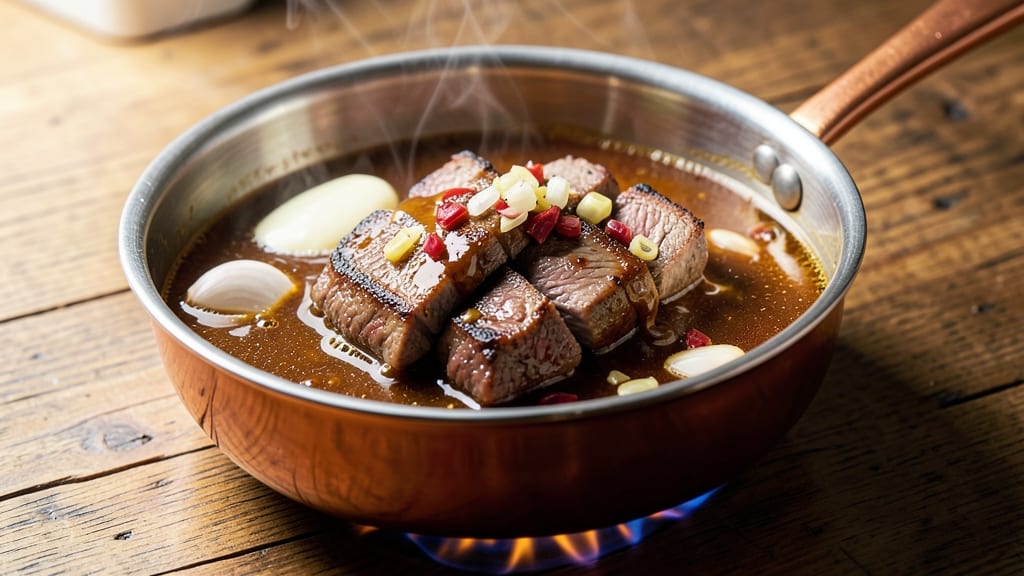
This au jus sauce recipe with beef broth transforms simple ingredients into a restaurant-quality pan sauce that elevates roast beef from ordinary to extraordinary. 🔥 The secret lies in a slow reduction that intensifies the natural umami of beef broth while building depth through aromatics and a touch of wine.
I developed this recipe after years of testing—each simmer, each strain, each careful reduction matters for that perfect balance of richness and brightness.
The foundation is built on high-quality beef broth, which carries the deep, savory notes of the roast beef itself. Aromatics like shallots and garlic form the flavor base, while a splash of red wine adds complexity that transforms this from a basic pan sauce into something truly special.
The key technique? Simmering gently to concentrate flavors without burning, then straining for a silky-smooth finish that coats every bite.
What you'll end up with is a deep amber sauce with layers of caramelized richness and just the right amount of acidity to cut through the richness of roast beef.
It's the kind of sauce that makes even simple weeknight dinners feel like a celebration—bold enough to stand alone but versatile enough to enhance any protein. The best part? It comes together in under 30 minutes with minimal effort, yet delivers professional results.
Perfect for drizzling over roast beef, using as a dipping sauce for crusty bread, or even as a base for gravy. Store leftovers in the fridge for up to 5 days or freeze for longer storage. Here's how to make it—simple, foolproof, and packed with flavor.
Ingredients for au jus sauce recipe with beef broth
Nine ingredients, bold flavors—this au jus transforms humble beef broth into restaurant-worthy sauce magic.
| Ingredient | Amount | Notes |
|---|---|---|
| High-Quality Beef Broth 🥩 | 3 cups | Homemade or premium store-bought |
| Shallots 🧅 | 1 whole | Finely minced, about 0.5 cup |
| Garlic Cloves 🧄 | 4 cloves | Peeled and smashed |
| Red Wine 🍷 | ½ cup | Bold dry variety like Cabernet |
| Extra-Virgin Olive Oil 🫒 | 2 tbsp | For deglazing and richness |
| Unsalted Butter 🧈 | 2 tbsp | Cold, for finishing |
| Diamond Crystal Kosher Salt 🧂 | 1 ½ tsp | Adjust to taste |
| Freshly Ground Black Pepper 🌶️ | ½ tsp | For finishing |
| Dried Thyme 🌿 | ½ tsp | Or 1 tsp fresh thyme |
| Balsamic Vinegar 🍶 | 1 tbsp | For brightness |
The beef broth is your flavor foundation—homemade is ideal (that deep, meaty essence), but Kirkland Signature or Pacific Foods from the grocery store work beautifully too. Shallots add sweetness without overpowering; skip the onions—they muddy the sauce. For the wine, Cabernet Sauvignon or Merlot (whatever’s open) bring the right depth. Fresh thyme? Dried works in a pinch, but fresh is worth hunting down at the market—it’s the secret that elevates this from basic to extraordinary. Pro tip: Toast your shallots and garlic in the olive oil for 2 minutes before adding broth—caramelization builds instant flavor.
No red wine? Substitute with beef broth + 1 tbsp balsamic vinegar for acidity. Swap dried thyme for fresh at one-third the amount (so 0.5 tsp dried = 1.5 tsp fresh). Olive oil shortage? Use avocado oil—same high smoke point. The butter at the end is non-negotiable; it adds silky richness that no other fat can replicate. Salt is your final balance—taste as you go and adjust. For a vegetarian twist, swap beef broth for mushroom broth (but expect a milder umami).
This sauce peaks after 30 minutes of resting—the flavors meld beautifully. Store leftovers in the fridge for up to 5 days in an airtight jar, or freeze for 3 months. Double the batch—it disappears fast. For reheating, warm gently on the stove with a splash of broth to restore silkiness. The butter finishing touch? Add it last—it melts instantly and creates that luxurious sheen. Leftovers? Drizzle over roast beef, use as a dip for crusty bread, or reduce further for gravy.
Why You'll Love This Recipe
- No-Chop Nightmare: The shallots and garlic take two minutes to mince—no knife skills required. I swear, I’ve made this sauce after work with my hands still greasy from fixing the car, and it still turns out rich and golden.
- Red Wine Magic: That splash of red wine cuts through the richness like a secret weapon. It’s not sweet, not overpowering—just deep, savory, and exactly what beef needs to sing.
- Leftovers That Lie: You’ll make twice as much as you think you need. The sauce keeps for days in the fridge, and reheats like it was just made—perfect for drizzling on next-day sandwiches or tossing with roasted veggies.
- Steakhouse at Home: This isn’t just for roasts. Drown fries in it, stir it into mashed potatoes, or use it to deglaze your pan after searing. Honestly, I’ve even poured it over eggs for breakfast—don’t judge.
Step-by-step instructions for deep umami au jus
This method unlocks restaurant-quality depth with simple techniques—every step builds flavor.
🍳 Step 1: Sauté Shallots and Garlic Until Translucent
Heat the 2 tablespoons extra-virgin olive oil in a medium saucepan over medium-low heat. Add the 1 whole shallot (finely minced) and cook for 3-4 minutes until completely soft and translucent. This gentle cooking prevents burning and preserves their sweetness.
Add the 4 cloves smashed garlic and cook for another 30 seconds until fragrant—you should smell that irresistible garlic aroma without any browned bits. Here's the thing: cooking garlic too fast turns it bitter. Keep the heat low and stir constantly to maintain that delicate sweetness.
🍳 Step 2: Deglaze with Red Wine and Reduce
Pour in the ½ cup red wine and immediately scrape up all the browned bits from the bottom of the pan with a wooden spoon. These bits are pure flavor—don't miss them! Increase heat to medium-high and let the wine simmer vigorously for 3-4 minutes until reduced by half.
Watch for the alcohol to cook off—you'll know it's ready when the wine transforms from a bright red to a deeper, more concentrated color. This reduction step intensifies the wine's flavor and forms the foundation of your sauce. If you rush this, you'll end up with a thin, watery base instead of rich umami depth.
🥘 Step 3: Build the Broth Base with Herbs and Salt
Pour in the 3 cups high-quality beef broth and add the 1½ teaspoons kosher salt and ½ teaspoon dried thyme. Bring to a gentle simmer over medium heat and let it cook uncovered for 8-10 minutes until slightly reduced and concentrated. You're looking for a sauce that coats the back of a spoon.
Here's where the magic happens: the thyme releases its earthy aroma while the broth reduces to intensify its beefy flavor. I like to taste at this stage—it should be rich and savory, with just a hint of wine acidity. If it's too thin, simmer another 2-3 minutes to reach your desired consistency.
🔥 Step 4: Finish with Butter and Balsamic
Reduce heat to low and whisk in the 2 tablespoons cold unsalted butter one tablespoon at a time. The butter should melt completely, creating a glossy finish. Add the 1 tablespoon balsamic vinegar and stir until fully incorporated. Here's the crucial part: keep the sauce moving constantly to prevent butter separation.
Season to taste with the ½ teaspoon freshly ground black pepper. The pepper adds a subtle heat that cuts through the richness of the butter and beef. Taste again—you're aiming for a balance of umami from the broth, acidity from the wine and vinegar, and a velvety mouthfeel from the butter. This should coat your roast beef beautifully without overpowering its natural flavors.
⏰ Step 5: Rest and Serve at Peak Temperature
Remove from heat and let the sauce rest for 5 minutes—this allows all the flavors to meld together. The sauce will thicken slightly as it cools, so if you need it thinner, simply reheat gently and add a splash of beef broth. Serve immediately alongside your roast beef for maximum flavor impact.
Real talk: this sauce tastes even better the next day when the flavors have time to develop fully. Store leftovers in the refrigerator for up to 3 days, then reheat gently over low heat, stirring constantly to prevent skin formation. The key is patience—don't rush the reduction steps or you'll miss out on that deep umami character that makes this sauce truly exceptional.
Pro Tips For Making Au Jus Sauce Recipe With Beef Broth
- SWEEAT SHALLOTS LOW: I learned this the hard way—drowning shallots in oil over high heat just burns them into oblivion. Instead, use medium-low heat and let them cook for 8-10 minutes until translucent and caramelized, stirring occasionally. No need to rush; patience here means flavor, not bitterness.
- DEGLAZE WITH WINE IMMEDIATELY: As soon as your shallots hit that golden stage, pour in the red wine without waiting. Scrape the browned bits (fond) from the pan—this is where the magic lives. If you let the pan dry out, you’ll end up with a thin, vinegary sauce instead of rich, layered depth.
- SKIP THE BOILING BROTH: After deglazing, add your beef broth but never bring it to a full boil. A gentle simmer (just small bubbles breaking the surface) is all you need—boiling turns the sauce cloudy and dulls the wine’s brightness. Keep it at a low simmer for 10-15 minutes to let flavors meld.
- UPGRADE WITH A SPLASH OF OIL: Sounds weird, but it works: Stir in 1 teaspoon of extra-virgin olive oil at the end. It coats the sauce, making it silky and glossy—no separation, no thinness. (Yes, even if you’re skeptical, like I was.) Just don’t overdo it, or it’ll taste like dressing.
Flavor customization for these flavors
Herb Variations
Swap the dried thyme for 1 teaspoon fresh thyme leaves or ½ teaspoon rosemary for an earthier profile. I love adding ½ teaspoon smoked paprika for a subtle BBQ-inspired depth—it pairs beautifully with roast beef.
For a Mediterranean twist, replace thyme with ½ teaspoon oregano and finish with a pinch of red pepper flakes. 🌿
Wine Alternatives
No red wine? Use ½ cup beef broth + 1 tablespoon balsamic vinegar for acidity. For a white wine version, substitute with ½ cup dry white wine (like Sauvignon Blanc) and add ½ teaspoon lemon zest to brighten the sauce.
A splash of apple cider vinegar (1 tablespoon) works too—it adds tang without wine's alcohol. 🍷
Umami Boosters
Deepening the umami is key! Stir in 1 teaspoon soy sauce or ½ teaspoon fish sauce during the broth simmer for extra savory punch. For a richer base, add 1 tablespoon Worcestershire sauce with the wine.
I also love 1 teaspoon miso paste (dissolved in a splash of broth) for a Japanese-inspired twist. 💛
Sweet-Tangy Balance
Add 1 teaspoon honey or maple syrup with the balsamic vinegar to soften acidity. For a caramelized touch, deglaze with ½ cup beef broth + 1 tablespoon brown sugar instead of wine. A dash of orange zest (from ½ orange) brightens the sauce beautifully—it’s a restaurant trick I’ve stolen. 🍯
Spice Level Control
For heat, add ½ teaspoon cayenne pepper or 1 teaspoon hot sauce (like Cholula) with the butter. For smoky depth, finish with ½ teaspoon chipotle powder or a pinch of crumbled smoked paprika. If you prefer mild, skip the spices entirely—the sauce’s richness stands on its own. 🌶️
Vegetarian Adaptation
Replace beef broth with mushroom or lentil broth for a hearty vegetarian version. Boost umami with 1 tablespoon nutritional yeast or ½ teaspoon liquid smoke. The sauce will be milder but still packed with depth—perfect for drizzling over roasted vegetables or lentil loaf. 🌱
Nutrition facts
Frequently asked questions
Can I make this au jus sauce without red wine?
For a wine-free version, substitute the ½ cup red wine with ½ cup beef broth + 1 tablespoon balsamic vinegar. This maintains the acidity needed to balance the richness while keeping the umami depth. The balsamic adds a subtle sweet-tart complexity that mimics wine's effect.
How do I prevent the sauce from getting too thin?
Simmer the broth uncovered for 10-12 minutes instead of 8-10 minutes to reduce it more. If it's still too thin, remove from heat and let it cool slightly—it will thicken naturally. For an instant fix, whisk in 1 teaspoon cornstarch mixed with 1 tablespoon cold water until glossy. Stir constantly over low heat until thickened.
What's the best way to store leftover au jus?
Store in an airtight container in the fridge for up to 5 days. For longer storage, freeze in ice cube trays for 3 months—thaw and reheat gently with a splash of broth. To reheat, warm over low heat and whisk in 1 tablespoon cold butter at the end to restore silkiness. Never microwave—it creates a skin and dulls the flavors.
Can I use this sauce for other proteins besides beef?
Yes! This au jus works beautifully with lamb, pork, or even roasted vegetables. For poultry, add ½ teaspoon lemon zest to brighten the sauce. For seafood, reduce the thyme to ¼ teaspoon and finish with a pinch of fresh tarragon. The beefy depth still shines but adapts to lighter proteins.
Why did my sauce separate when I reheated it?
This happens when butter separates from the liquid during reheating. Fix it by whisking vigorously over low heat and adding 1 teaspoon cold water to emulsify. For prevention, always reheat gently and stir constantly. If it happens again, whisk in ½ teaspoon Dijon mustard—it acts as a natural emulsifier.