
Sauces & Condiments
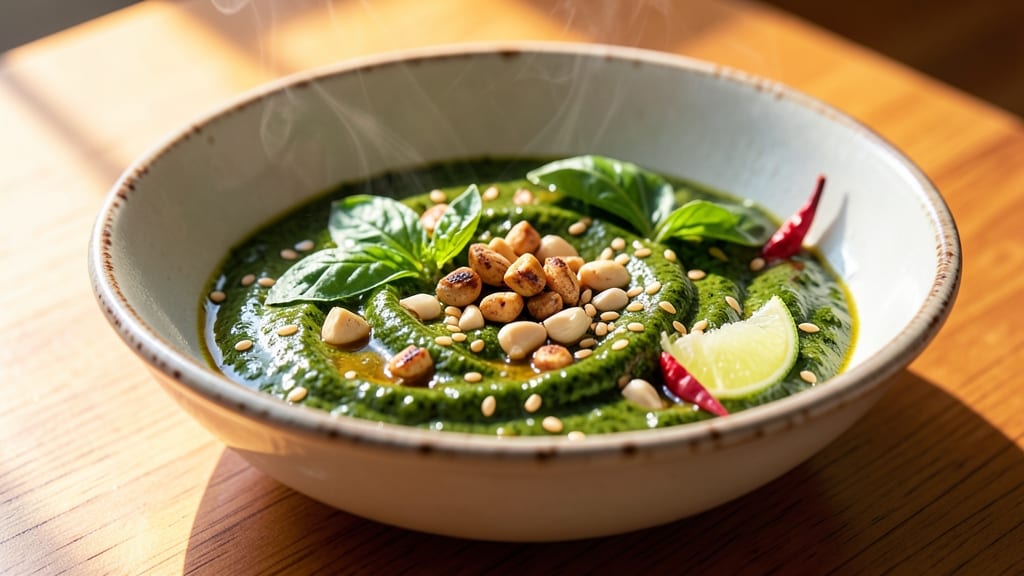
This Asian pesto sauce recipe transforms ordinary meals into vibrant, flavor-packed experiences with its perfect balance of nutty sesame crunch and fresh herb zing. The secret lies in blending toasted peanuts, aromatic herbs, and a touch of chili for depth—creating a sauce that's as versatile as it is delicious.
Unlike traditional pesto, this version delivers bold Asian-inspired flavors with just a few simple ingredients and minimal effort.
The sauce's magic comes from the combination of toasted peanuts for texture, fresh Thai basil for brightness, and a hint of chili to keep flavors dynamic. It's designed to elevate everything from grilled meats to noodles, adding richness without overwhelming the dish.
What makes this recipe stand out is how quickly it comes together—just 10 minutes of prep time—and how well it stores, making it perfect for meal prep.
What you'll end up with is a velvety, nutty sauce with a satisfying crunch that clings beautifully to every bite. It's the kind of condiment that transforms simple dishes into restaurant-worthy meals, offering layers of flavor that keep coming back with each use.
The best part? It keeps well in the fridge for up to a week, so you can make a batch and enjoy it all week long.
Whether you're drizzling it over stir-fried vegetables, tossing it with noodles, or using it as a marinade, this Asian pesto sauce brings a new dimension to your cooking. Let's get started on creating this flavorful addition to your kitchen arsenal.
Ingredients for asian pesto sauce
Nine bold flavors that turn any dish into an Asian-inspired masterpiece—crunchy, tangy, and packed with zing!
| Ingredient | Amount | Notes |
|---|---|---|
| Toasted Peanuts 🥜 | ¾ cup | Crushed for texture, store-bought or homemade |
| Fresh Thai Basil Leaves 🌿 | 1 ½ cups | Packed, stems removed, vibrant green |
| Sesame Seeds 🌰 | ¼ cup | Toasted for nutty aroma, white or black |
| Garlic Cloves 🧄 | 4 cloves | Peeled, roughly chopped, fresh preferred |
| Red Chili Flakes 🌶️ | 1 tbsp | Adjust for heat preference, crushed slightly |
| Lime Juice 🍋 | 2 tbsp | Freshly squeezed, seeds strained out |
| Extra-Virgin Olive Oil 🫒 | ½ cup | High quality, fruity, not bitter |
| Soy Sauce 🍶 | 1 ½ tbsp | Light or dark, to taste |
| Sesame Oil 🫒 | 1 tbsp | Toasted sesame oil for aroma, not cooking oil |
| Salt 🧂 | ½ tsp | Sea salt or kosher salt, adjust to taste |
Peanuts are the star here—Trader Joe's or bulk bins have the best toasted varieties. Grab them already roasted to save time, or toast your own in a dry pan for 2-3 minutes until fragrant. Fresh Thai basil makes all the difference; Asian markets often have the freshest, brightest leaves. If you can't find it, regular basil works in a pinch, but the anise notes are key. The sesame seeds? Toast them with the peanuts for extra depth—white sesame is classic, but black adds a smoky twist.
No toasted sesame oil? Regular sesame oil works, but it's less aromatic. Short on peanuts? Toasted cashews or almonds give a similar texture. The chili flakes can be swapped for fresh red chili or Thai bird's eye peppers—just adjust the quantity. Soy sauce too salty? Dilute with a splash of water before adding. And if you're making a big batch, double the lime juice—it brightens everything up.
This sauce keeps beautifully for 1 week in the fridge, sealed tightly in a jar. For longer storage, freeze in ice cube trays—perfect for single-use portions. Before using, give it a quick whisk to re-emulsify. The peanuts stay crunchy, but if you prefer a smoother texture, pulse them briefly in a food processor. Trust me, it's worth making extra—this sauce disappears fast!
Why You'll Love This Recipe
- No Blender Needed: I toss everything in a food processor—peanuts, basil, garlic, sesame seeds—until it’s chunky but still has texture. No waiting for a machine to catch up, no scraping out stubborn bits. Honestly, it’s the kind of recipe where the process feels as satisfying as the result.
- Umami Bomb: That combination of toasted peanuts and Thai basil? It’s like a flavor grenade in the best way. The garlic hits first, sharp and bright, then the chili flakes linger with a slow burn, while the sesame seeds add this nutty crunch that makes every bite feel intentional.
- Pantry to Plate: Here’s what sold me—this sauce works with anything. Drizzle it over noodles, toss it with grilled chicken, or even slather it on sandwiches. I’ve used it as a quick marinade, a dipping sauce, and even a stir-fry finish. The best part? It’s the kind of versatile sauce that makes lazy nights feel like a restaurant meal.
- Lasts All Week: Between us, I make a big batch on Sundays and it’s still my go-to by Friday. Store it in the fridge for up to a week, and the flavors only deepen. Plus, the peanuts and sesame seeds stretch the budget—no fancy ingredients, just solid, reliable flavor that doesn’t break the bank.
Step-by-step instructions for Asian pesto sauce
This vibrant sauce comes together in minutes with bold flavors and perfect texture.
Toast the Peanuts and Sesame Seeds
Heat a dry skillet over medium heat and add the 0.75 cup toasted peanuts. Toast for 3-4 minutes until fragrant and lightly golden, stirring constantly to prevent burning. Remove from heat and transfer to a cutting board. While still warm, roughly chop the peanuts with a knife - you want texture, not powder.
In the same skillet, add the 0.25 cup sesame seeds and toast for 1-2 minutes until golden brown and nutty. The seeds should smell intensely toasted - this aroma is essential for the sauce's depth. Immediately transfer to a bowl to cool slightly while you prepare the remaining ingredients.
Blend the Herb and Aromatic Base
In a food processor fitted with the metal blade, add the 1.5 cups fresh Thai basil leaves, 4 cloves garlic cloves, and 1 tbsp red chili flakes. Pulse 3-4 times until the garlic is finely minced but the basil remains mostly intact - you want visible herb flecks in the final sauce. This creates that perfect fresh-herb texture we love.
With the processor running, slowly drizzle in the 0.5 cup extra-virgin olive oil until fully incorporated. The mixture should look like a thick, vibrant green paste. Stop occasionally to scrape down the sides with a spatula - this ensures even blending and prevents any dry spots.
Combine All Ingredients for Perfect Balance
Add the toasted peanuts, sesame seeds, and the 0.5 tsp salt to the food processor. Pulse 2-3 times just to combine - don't over-blend or you'll lose the beautiful texture. Now add the 2 tbsp lime juice and 1.5 tbsp soy sauce, pulsing again until everything is evenly distributed.
Finally, with the processor running, drizzle in the 1 tbsp sesame oil slowly. The sauce should come together with a thick, vibrant consistency - almost like a cross between pesto and satay sauce. Taste and adjust seasoning: add more lime for brightness, soy sauce for saltiness, or red chili flakes for heat.
Achieve the Perfect Texture
Transfer the sauce to a bowl and give it a final taste. The texture should be thick enough to coat the back of a spoon but still spreadable. If it's too thick, add 1-2 teaspoons water at a time until it reaches your desired consistency. If too thin, let it sit at room temperature for 10-15 minutes - the oils will thicken naturally.
For maximum flavor development, let the sauce rest for 15 minutes before using. This allows all the components to meld together beautifully. The peanuts should be slightly crisp, the sesame seeds should add nutty crunch, and the Thai basil should shine with its bright, anise-like flavor. Store any leftovers in an airtight container in the refrigerator for up to 5 days.
Pro Tips For Making Asian Pesto Sauce
- TOAST PEANUTS UNTIL GOLDEN: I learned this the hard way—skipping the stovetop toast and using store-bought "roasted" peanuts (even the fancy ones) leaves your pesto tasting flat. Dry-toast them in a pan over medium-low heat for 3-4 minutes, stirring constantly, until they’re fragrant and just starting to brown. That nutty aroma is the foundation of the sauce.
- STACK BASIL LEAF BY LEAF: Thai basil bruises fast, and wet leaves turn your pesto into sad, watery mush. Instead of dumping the whole bunch in, strip leaves one by one and add them to the mortar or food processor after the peanuts and garlic. This keeps the texture vibrant and prevents bitterness.
- PULSE GARLIC IN BURSTS: Whole garlic cloves in pesto? Nope. Pulse them in short bursts—about 2-3 seconds at a time—until they’re almost but not quite a paste. You want tiny, uneven chunks to keep the sauce from turning into a gluey mess. Over-blending here is the fastest way to ruin the texture.
- SALT THE PEANUTS FIRST: This isn’t just about seasoning—it’s about flavor balance. Toss the toasted peanuts with a pinch of salt (about ¼ teaspoon) while they’re still hot. Let them sit for 30 seconds before blending; the salt draws out moisture, making the peanuts creamier and the final sauce richer. (Yes, even if you’re impatient like me.)
Essential equipment for asian pesto sauce
Food Processor Must-Have
Your food processor is the unsung hero of this recipe—no blender or mortar and pestle can replicate its precision. I recommend a 9-cup capacity model like the Ninja BN601 for home cooks or the Cuisinart DFP-14BCNY for serious sauce makers.
The metal blade is critical for achieving that perfect chunky-creamy texture. If you're short on space, a mini food processor like the Hamilton Beach 58120 works in a pinch, though you may need to work in batches. 💡
Skillet for Toasting
A 10-inch cast iron skillet is ideal for toasting peanuts and sesame seeds—its heavy base distributes heat evenly and prevents burning. I use my Lodge Pre-Seasoned Cast Iron skillet for this step because it develops a natural non-stick surface over time.
For quick cleanup, a non-stick skillet like GreenPan Smart Ceramic works too, though it lacks the same heat retention. Keep heat at medium to avoid scorching the delicate seeds. ⚡
Cutting Board & Knife
You'll need a sharp chef's knife (I prefer Wüsthof Classic 8-inch) and a large cutting board for chopping garlic and roughly crushing peanuts. For the peanuts, I find a wooden cutting board gives the best grip—just be sure to clean it thoroughly after use.
If you're using raw peanuts, toast them first in the skillet, then chop while still warm for maximum flavor release. A microplane is optional but handy for mincing garlic finely. 🌿
Measuring Tools
Precision matters with this sauce, so invest in a stainless steel measuring spoons set (like OXO Good Grips) for accurate measurements of chili flakes, lime juice, and sesame oil. A small liquid measuring cup (I use Pyrex) helps when measuring the olive oil.
For the sesame seeds, a 1/4-cup dry measuring cup ensures you get the right amount without overfilling. Don't skimp—these small details make a big difference in flavor balance. ✨
Storage Containers
For leftovers, use an airtight glass container with a lid—Ball Mason jars are perfect for this. They preserve the sauce's freshness and make it easy to grab a portion for later. If you're freezing, silicone ice cube trays work great for single-serving portions.
Label your containers with the date to track freshness. The sauce keeps for up to 1 week refrigerated or 3 months frozen, so proper storage is key. 🥫
Optional: Mortar & Pestle
For a more traditional approach, a marble mortar and pestle (like Kuhn Rikon) can be used to crush garlic and blend small batches. This method adds a rustic touch and lets you control the texture more precisely.
However, it's time-consuming for larger batches—best for small quantities or when you want to impress guests with an authentic touch. Just be prepared to work in small batches. 💛
Nutrition facts
Frequently asked questions
Can I substitute peanuts with other nuts in this Asian pesto?
Swap peanuts for toasted cashews or almonds for a different nutty profile. Cashews add a buttery richness, while almonds bring a slightly sweeter flavor. Toast them first to enhance their aroma—just like the peanuts. For extra crunch, use a mix of nuts.
How do I adjust the spice level in this sauce?
Start with 1 tbsp chili flakes for mild heat, then increase to 2 tbsp for medium spice. For a fiery kick, add 1-2 fresh Thai bird's eye chilis (seeds removed) to the food processor. Taste as you go—you can always add more, but you can't remove heat once it's in!
What’s the best way to use leftover Asian pesto?
This sauce is incredibly versatile! Drizzle over steamed rice, toss with cold noodles, or use as a marinade for grilled chicken or tofu. It also works as a dip for spring rolls or a bold addition to sandwiches. Store leftovers in an airtight container for up to 1 week—freeze in ice cube trays for single servings.
Can I make this sauce without a food processor?
Yes! Use a mortar and pestle for small batches or a sharp knife to finely chop all ingredients in a bowl. For texture, leave some peanuts and sesame seeds whole. Mix in the lime juice, soy sauce, and sesame oil by hand until well combined. The flavor will be just as vibrant—it’ll just take a little more elbow grease!
Why did my sauce turn out too thick or too thin?
If it’s too thick, stir in 1 tsp water or lime juice at a time until it reaches a spreadable consistency. For a thinner sauce, let it sit at room temperature for 10 minutes—the oils will naturally emulsify. Avoid adding too much liquid at once, or the sauce may separate. The ideal texture coats the back of a spoon but still clings to ingredients!