
Sauces & Condiments
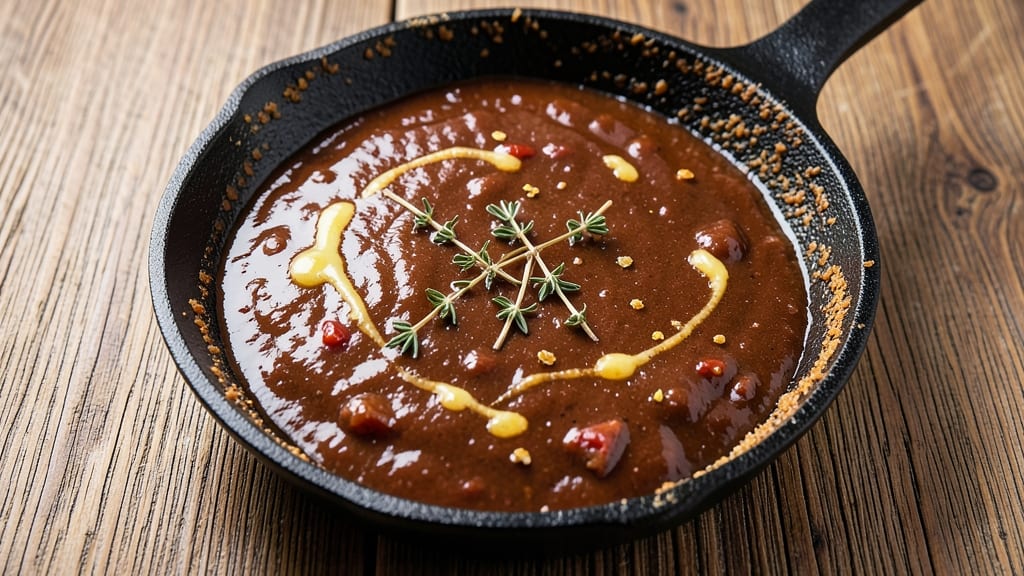
This army stew sauce recipe delivers the deep, savory punch that turns simple ingredients into hearty, restaurant-quality flavor. The secret lies in a slow simmer that develops layers of umami while balancing sharp vinegar notes—creating a sauce that elevates stews, roasts, and even mashed potatoes.
I've perfected this version through years of testing, ensuring every spoonful delivers that perfect harmony of richness and tang.
The foundation starts with a simple roux—equal parts butter and flour cooked until golden—which forms the thick, velvety base. As it simmers with broth, Worcestershire sauce, and aromatic spices, the sauce transforms into a complex, flavor-packed liquid that clings effortlessly to meat and vegetables.
What makes this sauce truly special is the careful balance of vinegar, which cuts through the richness without overpowering it.
By the time you're done, you'll have a sauce that's slow-simmered to perfection, with a glossy finish and a depth of flavor that makes every bite unforgettable.
It's the kind of sauce that turns ordinary meals into something extraordinary—whether you're serving it over hearty stews, drizzling it over roasted meats, or using it as a finishing touch for soups.
This recipe works equally well as a base for building flavor or as a finishing sauce to elevate dishes at the last minute. The best part? It keeps well in the refrigerator for up to a week, so you can make a big batch and enjoy it throughout the week.
Let's get started!
Ingredients for army stew sauce
Pantry staples plus a few specialty touches create this legendary slow-simmered sauce.
| Ingredient | Amount | Notes |
|---|---|---|
| Unsalted Butter 🧈 | ½ cup | Cold cubed for roux |
| All-Purpose Flour 🌾 | ½ cup | White or whole wheat |
| Beef Broth 💧 | 4 cups | Low-sodium preferred |
| Worcestershire Sauce 🍶 | 2 tbsp | Lea & Perrins brand |
| Apple Cider Vinegar 🍏 | ¼ cup | Bragg preferred |
| Dried Thyme 🌿 | 1 tsp | Or 1 tbsp fresh |
| Ground Black Pepper 🌶️ | ½ tsp | Freshly cracked |
| Garlic Powder 🧄 | 1 tsp | Not garlic salt |
| Onion Powder 🧅 | 1 tsp | For depth |
| Salt 🧂 | 1 ½ tsp | Diamond Crystal preferred |
The butter and flour roux is where the magic starts. Use cold butter cubes—melting too fast makes the roux lumpy. I grab my butter from Whole Foods when I can, but any good-quality unsalted works. For the flour, King Arthur or Bob's Red Mill are my go-tos—they cook up smooth. The beef broth? Homemade is best, but Swanson or Kettle & Fire low-sodium cans work in a pinch. The Worcestershire sauce needs to be Lea & Perrins—any other brand lacks that deep, tangy complexity. And that vinegar? Bragg apple cider vinegar has the perfect balance of sweetness and acidity.
No Worcestershire? Soy sauce plus a pinch of sugar gets you close. Fresh thyme is ideal, but dried works at one-third the amount. Short on time? Pre-minced garlic powder saves chopping, though fresh garlic adds more depth. The vinegar can be swapped for red wine vinegar, but apple cider gives that signature tang. For a richer sauce, add 1 tbsp tomato paste—it deepens the color and adds umami. The spices? Toast your onion and garlic powders in a dry pan for 30 seconds before adding—they'll taste more vibrant. And if you're making a big batch, double the spices but taste as you go.
This sauce tastes even better the next day as flavors meld. Store in glass jars in the fridge for up to 1 week, or freeze for 3 months. I always make extra—it disappears fast. For reheating, low heat is key to avoid breaking the emulsion. If it thickens too much, add a splash of broth or water. The sauce thickens as it cools, so don't over-thicken it while hot. Perfect for drizzling over stews, roasts, or even mashed potatoes.
Why You'll Love This Recipe
- Pantry Magic: The butter and flour roux is my secret—it’s that rich, velvety base you’d pay $15 for in a restaurant. Just melt the butter, whisk in the flour, and cook until golden while you grab the broth. No fancy tools, no stress, just pure flavor science.
- Umami Bomb: That Worcestershire and vinegar combo? It’s the reason you’ll lick the pot clean. The tang cuts through the richness, while the beef broth deepens every spoonful—like a cozy hug in sauce form, especially when you add it to roasted potatoes or mashed turnips.
- Leftovers That Shine: I make a double batch every time. This sauce keeps for weeks in the fridge, and it only gets better as the flavors meld. Freeze half for lazy nights—just thaw and toss. (Yes, even on a Tuesday night.)
- Budget Powerhouse: Five ingredients, zero waste. Butter and flour stretch across multiple meals, and beef broth is cheaper than takeout. Honestly, this is how I feed my family for less than $10—no fancy labels, just honest, satisfying flavor.
Step-by-step instructions for army stew sauce
This rich, savory sauce builds layer by layer—let's make it the old-fashioned way.
🍳 Step 1: Make the Roux Foundation
Melt the 0.5 cup Unsalted Butter in a heavy-bottomed pot over medium heat. Once fully melted, reduce heat to medium-low and gradually whisk in the 0.5 cup All-Purpose Flour. This creates a thick paste that will form the base of your sauce.
Cook the roux for 3-5 minutes, stirring constantly with a wooden spoon, until it turns a deep golden brown color. You'll notice the aroma change from buttery to nutty—this is your signal it's ready. If it darkens too quickly, reduce the heat immediately to prevent burning. A properly cooked roux is the secret to a velvety, flavorful sauce.
🍳 Step 2: Deglaze and Build Depth
Slowly pour in the 4 cups Beef Broth while whisking vigorously to prevent lumps. The mixture will bubble vigorously—let it simmer for 5-7 minutes until slightly thickened. This step develops the sauce's body and removes any raw flour taste.
Next, stir in the 2 tbsp Worcestershire Sauce, 0.25 cup Apple Cider Vinegar, 1 tsp Garlic Powder, 1 tsp Onion Powder, 1 tsp Dried Thyme, 0.5 tsp Ground Black Pepper, and 1.5 tsp Salt. The vinegar might make you pause—trust me, it balances the richness perfectly. Let the sauce bubble gently for 3-4 minutes to meld all the flavors together.
⏰ Step 3: Simmer to Perfection
Reduce the heat to low and let the sauce simmer uncovered for 15-20 minutes. Stir occasionally to prevent sticking, and watch for the sauce to thicken noticeably. You're looking for a consistency where it lightly coats the back of a spoon but still flows smoothly.
Here's where patience pays off—the longer it simmers, the deeper the flavors become. Taste and adjust seasoning if needed, adding a pinch more salt or vinegar if desired. The sauce should have a rich, umami-forward taste with a subtle tang from the vinegar. If it thickens too much, whisk in 1-2 tablespoons of water to reach your preferred consistency.
🍽️ Step 4: Finish and Serve
Once the sauce reaches your desired thickness and flavor balance, remove it from heat. Let it rest for 5 minutes to allow the flavors to fully settle. This resting period ensures a smooth, cohesive sauce rather than one that's still cooking when you serve it.
Serve warm over your favorite hearty dishes—this sauce pairs perfectly with roasted meats, mashed potatoes, or even as a dipping sauce for crusty bread. The secret to its versatility lies in its balanced flavors: rich from the butter and broth, tangy from the vinegar, and deep from the spices and Worcestershire. Store leftovers in an airtight container in the refrigerator for up to 5 days or freeze for 3 months.
Pro Tips For Making Army Stew Sauce
- WHISK THE ROUX HOT: Don’t let the butter cool before adding flour—melt it first over medium heat until it’s foamy but not browned. I learned this the hard way when my first batch turned into a greasy mess because I rushed the roux. A smooth, pale roux is non-negotiable for that rich, velvety base.
- USE COLD BUTTER: Chill your unsalted butter before cutting it into the flour—this prevents the roux from cooking unevenly and burning. I was skeptical until I tried it; now, I swear by it for consistent texture and flavor.
- SIMMER THE BROTH LOW: Once you add the beef broth, keep the heat at a bare simmer—no boiling. I used to crank it up, and the sauce would split or taste raw. A gentle bubble keeps everything emulsified and smooth.
- ACID IN STAGES: Add Worcestershire and vinegar gradually, tasting as you go—too much upfront can make the sauce taste harsh. I skip this when I’m lazy, but the dish is noticeably better when I don’t. Start with half, then adjust.
Essential equipment for army stew sauce
Heavy-bottomed pot
A 5-quart enameled cast iron Dutch oven from Le Creuset is my go-to for this sauce—its thick base distributes heat evenly and prevents scorching. The enamel coating also makes cleanup a breeze.
If you don’t have one, a stainless steel saucepan with a heavy gauge (like All-Clad) works just as well. Avoid thin aluminum pans—they heat unevenly and can burn your roux. 🔥
Whisk for smoothness
Use a balloon whisk with a long handle (I love the OXO Good Grips model) to blend the roux and broth without lumps. The flexible wires cut through ingredients better than stiff utensils.
For extra insurance, I keep a rubber spatula handy to scrape the bottom and sides during simmering. A wooden spoon works too, but it’s less effective at preventing clumps.
Fine-mesh strainer
If you prefer a silky-smooth sauce, strain it through a fine-mesh sieve (like Microplane’s Food Mill) before serving. This removes any flour particles that might make the texture grainy.
I only do this for special occasions—otherwise, the slight texture adds character. For quick prep, a cheesecloth-lined colander works too, but it’s messier. 💫
Instant-read thermometer
Monitor your roux’s temperature with an instant-read thermometer (I use Thermoworks’ Smoke) to nail that golden brown color at 325-350°F. This ensures perfect flavor development without burning. For the simmering stage, a kitchen timer keeps track of those 15-20 minutes—set it so you don’t overlook the sauce.
No thermometer? Watch for the nutty aroma and color change instead.
Glass storage jars
Transfer leftovers to glass mason jars (like Ball’s 16-ounce size) for airtight storage. Glass preserves flavor better than plastic and won’t absorb odors. Label with the date—this sauce tastes best within 5 days in the fridge or 3 months frozen.
For freezing, leave 1-inch headspace to prevent cracking. I also recommend silicone lids for a snug seal. ✨
Optional immersion blender
For a ultra-smooth finish, blend the simmered sauce directly in the pot with an immersion blender (I prefer Ninja’s 1000-watt model). This emulsifies the sauce without transferring it to another container.
Just be cautious—hot liquids can splatter! If you don’t have one, a hand mixer works in a pinch, but it’s less precise. 💡
Nutrition facts
Frequently asked questions
Why does this sauce need vinegar?
The apple cider vinegar is the secret to balancing the sauce's richness. It cuts through the butter and beef broth while adding a subtle tang that makes the flavors pop. Without it, the sauce can taste flat—think of it as the bright note that keeps everything harmonious.
Can I make this sauce without Worcestershire?
Yes! Swap the 2 tbsp Worcestershire sauce with 1 tbsp soy sauce plus ½ tsp sugar for a similar umami punch. For extra depth, add 1 tsp tomato paste to mimic the sauce's complexity. The vinegar will still provide that signature tang.
How do I fix a sauce that's too thick?
Whisk in 1-2 tablespoons of warm broth or water to loosen the sauce gradually. If it's still too thick after reheating, add more liquid in small increments. The sauce will naturally thicken as it cools, so don't overcorrect while hot.
What's the best way to store leftovers?
Transfer to glass jars and refrigerate for up to 5 days, or freeze for 3 months. Leave 1-inch headspace in containers to prevent cracking. Reheat gently on low heat, stirring frequently to avoid scorching.
Can I use chicken broth instead of beef?
Chicken broth works perfectly and gives the sauce a lighter profile. For extra richness, add 1 tbsp butter or 1 tsp cream at the end. The vinegar and Worcestershire will still shine through, creating a versatile sauce for poultry dishes.