
Sauces & Condiments
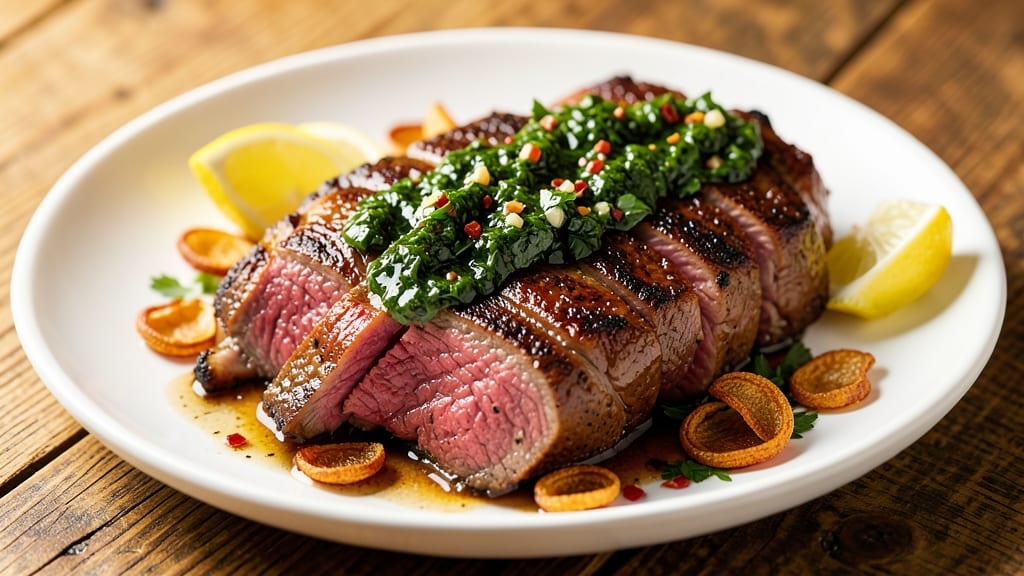
This Argentinian steak with chimichurri sauce delivers the bold, herbaceous fire that makes every bite unforgettable. The secret lies in perfectly seared meat—whether you choose skirt, flank, or ribeye—and a vibrant chimichurri that balances rich flavors with bright acidity.
I’ve perfected this technique over years of grilling, ensuring the steak stays juicy while the sauce adds layers of fresh parsley, garlic, and vinegar.
The chimichurri isn’t just a sauce; it’s the heart of the dish, cutting through the richness of the meat with its tangy, herby punch.
You’ll start by marinating the steak (if using) in a simple blend of olive oil, salt, and spices, then sear it over high heat for that signature char.
Meanwhile, the chimichurri comes together in minutes—just chop parsley, garlic, and red wine vinegar with a touch of red pepper flakes for heat.
What you’ll end up with is a plate that feels like a taste of Buenos Aires: tender, smoky steak topped with a vibrant green sauce that clings to every bite.
The contrast of textures—crispy edges on the meat, velvety sauce—makes this dish feel like a restaurant experience at home. Serve with grilled provoleta or roasted vegetables to complete the meal.
This recipe is designed for confidence: no fancy techniques, just bold flavors and a method that delivers every time. Whether you’re grilling for a crowd or treating yourself to a special night, this combination of juicy steak and bright chimichurri is the ultimate celebration of Argentinian comfort food.
Ingredients for argentinian steak with chimichurri sauce
Juicy steak needs bold chimichurri—here's what brings Buenos Aires to your grill.
| Ingredient | Amount | Notes |
|---|---|---|
| Skirt Steak or Flank Steak 🥩 | 1 ½ lb | Thinly sliced against grain |
| Extra-Virgin Olive Oil 🫒 | ½ cup | For marinating and searing |
| Fresh Flat-Leaf Parsley 🌿 | 1 ½ cups | Stems removed, loosely packed |
| Garlic Cloves 🧄 | 8 cloves | Peeled, roughly chopped |
| Red Wine Vinegar 🍷 | ⅓ cup | For tangy brightness |
| Red Pepper Flakes 🌶️ | 1 tbsp | Adjust for heat preference |
| Kosher Salt 🧂 | 2 tbsp | Diamond Crystal preferred |
| Ground Black Pepper 🌶️ | 1 tsp | Freshly cracked |
| Smoked Paprika 🌶️ | 1 tsp | For depth of flavor |
| Cumin Seeds 🌿 | ½ tsp | Toasted lightly |
| Lemon Juice 🍋 | 2 tbsp | Freshly squeezed |
| Fresh Oregano 🌿 | ¼ cup | Chopped, optional |
The steak choice matters. Skirt or flank gives you the best texture—ribeye works too but leans richer. Grab the thickest cut you can find at Whole Foods or your local butcher—they'll slice it against the grain for you. For the chimichurri, fresh parsley is non-negotiable (the grocery store stuff with wilted leaves won't cut it). Latin markets often have the freshest herbs, but your local grocery's produce section works if you pick it carefully. Look for parsley with vibrant green leaves—no yellowing or sliminess. The garlic should be firm with no sprouts, and the red wine vinegar? Bartles & Jaymes is my go-to for that perfect tang.
No fresh parsley? Cilantro works at half the amount, but it changes the flavor profile. Running low on red wine vinegar? Apple cider vinegar adds a different brightness, or swap for lemon juice if that's what you've got. The cumin seeds can be ground ahead of time (just toast them first in a dry pan for 30 seconds), but whole seeds add texture if you're feeling fancy. For the steak marinade, if you're short on time, just use olive oil, salt, and pepper—it'll still be delicious. The chimichurri keeps well in the fridge for 5 days, so make extra if you're planning to use it on other dishes like grilled chicken or fish.
Steak should rest at room temperature for 30 minutes before grilling for even cooking. Chimichurri's best made fresh, but if you're prepping ahead, store the components separately in the fridge—mix just before serving. The sauce will thicken as it sits, so add a splash of water or vinegar if it gets too stiff. Leftovers? The steak reheats beautifully in a skillet with a splash of water, and the chimichurri can be frozen for 3 months in an airtight container. I always make a double batch—one for the steak, one for grilled veggies the next day.
Why You'll Love This Recipe
- No-Chop Chimichurri: The parsley and garlic blend is so forgiving—I once used pre-minced garlic (don’t tell anyone) and it still tasted like a Buenos Aires parrilla. Just pulse in a food processor or chop roughly if you’re feeling fancy. That vinegar kick cuts through the richness like a cool breeze after a long day.
- Steakhouse Magic: The skirt steak gets this caramelized crust from high-heat searing, while the chimichurri—bright, herby, and tangy—balances it perfectly. Honestly, the first time I made it, my roommate stole half before I even sat down. That’s when I knew I’d be making this weekly.
- Party in a Bowl: This feeds a crowd without the stress. Double the chimichurri (it keeps for days) and grill extra steak—slice it thin, toss it in salads, or serve it with crusty bread for a no-fuss gathering. My book club lives for these leftovers the next morning, wrapped in tortillas with a fried egg.
- Budget Hero: Skirt steak is affordable, and you’re not wasting a thing. The chimichurri’s ingredients cost pennies, and the sauce lasts for days in the fridge. I’ll be real: I’ve stretched a single batch into three meals—steak tacos, sandwiches, even a pasta sauce. Versatile? Yes. Wasteful? Never.
Step-by-step instructions for Argentinian steak with chimichurri sauce
Here's how to transform simple ingredients into restaurant-quality steak with vibrant chimichurri.
Prepare the Chimichurri Sauce
In a food processor, combine the 1.5 cups fresh flat-leaf parsley, 8 cloves garlic, 0.33 cup red wine vinegar, 1 tablespoon red pepper flakes, 1 teaspoon smoked paprika, 0.5 teaspoon toasted cumin seeds, 2 tablespoons lemon juice, and 0.25 cup fresh oregano. Pulse until finely chopped but not completely smooth—you want texture.
With the processor running, slowly drizzle in the 0.5 cup extra-virgin olive oil until fully incorporated. Taste and adjust seasoning with 2 tablespoons kosher salt and 1 teaspoon ground black pepper as needed. The sauce should be bright green with a sharp, herby tang. Transfer to a bowl and set aside at room temperature.
Season and Marinate the Steak
Pat the 1.5 lb skirt steak or flank steak completely dry with paper towels—this ensures maximum browning. Season both sides generously with 2 tablespoons kosher salt and 1 teaspoon ground black pepper, pressing the seasoning into the meat.
Place the steak on a plate and let it sit at room temperature for 30 minutes. This step is crucial for even cooking. While it rests, toast the 0.5 teaspoon cumin seeds in a dry skillet over medium heat for 30 seconds until fragrant, then add them to the chimichurri sauce.
Grill the Steak to Perfection
Preheat a grill or grill pan over high heat until it's screaming hot. Place the steak on the grill and sear for 3-4 minutes per side for medium-rare, or until it reaches an internal temperature of 130-135°F. You'll know it's ready when it releases easily from the grill and has a deep brown crust.
For extra flavor, brush the steak with any remaining chimichurri sauce during the last minute of grilling. Let the steak rest for 10 minutes before slicing—this allows the juices to redistribute, keeping every bite juicy and tender.
Serve with Chimichurri
Slice the steak thinly against the grain into ¼-inch thick pieces. Arrange on a platter and drizzle generously with the remaining chimichurri sauce. The vibrant green sauce should coat the steak beautifully, adding a bright contrast to the rich, charred meat.
Serve immediately with crusty bread or roasted potatoes to soak up the delicious sauce. The combination of juicy steak and bold chimichurri creates a perfect balance of flavors—herby, tangy, and perfectly seasoned.
Pro Tips For Making Argentinian Steak With Chimichurri Sauce
- Sear with a Lid: Once your steak hits the pan, cover it for the first 2 minutes—yes, even if you’re used to open flames. The trapped steam keeps the meat juicy while the oil pools around it, creating that deep, caramelized crust without burning the garlic or parsley later in the chimichurri.
- Pulse Garlic Lightly: I learned this the hard way—blitzing garlic into a paste for chimichurri turns it bitter. Instead, finely chop it (or pulse just 3-4 quick bursts) and leave it chunky. You want flavor, not garlic punch.
- Salt the Steak Twice: Generously salt the steak 40 minutes before cooking (yes, even skirt/flank steaks need this), then hit it again right before searing. The first salt seasons deep; the second guarantees that crust sticks. Trust me, your knife will thank you too—it slices cleaner.
- Rest Under Foil: Skip the plate and tent the steak with aluminum foil for the first 5 minutes of resting. The residual heat keeps it warm while the juices redistribute without drying out the surface—critical for slicing against the grain later. (Your chimichurri will stick better too.)
Troubleshooting your argentinian steak with chimichurri sauce
Steak Too Tough?
If your steak turns out tough, it’s likely overcooked or not sliced properly. Skirt and flank steaks are leaner cuts, so medium-rare (130-135°F internal temp) is ideal. Use a meat thermometer to avoid overcooking, and slice against the grain for tenderness.
If the steak is still tough after cooking, try marinating it for 2-4 hours in olive oil, salt, and a splash of vinegar before grilling. 💡
Chimichurri Too Watery?
The sauce should be thick enough to cling to the steak but still pourable. If it’s too thin, let it sit for 10-15 minutes to thicken naturally. For an immediate fix, mix in 1 tablespoon cornstarch or 1 teaspoon arrowroot powder with 1 teaspoon water, then stir it in.
Avoid over-processing the herbs—chop them by hand if needed for better texture. 🌿
Uneven Cooking?
Uneven cooking usually means your grill isn’t hot enough or the steak wasn’t preheated. Let the grill reach high heat (450-500°F) before adding the steak, and always bring the meat to room temperature for 30 minutes beforehand.
If using a grill pan, make sure it’s well-oiled to prevent sticking. For extra insurance, sear the steak on one side, flip, then move it to a cooler part of the grill to finish cooking. ⚡
Chimichurri Too Mild?
If your chimichurri lacks punch, it might need more acid or herbs. Add 1 extra tablespoon of red wine vinegar or lemon juice for brightness, or increase the red pepper flakes to 1.5 tablespoons for heat.
Freshly toasted cumin seeds can also deepen the flavor—just pop them in a dry pan for 30 seconds before adding to the sauce. Taste as you go! 🌶️
Steak Sticking to Grill?
Sticking happens when the grill isn’t hot enough or the steak isn’t dry. Pat the steak very dry with paper towels before seasoning, and let the grill get ripping hot for at least 10 minutes before adding oil.
Use a high-smoke-point oil like avocado or grapeseed oil for brushing the grates. If it still sticks, try flipping the steak less often to build a better crust. 🔥
Chimichurri Separating?
If the sauce separates, it’s likely due to too much oil or not enough emulsification. Pulse the herbs and garlic in the food processor for 10-15 seconds before adding oil, and drizzle it in very slowly while the processor runs.
For a quick fix, whisk the sauce vigorously with a fork to recombine. If it’s still separating, add 1 teaspoon Dijon mustard to help bind it together. 💫
Nutrition facts
Frequently asked questions
Can I use flank steak instead of skirt steak?
Both cuts work beautifully with chimichurri. Flank steak is slightly leaner but equally tender when sliced against the grain and cooked to medium-rare (130-135°F). Just be sure to slice it thinly—about ¼-inch thick—to maximize tenderness. Both cuts deliver that signature Argentinian flavor, so pick whichever your butcher recommends freshest.
How do I adjust the heat level in chimichurri?
The red pepper flakes control the heat, so start with the 1 tablespoon called for and taste before serving. For milder heat, reduce to ½ teaspoon or omit entirely. Want more fire? Add an extra ½ teaspoon or swap in ½ teaspoon cayenne pepper for a smokier kick. Freshly toasted cumin seeds also add warmth without heat. Always taste as you go!
Can I make chimichurri ahead of time?
Yes, but store the components separately for best results. Mix the herbs, garlic, vinegar, and spices in a bowl, then keep the olive oil in a separate container. Combine just before serving to preserve freshness. The sauce keeps in the fridge for 5 days this way, or freeze for 3 months in an airtight container. For grilled chicken or veggies, make a double batch—chimichurri works on everything!
What's the best way to serve this dish?
Pair your steak with classic Argentinian sides like grilled provoleta (cheese), roasted chimichurri vegetables, or crusty bread to soak up the sauce. For a complete meal, add a simple green salad with red wine vinegar dressing. The contrast of creamy cheese or crispy veggies against the bold steak makes every bite unforgettable. Don't forget a cold Malbec wine—it's the perfect pairing!
Why does my chimichurri turn brown?
Brown chimichurri happens when the garlic oxidizes or the sauce sits too long. To prevent it, store the sauce in an airtight container with a layer of olive oil on top, which acts as a seal. If it does brown, simply stir in 1 extra tablespoon of lemon juice or vinegar to brighten it back up. The flavor won't be affected—just the color. Fresh parsley is key to keeping that vibrant green hue!