
Sauces & Condiments
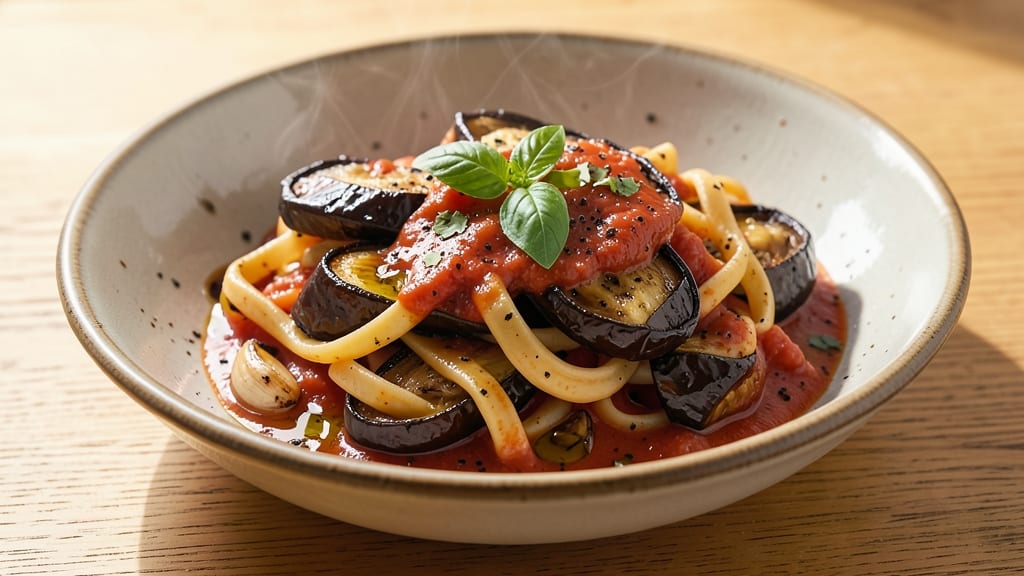
This aubergine pasta sauce recipe transforms humble eggplant into a smoky, velvety sauce that clings to every strand of pasta like a second skin. The secret lies in roasting eggplant until it's caramelized and tender, then blending it into a silky base that balances richness with bright acidity.
I developed this sauce after discovering how roasting deepens eggplant's natural sweetness while adding that coveted smoky depth that makes it unforgettable.
The process is simpler than it sounds: roast the eggplant until golden and blistered, then blend it with garlic, tomatoes, and a touch of olive oil until completely smooth.
The sauce thickens beautifully as it simmers, creating a texture that's neither too thin nor too heavy—just right for twirling onto al dente pasta. What makes this sauce truly special is how it elevates even the simplest pasta dish, turning a basic meal into something restaurant-worthy.
What you'll end up with is a sauce that's rich yet balanced, with layers of smoky, slightly sweet eggplant flavor that pairs perfectly with the acidity of tomatoes and the earthiness of garlic.
The texture is velvety and clings beautifully to pasta, making every bite feel indulgent without being overwhelming. This sauce keeps well in the fridge for up to five days, so you can make a big batch and enjoy it all week.
Whether you're serving it with spaghetti, penne, or even gluten-free pasta, this sauce delivers restaurant-quality results with minimal effort. The smoky roasted eggplant flavor makes it stand out from traditional marinara or Alfredo, while its versatility lets you adjust the acidity or spice level to your taste.
Let's get started on creating this sauce that will change how you think about eggplant forever.
Ingredients for aubergine pasta sauce
Nine ingredients transform humble eggplant into velvety, restaurant-quality pasta sauce.
| Ingredient | Amount | Notes |
|---|---|---|
| Eggplant 🍆 | 2 lbs | Large, firm, organic preferred |
| Extra-Virgin Olive Oil 🫒 | ½ cup | High-quality, fruity variety |
| Garlic Cloves 🧄 | 6 whole | Fresh, peeled, roasted with eggplant |
| Canned San Marzano Tomatoes 🍅 | 1 can | 28 oz, crushed by hand |
| Red Wine Vinegar 🍷 | 1 tbsp | Bright, dry variety |
| Dried Oregano 🌿 | 1 tsp | Mediterranean blend preferred |
| Smoked Paprika 🌶️ | 1 tsp | For authentic smoky flavor |
| Salt 🧂 | 1 ½ tsp | Diamond Crystal preferred |
| Black Pepper 🌶️ | ½ tsp | Freshly ground for warmth |
| Fresh Basil Leaves 🌿 | ¼ cup | Chopped for finishing |
The eggplant is the star here—organic, firm varieties like Black Beauty roast best, giving you that deep caramelization. I always grab mine from Whole Foods or the produce section at Trader Joe's—avoid the sad, shriveled ones. Roasting unlocks eggplant's natural sweetness, so don't skip this step. For garlic, roast it with the eggplant—it mellows beautifully and adds depth. The San Marzano tomatoes? Worth the splurge if you can find them—they're sweeter and less acidic than regular canned tomatoes, which balances the smoky eggplant perfectly.
No smoked paprika? Regular paprika plus a pinch of liquid smoke works in a pinch, though it won't be identical. Fresh basil wilting? Dried oregano at half the amount keeps the Mediterranean vibe. Short on time? Pre-chopped garlic from the freezer section saves minutes, though fresh is always better. The vinegar adds brightness—apple cider vinegar works too if that's what you've got. For extra richness, stir in 1 tbsp nutritional yeast at the end (it adds that cheesy umami without dairy).
This sauce tastes even better the next day as flavors meld. Store in an airtight container in the fridge for up to 5 days—it thickens slightly, so thin with water or pasta water when reheating. Freezes beautifully for 3 months—portion into ice cube trays for single servings. I always make a double batch because it disappears fast, especially when twirled onto pasta with freshly grated Parmesan on top.
Why You'll Love This Recipe
- No Chopping Chaos: I swear by this recipe—just roast the eggplant whole, peel off the skin, and mash it right into the sauce. No dicing, no stress, and you still get that deep, smoky flavor from the charred skin.
- Wine Vinegar Magic: That splash of red wine vinegar? It cuts through the richness of the olive oil and brightens the tomatoes like a little flavor bomb. Honestly, it’s the secret that makes this sauce sing—no one will guess it’s just pantry basics.
- Leftovers That Shine: This sauce only gets better the next day. I make a double batch on Sundays, freeze half, and reheat it for lazy nights. The eggplant soaks up flavors overnight, turning it into something even more luxurious than the first time.
- Budget-Friendly Luxe: Eggplant is cheap, San Marzano tomatoes are a steal in cans, and olive oil stretches far. Between us, this feeds four for under $10 and tastes like you spent hours on it. (Yes, even on a Tuesday night.)
Step-by-step instructions for smoky roasted eggplant velocity
Here's how to transform simple ingredients into a rich, velvety eggplant sauce that clings perfectly to pasta.
Roast the Eggplant Until Caramelized
Preheat your oven to 425°F and line a baking sheet with parchment paper. Cut the 2 lbs eggplant into ½-inch thick slices and place them on the prepared sheet. Drizzle generously with ¼ cup of the extra-virgin olive oil, then sprinkle evenly with ½ tsp salt and ¼ tsp black pepper.
Roast for 20-25 minutes until the edges are deeply golden and the flesh is tender when pierced with a fork. Flip the slices halfway through for even browning. The eggplant should be soft enough to collapse slightly when pressed, but still hold its shape. This caramelization builds the sauce's depth of flavor—don't skip this step.
Roast the Garlic and Build the Base
While the eggplant roasts, add the 6 whole garlic cloves to the same baking sheet (no oil needed—they'll roast in their own juices). Roast for 10-12 minutes until soft and golden brown, watching closely so they don't burn. Let them cool slightly, then squeeze the cloves out of their skins into a food processor.
In a large Dutch oven, heat ¼ cup extra-virgin olive oil over medium heat. Add the roasted garlic and cook for 30 seconds until fragrant. Pour in the 1 can crushed San Marzano tomatoes, scraping up any browned bits from the bottom. Stir in the 1 tbsp red wine vinegar, 1 tsp smoked paprika, and 1 tsp dried oregano. Bring to a gentle simmer and cook uncovered for 15 minutes to develop the flavors.
Blend the Eggplant into a Silky Sauce
Transfer the roasted eggplant slices to the food processor along with the roasted garlic. Add ½ tsp salt and ¼ tsp black pepper, then pulse until smooth. With the processor running, slowly pour in the tomato mixture from the Dutch oven, blending until completely combined. The sauce should be velvety but still have some body—if it's too thick, thin with 2-4 tablespoons water.
Return the blended sauce to the Dutch oven and simmer gently for 10 minutes to meld all the flavors. Taste and adjust seasoning—you might need a touch more salt or vinegar to balance the sweetness. The sauce should coat the back of a spoon with a glossy finish. This simmering step is what transforms everything into a cohesive sauce rather than just blended ingredients.
Finish with Fresh Basil and Serve
Remove the sauce from heat and stir in the ¼ cup chopped fresh basil leaves. Let it steep for 5 minutes so the basil infuses the sauce with its bright aroma. The basil should be visible as delicate flecks throughout—this is what gives the sauce its fresh finish.
Serve immediately over your choice of pasta, tossing well to coat each strand. The sauce should cling beautifully to the pasta, with a perfect balance of smoky, sweet, and tangy flavors. For extra richness, drizzle with a little more extra-virgin olive oil before serving. This sauce tastes even better the next day, so make extra if you can!
Pro Tips For Making Aubergine Pasta Sauce
- SALT THE EGPLANT FIRST: Toss sliced eggplant with 1 teaspoon salt per pound and let it sit for 20 minutes—this removes bitterness and excess moisture. I learned this the hard way after tasting a sauce that tasted like rubber; skip this and you’ll regret it.
- CHAR THE GARLIC LOW: Cook your garlic in olive oil over medium-low heat until golden, not browned—burnt garlic turns bitter and overpowers the delicate tomato flavor. After burning three batches, I finally figured out patience pays off here.
- CRUSH TOMATOES BY HAND: Drain the San Marzano tomatoes but don’t blend them—crush them with your fingers to release natural sweetness and texture. Sounds weird, but it works: the sauce thickens better and tastes brighter than if you just chop them roughly.
- DEGLAZE WITH VINEGAR LAST: Add the red wine vinegar at the very end, just before serving, to brighten the sauce without cooking off its acidity. I was skeptical until I tried it—now I always keep a splash on hand for this exact moment.
Flavor customization for these flavors
Sweet & Tangy Twist
Add 1 tbsp honey or maple syrup when blending the eggplant to enhance its natural sweetness. Balance it with an extra ½ tbsp red wine vinegar—this creates a perfect sweet-tangy contrast that brightens the smoky depth.
I love this variation when serving with linguine pasta because the wider noodles hold up better to the sauce's velvety texture. 🍯
Spicy Kick
Increase the heat by adding ½ tsp cayenne pepper or 1 tbsp hot honey during the simmering stage. For a smoky-spicy combo, stir in ½ tsp chipotle powder along with the smoked paprika.
This works beautifully with arborio rice or penne pasta—just be sure to taste as you go and adjust the vinegar to keep the flavors balanced. 🌶️
Creamy Version
Blend in ½ cup silken tofu or ¼ cup cashew cream (soaked cashews blended with water) for a luxurious, dairy-free richness. This transforms the sauce into a creamy yet still light option perfect for gluten-free pasta or vegan diets.
Add a pinch of nutritional yeast for that cheesy umami kick that makes it irresistible. 🥛
Herb-Forward
Swap the basil for ½ cup chopped parsley or ¼ cup fresh thyme leaves for a completely different flavor profile. Parsley adds a fresh, slightly peppery note, while thyme brings earthy warmth. I especially love this with fettuccine—the herbs stand out beautifully against the smoky eggplant base. 🌿
Umami Boost
For deeper savory notes, stir in 1 tbsp soy sauce or 1 tsp miso paste during the simmering stage. This works amazingly with wonton noodles or udon pasta, giving the sauce an Asian-inspired twist. The umami enhances the eggplant's natural sweetness while adding complexity. 🍜
Nutty Crunch
Finish with 2 tbsp toasted pine nuts or walnuts for texture contrast. Toast them in a dry pan for 2-3 minutes until fragrant, then sprinkle over the sauce just before serving. This adds a delightful crunch that pairs perfectly with spaghetti or angel hair pasta. 🌰
Nutrition facts
Frequently asked questions
Can I substitute regular eggplant for the recipe?
Yes, but choose firm, dark-skinned varieties like Black Beauty or Italian eggplant. Avoid small, misshapen ones—they often have more seeds and bitter flesh. The key is selecting eggplant that's heavy for its size, indicating high moisture content and better flavor.
How do I make this sauce vegan?
This recipe is already vegan! Simply omit any optional cheese toppings and ensure your olive oil is certified vegan. For extra richness, blend in ¼ cup cashew cream (soaked cashews blended with water) during the final simmering stage.
What if my sauce turns out too thick?
Thin with 2-4 tablespoons water or pasta water while blending, or add a splash when reheating. The sauce thickens further as it cools, so don't worry if it seems perfect immediately—it'll adjust as it sits. For a creamier texture, blend in 2 tablespoons unsweetened almond milk at the end.
Can I make this sauce in a slow cooker?
After roasting the eggplant and garlic, transfer everything to your slow cooker on low heat for 4-5 hours. Stir occasionally and add water as needed to maintain consistency. The slow cooking enhances the smoky depth while keeping the sauce silky.
Why does my eggplant taste bitter?
Bitter eggplant usually means it wasn't roasted long enough or was overcooked. Roast until edges are deeply golden and flesh is tender but not mushy. For extra sweetness, add ½ tsp sugar during the final simmering stage. Also, avoid using young, underripe eggplant—look for firm, glossy skin.