
Sauces & Condiments
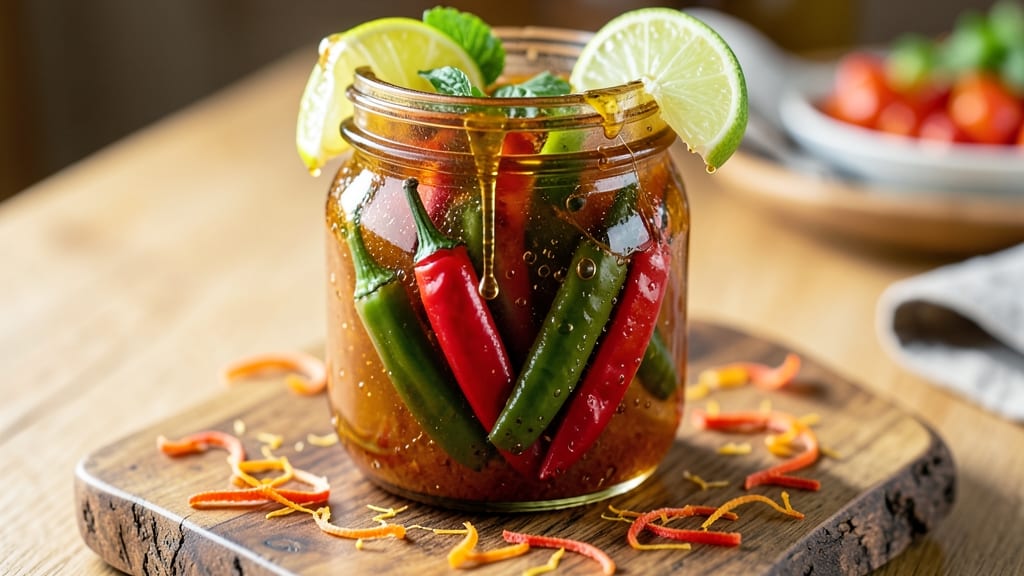
This citrus hot sauce recipe transforms bold flavors into a versatile condiment that brightens everything from tacos to seafood. The perfect balance of tangy lime, fiery chili, and sweet orange creates a complex heat that lingers without overwhelming.
I developed this after struggling to find a hot sauce that didn't taste like just vinegar and capsaicin—this version delivers a vibrant, layered punch every time.
The secret lies in fermenting the citrus and peppers for 5-7 days, which deepens their flavors while preserving natural sweetness. You'll start with fresh jalapeños and serranos for heat, then blend them with lime juice, orange zest, and a touch of honey to round out the sharpness.
The fermentation process isn't complicated—just a clean jar and patience—but it makes all the difference.
What you'll end up with is a glossy, aromatic hot sauce that's perfect for drizzling over grilled fish, tacos, or even cocktails. The acidity cuts through richness, while the citrus notes keep it refreshingly bright.
Unlike store-bought versions, this sauce stays vibrant for months when stored properly, giving you restaurant-quality flavor at home.
Use it sparingly at first—this sauce packs a concentrated punch. Start with a few drops and adjust to taste. The possibilities are endless: elevate ceviche, brighten marinades, or turn a simple burger into a gourmet experience. Here's how to make it.
Ingredients for citrus hot sauce
Nine vibrant ingredients that ferment into a restaurant-quality citrus hot sauce.
| Ingredient | Amount | Notes |
|---|---|---|
| Fresh Jalapeño Peppers 🌶️ | 4 whole | Seeds removed for milder heat |
| Fresh Serrano Peppers 🌶️ | 2 whole | Seeds removed for balanced heat |
| Fresh Lime Juice 🍋 | ½ cup | Strained for clarity |
| Orange Zest 🍊 | 2 tbsp | From organic navel orange |
| Raw Honey 🍯 | 2 tbsp | Light amber variety preferred |
| Apple Cider Vinegar 💧 | ¼ cup | Unfiltered for depth |
| Sea Salt 🧂 | 1 tsp | Diamond Crystal preferred |
| Granulated Garlic 🧄 | 1 tsp | Freshly minced alternative |
| Distilled Water 💧 | ¼ cup | Filtered preferred |
| Xanthan Gum 🧪 | ¼ tsp | For thickening stability |
The peppers are everything here—jalapeños and serranos give that signature heat, but the real magic happens during fermentation. Trader Joe's and Whole Foods usually carry organic peppers with consistent heat levels, but any fresh, firm peppers work. Look for bright green color and no soft spots—those mean the peppers are past their prime. The zest should be fragrant, not bitter, and the limes should be heavy for their size. If you can't find organic oranges, conventional is fine, but wash the peel thoroughly before zesting. The honey? Local raw honey adds subtle floral notes that store-bought can't match.
No jalapeños? Substitute Thai bird's eye peppers at half the quantity—they're hotter but pack more citrus-friendly flavors. Running low on lime juice? Key lime juice works better than regular, but lemon juice in a pinch (though it'll be less tangy). The vinegar can be swapped for white wine vinegar, but apple cider gives that fermented depth. If you're sensitive to heat, reduce the serrano count to just 1 pepper. The xanthan gum might be hard to find—cornstarch at double the amount works if you're in a bind, though it won't thicken quite as smoothly. For the garlic, fresh is ideal, but if you must use powder, reduce to half a teaspoon—it's way more concentrated.
Fermenting is key—use a sterilized glass jar with an airlock or tight lid to keep things fresh. Store in a dark, cool spot (like your pantry) for 5-7 days, shaking gently daily. Once fermented, blend until silky smooth, then strain through a fine-mesh sieve. The sauce thickens as it sits, so shake well before each use. Keeps for 6-8 months in the fridge once opened, or 12 months unopened in the pantry. I always make double batches—one for immediate use, one to gift. The flavor only gets better with time.
Why You'll Love This Recipe
- No Chopping Needed: I swear by this trick—just toss whole jalapeños and serranos into the blender with their seeds for a perfectly balanced heat. The skins soften into the sauce, so no peeling or dicing required. (Yes, even on a Tuesday night.)
- Sweet Heat Balance: That honey and lime juice combo? It’s the magic. The serranos bring sharp, bright heat, while the orange zest adds a sun-kissed warmth—like a margarita in sauce form. Honestly, I’ve never met a hot sauce that didn’t feel like a hug after the first taste.
- Game for Any Meal: Slather it on grilled chicken, drizzle it over tacos, or stir it into marinades—this sauce disappears fast. I keep a jar in the fridge for everything from breakfast eggs to late-night nachos. (Between us, it’s my secret weapon for boring takeout nights.)
- Lasts for Weeks: One batch stretches across four meals, and the flavor only gets better as the citrus brightens. Store it in the fridge for up to a month, or freeze it in ice cube trays for single-use portions. Not the prettiest, but the taste makes up for it every time.
Step-by-step instructions for citrus hot sauce
This vibrant hot sauce balances heat, sweetness, and acidity—perfect for drizzling or cooking.
Sterilize and Prep the Peppers
Start by sterilizing a clean glass jar and its lid by rinsing them with boiling water. This ensures your hot sauce stays fresh longer. While they dry, remove the seeds and membranes from all 4 whole fresh jalapeño peppers and 2 whole fresh serrano peppers—this controls the heat intensity while keeping the flavor. Chop the peppers into ¼-inch pieces and transfer them to a food processor or blender.
Here's the thing—serranos pack serious heat, so removing the seeds makes a noticeable difference. If you prefer more spice, leave a few seeds in one serrano. Pulse the peppers until you get a coarse chop, not a puree. This texture gives the sauce body and prevents it from being too smooth.
Blend the Base Ingredients
Add the 0.5 cup fresh lime juice, 2 tbsp orange zest, 2 tbsp raw honey, and 0.25 cup apple cider vinegar to the food processor. Pulse again until everything is fully combined and smooth. The lime juice brightens the sauce, while the orange zest adds a citrusy depth that cuts through the heat. The honey balances the acidity, and the vinegar ensures tangy sharpness.
Taste the mixture before proceeding—this is your flavor checkpoint. You should notice a balance of sweet, sour, and a hint of spice. If it’s too sharp, add a touch more honey. If it’s too mild, you can adjust later with extra lime juice or vinegar. The goal is a harmonious blend where no single flavor dominates.
Simmer and Thicken the Sauce
Transfer the blended mixture to a small saucepan and stir in the 1 tsp sea salt, 1 tsp granulated garlic, 0.25 cup distilled water, and 0.25 tsp xanthan gum. The xanthan gum is key here—it thickens the sauce naturally without altering the flavor. Bring the mixture to a gentle simmer over medium-low heat, stirring constantly to prevent burning.
Let it cook for 15-20 minutes, stirring occasionally, until it thickens to a syrupy consistency. You’ll know it’s ready when it coats the back of a spoon smoothly. If it thickens too quickly, add a splash of water to adjust. Once thickened, remove from heat and let it cool completely before bottling.
Bottle and Store for Maximum Freshness
Pour the cooled sauce into the sterilized jar, leaving about ½-inch headspace at the top. Seal the lid tightly and let it sit at room temperature for 24 hours before refrigerating. This resting period allows the flavors to meld and the sauce to develop depth. Once refrigerated, it will keep for up to 3 months—though it’s likely to disappear faster than that.
This sauce is incredibly versatile. Drizzle it over tacos, mix it into marinades, or use it as a finishing touch for grilled meats. The citrus notes make it a standout compared to traditional hot sauces, and the balanced heat ensures it won’t overpower your dish. Store any leftovers in the fridge for up to a week.
Pro Tips For Making Citrus Hot Sauce
- CHAR THE PEPPERS FIRST: Toss whole jalapeños and serranos in boiling water for exactly 30 seconds before seeding—this softens them just enough to blend smoothly without losing heat. I used to skip this and ended up with a chunky, uneven sauce that fought me every time.
- USE A MICROPLANE FOR ZEST: Skip the grater and grab a microplane for the orange zest—it yields finer, brighter strips that dissolve into the sauce instead of clumping. My first batch used a box grater, and the texture was noticeably dull.
- BLEND IN STAGES: Pulse the peppers first, then add lime juice and honey in batches while tasting—this lets you adjust heat and sweetness before committing. I once dumped everything in at once and had to salvage the whole batch with extra honey.
- STRAIN IF SMOOTHNESS MATTERS: Run the finished sauce through a fine-mesh sieve if you want it silky, not pulpy—especially important if you’re using serranos with thick skins. I learned this after three batches where I could still feel the pepper skins in every bite.
Perfect pairings for these flavors
Seafood Showstopper
This citrus hot sauce is a game-changer for seafood—try it with grilled mahi-mahi or shrimp skewers. The bright acidity cuts through the richness of the fish while the heat adds depth.
I love drizzling it over seared scallops right before serving, or mixing it into a ceviche marinade for extra zing. The orange zest especially pairs beautifully with buttery shellfish. 🍤
Taco & Burrito Brightener
Swap out store-bought hot sauce for this vibrant version on tacos and burritos. The citrus notes elevate al pastor pork or grilled chicken with a fresh twist. I recommend using it sparingly at first—just 1-2 drops per taco—since it's more concentrated than bottled sauces.
For extra flair, add a squeeze of fresh lime juice on top.
Cocktail Kickstarter
Add this sauce to cocktails for a sophisticated heat boost. I mix 1 tsp into a margarita or paloma for a citrus-forward spicy twist. For non-alcoholic drinks, try it in a sparkling limeade or ginger beer with a splash of soda water.
The honey balances the acidity, making it perfect for sipping. 🍹
Grilled Meat Glaze
Use it as a finishing glaze for grilled meats like ribeye steak or pork chops. Brush it on during the last 2-3 minutes of cooking for a caramelized crust.
The vinegar helps tenderize the meat while the citrus adds a bright contrast to the smoky flavors. I also love mixing it into barbecue sauces for a modern twist.
Dip & Spread Magic
Thin it with a little water and use it as a dip for fries, onion rings, or veggie sticks. The citrus keeps it from being too heavy, while the heat adds excitement.
For a creamy version, mix it with Greek yogurt or sour cream—perfect for tacos or nachos. Store extra in a small squeeze bottle for easy dipping.
Fermented Flavor Booster
Use it to enhance other fermented foods like kimchi or pickles. Stir 1 tbsp into a batch of kimchi for extra heat and brightness. It also works well in hot sauce blends—just mix with other sauces like sriracha or tabasco for a citrusy fusion.
The fermentation process in this sauce makes it a great pairing for other fermented dishes. 💡
Nutrition facts
Frequently asked questions
Can I make this citrus hot sauce without fermentation?
The fermentation process develops deeper flavor, but you can skip it for a quicker version. Simmer all ingredients together for 20-30 minutes instead of fermenting, then blend and strain. The result will be tangier but still delicious—just less complex. For best results, let it rest 24 hours before using to allow flavors to meld.
How do I adjust the heat level?
For milder heat, reduce serrano peppers to just 1 or remove seeds completely. For extra spice, add 1-2 extra serranos or leave seeds in. You can also blend in ½ tsp cayenne powder later if needed. Taste as you go—citrus hot sauces should balance heat with sweetness and acidity.
What's the best way to store leftover hot sauce?
Transfer to a clean glass bottle and store in the fridge for up to 3 months. For longer storage, freeze in ice cube trays—thaw overnight in the fridge. The sauce thickens when cold, so shake well before each use. If it separates, stir gently to recombine.
Can I use dried citrus peels instead of fresh?
Fresh citrus zest works best for vibrant flavor, but you can use dried peels in a pinch. Soak them in warm water for 10 minutes first to rehydrate, then strain before adding to the sauce. Expect slightly less brightness—fresh is ideal for that signature zing.
Why did my hot sauce turn cloudy?
Cloudiness usually means fermentation went too long or the sauce wasn't properly sealed. If it's safe (no mold or bad smells), strain through a fine-mesh sieve to clarify. For prevention, use sterilized jars and ferment for 5-7 days max. The cloudy version may taste fine—just less polished.