
Sauces & Condiments
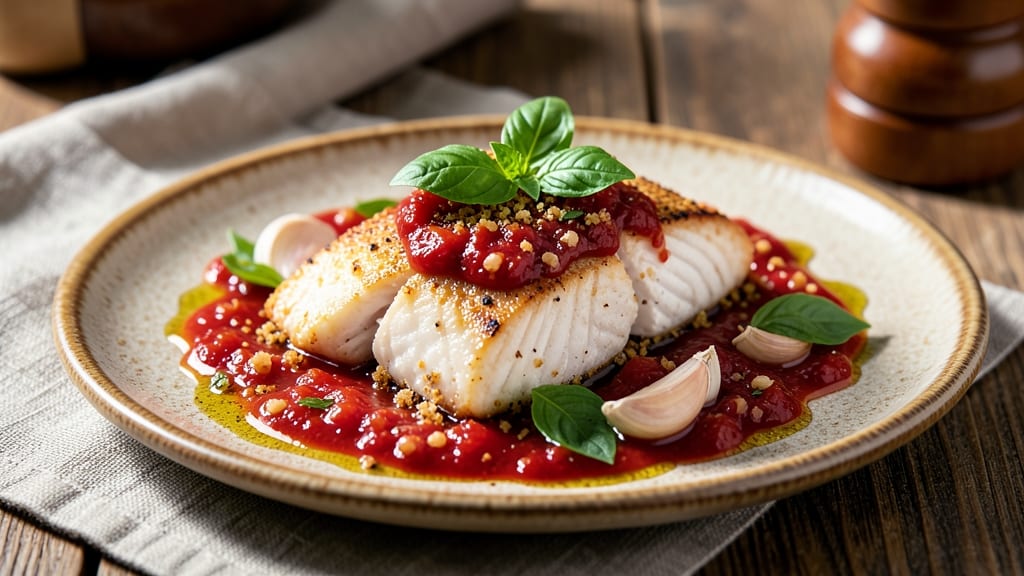
This baked cod in tomato sauce recipe delivers restaurant-quality flakiness with a silky, aromatic sauce that clings to every bite. The secret lies in a balanced tomato-herb sauce that gently poaches the fish, ensuring tender, melt-in-your-mouth texture without overcooking.
I've perfected this method after years of testing—no dry fish here, just perfectly moist, flavorful fillets ready in just 30 minutes.
The foundation is a simple yet deeply flavorful tomato sauce, built with canned tomatoes, garlic, and fresh herbs that infuse the fish with Mediterranean brightness.
Unlike traditional baking methods that risk drying out delicate cod, this approach uses the sauce as both a cooking medium and finishing touch, creating a dish that's elegant yet effortless. The result?
Cod so tender it falls apart at the touch, bathed in a glossy, herby sauce that's rich without being heavy.
What makes this recipe truly special is its versatility—serve it over polenta for a heartier meal, alongside crusty bread to soak up every drop of sauce, or with a simple green salad to balance the richness.
The dish is foolproof for weeknight dinners but impressive enough for guests, all while maintaining a clean, bright flavor profile that lets the cod shine. The secret weapon? A 400°F oven that ensures even cooking without drying out the delicate fish.
Once you try this method, you'll never bake cod the same way again. The sauce doesn't just accompany the fish—it becomes part of the dish, creating a harmonious balance of textures and flavors that's both comforting and sophisticated. Ready to transform simple cod into a showstopper? Let's get started.
Ingredients for baked cod in tomato sauce
Simple ingredients transform into restaurant-style cod with Mediterranean flair in minutes.
| Ingredient | Amount | Notes |
|---|---|---|
| Cod Fillets 🐟 | 4 pieces | Skin-on preferred for texture |
| Canned San Marzano Tomatoes 🍅 | 1 can | 28 oz, crushed by hand |
| Garlic Cloves 🧄 | 3 cloves | Minced for sauce base |
| Fresh Basil Leaves 🌿 | ½ cup | Chopped, stems removed |
| Extra-Virgin Olive Oil 🫒 | ¼ cup | Light fruity variety |
| Dry White Wine 🍷 | ½ cup | Sauvignon Blanc preferred |
| Lemon Juice 🍋 | 1 tbsp | Freshly squeezed |
| Salt 🧂 | 1 ½ tsp | Diamond Crystal kosher |
| Black Pepper 🌶️ | ½ tsp | Freshly cracked |
| Red Pepper Flakes 🌶️ | ¼ tsp | Optional for heat |
| Fresh Parsley 🌿 | ¼ cup | Chopped for garnish |
| Polenta 🌾 | 1 ½ cups | Cooked, for serving |
| Crusty Bread 🍞 | 4 slices | For serving |
| Fresh Thyme Leaves 🌿 | 1 tsp | Chopped, for sauce |
The cod makes or breaks this dish—look for fresh, firm fillets with a vibrant color. Whole Foods or your local fishmonger are best for quality, but any reputable grocery store will have suitable options. Skin-on fillets add texture, but skinless works if that's what's available. The tomatoes are non-negotiable—San Marzano has that perfect balance of sweetness and acidity that makes this sauce sing. Fresh herbs are ideal, but if you're using dried, cut the amount to one-third. The wine adds depth, but if you don't have any, a splash of extra lemon juice will work in a pinch.
No white wine? Fish or vegetable stock with a splash of vinegar gets you close. Fresh basil is ideal, but dried basil at one-third the amount works if that's all you've got. The polenta can be pre-made or cooked fresh—just make sure it's creamy, not gritty. For the bread, a good sourdough or baguette from the bakery section is perfect for soaking up that delicious sauce. The red pepper flakes are optional but add a nice kick—skip them if you prefer mild flavors. And if you're feeling fancy, add a few Kalamera olives to the sauce for extra Mediterranean flair.
This dish reheats beautifully—just warm through gently on the stove with a splash of water. The sauce can be made ahead and stored for up to 5 days in the fridge, but the cod is best cooked fresh. If you're prepping ahead, keep the sauce and cod separate until ready to bake. The polenta keeps well for 3 days in the fridge, and the bread can be toasted fresh when serving. For a complete meal, double the polenta and sauce—leftovers make great lunches.
Why You'll Love This Recipe
- No-Chop Night: I swear by this when I’m too tired to dice anything—just tear basil, crush garlic, and dump tomatoes straight from the can. The sauce still tastes like it simmered for hours, not because I spent hours.
- Garlic-Basil Magic: That first bite? The cod’s tender but holds its shape, kissed by sweet tomatoes and bright basil, with garlic soaking in like a hug. Honestly, my husband licks his plate.
- Lunchbox Hero: Pack the leftovers cold or reheated—the sauce thickens into a glossy coat that makes even office salads feel fancy. (Yes, even on a Tuesday night.)
- Budget Win: Cod’s affordable, San Marzano tomatoes last forever, and olive oil stretches across multiple meals. I’ve fed four people for under $15 with this—no guilt, all flavor.
Step-by-step instructions for baked cod in tomato sauce
Here's how to achieve perfectly flaky cod with a silky tomato sauce that clings beautifully.
Prepare the Tomato Sauce Base
Heat the 0.25 cup extra-virgin olive oil in a medium saucepan over medium heat. Add the 3 minced garlic cloves and 1 tsp chopped fresh thyme leaves, cooking for 1-2 minutes until fragrant but not browned. This step builds the aromatic foundation that will infuse the entire dish.
Pour in the 0.5 cup dry white wine and let it simmer for 2-3 minutes until reduced by half. Add the 1 can crushed San Marzano tomatoes, bringing to a gentle simmer. Season with 1.5 tsp salt, 0.5 tsp black pepper, and 0.25 tsp red pepper flakes if using. Let the sauce cook uncovered for 10 minutes until slightly thickened and the flavors meld together.
Season and Arrange the Cod Fillets
While the sauce simmers, pat the 4 cod fillets dry with paper towels—this ensures crisp skin and prevents steam from making the sauce watery. Season each fillet generously with salt and pepper on both sides, focusing on the edges where they'll touch the baking dish.
Arrange the fillets skin-side down in a single layer in a baking dish just large enough to hold them snugly. Pour the tomato sauce evenly over the fillets, making sure each piece is completely covered. The sauce should reach about halfway up the sides of the fish. Let it sit at room temperature for 5 minutes while you prepare the remaining components.
Bake Until Flaky and Silky
Preheat your oven to 375°F. Bake the cod for 12-15 minutes until the fish is just opaque in the center and flakes easily with a fork. The sauce should be bubbling gently around the edges but not boiling vigorously. If the sauce looks too thick, add 1-2 tablespoons of water to maintain its silky consistency.
Here's the key: the cod is done when it reaches 145°F internally and the edges begin to lift slightly from the baking dish. Overcooking by even 1 minute will turn the delicate fish into rubber. Remove from the oven and let rest for 3 minutes before serving—this allows the juices to redistribute, ensuring each bite is moist and flavorful.
Serve with Polenta and Crusty Bread
While the cod rests, cook the 1.5 cups polenta according to package instructions until creamy and smooth. Stir in 1 tablespoon lemon juice and 2 tablespoons chopped fresh basil leaves just before serving to brighten the flavors. The polenta should be thick enough to hold its shape when spooned but still tender.
Garnish each serving with additional chopped fresh parsley and a drizzle of the reserved tomato sauce. Serve immediately with the 4 slices crusty bread on the side for dipping. The contrast between the flaky cod, silky sauce, and hearty polenta creates a perfect balance of textures and flavors in every bite.
Pro Tips For Making Baked Cod In Tomato Sauce
- Preheat Like It’s 1985: Crank that oven to 400°F (200°C) and let it scream for 10 minutes before anything goes in. I used to skip this, and my cod would either steam like sad office coffee or dry out faster than my motivation on a Monday. That extra heat jump-sears the fillets right away—no sad, gray centers here.
- Crush Garlic Like a Boss: Skip the mincer—smash those cloves with the flat side of your knife first, then chop. San Marzano sauce is sweet and mellow, so you don’t need garlic bomb flavor, but you do want it to dissolve into the sauce without turning it into a pesto. Over-chopping = bitterness city.
- Don’t Crowd the Pan: Give those cod fillets space—no less than ½ inch between them. I learned this the hard way when my first batch turned into a sad, soggy pile. If your pan’s too crowded, the sauce will pool instead of caramelize, and your cod will steam instead of bake. (Pro move: Use a rimmed sheet pan for easy cleanup.)
- Toss Basil at the End: Add fresh basil leaves whole in the last 5 minutes of baking, then let them wilt right over the fillets. Tossing them in early = a bitter, mushy mess. The heat will release their aroma without turning them to sludge, and they’ll stick to the cod like a fancy garnish—no chopping required.
Essential equipment for this recipe
Baking Dish Essentials
Start with a light-colored, oven-safe baking dish—I recommend a 9x13-inch glass or ceramic dish from CorningWare—because it distributes heat evenly and prevents hot spots that can overcook delicate cod.
The dish should be just large enough to fit your fillets snugly in a single layer, allowing the sauce to pool around them without spilling over. Avoid dark-colored dishes, which absorb heat and can dry out the fish faster. 🔥
Precision Thermometer
A meat thermometer is non-negotiable for this recipe. I use the Thermoworks Smoke because it's accurate to ±1°F and has a flexible probe that fits easily into the center of cod fillets. Insert the probe into the thickest part of the fish to check for 145°F internal temperature.
Without this, you risk overcooking the cod, which turns it from tender to tough. If you don’t have one, a kitchen timer paired with visual cues (opaque center, flaky edges) works as a backup.
Saucepan for Sauce
For the tomato sauce, use a medium-sized, heavy-bottomed saucepan like All-Clad Stainless Steel to prevent scorching. The even heat distribution ensures the garlic and wine cook gently without burning, which would make the sauce bitter.
If you don’t have a heavy-bottomed pan, a stainless steel saucepan (like Cuisinart MultiClad) is a budget-friendly alternative. Avoid non-stick pans for this step—they can’t handle the gentle simmering required for flavor development.
Sharp Knife and Cutting Board
A sharp chef’s knife (I prefer Wüsthof Ikon) and a cutting board are essential for prepping the garlic, herbs, and lemon juice. Dull knives make mincing garlic dangerous and chopping herbs inefficient.
For the cod, use a fish fillet knife if you have one—its thin, flexible blade glides through the flesh without tearing. If not, a sharp serrated knife works well. Always keep your cutting board stable (I use a teak board for grip) to avoid accidents.
Measuring Tools
Precision matters in this recipe, so invest in stainless steel measuring spoons (like OXO Good Grips) and a liquid measuring cup. For the olive oil and wine, use the spouted measuring cup to pour directly into the saucepan without spills.
A microplane is also handy for zesting lemon or grating garlic if you prefer that texture. Avoid plastic tools—they can melt or degrade when exposed to high heat or acidic ingredients like lemon juice.
Optional: Fish Spatula
While not required, a fish spatula (like Nordic Ware) makes transferring the cod fillets into and out of the baking dish effortless without tearing the delicate flesh. If you don’t have one, use a flexible silicone spatula or a long-handled fish turner.
Avoid metal spatulas—they can scratch non-stick dishes or damage the fish’s surface. For serving, a slotted spoon helps lift the cod onto plates while allowing excess sauce to drip back into the dish. 💫
Nutrition facts
Frequently asked questions
Can I substitute another white fish for cod?
Halibut, sea bass, or mahi-mahi work beautifully with this method. The key is choosing a firm, medium-thickness fillet that won't fall apart during baking. For delicate fish like tilapia, reduce baking time by 2 minutes to prevent overcooking. Always adjust based on fillet thickness—thicker pieces need extra time.
What if I don't have white wine?
No problem! Use fish or vegetable stock with 1 tablespoon lemon juice for acidity. For a non-alcoholic option, try dry vermouth or even apple cider vinegar (reduce by half). The sauce will still develop great flavor—just monitor the simmer time closely to prevent over-reduction.
How do I prevent the cod from drying out?
The secret is don't overbake—cod is done at 145°F internally. Use a meat thermometer and remove it immediately when it reaches temperature. Also, keep the sauce covering the fillets during baking. If your oven runs hot, reduce temperature to 350°F and add 5 minutes to the baking time.
Can I make the sauce ahead of time?
Yes! The sauce keeps well in the refrigerator for 5 days or freezes for 3 months. Reheat gently on the stove before pouring over the cod. For best results, add 1 tablespoon water when reheating to restore its silky texture. Just don't add the lemon juice or fresh herbs until you're ready to serve.
What's the best way to reheat leftovers?
Gently reheat in a skillet over low heat with 1 tablespoon water or broth to prevent drying. For a quick fix, microwave for 30 seconds covered, then finish with a splash of water. The polenta reheats best in the microwave with a damp paper towel covering it. Always serve with fresh herbs and lemon juice to brighten flavors.