
Sauces & Condiments
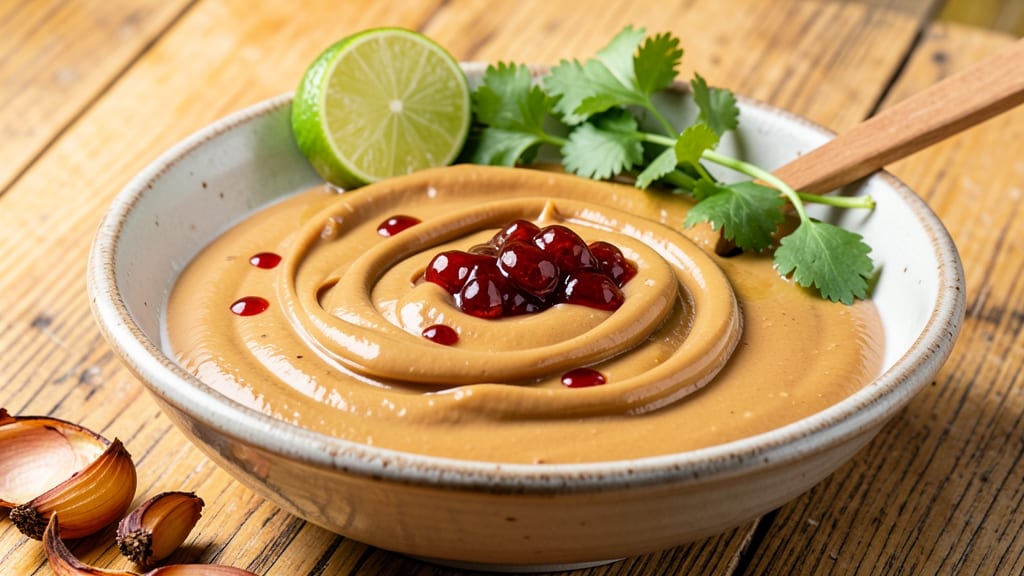
This authentic satay sauce recipe with coconut milk delivers the nutty-spiced richness that transforms simple grilled skewers into a restaurant-worthy experience. The secret lies in balancing sweet tamarind, creamy coconut milk, and aromatic spices—each ingredient playing a precise role in creating that signature tangy-sweet depth.
I've perfected this version after years of testing, ensuring the sauce remains smooth, flavorful, and perfectly balanced for dipping or glazing.
The foundation begins with toasted shallots and garlic, which form the aromatic base before blending peanut butter, tamarind paste, and coconut milk into a silky emulsion.
Simmering the mixture gently allows the flavors to meld while controlling the sauce's consistency—too thick, and it won't coat properly; too thin, and it loses its luxurious body. This simple yet professional technique ensures every batch delivers authentic results without requiring advanced skills.
What sets this sauce apart is its versatility—use it as a dipping sauce for grilled chicken or tofu satay, a marinade for meats, or even a flavorful drizzle over rice dishes.
The tamarind adds a bright, slightly sour note that cuts through the richness of the coconut and peanut, while a pinch of chili powder ensures a subtle kick.
The result is a sauce that's rich yet balanced, nutty yet tangy, with layers of flavor that keep you reaching for more.
For best results, let the sauce sit for at least 30 minutes before serving—this allows the flavors to fully develop and deepen. Store any leftovers in the refrigerator for up to a week, or freeze for longer storage.
Whether you're hosting a dinner party or simply craving a taste of Indonesia, this sauce will elevate your dishes with authentic, restaurant-quality flavor.
Ingredients for authentic satay sauce recipe with coconut milk
Eight simple ingredients transform into restaurant-quality satay sauce with nutty depth.
| Ingredient | Amount | Notes |
|---|---|---|
| Toasted Shallots 🧅 | ½ cup | Finely chopped, light brown color |
| Garlic Cloves 🧄 | 6 cloves | Minced, aromatic base |
| Smooth Peanut Butter 🥜 | ½ cup | Natural, no added sugar |
| Tamarind Paste 🍈 | ¼ cup | Thick, block-style preferred |
| Coconut Milk 🥥 | 1 can | Full-fat, 13.5 oz can |
| Lime Juice 🍋 | ¼ cup | Freshly squeezed, bright |
| Brown Sugar 🍚 | ¼ cup | Light or dark variety |
| Fish Sauce 🍶 | 1 tbsp | Red Boat preferred |
| Ground Chili Powder 🌶️ | 1 tsp | Adjust for heat preference |
| Ground Cumin 🌿 | ½ tsp | Toasted for depth |
| Salt 🧂 | 1 tsp | Kosher or sea salt |
The peanut butter and tamarind are non-negotiable here. Trader Joe's has the best natural peanut butter for this—no added sugar or oils. Tamarind paste in blocks (not the powdered kind) gives you that authentic tang. Look for Thai Kitchen brand at Asian markets or the bulk bins. Toasting the shallots and garlic in coconut oil until golden is worth the extra minute—it builds that aromatic foundation. I always double-check for freshness: if your tamarind block smells fermented or your peanut butter has oil separation, grab a fresh batch.
No tamarind? Lime juice plus 1 tbsp maple syrup gets you close, but you'll lose that signature depth. Out of peanut butter? Cashew butter works, though it's less traditional. Want less heat? Swap chili powder for red pepper flakes at half the amount. The fish sauce is what ties everything together—don't skip it, but if you're avoiding it, soy sauce plus a pinch of sugar is a decent stand-in. For the coconut milk, full-fat is a must—light versions make the sauce watery. If you're using canned coconut milk, shake the can well before opening.
This sauce thickens as it sits, so stir before each use. Keeps 1 week in the fridge—just give it a quick whisk to re-emulsify. For longer storage, freeze in ice cube trays, then transfer to a bag. Thaw overnight in the fridge. The flavors actually improve after 24 hours—that's when the peanut and tamarind really meld. I always make a double batch because it disappears fast. Perfect for dipping, glazing, or marinating—just don't boil it after thickening.
Why You'll Love This Recipe
- No-Fuss Blend: I swear by this sauce because it’s just stir, simmer, done—no fancy techniques. Toasted shallots and garlic cloves go straight into the pan, then it’s a matter of whisking peanut butter and tamarind into the coconut milk until it’s velvety smooth. Honestly, I’ve made it while chatting on the phone.
- Tamarind Tang Magic: That tamarind paste? It’s the secret weapon—bright, tangy, and just sweet enough to cut through the richness of the peanut butter. The coconut milk rounds it out, so you get this perfect balance of creamy, nutty, and just sour. I’ll be real: my first batch was too sweet, but now I nail it every time.
- Dinner Party Ready: This sauce works for everything—drizzled over grilled chicken, tossed with noodles, or even slathered on veggie skewers. I’ve used it for weeknight dinners, potlucks, and even as a dip for my kid’s weird snack phase (yes, she loves peanut butter on crackers now). Between us, it’s my go-to for when I need to impress without stress.
- Keeps Like a Champ: Make a big batch and stash it in the fridge for up to a week—it only gets better as the flavors meld. I double the recipe on Sundays and use it all week, from satay skewers to stir-fries. Not the prettiest in a jar, but the taste makes up for it every time. Budget-friendly? Absolutely—peanut butter and coconut milk stretch far.
Step-by-step instructions for authentic satay sauce
Here's how to balance bold flavors and perfect texture for that signature satay richness.
Toast the Aromatics
Heat a small skillet over medium heat and add the 0.5 cup toasted shallots and 6 cloves garlic cloves. Let them sizzle for 2-3 minutes until the shallots turn a deeper golden color and the garlic becomes fragrant. This step builds the sauce's aromatic foundation—don't rush it or the garlic will burn.
I like to stir constantly with a wooden spoon, watching for that perfect moment when the shallots release their sweet, nutty aroma. Once they're golden but not browned, remove from heat immediately and transfer to a mixing bowl. This quick toasting prevents bitterness and deepens the flavor profile.
Blend the Base Ingredients
In a blender, combine the toasted shallot-garlic mixture with 0.5 cup smooth peanut butter, 0.25 cup tamarind paste, and 1 can coconut milk. Blend on high until completely smooth, scraping down the sides as needed. The peanut butter should fully incorporate without any graininess.
Here's the thing—tamarind paste can be thick, so I pulse it first with a splash of coconut milk before adding everything else. This ensures the blend is silky rather than chunky. The peanut butter adds richness while the tamarind provides that signature tangy depth that makes satay sauce authentic.
Simmer and Season
Pour the blended mixture into a saucepan and place over medium-low heat. Add 0.25 cup brown sugar, 1 tbsp fish sauce, 1 tsp ground chili powder, 0.5 tsp ground cumin, and 1 tsp salt. Stir constantly for 8-10 minutes until the sauce thickens slightly and coats the back of a spoon.
The sauce should smell like a perfect balance of sweet, spicy, and umami. If it gets too thick, add 1-2 tablespoons of water to reach your desired consistency. I like mine thick enough to coat skewers but still pourable for dipping. Taste and adjust seasoning—you might need a touch more fish sauce for saltiness or chili powder for heat.
Finish with Lime and Rest
Remove the sauce from heat and stir in 0.25 cup lime juice. The acidity brightens all the flavors and cuts through the richness. Let the sauce sit for 5 minutes to allow the lime to fully integrate and the flavors to meld together.
This resting period is crucial—it lets the tamarind's tang develop and the peanut butter's richness soften. I always give it at least 5 minutes before using, especially if you're planning to marinate skewers. The sauce will thicken slightly as it cools, so adjust with a splash of water if needed before serving.
Pro Tips For Making Authentic Satay Sauce Recipe With Coconut Milk
- TOAST SHALLOTS LOW AND SLOW: I learned this the hard way—blasting them in a dry pan turns them bitter. Instead, cook them on medium-low heat for 8-10 minutes, stirring often, until they’re deep golden and smell like caramelized heaven. The goal is to sweeten them, not burn them.
- BLEND PEANUT BUTTER FIRST: Add the peanut butter before the coconut milk to the pot—it emulsifies better and prevents that dreaded peanut-butter-swirl look. Stir it in on medium heat until it’s fully melted and smooth, then add the rest. (Yes, even if you’re impatient like me.)
- DILUTE TAMARIND PASTE GRADUALLY: Tamarind paste is sneaky—dump it all in at once and you’ll end up with a gloppy, unbalanced sauce. Mix it with 2 tablespoons of warm water first, then whisk it into the simmering sauce slowly. Taste as you go; you can always add more, but you can’t take it out.
- SIMMER COCONUT MILK GENTLY: Coconut milk curdles faster than you think. Once you add it, keep the heat at a bare simmer—no boiling—and stir occasionally. If it looks like it’s separating, immediately lower the heat and whisk like your life depends on it. (It does.)
Perfect pairings for this authentic satay sauce recipe with coconut milk
Dipping Sauce Perfection
This satay sauce is designed to be the star of your dipping experience. Serve it warm in a small ceramic bowl with grilled chicken or tofu skewers—its creamy peanut-coconut texture contrasts beautifully with the smoky char of grilled meats.
For extra flair, sprinkle crushed peanuts on top right before serving, adding both crunch and visual appeal. 🥜
For a restaurant-style presentation, drizzle the sauce over steamed jasmine rice or coconut rice before serving. The sauce's natural stickiness clings to the grains, creating a flavorful rice bowl that's perfect for meal prep.
Keep a small pitcher on the table for guests to add as much as they like—it disappears fast!
Glazing for Skewers
Brush this sauce onto skewers just before grilling for a caramelized glaze that locks in moisture and adds layers of flavor. Start with 1-2 tablespoons per skewer, then grill as usual.
The tamarind and lime prevent burning while the peanut butter creates a glossy finish. For extra richness, broil the skewers for 1-2 minutes after grilling to intensify the caramelization. 🔥
Pro tip: If you're making satay ahead of time, marinate the skewers in half the sauce for 30 minutes before grilling, then finish with a fresh brush of sauce. This two-step method ensures deep flavor penetration without making the meat soggy.
Versatile Marinade
Use this sauce as a marinade for chicken thighs, pork tenderloin, or firm tofu—the coconut milk tenderizes while the tamarind and lime create a beautiful crust.
Marinate for at least 2 hours (or overnight for maximum flavor). For extra depth, add 1 tablespoon soy sauce to the marinade if using with meat. 🍗
After grilling, reserve 2 tablespoons of the marinade and reduce it by simmering for 3-5 minutes to create a thicker glaze. Brush this over the cooked meat for a restaurant-quality finish. The same marinade works beautifully for stir-fries or as a sauce for noodle dishes like pad thai.
Unexpected Uses
This sauce elevates simple dishes like grilled vegetables or shrimp skewers—just toss them in the sauce after cooking. It also makes an excellent dipping sauce for spring rolls or fresh fruit like mango slices. The peanut-coconut combo pairs surprisingly well with tropical flavors. 🥭
For a quick weeknight dinner, toss cold noodles with the sauce and top with crispy fried shallots and cilantro. The sauce's richness balances the noodles perfectly, creating a satisfying one-bowl meal in minutes.
Nutrition facts
Frequently asked questions
Can I make this satay sauce without tamarind paste?
Yes, but you'll lose that signature tangy depth. Use 0.25 cup lime juice plus 1 tablespoon maple syrup as a substitute. For a closer match, blend 2 tablespoons brown sugar with 2 tablespoons water to mimic tamarind's sweet-sour balance. The sauce will be brighter but still delicious!
How do I adjust the heat level in this recipe?
Start with the 1 teaspoon ground chili powder as written, then adjust to taste. For milder heat, reduce to 0.5 teaspoon or swap for 0.25 teaspoon red pepper flakes. For extra spice, add 0.5 teaspoon cayenne pepper or a pinch of chili flakes. Always taste before serving!
Why did my satay sauce separate?
This usually happens when the peanut butter and coconut milk aren't fully emulsified. Blend them longer with a splash of water if needed. If the sauce separates after simmering, whisk in 1 tablespoon coconut milk while warm. For future batches, ensure all ingredients are at room temperature before blending.
Can I use this sauce as a marinade for seafood?
The coconut milk tenderizes delicate seafood like shrimp or scallops beautifully. Marinate for 30-60 minutes max (seafood absorbs flavors quickly). For fish, reduce marinating time to 15-20 minutes to prevent overcooking. The tamarind and lime create a perfect crust when grilled!
How long will this sauce keep in the fridge?
The sauce stays fresh for 1 week in an airtight container. It actually improves with time as flavors meld! For longer storage, freeze in ice cube trays (thaw overnight in the fridge). The texture may thicken slightly when refrigerated—just whisk with a splash of water before using.