
Sauces & Condiments
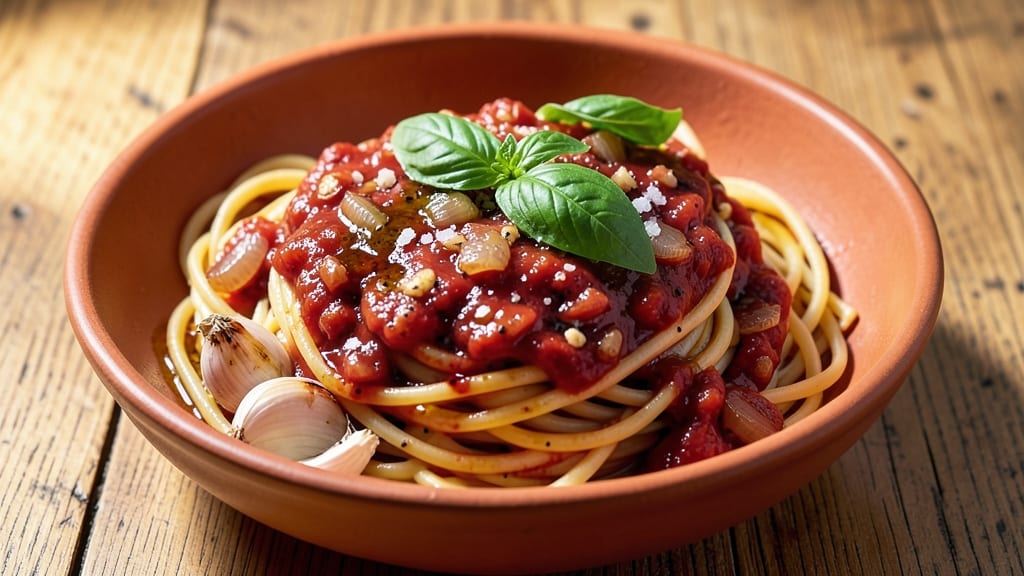
This authentic red sauce pasta recipe brings the soul of Italy to your dinner table with a balance of smoky tomato depth and herby brightness. 🌟 The secret lies in slow-cooked tomatoes, aromatic herbs, and a touch of sweetness to round out the acidity—just like Nonna used to make.
I’ve refined this version to deliver restaurant-quality flavor without sacrificing simplicity, so you can enjoy the process as much as the result.
What sets this recipe apart is the umami-rich base—a blend of tomatoes, garlic, and onions simmered until deeply concentrated, then elevated with a splash of red wine and a sprinkle of Parmesan. The sauce clings to al dente pasta perfectly, creating a dish that’s both comforting and sophisticated.
Whether you’re serving it for a family dinner or a weeknight meal, this sauce transforms simple ingredients into something extraordinary.
The key to success is patience: letting the sauce develop its flavors over time while keeping the pasta tender. With just a few pantry staples and an hour of hands-off cooking, you’ll have a dish that’s authentic, hearty, and full of Italian charm.
Pair it with crusty garlic bread and a simple salad for a complete meal that feels like a taste of Tuscany.
This recipe works equally well with pappardelle, fettuccine, or even penne—just adjust the sauce quantity to taste. The beauty of this method is its versatility: use ground beef for a heartier ragù or keep it vegetarian for a lighter, equally satisfying dish. Let’s get cooking!
Ingredients for authentic red sauce pasta
Pantry staples meet Italian charm in this red sauce pasta recipe—simple ingredients, bold flavors.
| Ingredient | Amount | Notes |
|---|---|---|
| Extra-Virgin Olive Oil 🫒 | ½ cup | For sautéing onions and garlic |
| Yellow Onion 🧅 | 1 whole | Diced into small pieces |
| Garlic Cloves 🧄 | 4 cloves | Minced for aromatic base |
| Canned San Marzano Tomatoes 🍅 | 28 oz | Crushed by hand or blender |
| Red Wine 🍷 | ½ cup | Bold dry variety like Chianti |
| Fresh Basil Leaves 🌿 | ⅓ cup | Chopped finely for freshness |
| Fresh Parsley 🌿 | ¼ cup | Chopped for brightness |
| Dried Oregano 🌿 | 1 tsp | Italian variety preferred |
| Ground Black Pepper 🌶️ | ½ tsp | Freshly ground for heat |
| Parmesan Cheese 🧀 | ½ cup | Freshly grated from block |
| Pasta 🍝 | 12 oz | Pappardelle or fettuccine preferred |
| Salt 🧂 | 1 ½ tsp | Kosher or sea salt |
| Sugar 🍯 | 1 tsp | Balances acidity |
| Vegetable Broth 💧 | ½ cup | Low-sodium preferred |
The tomatoes make this sauce. San Marzano is the gold standard—sweet, meaty, and less acidic than regular canned tomatoes. I grab mine from Trader Joe's or any Italian market, but the regular grocery store brand works in a pinch. Fresh basil is non-negotiable here, but if you're out, dried oregano at half the amount will keep the Italian vibe. The red wine? Any bold, dry variety—Chianti or Cabernet both work. Just make sure it's not too sweet, or the sauce will taste off. For the pasta, pappardelle or fettuccine are traditional, but penne works too if you've got it.
No San Marzano tomatoes? High-quality crushed tomatoes will do, but add an extra pinch of sugar to balance the acidity. Running low on red wine? Vegetable broth with a splash of balsamic vinegar mimics the depth. Fresh herbs wilt fast, so if you're prepping ahead, store them separately and add them at the end. The Parmesan needs to be freshly grated—pre-grated gets clumpy and doesn't melt right. For a vegetarian twist, skip the optional ground beef and add mushrooms or lentils for heartiness. The sugar might seem odd, but it rounds out the acidity—trust me on this.
This sauce tastes even better the next day, so make extra. It keeps for 5 days in the fridge or 3 months frozen. I always double the batch and freeze half for lazy weeknights. The pasta? Cook it al dente—it'll finish cooking in the sauce. Store leftovers in an airtight container with a little olive oil on top to keep it fresh. And if you're serving it to guests, garnish with extra Parmesan and a sprinkle of fresh basil—it looks as good as it tastes.
Why You'll Love This Recipe
- No-Fuss Simplicity: I swear, this sauce comes together in one pot—no blender, no fancy techniques. Just onions caramelizing in olive oil, a splash of wine, and those San Marzano tomatoes doing all the heavy lifting. My kids think I’m some kind of chef, but honestly? It’s more like assembling than cooking.
- Wine-Infused Depth: That red wine isn’t just for flavor—it’s the secret weapon. It softens the acidity of the tomatoes and adds this rich, earthy backbone that makes the sauce taste layered, not one-note. (Yes, even the cheap grocery-store wine works—just don’t tell anyone.)
- Leftovers That Beg for Seconds: This sauce improves overnight, getting thicker and more complex. I always make double batches because it’s perfect for lunches, sandwiches, or even a quick breakfast scramble. My freezer’s full of it, and I don’t even care—I’ll eat it straight from the jar.
- Budget Meal for Any Night: San Marzano tomatoes and olive oil might sound fancy, but they stretch forever. A single can of tomatoes and a bottle of wine feed four people for under $10, and the leftovers? Even better the next day. This is my “I have nothing in the fridge” go-to—and it never lets me down.
Step-by-step instructions for authentic red sauce pasta
This isn't your grandma's tomato sauce—we're making Italian nonna-style pasta with depth and balance.
🍳 Step 1: Build the Flavor Base
Heat the 0.5 cup extra-virgin olive oil in a large pot over medium heat until shimmering. Add the 1 whole yellow onion (diced) and cook for 5-6 minutes until soft and translucent, stirring occasionally. Here's the thing—don't rush this step. You want the onion to caramelize just slightly for that sweet foundation.
Push the onions to one side of the pot and add the 4 cloves minced garlic. Stir for 30 seconds until fragrant—you'll smell that unmistakable garlic aroma. Watch carefully though; garlic burns fast. If it starts to brown too quickly, reduce heat to medium-low immediately. This aromatic base is where all the magic begins.
🍳 Step 2: Develop the Tomato Sauce
Pour in the 0.5 cup red wine and let it simmer for 2-3 minutes until mostly evaporated. The alcohol will cook off, leaving behind just the wine's rich flavors. Add the 28 oz crushed San Marzano tomatoes, 1 tsp sugar, 1 tsp dried oregano, and 1.5 tsp salt. Stir well to combine.
Bring to a gentle simmer and cook uncovered for 20-25 minutes while stirring occasionally. You're looking for a sauce that thickens naturally as the water content reduces. The sugar helps balance the acidity of the tomatoes, while the oregano adds that classic Italian depth. Real talk: don't skip this simmering time—it's what transforms basic canned tomatoes into restaurant-quality sauce.
🍳 Step 3: Enhance with Herbs and Broth
After the initial simmer, stir in the 0.5 cup vegetable broth and 0.5 tsp ground black pepper. Let the sauce cook for another 5 minutes to meld all the flavors. This is when you'll add the 0.33 cup chopped fresh basil leaves and 0.25 cup chopped fresh parsley. I like to add them just before serving to preserve their bright flavors, but if you're making this ahead, add them during the last 5 minutes of cooking.
The sauce should now be thick, velvety, and full of complex flavors. Taste and adjust seasoning if needed—sometimes you need a touch more salt or a splash of water to reach your preferred consistency. Here's the secret: the best red sauces aren't just about tomatoes; it's about layering flavors through proper technique.
🍳 Step 4: Cook the Pasta
While the sauce simmers, bring a large pot of well-salted water to a rolling boil. Add the 12 oz pasta and cook until 1 minute before al dente (check package instructions). I always save 1 cup of pasta water before draining—this starchy liquid is liquid gold for adjusting sauce consistency.
Drain the pasta but don't rinse it. The starch on the pasta helps the sauce cling beautifully. Here's where it gets fun—toss the hot pasta directly into your sauce pot. Stir vigorously for 1-2 minutes to coat each strand. If the sauce seems too thick, add splashes of the reserved pasta water until it reaches a silky consistency that coats the back of a spoon.
🥘 Step 5: Finish and Serve
Remove from heat and stir in the 0.5 cup freshly grated Parmesan cheese. The heat will make it melt beautifully into the sauce, creating a creamy finish. Let the pasta rest for 2-3 minutes off the heat—this allows the sauce to fully coat every noodle.
Serve immediately with extra grated Parmesan and a sprinkle of fresh basil. Each forkful should deliver perfectly al dente pasta with that rich, smoky tomato sauce clinging to every strand. Trust me, this isn't just pasta—it's a flavor experience that tastes authentically Italian.
Pro Tips For Making Authentic Red Sauce Pasta
- Sweat the Onion First: I used to rush this and end up with raw onion chunks in my sauce—no one wants that. Cut the onion into even ¼-inch slices and cook them in the olive oil over medium-low heat until they’re translucent and just starting to caramelize (about 8-10 minutes). This builds flavor without burning, and the sauce won’t taste like you skipped a step.
- Deglaze with Wine Immediately: As soon as you remove the garlic (after it’s golden but not brown), pour in that red wine and let it bubble away for 30 seconds. Scrape up every last bit of browned goodness from the pan—this is where the depth of flavor hides. Skipping this step means missing out on the sauce’s soul.
- Crush the Tomatoes by Hand: Drain the San Marzano tomatoes but don’t break them up with a spoon—use your fingers to gently crush them against the side of the pot. This keeps some texture and prevents a watery sauce. If you’re lazy, at least give them a rough mash before adding them to the pan.
- Simmer Low and Slow: After adding the tomatoes, reduce the heat to the lowest setting you can tolerate and let the sauce bubble gently for at least 20-25 minutes. Stir occasionally, but don’t obsess—just let it work its magic. Rushing this turns a rich, balanced sauce into something thin and one-dimensional. (Yes, even if you’re starving.)
Dietary considerations for authentic red sauce pasta
Vegetarian Adaptations
Skip the optional protein entirely and add 8 oz mushrooms (cremini or portobello) sautéed with the onions for a hearty vegetarian version. Sauté the mushrooms until golden before adding garlic, then proceed with the recipe as written.
For extra umami, stir in 1 tbsp soy sauce or 1 tsp miso paste when adding the tomatoes. 🌱
Gluten-Free Options
Use gluten-free pasta like brown rice or chickpea-based noodles—they absorb sauce differently, so add 2-3 tbsp pasta water to maintain silky texture. I recommend Barilla Gluten-Free Pappardelle for the most authentic experience. For extra flavor, toss the cooked pasta with 1 tbsp nutritional yeast before mixing with the sauce.
Low-Carb Versions
Replace pasta with shirataki noodles (rinsed thoroughly) or zucchini noodles for a lighter option. Zucchini noodles cook in 2 minutes—toss them with sauce for just 1 minute—to avoid mushiness. For extra protein, stir in ½ cup cooked lentils—they blend beautifully with the tomato flavors.
Dairy-Free Substitutes
Replace Parmesan with nutritional yeast—it adds a cheesy flavor without dairy. Use ½ cup—it's stronger than cheese, so start with less. For extra richness, stir in 1 tbsp olive oil—it mimics the creaminess of Parmesan while keeping the dish dairy-free.
Allergen-Friendly Tips
For nut allergies, avoid any almond-based Parmesan substitutes and stick with nutritional yeast. If wine is a concern, substitute with ½ cup extra vegetable broth—add ½ tsp balsamic vinegar—to replicate the depth.
Always check labels on canned tomatoes and broth for hidden allergens like soy or gluten.
Nutrition facts
Frequently asked questions
What makes this red sauce different from regular marinara?
This sauce builds depth through slow simmering, red wine reduction, and balanced seasoning—no added sugar or artificial flavors. The key difference is the 20-25 minute simmer that concentrates flavors and the umami boost from fresh herbs and Parmesan. Regular marinara often skips these steps, resulting in a thinner, more acidic sauce.
Can I use fresh tomatoes instead of canned?
Fresh tomatoes work but require extra prep—peel, seed, and chop 4-5 large ripe tomatoes (about 2 cups). They'll release more water, so simmer uncovered for 30-40 minutes until thickened. For best results, blend half the tomatoes into a sauce first to reduce moisture.
Why does my sauce get watery when mixed with pasta?
This happens when the sauce lacks starch or the pasta absorbs too much liquid. Always reserve 1 cup pasta water before draining, then add it gradually to the sauce while tossing. For extra insurance, stir in 1 tbsp cornstarch mixed with 2 tbsp water to thicken. The sauce should coat the back of a spoon without being gluey.
What's the best pasta shape for this sauce?
Flat noodles like pappardelle, fettuccine, or tagliatelle work best—they cradle the sauce beautifully. For ribbed varieties like penne or rigatoni, add 1 extra tablespoon olive oil to prevent sticking. Avoid thin strands like spaghetti unless you prefer a lighter sauce coating.
How can I make this sauce ahead of time?
Prepare the sauce completely (without pasta) and store it in an airtight container in the fridge for 5 days or freeze for 3 months. Reheat gently on the stove with a splash of water or broth. For best texture, cook pasta fresh and toss with reheated sauce. The flavors actually improve overnight!