
Sauces & Condiments
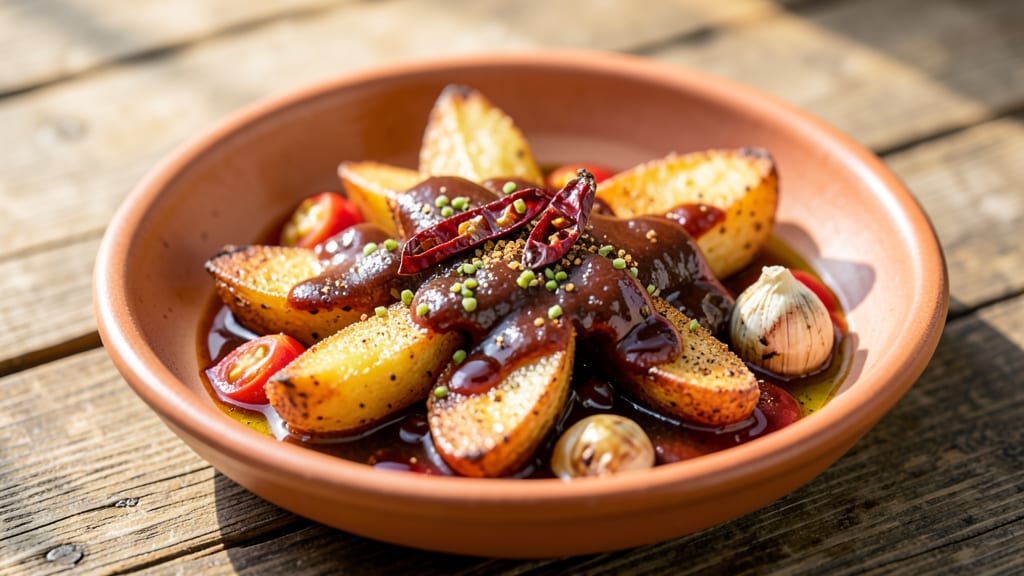
This authentic patatas bravas sauce transforms simple tapas into a smoky, spicy masterpiece—just like Spain’s most beloved bar snack. 🔥 The secret lies in slow-simmered tomatoes, smoldering smoked paprika, and a touch of vinegar that cuts through the heat, creating a sauce that’s bold yet balanced.
I’ve perfected this recipe over years of tapas nights, ensuring every spoonful delivers that unmistakable Spanish flavor without overpowering the crispy potatoes it’s meant to accompany.
The foundation is a classic salsa brava: ripe tomatoes blended with garlic, smoked paprika, and a splash of sherry vinegar for depth. What sets this apart is the chipotle crunch—a blend of dried chipotle peppers and celery seeds that adds a smoky, slightly sweet kick.
The sauce simmers until thick and velvety, then finishes with a touch of honey for balance, ensuring it’s complex enough to stand alone but simple enough to elevate any dish. No shortcuts here—just the real deal.
Once you taste this sauce, you’ll understand why it’s a staple in Spanish bars. The smoky paprika and chipotle create a warmth that lingers, while the vinegar keeps it bright and vibrant. It’s the kind of sauce that makes even the simplest fried potatoes taste like a gourmet experience.
The best part? It keeps beautifully in the fridge for up to a week, so you can make a big batch and enjoy it all week long.
For an extra touch of authenticity, top with crispy fried celery crowns—a traditional garnish that adds crunch and visual appeal. This isn’t just a sauce; it’s a flavor bomb that turns any meal into a taste of Spain. Let’s get cooking!
Ingredients for authentic patatas bravas sauce
Eleven ingredients that pack a smoky, spicy punch—just like Spain’s tapas bars.
| Ingredient | Amount | Notes |
|---|---|---|
| Ripe Tomatoes 🍅 | 2 lbs | Roma or vine-ripened preferred |
| Smoked Paprika 🌶️ | 3 tbsp | High-quality Spanish smoked paprika |
| Dried Chipotle Peppers in Adobo 🌶️ | 2 whole | Mined for smoky depth |
| Garlic Cloves 🧄 | 6 cloves | Freshly minced for aroma |
| Sherry Vinegar 🍷 | ¼ cup | For authentic tang |
| Celery Seeds 🧅 | 1 tsp | Crunchy, earthy kick |
| Extra-Virgin Olive Oil 🫒 | ½ cup | High-quality for richness |
| Honey 🍯 | 1 tbsp | Balances heat |
| Salt 🧂 | 1 ½ tsp | Diamond Crystal preferred |
| Ground Black Pepper 🌶️ | ½ tsp | Freshly cracked |
| Celery Crowns 🥬 | 1 whole | For crispy garnish |
The tomatoes are the heart of this sauce. Roma tomatoes work best—they’re meaty and less watery than other varieties. I always grab them at Whole Foods or my local Spanish market, but regular grocery stores carry them too. Look for ones that are firm but yield slightly when squeezed. The smoked paprika? Penzeys has the best Spanish variety, but any high-quality smoked paprika will do. The chipotle peppers in adobo are key for that authentic smoky depth—don’t skip the adobo sauce, as it adds moisture and flavor. For the celery crowns, grab the thick, pale green stalks from the produce section—they fry up crispy and add that perfect crunch.
No smoked paprika? Regular paprika plus a pinch of liquid smoke gets you close. Short on chipotle peppers? Dried ancho chiles or even a pinch of cayenne can work in a pinch, but the smoky depth will be different. The sherry vinegar is non-negotiable for authenticity—subbing with regular white vinegar will work, but it won’t have the same complexity. For the celery seeds, if you can’t find them, a pinch of ground coriander adds a similar earthiness. The honey balances the heat, so if you’re avoiding sugar, a splash of apple cider vinegar can add brightness instead. Fresh garlic is a must here—jarred garlic just doesn’t cut it.
This sauce tastes even better the next day as the flavors meld. Store it in an airtight container in the fridge for up to 1 week. For the celery crowns, fry them fresh when you’re ready to serve—they lose crispness fast. If you want to prep ahead, fry a big batch and store them in the freezer for up to 1 month. Reheat the sauce gently on the stove, stirring occasionally. It thickens as it cools, so add a splash of water if it gets too stiff. Trust me, this sauce is worth making a big batch of—you’ll want it on everything from fries to grilled meats.
Why You'll Love This Recipe
- No-Fuss Simmer: I swear by this sauce because it’s basically hands-off after the initial chop. Toss everything—tomatoes, chipotle, garlic—into a pot, let it bubble, and boom, you’ve got depth without standing over the stove. My lazy Sundays thank me.
- Smoky Heat Balance: That first bite? Sweet tomatoes caramelizing with smoldering paprika and a whisper of chipotle—it’s the kind of sauce where the heat lingers but doesn’t overpower. Sherry vinegar ties it all together like a perfect hug of acidity.
- Game for Any Night: Toss it with fries for a classic, but I’ve also drizzled it over grilled chicken or even scrambled eggs. (Yes, I’m weird like that.) It’s the one sauce that turns a simple meal into something that feels special—no fancy prep required.
- Budget Magic Maker: Ripe tomatoes and smoked paprika cost pennies, and a single adobo canned chipotle stretches across multiple batches. I make a double batch every time, freeze half, and still have leftovers for days. Efficiency at its finest.
Step-by-step instructions for authentic patatas bravas sauce
Here's how to build that signature smoky, slightly sweet, and crunchy sauce from Spain.
🍳 Step 1: Roast the Tomatoes for Deep Flavor
Preheat your oven to 425°F. Cut the 2 lbs ripe tomatoes in half crosswise and place them cut-side down on a rimmed baking sheet. Drizzle with 2 tablespoons of the extra-virgin olive oil and sprinkle with ½ teaspoon of the salt. Roast for 25-30 minutes until the skins blister and darken—this caramelizes their natural sugars and intensifies their flavor.
Real talk: don't skip this step. Roasting transforms the tomatoes from fresh to deeply concentrated, forming the base of that authentic bravas sauce. You'll know they're ready when they smell sweetly smoky and the edges are slightly charred. Let them cool for 10 minutes before handling—they'll be hot!
🍳 Step 2: Build the Smoky Base with Chipotle and Aromatics
While the tomatoes cool, heat the remaining 3 tablespoons extra-virgin olive oil in a large skillet over medium heat. Add the 6 cloves minced garlic and cook for 30 seconds until fragrant—don't let it brown or it'll turn bitter. Remove the garlic with a slotted spoon and set aside.
Add the 2 whole dried chipotle peppers in adobo, sliced lengthwise, and the 3 tablespoons smoked paprika to the skillet. Toast for 1-2 minutes until the paprika smells aromatic and the peppers darken slightly. Here's the thing—this is where that authentic smoky depth comes from. Don't rush it, but don't burn it either.
🍳 Step 3: Blend the Sauce to Silky Perfection
Transfer the roasted tomatoes to the skillet with the chipotle mixture. Using a wooden spoon, mash them against the pan's sides to release their juices. Add the ¼ cup sherry vinegar, 1 tablespoon honey, 1 teaspoon celery seeds, remaining 1 teaspoon salt, and ½ teaspoon ground black pepper. Stir well to combine.
Let the mixture simmer for 5-7 minutes until it thickens slightly. Then, carefully transfer everything to a blender (don't overfill—leave room for expansion). Blend until completely smooth, scraping down the sides as needed. You want a sauce that coats the back of a spoon with a velvety texture—this is your base sauce.
🔥 Step 4: Simmer and Season to Balance Flavors
Return the blended sauce to the skillet and simmer over medium-low heat for 10-15 minutes, stirring occasionally. This slow reduction concentrates the flavors and develops that perfect balance of smoky, tangy, and slightly sweet notes. Taste and adjust seasoning—you might need a bit more salt or vinegar to achieve that authentic bravas tang.
Here's where it gets fun: the sauce should be thick enough to coat the back of a spoon but still pourable. If it's too thick, add 1-2 tablespoons water to loosen it. If it's too thin, simmer longer until it reaches the right consistency. The sauce should cling beautifully to fried potatoes—this is the moment that matters.
🥘 Step 5: Prepare the Celery Crown Topping
While the sauce simmers, cut the celery crowns into ¼-inch thick slices. Heat 2 tablespoons olive oil in a separate skillet over medium heat until shimmering. Add the celery in a single layer and fry for 3-4 minutes per side until golden brown and crispy. You want them to look like little crispy chips—this is what gives bravas its signature crunch!
Transfer the fried celery to paper towels to drain excess oil, then sprinkle with a pinch of salt. Keep them warm until serving. This crispy topping is what makes bravas special—don't skip it! The contrast between the silky sauce and crispy celery is what makes this dish unforgettable.
Pro Tips For Making Authentic Patatas Bravas Sauce
- Char the Tomatoes: Get them deeply browned—almost black in spots—before blending. I used to skip this and ended up with a pale, watery sauce that lacked real depth. A dry skillet over medium-high heat for 10-12 minutes (stirring occasionally) concentrates the sweetness and smoky notes the sauce needs to shine.
- Blend the Adobo Paste: Don’t just toss in the dried chipotle—mix the paste with a splash of the cooking liquid first. The adobo sauce is thick and sticky, and blending it directly often leaves clumps that ruin the texture. A quick whisk with 1-2 tablespoons of water or tomato juice ensures even distribution.
- Toast the Paprika Wet: Bloom the smoked paprika in the oil after the garlic sizzles but before adding vinegar. Dry-toasting burns it fast, turning the sauce bitter. A few seconds with the garlic (until fragrant) is enough—just enough to wake up the smoky flavor without overpowering it.
- Strain the Sauce: Even if you blend finely, strain it through a fine-mesh sieve. The chipotle seeds and tomato skins add bitterness and grittiness that’ll make your sauce taste amateur. Takes 30 seconds but guarantees a silky, restaurant-quality finish—trust me, it’s worth it.
Make-ahead tips for this dish
Sauce Prep Ahead
Make this sauce 2 days in advance for the best flavor development. Store it in an airtight glass container in the fridge, where it thickens slightly and flavors meld beautifully.
The longer it sits, the deeper the smoky-sweet balance becomes. I like to make a big batch—this sauce elevates everything from tapas to grilled meats all week long. 💫
Celery Crown Prep
Fry celery crowns fresh when serving for maximum crispiness, but you can prep them ahead too. Fry a big batch, drain on paper towels, and store in a single layer in the freezer for up to 1 month.
Reheat in a 350°F oven for 5-7 minutes to restore crispness. Pro tip: Keep them in a paper bag to maintain crunch longer than plastic containers.
Freezer Storage
This sauce freezes beautifully for up to 3 months. Portion it into ice cube trays before transferring to a freezer bag—this makes it easy to thaw just what you need.
When ready to use, thaw overnight in the fridge, then reheat gently on the stove with 1 tablespoon water to restore texture. Never microwave—it ruins the velvety consistency. ❄️
Batch Adjustments
Double or triple the recipe for parties—just maintain the same ratios. For example, 4 lbs tomatoes, 6 tbsp smoked paprika, and 4 chipotle peppers scale perfectly. Use a large stockpot for simmering and a high-powered blender like the Ninja BN601 to handle bigger batches smoothly.
The key is patience—rushing the simmering will make the sauce watery.
Reheating Secrets
Always reheat sauce gently on low heat to preserve texture. If it thickens too much, add 1 tbsp water per cup of sauce while warming. For extra richness, stir in 1 tsp olive oil at the end.
I avoid microwaving—it turns the sauce grainy and dulls the smoky flavors. A quick 3-5 minute simmer brings back that restaurant-quality velvety finish.
Nutrition facts
Frequently asked questions
Can I make this sauce without roasting the tomatoes?
Roasting is key for authentic flavor, but you can use canned crushed tomatoes in a pinch. Simmer them for 10 minutes first to reduce excess water, then proceed with the recipe. The sauce will be less concentrated but still delicious. For best results, stick with fresh tomatoes—roasting caramelizes their natural sugars for that signature depth.
What can I substitute for chipotle peppers in adobo?
If you can't find chipotle peppers, try 1-2 teaspoons smoked paprika plus ½ teaspoon cayenne for heat. For a milder option, use 1 teaspoon dried ancho chiles (soaked first) or ½ teaspoon liquid smoke. The smoky depth will differ slightly, but it'll still deliver that characteristic bravas kick. Just adjust the vinegar if needed—smoke can make the sauce taste heavier.
How spicy should this sauce be?
The sauce should have a moderate heat level—warm and smoky with a subtle kick, not overwhelming. Taste after simmering and adjust with more honey (1 tsp) to balance or extra vinegar (1 tsp) to brighten if needed. For extra heat, add ½ teaspoon cayenne at the end. The celery crowns add crunch to cool the palate naturally.
Can I use this sauce for other dishes besides patatas bravas?
This versatile sauce works perfectly with fried fish, grilled meats, tortilla chips, or even as a pasta sauce. Its smoky-sweet balance pairs well with rich proteins like chorizo or pulled pork. For dipping, thin it slightly with water or broth. The celery crowns add a fun garnish to any dish too!
Why did my sauce turn out too thick/thin?
If too thick, stir in 1-2 tablespoons water while reheating. For thin sauce, simmer uncovered for 5-10 more minutes to reduce. The ideal consistency should coat the back of a spoon but still be pourable. Pro tip: Use a large skillet for simmering—small pans concentrate heat and can make the sauce reduce too quickly.