
Sauces & Condiments
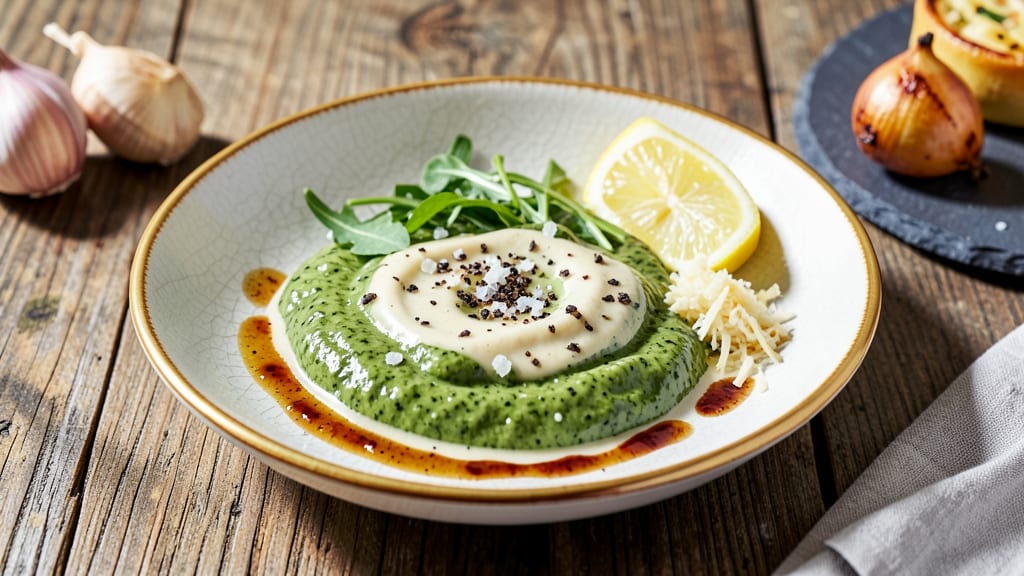
This arugula sauce recipe transforms simple ingredients into a creamy, peppery masterpiece that elevates any dish. The secret lies in blending fresh arugula with garlic, lemon, and Parmesan, creating a sauce that's both vibrant and rich—without heavy cream.
I developed this version after realizing store-bought options never captured the bright, slightly bitter depth of fresh greens.
The beauty of this sauce is its versatility—it works as a dressing for salads, a drizzle for pasta, or even a dip for crusty bread.
The key technique is pulsing the arugula until it releases its natural oils, which creates that signature creamy texture without adding extra fat. A touch of Dijon mustard adds depth, while lemon juice keeps the flavors bright and balanced.
What you'll end up with is a sauce that's restaurant-quality but takes just minutes to prepare. The peppery bite of arugula cuts through rich dishes, while the Parmesan adds a savory richness that makes every bite satisfying.
It's the kind of sauce that transforms simple meals into something special—without the fuss.
Store it in the fridge for up to 3 days, or freeze for longer shelf life. Perfect for meal prep, this sauce keeps its vibrant color and fresh taste, ready to brighten up any dish. Let's make it!
Ingredients for arugula sauce
Eight simple ingredients transform into a restaurant-quality sauce that's creamy yet vibrant.
| Ingredient | Amount | Notes |
|---|---|---|
| Fresh Arugula Leaves 🌿 | 2 cups | Packed, stems removed |
| Extra-Virgin Olive Oil 🫒 | ½ cup | High-quality, fruity |
| Garlic Cloves 🧄 | 2 cloves | Peeled, roughly chopped |
| Parmesan Cheese 🧀 | ½ cup | Freshly grated from block |
| Lemon Juice 🍋 | 2 tbsp | Freshly squeezed |
| Dijon Mustard 🌶️ | 1 tsp | Mild or strong variety |
| Salt 🧂 | ½ tsp | Diamond Crystal preferred |
| Black Pepper 🌶️ | ¼ tsp | Freshly ground preferred |
The arugula is the star—freshness matters here. Grab the brightest, most vibrant leaves you can find, ideally from a farmers market or the produce section of a Whole Foods. Avoid wilted or yellowing greens, as they'll compromise the sauce's signature peppery bite. The Parmesan should be real Parmigiano-Reggiano, freshly grated from a block—pre-grated cheese lacks the depth and texture. For olive oil, California Extra Virgin or Italian brands like Bertolli or Filippo Berio deliver the best flavor. The garlic cloves should be firm and free of sprouts, and the lemon juice should come from freshly squeezed lemons if possible—bottled juice lacks the bright acidity needed to balance the sauce.
No fresh arugula? Baby spinach or baby kale work in a pinch, though the flavor will be milder. Running out of Parmesan? Pecorino Romano or even nutritional yeast (for a vegan option) can add a similar umami depth. Short on Dijon mustard? Whole-grain mustard thinned with a splash of water works just as well. The olive oil can be swapped for avocado oil if you prefer a neutral flavor, but stick with extra-virgin for the best results. If you're making this ahead, store the sauce in an airtight container with a thin layer of olive oil on top to preserve its vibrant green color and fresh taste.
This sauce keeps beautifully in the fridge for up to 3 days, though it's best enjoyed within 24 hours for peak freshness. For longer storage, freeze in ice cube trays—perfect for adding a single serving to any dish. To prevent browning, press plastic wrap directly onto the surface before sealing the container. The sauce reheats beautifully, making it ideal for meal prep. If the texture thickens upon reheating, simply stir in a splash of water or olive oil to restore its creamy consistency.
Why You'll Love This Recipe
- No Chopping Needed: I swear by this—just tear those arugula leaves by hand. No knife skills required, and the sauce still tastes like you slaved over it.
- Bright & Tangy Magic: That lemon juice cuts through the richness of the olive oil and Parmesan, giving it a fresh kick. Honestly, it’s the perfect balance—creamy but never heavy.
- Pasta’s New Best Friend: Drizzle it over hot pasta, toss it with grilled chicken, or spread it on toast. I’ve used it for breakfast, lunch, and dinner—it’s that adaptable.
- Cheap & Lasts Days: Arugula’s affordable, and this sauce keeps in the fridge for days without wilting. Between us, I’ve had it for five days straight—still delicious. Budget win.
Step-by-step instructions for arugula sauce
This vibrant sauce combines fresh arugula with rich Parmesan for a creamy, peppery finish perfect over pasta or proteins.
Blanch the Arugula
Bring a small pot of water to a gentle boil. Add the 2 cups of fresh arugula leaves and cook for exactly 30 seconds—just enough to soften the leaves while preserving their vibrant green color. Immediately drain in a colander and rinse under cold water to stop the cooking process.
This quick blanching removes the bitter edge from arugula's stems while keeping the leaves tender enough to blend smoothly. Overcooking will turn the sauce bitter, so watch the time closely. Once cooled, gently squeeze out excess water using a clean kitchen towel or paper towels—this ensures your sauce won't be watery.
Pulse the Arugula and Garlic
Transfer the blanched arugula to a food processor along with the 2 peeled garlic cloves. Pulse 3-4 times until the mixture is finely chopped but not completely pureed—you want visible texture for that fresh, peppery bite. Scrape down the sides of the processor bowl to ensure even blending.
Here's where the magic happens: the garlic should be completely broken down but still visible as tiny flecks. This creates layers of flavor without overpowering the delicate arugula. If you're using a blender instead, pulse at high speed for 10-12 seconds—just enough to break down the leaves without turning them into a smooth paste.
Add Creamy Elements
With the processor running, slowly drizzle in the 0.5 cup of extra-virgin olive oil through the feed tube. This gradual addition creates an emulsion that prevents the sauce from separating. Add the 0.5 cup of freshly grated Parmesan cheese, 1 teaspoon of Dijon mustard, and the 0.5 teaspoon of salt.
Pulse again until the mixture is completely smooth, scraping down the sides as needed. The sauce should look like thick pesto with a vibrant green hue. If it's too thick, add 1 tablespoon of water at a time until it reaches a pourable consistency. The mustard helps emulsify the oil and cheese, creating that signature creamy texture promised in the title.
Finish with Acid and Season
Transfer the mixture to a bowl and stir in the 2 tablespoons of freshly squeezed lemon juice and 0.25 teaspoon of freshly ground black pepper. Taste and adjust seasoning—you might need a pinch more salt to balance the acidity. The lemon juice brightens the flavors and prevents the sauce from tasting too heavy.
Let the sauce sit for 5 minutes before serving. This resting time allows the flavors to meld completely. The sauce should coat the back of a spoon with a velvety texture while still retaining that signature peppery kick from the arugula. For best results, use within 2 hours—the freshness of the ingredients makes all the difference.
Pro Tips For Making Arugula Sauce
- Pulse Garlic Fast: Toss the whole garlic cloves into the food processor with the arugula—no peeling needed. I learned this the hard way after peeling cloves only to realize the skins add texture and prevent bitterness. Just hit pulse twice, then scrape down the sides.
- Dry Arugula First: Pat the leaves thoroughly with paper towels before blending—wet arugula waterlogs the sauce and makes it slimy. I used to skip this, and the sauce always ended up too thin. Five seconds of drying saves you from adding extra oil later.
- Toast Garlic Slightly: Add a pinch of salt to the garlic cloves before pulsing—it draws out moisture and prevents burning. I was skeptical until I tried it; now the garlic flavor pops without turning acrid. Just 3-4 seconds in the processor is enough.
- Use Cold Oil: Chill the extra-virgin olive oil in the fridge for 10 minutes before adding it to the arugula. Cold oil emulsifies better and keeps the sauce from separating. I used to add it straight from the bottle, and the sauce always broke after sitting for 10 minutes.
Common mistakes when making your arugula sauce
Over-Blanching Arugula
I’ve made this mistake more than once—leaving the arugula in the boiling water for too long. 30 seconds is the absolute max; any longer and the leaves turn bitter and mushy, ruining the sauce’s delicate balance.
The goal is to soften the leaves just enough to blend smoothly while preserving their vibrant, peppery flavor. If your arugula starts looking wilted or darkens in color, it’s time to pull it out immediately. 🌿
Skipping the Cold Water Rinse
After blanching, always rinse the arugula under cold water to stop the cooking process. Skipping this step means the leaves will continue cooking in the food processor, leading to a bitter, watery sauce.
The cold shock also helps set the color, keeping that bright green hue that makes this sauce so visually appealing. Pro tip: Use an ice bath for even better results—just transfer the blanched arugula to a bowl of ice water for 10 seconds before draining.
Pulsing Too Long in the Processor
Over-processing turns your sauce into a smooth, flavorless paste instead of the textured, vibrant condiment you want. Aim for 3-4 pulses—just enough to break down the arugula into small, visible pieces. If you pulse too long, the sauce loses its fresh, peppery bite and becomes dull.
For a quick check, take a taste halfway through blending; if it’s already too smooth, stop immediately. 💫
Adding Oil Too Quickly
Drizzling olive oil too fast while blending causes the sauce to separate into a greasy, broken emulsion. Instead, slowly add the oil through the feed tube while the processor is running. This gradual addition helps create a stable emulsion, just like making mayo.
If the sauce starts looking oily or clumpy, stop and scrape down the sides before continuing. Patience here makes all the difference!
Using Pre-Grated Parmesan
Pre-grated Parmesan is often coated with anti-caking agents that prevent it from melting smoothly into the sauce, resulting in a grainy texture. Always use freshly grated Parmigiano-Reggiano from a block for the best results.
If you’re in a pinch, buy a block and grate it yourself—it’s worth the extra effort. The difference in texture and flavor is night and day. 🧀
Neglecting the Resting Time
Rushing to serve the sauce right after blending means missing out on its full potential. Let it sit for 5 minutes before tasting or serving—this allows the flavors to meld and the sauce to thicken slightly.
Skipping this step can leave the sauce tasting flat or overly acidic. If you’re short on time, at least let it rest for 2 minutes; you’ll notice the difference in depth of flavor.
Nutrition facts
Frequently asked questions
Can I make this arugula sauce without blanching the greens?
You can try, but blanching is key for the best texture! Without it, the sauce may turn bitter or watery. For a quick alternative, massage the arugula with salt and lemon juice for 1 minute before blending—this helps break down the leaves slightly. However, blanching ensures a smoother, creamier result.
How do I store leftover arugula sauce?
Store in an airtight container in the fridge for up to 3 days, covered with a thin layer of olive oil to preserve color and freshness. For longer storage, freeze in ice cube trays—perfect for adding to dishes later! Thaw overnight in the fridge before using.
Can I substitute Parmesan for a vegan alternative?
Use nutritional yeast (2 tbsp) or vegan Parmesan (¼ cup) for a cheesy flavor without dairy. Add a splash of lemon juice to balance the taste. The texture will be slightly lighter, but still delicious. For extra creaminess, stir in 1 tbsp vegan mayo or silken tofu.
What’s the best way to use this sauce?
This versatile sauce works as a pasta drizzle, salad dressing, or dip for crusty bread. Toss with fresh linguine or grilled chicken for a quick meal. It also pairs perfectly with roasted veggies or as a topping for flatbread pizza. The peppery kick brightens rich dishes beautifully!
Why did my sauce turn bitter?
Overcooking the arugula (blanching too long) or using wilted greens are common culprits. To fix it, stir in ½ tsp sugar or 1 tsp honey> to balance the bitterness. For future batches, stick to 30 seconds of blanching> and use the freshest arugula possible.