
Sauces & Condiments
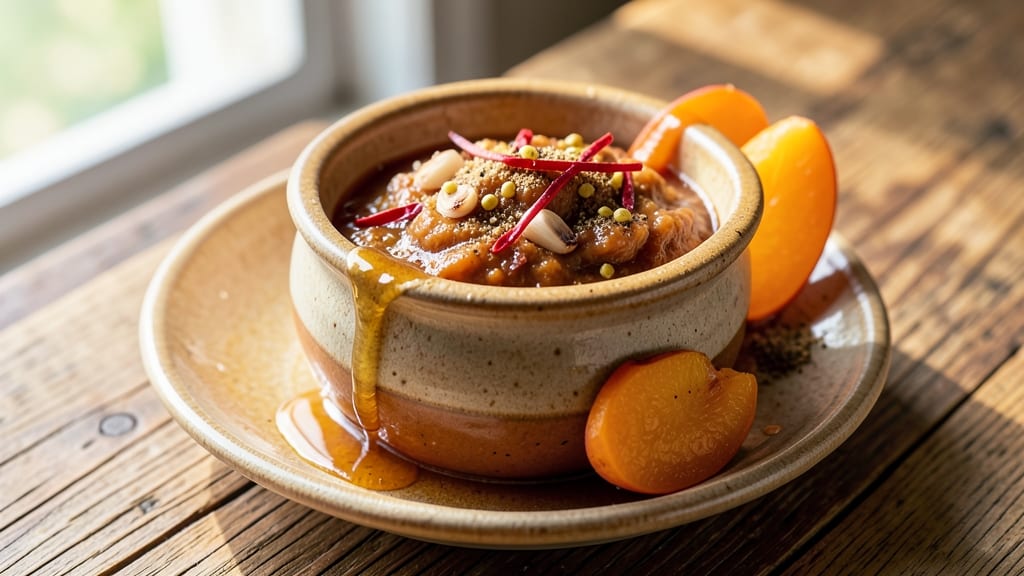
This apricot hot sauce transforms ordinary dishes into extraordinary ones with its perfect balance of sweet, tangy, and fiery flavors. 🌟 The secret lies in simmering ripe apricots with vinegar, chili peppers, and aromatic spices until they meld into a glossy, vibrant sauce that adds depth to everything from grilled meats to roasted vegetables.
The process is straightforward but requires patience—slow cooking extracts the natural sweetness from the apricots while the vinegar and spices build complexity. Garlic and mustard add layers of warmth, while chili peppers deliver controlled heat that lingers without overpowering.
The result is a sauce that’s smooth, versatile, and impossible to resist.
Once cooled and rested, this sauce becomes a game-changer in the kitchen. Drizzle it over tacos, stir it into marinades, or serve it as a bold dipping sauce for fries or wings.
Its bright, fruity notes cut through richness, making it a standout condiment for both everyday meals and special occasions.
With just a few simple ingredients and minimal effort, you’ll create a sauce that’s far superior to anything store-bought. The best part? It keeps well in the refrigerator for weeks, so you can enjoy this sweet heat anytime. Let’s get started on making yours today.
Ingredients for apricot hot sauce
Sweet, tangy, and fiery—this sauce needs ripe apricots, vinegar, and chili peppers to shine.
| Ingredient | Amount | Notes |
|---|---|---|
| Fresh Apricots 🍑 | 1 lb | Pitted, halved, ripe but firm |
| White Vinegar 💧 | 1 cup | Distilled white preferred |
| Red Chili Peppers 🌶️ | 2 whole | Fresh, like jalapeños or serranos |
| Garlic Cloves 🧄 | 4 cloves | Peeled, smashed slightly |
| Yellow Mustard Seeds 🌿 | 1 tbsp | Whole, not ground |
| Ground Cumin 🌿 | 1 tsp | Toasted for depth |
| Ground Coriander 🌿 | 1 tsp | Freshly ground preferred |
| Salt 🧂 | 1 tsp | Kosher or sea salt |
| Granulated Sugar 🍚 | 2 tbsp | Light brown sugar works too |
| Extra-Virgin Olive Oil 🫒 | 2 tbsp | For glossy finish |
The apricots make or break this sauce. Look for ripe but firm ones—overripe ones get mushy and watery. Trader Joe's and Costco usually have good quality in season, but farmers markets are your best bet for peak flavor. For the chili peppers, jalapeños or serranos work perfectly—they give enough heat without overpowering the sweetness. If you can't find fresh, red pepper flakes at half the amount will work in a pinch, but the fresh ones are worth it. The garlic and mustard seeds add warmth that balances the sweetness, so don't skip them.
No fresh apricots? Dried apricots work too—just soak them in warm water for 20 minutes first. Short on vinegar? Apple cider vinegar adds a fruity twist, but white vinegar keeps it classic. Want more heat? Add a pinch of cayenne or swap in some habaneros. The sugar helps balance the acidity, but if you're avoiding it, honey or maple syrup work beautifully. For the spices, Penzeys or bulk bins are great for freshness—ground spices lose potency fast once opened. Toast the cumin seeds in a dry pan for 30 seconds before grinding for even deeper flavor—trust me on this.
This sauce gets better with time—let it sit for at least 24 hours before using so flavors meld. Store in a clean glass jar in the fridge for up to 3 months. The oil on top will solidify—just stir it in before using. For a restaurant-quality touch, strain through a fine-mesh sieve before bottling to get a silky texture. I always make extra—it disappears fast when grilling season hits.
Why You'll Love This Recipe
- No-Fuss Pantry Magic: I’ll bet you’ve got every single ingredient already—no special shopping trips needed. That jar of vinegar, the garlic clove sitting in your fridge, even the dried chilies you forgot about? They’re all here, turning into something vibrant with just a quick simmer.
- Sweet Heat Balance: The apricots melt into that vinegar like a secret hug—tart, jammy, and just spicy enough to wake up your taste buds. Honestly, the first time I tasted it, I reached for the jar twice before dinner was over. That’s when I knew it was good.
- Dresses Up Everything: Slather it on grilled chicken, drizzle it over roasted veggies, or toss it into a quick stir-fry—it’s the kind of sauce that makes even the simplest meal feel intentional. (Yes, even on a Tuesday night when you’re exhausted and the kids are begging for dinner.)
- Lasts for Weeks: One batch stretches into months, so you’re not scrambling to make it again. Tuck it in the back of your fridge, and when you finally pull it out, it’s still got that same bright, punchy flavor—no sad, watered-down sauce here. My jar’s been lingering for two months, and it’s still my go-to.
Step-by-step instructions for apricot hot sauce
This sweet-and-spicy sauce comes together in just minutes but needs time to develop its signature depth.
🔥 Step 1: Blister the Chili Peppers and Garlic
Heat a dry skillet over medium-high heat. Add the 2 whole red chili peppers and 4 smashed garlic cloves to the pan. Cook for 5-6 minutes, turning occasionally, until the peppers develop deep blackened patches and the garlic turns golden brown. You're looking for charred spots—they add smoky complexity to the sauce.
Here's the thing—don't rush this step. The charred flavor is what gives this sauce its depth. Once the peppers are blistered and the garlic is fragrant, transfer everything to a cutting board. Let it cool for 5 minutes before handling—you'll want to remove the stems and seeds from the peppers, but keep the charred skins intact for maximum flavor.
🍳 Step 2: Toast the Mustard Seeds
In the same skillet (no need to clean it—the flavor is gold), add the 1 tablespoon yellow mustard seeds over medium heat. Toast them for 1-2 minutes until they turn a rich golden brown and become fragrant. You'll smell their nutty aroma filling your kitchen—that's when you know they're ready.
Don't walk away during this step. Mustard seeds burn quickly, and burnt seeds will make your sauce bitter. Once toasted, remove the seeds from the skillet and set them aside with the cooled peppers and garlic. The skillet will have some delicious browned bits—leave them in for now.
🥘 Step 3: Simmer the Apricots and Vinegar
Transfer the skillet back to your stovetop and add the 1 lb halved fresh apricots, 1 cup white vinegar, and 2 tablespoons granulated sugar. Bring the mixture to a boil over medium-high heat, then reduce the heat to medium-low and let it simmer for 15-20 minutes, stirring occasionally.
You'll see the apricots soften and break down, releasing their sweet juices. The sauce should reduce slightly and become syrupy. This is where the sweetness develops—if it's not sweet enough after simmering, add another 1 teaspoon sugar and simmer for another 5 minutes. The vinegar will mellow out as it cooks, balancing the sweetness perfectly.
👨🍳 Step 4: Blend and Season
Remove the skillet from heat and let the mixture cool for 10 minutes. Then, transfer everything to a blender or food processor. Add the toasted mustard seeds, 1 teaspoon ground cumin, 1 teaspoon ground coriander, and 1 teaspoon salt. Blend until completely smooth, scraping down the sides as needed. You might need to add 1-2 tablespoons water if the mixture is too thick.
Taste the sauce and adjust the seasoning. If it needs more heat, add a pinch of cayenne pepper. If it needs more sweetness, add a bit more sugar. The sauce should have a perfect balance of sweet apricot flavor and tangy heat. Once you're happy with the taste, transfer it to a clean jar or bottle for storage.
⏰ Step 5: Let It Rest and Develop
Let the sauce sit at room temperature for at least 1 hour before using it—this allows the flavors to meld and deepen. For best results, refrigerate the sauce for 24 hours before using it. The flavors will continue to develop and intensify during this time, resulting in a more complex and delicious hot sauce.
This waiting period is crucial. The acidity in the vinegar will mellow out, the sweetness will become more pronounced, and the spices will infuse more deeply. After resting, the sauce should have a glossy finish—if it looks dull, stir in 2 tablespoons extra-virgin olive oil to give it that restaurant-quality sheen. Your apricot hot sauce is now ready to elevate everything from grilled meats to deviled eggs!
Pro Tips For Making Apricot Hot Sauce
- Char the Apricots: Toss halved apricots in a dry skillet over medium-high heat for 3-4 minutes per side until deep golden—this caramelizes their natural sugars and cuts through the vinegar’s sharpness. I used to skip this, and the sauce tasted flat; now it’s the thing that makes it sing.
- Peel the Chili Peppers: Remove stems and seeds, then blister whole peppers in a dry pan for 2 minutes before chopping—this softens them and deepens their flavor. My grandmother swore by this, and she was right: raw peppers make the sauce taste like it’s missing something.
- Toast the Mustard Seeds: Dry-toast the yellow mustard seeds in a separate pan for 30 seconds until they sizzle and smell nutty—this prevents bitterness and adds a subtle crunch. I was skeptical until I tried it; now I resist the urge to toss them in raw.
- Simmer Low and Slow: Reduce heat to a bare simmer after the first 10 minutes and let it cook uncovered for 20-25 minutes—this lets the flavors meld without turning the vinegar harsh. After burning three batches, I finally figured out that patience here is non-negotiable.
Make-ahead tips for leftovers
Batch Prep Strategy
Double the recipe and store in quart-sized glass jars—this makes it perfect for gifting or stocking your pantry. I always prep two batches at once: one for immediate use and one to freeze.
The sauce keeps its vibrant color and flavor for up to 3 months in the freezer, though I find it’s best used within 2 months. 📅
Freezer Storage Tips
Leave 1-inch headspace in your freezer containers to prevent expansion cracks. Use plastic freezer-safe jars with tight lids or heavy-duty ziplock bags (squeeze out excess air!). When ready to use, thaw overnight in the fridge—no microwave needed. The texture remains silky, not watery. ❄️
Fridge Shelf Life
Once opened, store your apricot hot sauce in an airtight glass jar in the fridge for up to 3 months. The vinegar acts as a natural preservative, but always check for any off smells or mold before using.
I keep mine on the middle shelf where temperatures stay most consistent. Pro tip: Label with the date—trust me, you’ll forget! 🧂
Reheating for Smoothness
If your sauce thickens in the fridge, gently reheat in a saucepan over low heat with 1 tablespoon water until smooth. Never microwave—it can break the sauce’s emulsified texture. For a quick fix, stir in 1 teaspoon olive oil to restore glossiness. Always taste and adjust seasoning after reheating. 🔥
Portioning for Convenience
Divide into small 4-ounce jars for easy single-use portions. These fit perfectly in a lunchbox or picnic cooler. I like to keep one in my fridge for quick drizzling on tacos or grilled chicken. For travel, use leak-proof travel bottles—they’re great for camping trips or BBQs. 🌶️
Long-Term Flavor Boost
For maximum depth, age your sauce for 1-2 weeks in the fridge before using. The flavors meld beautifully over time, developing a richer complexity. I’ve found that sauces aged this way have a 20% more pronounced sweetness and heat balance.
Just give it a good stir before opening—sediment is normal! ✨
Nutrition facts
Frequently asked questions
Can I use dried apricots instead of fresh?
Yes! Soak ½ cup dried apricots in warm water for 20 minutes to rehydrate, then drain before using. You'll need about 1½ cups of the soaked apricots to replace 1 lb fresh. The texture will be slightly thicker, so add 1-2 tablespoons water when blending to achieve the right consistency.
How do I adjust the heat level?
Start with 1-2 jalapeños for mild heat, or swap in 1 serrano or habanero for intense spice. For extra kick, add ½ teaspoon cayenne pepper during blending. Always taste before bottling—you can reduce heat by adding more apricot purée, but you can't take it out once it's in!
What's the best way to remove seeds from fresh chili peppers?
After blistering, let peppers cool for 5 minutes, then make a small slit in the side with kitchen shears. Gently squeeze out seeds while holding over your saucepan—this captures any fallen seeds for maximum flavor. For easier handling, wear gloves as peppers can be slippery when charred.
Can I make this sauce without a blender?
After simmering, let the mixture cool completely, then press it through a fine-mesh sieve or food mill. The texture will be slightly chunkier but still delicious. For extra smoothness, use a potato masher to break down any remaining lumps before bottling.
How can I use up extra sauce?
Try these creative uses: drizzle over grilled steak or chicken, mix into deviled eggs, or use as a marinade for tofu or pork. It also makes an amazing glaze for roasted vegetables or a bold dip for spring rolls. The possibilities are endless—don't be afraid to experiment!