
Sauces & Condiments
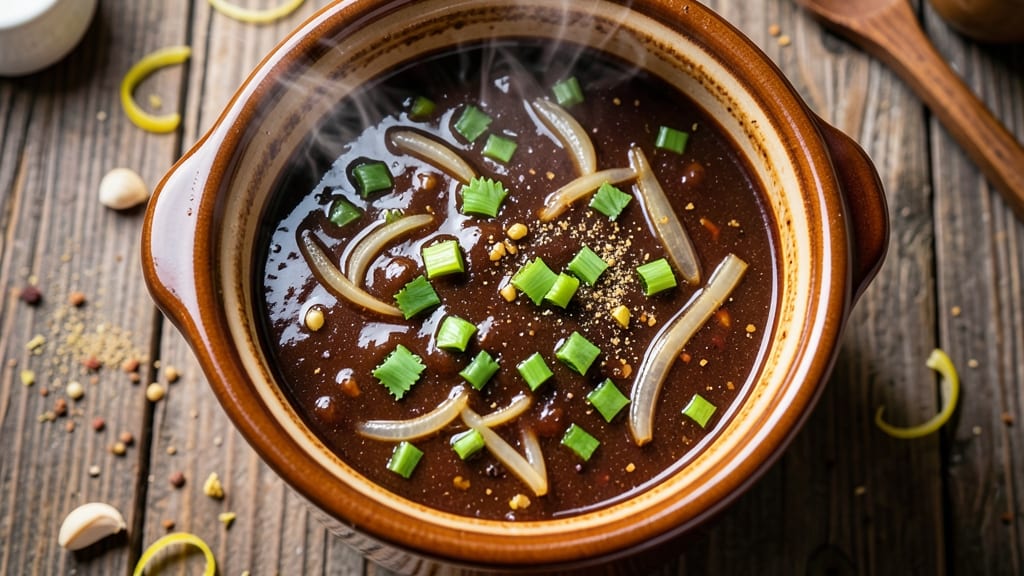
This Amish BBQ sauce recipe brings the heart of Pennsylvania farmhouse kitchens to your grill—where celery crowns add unexpected crunch and slow-simmered spices create depth that store-bought versions can't match.
The secret lies in balancing sweet molasses with tangy vinegar and a touch of cinnamon, creating a sauce that's rich without being cloying, smoky without overpowering. I developed this after years of perfecting the perfect balance between old-world Amish traditions and modern grilling needs.
The beauty of this recipe is its simplicity—just 10 ingredients that come together in a single pot with no fancy techniques required. You'll start with fresh celery crowns (the leafy tops) that add subtle bitterness and texture, while spices like mustard seed and cloves build layers of warmth.
The sauce thickens naturally as it simmers, creating that perfect glaze consistency that clings beautifully to ribs, chicken, or pulled pork.
What makes this sauce truly special is how it transforms ordinary grilled meats into something extraordinary. The caramelized edges from the celery crowns add a pleasant crunch, while the molasses and vinegar create a perfect sweet-tangy balance that cuts through rich meats.
It's the kind of sauce that makes your neighbors ask for seconds—and then beg for the recipe.
Best of all, this sauce keeps beautifully for up to 3 months in the refrigerator, making it perfect for batch cooking and gifting. Whether you're slow-cooking ribs for a family gathering or basting grilled chicken for a weeknight dinner, this Amish-inspired BBQ sauce will elevate every bite.
Let's get started on making yours today!
Ingredients for amish bbq sauce
Ten simple ingredients transform into the soul of Pennsylvania farmhouse grilling—where celery crowns add crunch and spices sing.
| Ingredient | Amount | Notes |
|---|---|---|
| Celery Crowns (Leafy Tops) 🧅 | 1 ½ cups | Chopped, including stems for texture |
| Unsweetened Molasses 🍯 | ½ cup | Blackstrap preferred for depth |
| Apple Cider Vinegar 🍎 | ½ cup | Raw, unfiltered for tang |
| Yellow Onion 🧅 | 1 whole | Medium, finely diced |
| Garlic Cloves 🧄 | 4 cloves | Peeled, minced for aroma |
| Ground Mustard Seed 🌶️ | 1 tbsp | Freshly ground for heat |
| Ground Cinnamon 🌿 | 1 tsp | Warm, authentic Amish touch |
| Ground Cloves 🌶️ | ½ tsp | Whole cloves crushed first |
| Kosher Salt 🧂 | 1 ½ tsp | Diamond Crystal preferred |
| Black Peppercorns 🌶️ | ½ tsp | Freshly cracked for bite |
Celery crowns are the star here—those leafy tops you usually toss. Look for fresh, vibrant green crowns at farmers markets or your grocery store's produce section. They add a subtle bitterness and satisfying crunch that store-bought sauces miss. Whole Foods usually carries them year-round, but local Amish markets in Pennsylvania have the freshest. If you can't find crowns, regular celery stalks work (just remove the leaves), but you'll lose that special texture. The molasses? Blackstrap is non-negotiable—it's richer and less sweet than regular molasses, giving that authentic Amish depth. I always grab mine from Trader Joe's—their blackstrap is affordable and consistently good.
No celery crowns? Substitute with chopped regular celery plus 1 tbsp lemon juice for a similar bite. Running low on molasses? Maple syrup works in a pinch, but reduce it by 1 tbsp since it's sweeter. Vinegar options? Balsamic vinegar adds complexity, but stick with apple cider for that classic Amish tang. The spices are where this sauce gets its magic—toast your whole spices first (cinnamon, cloves) in a dry pan for 30 seconds to wake up their flavors. No fresh peppercorns? Regular ground pepper at half the amount works, but you'll lose that little pop of texture. Pro tip: Make a double batch—this sauce tastes even better after sitting overnight as the flavors meld.
This sauce keeps for 3 months in the fridge in an airtight jar, so it's perfect for batch cooking. Freeze portions in ice cube trays for easy single-use servings—just thaw and stir. The flavors actually improve after a week or two, so don't hesitate to make extra for gifting. I always label mine with the date and 'Best After 2 Weeks'—trust me, it's worth the wait. For grilling, bring the sauce to room temperature before using so it spreads beautifully. And if you're feeling fancy, reduce it by 20% on the stove for an extra-thick glaze that clings like a dream to ribs or pulled pork.
Why You'll Love This Recipe
- Uses Pantry Staples: I swear by this sauce because it’s made with things I already have—molasses, vinegar, and those celery tops gathering dust in my fridge. No fancy shopping trips here, just honest, flavorful ingredients that cost next to nothing.
- No Stress Simmering: Honestly, it’s the kind of recipe where you can walk away. Toss everything in a pot, let it bubble for 20 minutes, and the molasses and vinegar do all the heavy lifting. That celery top bit? It’s the secret—earthy, bright, and it disappears into the sauce without fuss.
- Tastes Like Grandma’s: Between us, this isn’t your store-bought, overly sweet BBQ sauce. The molasses gives it that deep, rich backbone, while the vinegar keeps it sharp and tangy—just like the sauce my grandma used to make for Sunday dinners. It’s the kind of flavor that sticks with you.
- Doubles for Everything: I make a big batch and keep it in the fridge for weeks. Slather it on pulled pork, drizzle it over baked beans, or even toss it with roasted veggies. It’s my go-to for weeknight dinners, potlucks, or whenever I need something that tastes homemade but takes zero effort.
Step-by-step instructions for Amish BBQ sauce
This homemade sauce delivers that signature Amish crunch and depth—no shortcuts, just pure flavor.
Prep the Celery Crowns and Onion
Start by washing the 1.5 cups celery crowns (leafy tops) thoroughly to remove any dirt. Chop them finely, including the stems—this adds wonderful texture to the sauce. In a separate bowl, finely dice the whole yellow onion until you have small, even pieces. The onion will sweeten as it cooks, adding natural sweetness to balance the tang.
Here's the thing—don't skip the stems. They contain a subtle bitterness that rounds out the molasses and vinegar. If you're using fresh celery, be sure to remove any tough strings from the leaves before chopping. This prep work takes about 5 minutes, but it's worth it for that authentic Amish crunch.
Sauté Aromatics Until Soft
Heat a medium saucepan over medium heat and add the chopped celery crowns and onion. Cook for 8-10 minutes, stirring occasionally, until the onions become translucent and the celery softens. You'll notice the mixture releases moisture and starts to caramelize slightly—this is where the foundational flavor develops.
I like to press down gently with a wooden spoon during the first few minutes to help break down the celery stems. Don't walk away—burnt aromatics ruin the sauce. When the celery is tender and the onions are golden, it's time to add the garlic. This is the moment that matters: the aromatics should smell rich and inviting, like the start of something special.
Add Molasses and Vinegar
Pour in the 0.5 cup unsweetened molasses and 0.5 cup apple cider vinegar, stirring constantly to combine. The mixture will bubble vigorously as the molasses heats up. Let it simmer for 5-7 minutes until slightly thickened. You're looking for a sauce that coats the back of a spoon but still flows easily—this ensures it'll cling perfectly to your BBQ.
This is where the real magic happens. The molasses brings deep caramel notes while the vinegar adds that signature tang. If the sauce looks too thin, let it simmer uncovered for another minute or two. The reason we wait until the aromatics are fully cooked first is that raw onion and celery can make the sauce taste bitter if added later.
Season with Spices and Salt
Reduce heat to low and stir in the 1 tablespoon ground mustard seed, 1 teaspoon ground cinnamon, 0.5 teaspoon ground cloves, 1.5 teaspoons kosher salt, and 0.5 teaspoon black peppercorns. Let the sauce simmer for another 3-4 minutes, stirring frequently. The spices will bloom and infuse the sauce with warmth and complexity—you'll smell that familiar Amish spice blend that makes this sauce so special.
Here's a pro tip: if you're using freshly ground spices, the flavor will be more vibrant. I always crack the whole cloves first in a mortar and pestle before grinding them—this releases more aroma. Taste the sauce now; it should be tangy, sweet, and spicy with a hint of earthiness from the celery. If it needs more salt, add it now—you can't fix under-seasoned sauce later.
Simmer to Perfection and Cool
Continue simmering for 10-15 minutes until the sauce thickens to your desired consistency. It should coat the back of a spoon but still be pourable. For a thicker sauce, simmer longer; for a thinner one, add a splash of water. The celery crowns should be completely tender, breaking down into the sauce and creating that signature crunch.
Once thickened, remove from heat and let it cool completely. This resting period allows the flavors to meld and the sauce to thicken further. Store in an airtight container in the refrigerator for up to 2 weeks or freeze for longer storage. The longer it sits, the better the flavors develop—this sauce only gets better with time.
Pro Tips For Making Amish Bbq Sauce
- CHAR THE CELERY FIRST: I learned this the hard way—skipping this step means your sauce will taste raw and bitter. Sear the celery crowns in a dry pan for 2-3 minutes until they darken slightly before adding any liquid. This caramelizes the natural sugars and deepens the flavor.
- USE THICK MOLASSES: Don’t grab just any molasses—opt for unsweetened, but even then, check the color. Darker molasses adds richer depth, but if yours is too thin, simmer it first to reduce it by about 20% before adding to the sauce. This prevents a watery, weak finish.
- SWEAT THE ONIONS LOW: If you rush the onions, they’ll turn mushy and add bitterness. Cook them on medium-low heat for at least 8-10 minutes, stirring occasionally, until they’re translucent and just starting to soften. Patience here makes the difference between a sharp sauce and one with balanced sweetness.
- STRAIN THE GARLIC: After mincing, crush the garlic cloves with the flat side of your knife before adding them to the pot. This releases more flavor, but even better—strain the cooked garlic through a fine-mesh sieve at the end. It removes any harsh bits and leaves behind a smooth, mellow garlic taste.
Flavor customization for this dish
Sweetness Control
Adjust sweetness by swapping molasses for maple syrup (reduce by 1 tbsp) or honey (use 3 tbsp instead of ½ cup molasses). For a deeper caramel note, add 1 tbsp brown sugar during the final simmer.
I find blackstrap molasses gives the most authentic Amish flavor, but unsulphured molasses works too if that's what you have on hand. 🍯
Heat Adjustments
For mild heat, reduce the ground mustard seed to ½ tsp and skip the black peppercorns. Want more kick? Add ½ tsp cayenne pepper or 1 tsp smoked paprika after removing from heat.
Freshly ground spices always pack more punch—if you're feeling adventurous, toast ½ tsp coriander seeds with the cinnamon and cloves for an unexpected depth. 🌶️
Tangy Variations
Swap apple cider vinegar for white vinegar (use ¼ cup less) for sharper acidity, or try red wine vinegar for complexity. For a fruity twist, add 2 tbsp cranberry sauce during the final simmer.
I've also seen Amish cooks use pickle juice (about 2 tbsp) for a tangy-savory balance that works surprisingly well with ribs. 🍇
Smoky Depth
Infuse smokiness by adding 1 tsp liquid smoke (like Kikkoman) or simmering with 2 chopped chipotle peppers in adobo (remove before serving). For a milder smoke flavor, toast 1 tsp smoked paprika in the dry pan with the spices before adding to the sauce.
This technique mimics the wood-fired flavor of traditional Amish outdoor cooking. 🔥
Texture Tweaks
For extra crunch, stir in 1 tbsp finely chopped celery seeds at the end. Need a smoother sauce? Blend it briefly with an immersion blender after cooling. I've also seen cooks add 1 tsp xanthan gum for a thicker, more stable consistency—great for dipping sauces or slathered ribs. 🥄
Regional Twists
In Ohio Amish communities, they often add 1 tsp ground allspice for warmth. Pennsylvania Dutch versions sometimes include 1 tsp grated orange peel for brightness.
For a Southern-inspired twist, add 1 tbsp tomato paste with the molasses. Each variation keeps the core balance of sweet-tangy-spicy while adding local character. 🗺️
Nutrition facts
Frequently asked questions
Why does this recipe use celery crowns instead of regular celery?
The leafy celery crowns add a unique texture and subtle bitterness that regular celery stalks can't match. They break down beautifully during cooking, creating that signature Amish crunch while adding depth to the sauce. Plus, using the whole plant reduces waste—something traditional Amish cooking values highly!
Can I make this sauce without molasses?
Yes, but you'll lose that authentic Amish depth. For a substitute, use 3 tablespoons honey or 2 tablespoons maple syrup per ½ cup molasses. The sauce will be sweeter, so reduce other sweet ingredients by 1 tablespoon total. For a savory version, try 2 tablespoons tomato paste instead.
How do I know when the sauce is thick enough?
The sauce is ready when it coats the back of a spoon but still flows smoothly. Test by dipping a spoon in and lifting it—if it leaves a visible trail that doesn't immediately drip off, it's perfect. For ribs, aim for a slightly thicker consistency; for chicken or pork, a thinner sauce works better. If too thick, add 1 teaspoon water at a time.
Can I use this sauce for vegetables or tofu?
This sauce works beautifully on grilled vegetables like eggplant or bell peppers. For tofu, reduce the molasses to ¼ cup and add 1 teaspoon soy sauce to balance flavors. The tangy-sweet profile complements plant-based dishes wonderfully. Just avoid using it on delicate vegetables that might absorb too much liquid.
What's the best way to store leftovers?
Transfer to an airtight glass jar and refrigerate for up to 3 months. For longer storage, freeze in ice cube trays (thaw as needed). The sauce actually improves with time as flavors meld. Pro tip: Label with the date—this sauce tastes best after 2 weeks of aging!