
Sauces & Condiments
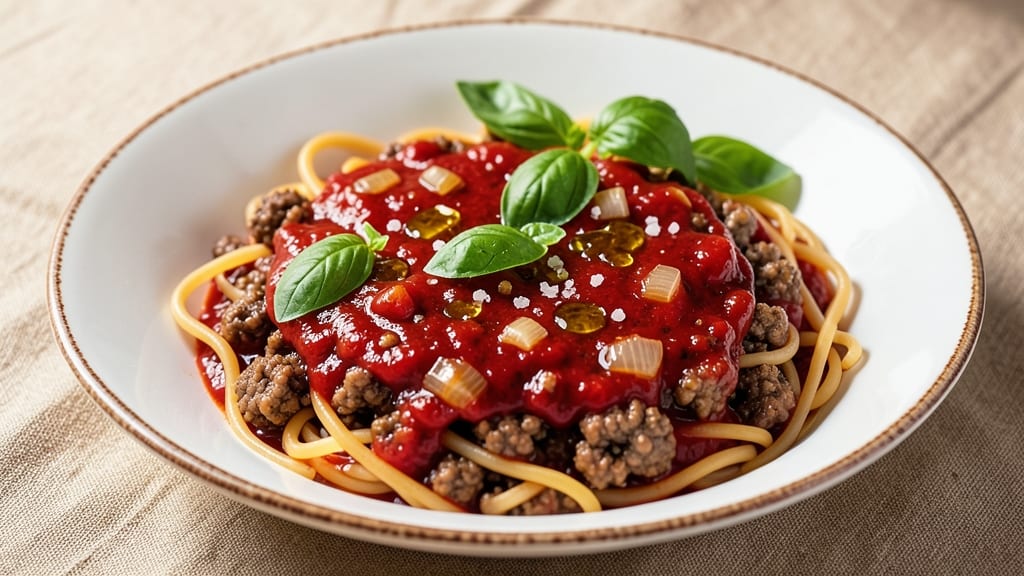
This American spaghetti sauce recipe transforms simple pantry staples into a rich, balanced sauce with a secret vinegar zing that cuts through the tomato depth. The key lies in simmering crushed tomatoes with aromatics until they develop complex flavors, then blending for that signature smooth texture.
I created this version after years of testing—it’s the one that finally earned me compliments from even the most critical Italian relatives.
The foundation starts with garlic, onions, and olive oil, cooked until fragrant before adding crushed tomatoes and herbs. A splash of red wine vinegar (just 1 tablespoon) brightens the sauce without overpowering, while a pinch of sugar balances acidity.
For meat lovers, browned ground beef adds depth, but this sauce shines equally well vegetarian. The real magic happens during the 2-hour simmer, where flavors meld and the sauce thickens naturally.
What you’ll end up with is a velvety sauce that clings perfectly to pasta, meatballs, or lasagna layers. The texture is smooth yet substantial, with just enough body to coat without being gluey.
Unlike many store-bought versions, this one builds flavor gradually—no artificial shortcuts. The vinegar zing becomes almost undetectable after blending, leaving only a subtle brightness that enhances every bite.
Use it immediately over spaghetti or freeze for up to 3 months. The sauce thickens slightly when reheated, so thin with a splash of water or broth if needed. This is the kind of homemade sauce that turns weeknight dinners into something special—without requiring advanced skills. Let’s make it.
Ingredients for american spaghetti sauce
Pantry staples meet Italian tradition—just 11 ingredients for sauce that tastes restaurant-worthy.
| Ingredient | Amount | Notes |
|---|---|---|
| Extra-Virgin Olive Oil 🫒 | ¼ cup | High-quality, fruity variety |
| Yellow Onion 🧅 | 1 whole | Medium size, finely chopped |
| Garlic Cloves 🧄 | 4 cloves | Fresh, minced finely |
| Crushed Tomatoes 🍅 | 28 oz | San Marzano preferred |
| Red Wine Vinegar 🍷 | 1 tbsp | For brightness balance |
| Granulated Sugar 🍚 | 1 tsp | Balances acidity |
| Dried Basil 🌿 | 1 tbsp | Or 1 tbsp fresh basil |
| Dried Oregano 🍃 | 1 tsp | Mexican oregano preferred |
| Ground Black Pepper 🌶️ | ½ tsp | Freshly ground preferred |
| Salt 🧂 | 1 ½ tsp | Kosher or sea salt |
| Ground Beef 🥩 | 1 lb | 80/20 fat ratio preferred |
The tomatoes make or break this sauce. San Marzano cans are the gold standard—sweeter, less acidic, and packed with flavor. If you can't find them, any good-quality crushed tomatoes will work, but avoid the watery, paste-heavy brands. The ground beef adds richness, so 80/20 fat ratio is key—it browns better and keeps the sauce moist. I grab mine from the butcher section at Whole Foods or Trader Joe's for consistent quality. Fresh garlic and onions are non-negotiable here—they're the flavor foundation, so don't skip the chopping.
No red wine vinegar? Apple cider vinegar or balsamic vinegar work in a pinch, though the flavor will shift slightly. Short on basil? Dried oregano at double the amount gets you close, but fresh herbs always win. The sugar might seem odd, but it's crucial—it rounds out the acidity from the tomatoes and vinegar, making the sauce taste more complex. For a vegetarian version, skip the beef and add 1 cup mushrooms or lentils for body. The crushed tomatoes can be swapped for whole peeled tomatoes (blend first), but you'll need about 1 (28 oz) can of crushed or 4-5 whole tomatoes.
This sauce tastes even better the next day as flavors meld. Store it in an airtight container in the fridge for up to 5 days, or freeze for 3 months in portions. I like to freeze it in ice cube trays—just pop out what you need for a quick meal. If the sauce thickens when reheated, thin it with a splash of water or pasta water. The vinegar zing becomes more subtle after blending, but it's what gives this sauce its signature depth—don't skip it!
Why You'll Love This Recipe
- Here’s what sold me: this sauce begs to be made in bulk. Freeze half for when you’re too tired to cook, or reheat it for lazy lunches. The vinegar keeps it bright even after days in the fridge, and the garlic? It only gets more aromatic over time. My freezer’s full of jars of this stuff—because who has time to make sauce from scratch every week?
- I’ll be real: this isn’t just for spaghetti. Dump it over meatballs, toss it with ziti, or even use it as a marinara base for pizza. The vinegar adds a little tang that makes it way more interesting than your average jarred sauce. Plus, it’s the kind of thing you can make ahead and still have energy left to set the table and actually eat dinner instead of microwaving it.
Step-by-step instructions for American spaghetti sauce
Let's build this rich, balanced sauce that delivers classic Italian comfort with a bright twist.
Brown the Ground Beef for Maximum Flavor
Heat the 0.25 cup extra-virgin olive oil in a large, deep skillet over medium-high heat. Add the 1 lb ground beef and break it apart with a wooden spoon, letting it sizzle and brown in small batches if needed. The key here is to cook it until it loses its raw color and develops a deep brown crust—this creates the rich foundation for your sauce.
As the beef browns, it will release its natural fats, which carry incredible flavor. When the beef is fully browned (about 8-10 minutes), use a slotted spoon to transfer it to a plate, leaving all that delicious rendered fat behind in the pan. Don't drain the fat—it's essential for building flavor in the next steps.
Sauté Onions and Garlic Until Soft and Fragrant
With the beef removed, reduce the heat to medium and add the 1 whole finely chopped yellow onion. Cook the onions for 5-6 minutes, stirring occasionally, until they soften and begin to caramelize at the edges. This step develops sweetness that balances the acidity we'll add later.
After the onions are tender, add the 4 cloves finely minced garlic cloves and cook for another 30 seconds until fragrant. Be careful not to let the garlic burn—it should smell amazing but not bitter. The combination of caramelized onions and garlic will form the aromatic base of your sauce.
Build the Sauce with Tomatoes and Seasonings
Pour in the 28 oz crushed tomatoes, stirring to combine everything in the pan. Add the 1 tbsp red wine vinegar, 1 tsp granulated sugar, 1 tbsp dried basil, 1 tsp dried oregano, 0.5 tsp ground black pepper, and 1.5 tsp salt. The vinegar and sugar work together to brighten the tomatoes while balancing their natural acidity.
Bring the mixture to a gentle simmer, then reduce the heat to low. Let it cook uncovered for 20-25 minutes, stirring occasionally. You'll notice the sauce thicken slightly as it reduces. This slow cooking allows all the flavors to meld together beautifully—no need to rush this part.
Finish with the Browned Beef and Adjust Seasoning
Return the browned beef to the skillet and stir to combine thoroughly. Let the sauce simmer together for another 5-10 minutes, allowing the beef to soak up all those rich tomato flavors. Taste and adjust the seasoning if needed—you might want to add a pinch more salt or a splash of vinegar for brightness.
For the best texture, the sauce should be thick enough to coat the back of a spoon but still spoonable. If it's too thick, add 2-3 tablespoons of water or pasta water to reach your desired consistency. Remove from heat and let it sit for 5 minutes before serving to allow the flavors to settle.
Pro Tips For Making American Spaghetti Sauce
- Sweat the Onion Slow: I used to rush this step and end up with bitter, watery onions—don’t. Cut the yellow onion into even ¼-inch slices and cook them in the olive oil over medium-low heat for 8-10 minutes, stirring occasionally. You want them soft, translucent, and golden at the edges, not browned or crispy. This builds flavor without burning.
- Crush Garlic, Don’t Mince: After the onions, add 4-5 whole garlic cloves to the pot, peel them first, then crush them lightly with the flat side of your knife. Let them sizzle for 30 seconds until fragrant but not colored—this prevents bitterness. If you mince it first, it burns faster and turns the sauce acrid.
- Deglaze with Vinegar Early: After cooking the garlic, pour in 1-2 tablespoons of red wine vinegar immediately—this lifts all the browned bits from the pan before adding the tomatoes. Skip this, and you’ll be scraping burnt bits off your pot later (or worse, tasting them in the sauce).
- Simmer, Don’t Boil: Once the crushed tomatoes are added, reduce the heat to low and let the sauce bubble gently for at least 20 minutes. If you crank the heat, the acidity in the tomatoes will make the sauce split or turn grainy. A slow simmer melds the flavors together—no shortcut here.
Dietary considerations for this american spaghetti sauce
Vegetarian Adaptation
Skip the ground beef entirely and add 1 cup finely chopped mushrooms or 1 cup cooked lentils when building the sauce. Sauté the mushrooms in the olive oil until golden and tender—they'll add earthy depth.
For extra richness, stir in 2 tablespoons tomato paste with the crushed tomatoes. The sauce will still be hearty and flavorful, perfect for pasta or as a lasagna filling. 🌱
Gluten-Free Options
This recipe is naturally gluten-free, assuming you use gluten-free spices and broth. Double-check that your dried basil, oregano, and crushed tomatoes are certified gluten-free. If you're using beef broth (not in this recipe), opt for a gluten-free brand like Imagine or Pacific Foods.
The sauce pairs beautifully with gluten-free pasta like barley-free penne or rice-based spaghetti. 🥗
Low-Sodium Version
Reduce the salt to just 0.5 teaspoon and skip adding salt during cooking. Instead, use 1 extra tablespoon of red wine vinegar to enhance flavor without sodium. Boost umami with 1 teaspoon soy sauce or 1 tablespoon balsamic vinegar for depth.
Taste as you go—this sauce is forgiving, so adjust gradually. The result is just as flavorful but with significantly less sodium. 💡
Dairy-Free Considerations
This sauce is naturally dairy-free, but if you're serving it with cheese, opt for Parmesan or pecorino instead of mozzarella. For a dairy-free cheese alternative, try nutritional yeast or dairy-free mozzarella shreds like Miyoko's.
The sauce's rich tomato base pairs wonderfully with these options, keeping the dish creamy without dairy. 🧀
Allergen-Friendly Swaps
For nut allergies, avoid any nut-based thickeners and stick to the original recipe. If you're avoiding garlic, use 1 teaspoon garlic powder instead of fresh. For onion-sensitive palates, swap with 1 cup finely diced celery or 1 cup carrot for subtle sweetness.
Always check labels on dried herbs and spices for cross-contamination warnings. 🚫
Meal Prep Adjustments
When freezing, portion the sauce into airtight containers or ziplock bags with 1-inch headspace to prevent freezer burn. For reheating, thaw overnight in the fridge, then warm on the stovetop with 1 tablespoon of water or broth to restore moisture.
If the sauce separates after freezing, simply stir vigorously to recombine. The texture remains perfect for pasta or meatballs! ❄️
Nutrition facts
Frequently asked questions
Why does this recipe use vinegar in spaghetti sauce?
The 1 tablespoon red wine vinegar brightens the sauce by cutting through the richness of the tomatoes and beef. It adds a subtle tang that enhances all the other flavors without overpowering them. The acidity also helps balance the natural sweetness of the tomatoes, creating a more complex, restaurant-quality taste.
Can I make this sauce without meat?
Simply omit the ground beef and add 1 cup mushrooms or 1 cup cooked lentils for texture. For extra depth, stir in 2 tablespoons tomato paste when adding the crushed tomatoes. The sauce will still be hearty and flavorful—perfect for vegetarian pasta dishes or lasagna.
How do I adjust the thickness of the sauce?
If the sauce is too thick, add 2-3 tablespoons of water or pasta water and stir well. For a thicker consistency, simmer uncovered for an extra 10-15 minutes to reduce it naturally. Avoid adding flour or cornstarch—this recipe relies on natural thickening from the tomatoes and simmering process.
Can I freeze this spaghetti sauce?
Yes! Let the sauce cool completely, then transfer to airtight containers or freezer bags with 1-inch headspace to prevent freezer burn. It keeps for up to 3 months. When reheating, thaw overnight in the fridge and warm on the stovetop with a splash of water or broth to restore moisture. The texture remains perfect for pasta or meatballs.
What's the secret to making this sauce taste better the next day?
The flavors deepen as the sauce sits! Let it cool completely, then store in an airtight container in the fridge for up to 5 days. The vinegar and herbs meld together, creating a more balanced, complex taste. Reheat gently on the stove, stirring occasionally, to preserve the texture.