
Sauces & Condiments
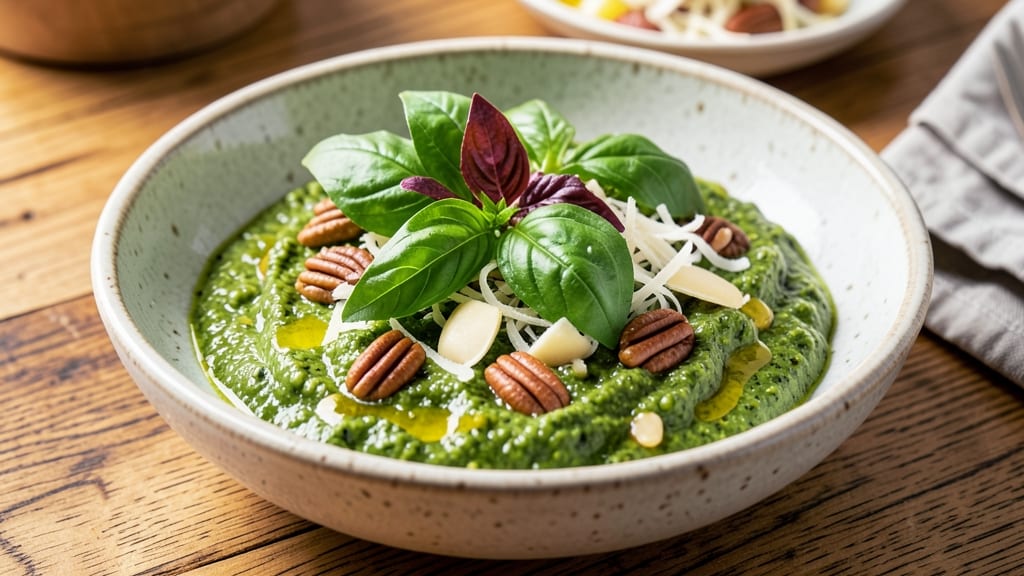
Alton Brown's pesto sauce recipe delivers that perfect balance of nutty, herby freshness in just 10 minutes—no blender required. This version stays true to the original while simplifying the process for home cooks. The secret lies in proper nut preparation and fresh basil, which transform into a vibrant, creamy sauce that elevates everything from pasta to sandwiches.
What sets this sauce apart is the texture—smooth yet still bright with basil's freshness, thanks to a quick pulse in the food processor. Alton's method avoids overworking the nuts, which keeps the sauce from turning greasy.
The addition of parmesan adds depth, while lemon juice brightens the entire batch. It's the kind of sauce that makes you want to drizzle it on everything.
Once blended, this pesto keeps its vibrant color and flavor for up to a week in the refrigerator, making it perfect for meal prep. The sauce's versatility means you can use it as a pasta toss, sandwich spread, or even a dip for bread.
The result is a restaurant-quality condiment that's surprisingly simple to make at home.
For best results, use fresh basil and toast your nuts lightly before blending—this step makes all the difference. The sauce comes together quickly, but the flavor develops even more after resting for 15 minutes. Ready in just 10 minutes, this pesto is a game-changer for any kitchen.
Ingredients for alton brown pesto sauce
Fresh basil and toasted nuts come together for Alton Brown's legendary pesto—bright, creamy, and ready in minutes.
| Ingredient | Amount | Notes |
|---|---|---|
| Fresh Basil Leaves 🌿 | 2 cups | Packed, stems removed |
| Pine Nuts 🥜 | ½ cup | Toasted lightly for richness |
| Garlic Cloves 🧄 | 3 cloves | Peeled, roughly chopped |
| Parmesan Cheese 🧀 | ¾ cup | Freshly grated from block |
| Extra-Virgin Olive Oil 🫒 | ¾ cup | High-quality, fruity variety |
| Lemon Juice 🍋 | 1 tbsp | Freshly squeezed |
| Salt 🧂 | ½ tsp | Fine sea salt preferred |
| Black Pepper 🌶️ | ¼ tsp | Freshly ground |
The basil is non-negotiable here—farmers market bunches have the most vibrant flavor, but grocery store containers work in a pinch. Pine nuts are pricey, so Trader Joe's or Costco offer the best deals. Toast them in a dry pan for 2-3 minutes until fragrant—this step makes all the difference. For Parmesan, grate it yourself from a wedge; pre-grated cheese has anti-caking agents that ruin the texture. The olive oil should be high-quality extra-virgin—you'll taste the difference when it's fruity and peppery.
No pine nuts? Walnuts or cashews work beautifully—just toast them first. Short on basil? Stretch it with fresh parsley (up to half and half). The lemon juice can be bottled, but freshly squeezed adds that bright pop. Running low on Parmesan? Pecorino Romano has a sharper bite that works well. For a nut-free version, swap the nuts for avocado or silken tofu—blend until smooth. The sauce should be vibrant green, not dull. If it looks too thick, add a splash more olive oil.
This pesto keeps its vibrant color and flavor for up to 1 week in the fridge, sealed under a thin layer of olive oil. For longer storage, freeze in ice cube trays—6 months in the freezer, no quality loss. I always make extra because it disappears fast. Drizzle it on pasta, toss with roasted veggies, or use as a sandwich spread. The flavor actually improves after resting for 15 minutes, so don't rush it.
Why You'll Love This Recipe
- I’ll be real: this takes five minutes of actual work—just pulse basil, nuts, garlic, and cheese in a food processor. The rest is just drizzling olive oil and tasting. (Yes, even on a Tuesday night.)
- No Fuss, Big Payoff: I’ll be real: this takes five minutes of actual work—just pulse basil, nuts, garlic, and cheese in a food processor. The rest is just drizzling olive oil and tasting. (Yes, even on a Tuesday night.)
- Umami Bomb: That balance of nutty pine nuts, sharp garlic, and salty Parmesan? It’s the kind of flavor that makes you pause mid-bite. Honestly, I’ve tried store-bought pesto—this version actually tastes like summer in a jar.
- Weeknight Swiss Army Knife: Slather it on pasta, toss it with roasted veggies, or dollop it into soup. I keep a jar in the fridge for when I’m too tired to plan dinner. It’s my go-to for turning simple meals into something that feels special.
Step-by-step instructions for Alton Brown's pesto sauce
This vibrant, nutty pesto comes together faster than you can say "Good Eats" - let's make it!
Toast the Pine Nuts for Maximum Flavor
Heat a dry skillet over medium heat and add the 0.5 cup pine nuts. Toast them for 3-4 minutes until they're fragrant and just beginning to turn golden brown. Watch them closely—they burn quickly and become bitter. You want them to smell like fresh pine forest, not like burnt popcorn.
As they toast, shake the pan occasionally to prevent burning. When they're done, immediately transfer them to a bowl to cool. This quick toasting step is crucial—it deepens their nutty flavor and prevents them from tasting raw when you blend everything together. Let them cool for 2 minutes before proceeding.
Pulse the Garlic and Pine Nuts
Add the 3 cloves garlic cloves and the toasted 0.5 cup pine nuts to a food processor. Pulse them together for 10-15 seconds until the garlic is finely minced but not pasty. You want visible texture here—this creates the perfect balance of smooth and chunky in your final pesto. Don't over-process or you'll end up with a paste instead of a vibrant sauce.
Here's the thing—if you skip this step and just throw everything in raw, you'll get a bland, watery pesto. The garlic needs to be broken down slightly to release its oils, and the pine nuts need to be textured to add that satisfying crunch. Set aside the garlic-pine nut mixture in the food processor bowl for now.
Add the Fresh Basil and Cheese
Add the 2 cups fresh basil leaves and 0.75 cup freshly grated Parmesan cheese to the processor with the garlic-pine nut mixture. Pulse everything together for 10-15 seconds until the basil is mostly chopped but still retains some texture. You want to see visible green flecks throughout the mixture—this is what gives pesto its signature vibrant appearance and fresh flavor.
I like to give the processor a quick scrape down the sides at this point to make sure everything gets evenly incorporated. The basil should be finely chopped but not completely pureed—you want that fresh, garden-like quality to shine through in every bite. The Parmesan should be fully melted into the mixture, creating a creamy base for the sauce.
Stream in the Olive Oil and Lemon
With the processor running, very slowly pour in the 0.75 cup extra-virgin olive oil while simultaneously drizzling in the 1 tbsp lemon juice. This gradual addition prevents the mixture from becoming too thick too quickly. Process for another 20-30 seconds until everything is completely combined and smooth.
The lemon juice brightens the entire sauce, cutting through the richness of the cheese and nuts. The olive oil carries all the flavors together, creating that signature silky texture. Here's where it gets fun—taste the mixture and adjust the seasoning. You'll likely need to add the 0.5 tsp salt and 0.25 tsp black pepper now, but go by taste rather than the recipe.
Adjust Consistency and Serve Immediately
Transfer the pesto to a serving bowl. If it's too thick, add 1-2 tablespoons of water at a time until you reach your desired consistency. If it's too thin, add a bit more Parmesan cheese or pine nuts to thicken it up. The perfect pesto should coat the back of a spoon but still be spreadable.
This pesto is best used immediately, but if you need to store it, cover the surface with a thin layer of olive oil to prevent browning. It'll keep in the refrigerator for up to 5 days, though I find it's always best fresh. Serve it with your favorite pasta, on bruschetta, or even as a marinade for grilled chicken. The possibilities are endless with this bright, nutty, basil-forward sauce!
Pro Tips For Making Alton Brown Pesto Sauce
- Toast the Pine Nuts: Toss them in a dry skillet over medium-low heat—just until they’re fragrant and golden, not browned. I learned this the hard way: burned nuts taste bitter and ruin the whole dish. Keep an eye on them; they go from perfect to disaster faster than you’d think.
- Pulse, Don’t Purée: Use a food processor but stop before it turns into soup—you want chunky texture, not smooth. Hit pulse 4-5 times, then taste. If it’s too thick, add a splash of olive oil; if too thin, pulse in more nuts or cheese. Alton’s version is bold, not buttery.
- Grate the Parmesan Fresh: Skip the pre-grated stuff—it’s sawdust and anti-caking agents. Use a microplane or fine grater for powdery, flavorful shards. I was skeptical until I tried it: the difference is like night and day. Store-bought grated cheese is a shortcut that dulls the sauce.
- Chill Before Serving: Let the pesto sit at room temp for 10 minutes after blending—it thickens slightly and mellows the garlic’s bite. I used to serve it straight away, but chilling makes it richer, especially when tossed with hot pasta. Patience here makes a real difference.
Regional styles of this alton brown pesto sauce
Italian Classic
Alton Brown’s pesto pays homage to the traditional Italian version from Genova, where it originated as a peasant sauce called pesto alla Genovese. The key difference here is the use of pine nuts instead of the cheaper walnuts often found in Italian recipes.
I’ve made this sauce countless times, and the Italian version relies on freshly grated pecorino alongside Parmesan for a sharper, more complex flavor profile. 🌿
In Italy, pesto is traditionally made with a mortar and pestle rather than a food processor, creating a slightly coarser texture. The sauce is often served immediately with trofie pasta or focaccia—never stored for long.
The Italian approach emphasizes minimal ingredients and maximum freshness, which is exactly what Alton’s recipe captures.
American Adaptations
Across the U.S., pesto has evolved into a versatile condiment, often used beyond its Italian roots. In California, for example, you’ll find versions with avocado or silken tofu for a vegan twist, while New England chefs sometimes add maple syrup for a sweet-savory balance.
I’ve experimented with adding sunflower seeds for a budget-friendly alternative to pine nuts—it works surprisingly well! 🥜
Southern U.S. adaptations often include smoked paprika or hot sauce for a spicy kick, transforming pesto into a dipping sauce for fried chicken or shrimp. Meanwhile, Midwestern versions might swap basil for parsley or cilantro, especially in Mexican-inspired dishes.
The beauty of pesto is its adaptability—it’s as much about creativity as it is tradition.
Mediterranean Twists
In Greece, pesto-inspired sauces often feature dill and feta cheese, creating a bright, tangy spread perfect for grilled meats. The Lebanese take it further with sumac and pomegranate molasses, adding a fruity depth that pairs beautifully with lamb.
I once made a version with za’atar and olive tapenade—it was a game-changer for hummus bowls! 🌶️
Spanish pesto-style sauces often include almonds and smoked paprika, while Moroccan adaptations might incorporate harissa or preserved lemon for a bold, citrusy kick. These variations prove that pesto’s essence—fresh herbs, nuts, and oil—can be reimagined across cuisines while keeping that signature vibrancy.
Modern Innovations
Today’s chefs are pushing pesto into unexpected territory. Vegan pesto now commonly uses cashews or hemp seeds for creaminess, while gluten-free versions swap traditional pasta for zucchini noodles or rice pasta.
I’ve even seen pesto ice cream—yes, you read that right! The sauce’s rich, herby notes work surprisingly well in frozen desserts. 💫
Another trend is fermented pesto, where the sauce is aged with garlic and chili for a probiotic-rich twist. Some brands even sell pesto powder for instant sauces—just add oil and water.
While these innovations are fun, there’s still nothing like the fresh, bright flavor of Alton’s classic recipe made from scratch.
Nutrition facts
Frequently asked questions
Can I substitute pine nuts in Alton Brown's pesto?
Pine nuts are pricey, so try walnuts, cashews, or almonds instead. Toast them first for 2-3 minutes until fragrant, just like the pine nuts. For a budget-friendly twist, sunflower seeds work too—just add 1 tablespoon extra olive oil to compensate for their lower fat content.
Why does my pesto turn out greasy or watery?
This usually happens from over-processing or using too much olive oil. Pulse the nuts and garlic first, then add basil and cheese before streaming in the oil. If it's too thick, add 1 teaspoon water at a time. For greasiness, reduce the oil by 1-2 tablespoons or add 1 tablespoon grated Parmesan to absorb excess.
How long should I let the pesto rest before using it?
Resting for 15-20 minutes lets the flavors meld beautifully. The basil releases more oils, and the cheese fully emulsifies. For best results, cover and refrigerate while resting. Pro tip: Taste it after 10 minutes—you might be surprised how much better it tastes!
Can I make this pesto without a food processor?
Yes! Use a mortar and pestle for a more traditional approach. Toast the nuts first, then crush them with garlic. Add basil and cheese, mashing everything together. Finish by drizzling in olive oil and lemon juice while stirring. It'll be slightly chunkier but just as flavorful!
What's the best way to store leftover pesto?
Transfer to an airtight container and press a thin layer of olive oil on top to prevent browning. It'll keep for 5-7 days in the fridge. For longer storage, freeze in ice cube trays for up to 6 months. Thaw in the fridge overnight before using.