
Sauces & Condiments
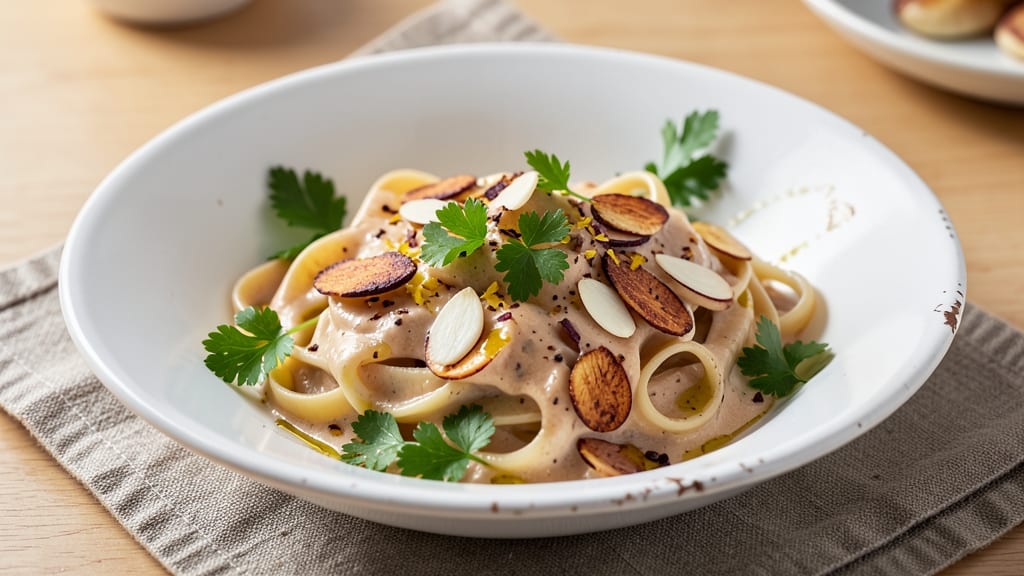
This almond pasta sauce delivers velvety richness without dairy, blending nutty almond butter with aromatic garlic and fresh herbs for a savory-sweet balance. 🌟 The secret lies in simmering almond butter with warm broth and lemon juice to create a smooth, clingy sauce that coats pasta perfectly—no lumps, no grittiness.
Perfect for vegetarian meals or anyone avoiding dairy, this sauce transforms simple pasta into a restaurant-worthy dish with minimal effort.
What sets this sauce apart is its versatile texture—silky when blended smooth or slightly chunky with toasted almond bits for added crunch.
The flavor profile marries the natural sweetness of almond butter with bright lemon, earthy garlic, and fresh herbs like parsley or basil, creating a harmony that’s both comforting and sophisticated.
Unlike heavy cream-based sauces, this one stays light yet deeply satisfying, making it ideal for warm weather or those watching their fat intake.
The sauce’s foolproof technique ensures creamy perfection every time: toast the almond butter to deepen its flavor, then whisk it with warm broth and lemon juice until completely smooth. A splash of pasta water at the end guarantees a silky finish that clings to every noodle.
Ready in just 15 minutes, it’s the perfect weeknight solution for elevating dinner without the fuss of elaborate cooking.
Store leftovers in the fridge for up to 5 days or freeze for 3 months—simply reheat with a splash of water or broth to restore its luscious texture.
Pair with whole wheat pasta, roasted vegetables, or grilled chicken for a meal that feels indulgent yet remains light and nutritious. Let’s make this sauce today!
Ingredients for almond pasta sauce
Nine simple ingredients transform into a velvety almond sauce with vibrant herb notes.
| Ingredient | Amount | Notes |
|---|---|---|
| Almond Butter 🥜 | ½ cup | Natural, unsweetened preferred |
| Vegetable Broth 💧 | 1 ½ cups | Low-sodium for flavor balance |
| Fresh Garlic Cloves 🧄 | 3 cloves | Minced for aromatic depth |
| Fresh Lemon Juice 🍋 | 2 tbsp | Freshly squeezed for brightness |
| Fresh Parsley Leaves 🌿 | ¼ cup | Chopped, for fresh herb zing |
| Extra-Virgin Olive Oil 🫒 | ¼ cup | For richness and smoothness |
| Toasted Almond Slices 🥜 | ¼ cup | Optional for nutty crunch |
| Salt 🧂 | ½ tsp | Diamond Crystal preferred |
| Black Pepper 🌶️ | ¼ tsp | Freshly ground for warmth |
The almond butter is the foundation—natural, unsweetened ensures no added sugars or oils. Trader Joe's and Whole Foods carry excellent options, or make your own by blending raw almonds. Toasting the almond butter before using deepens its flavor significantly—just spread it on parchment and bake at 350°F for 5-7 minutes. Fresh parsley and garlic are non-negotiable for that bright, aromatic punch; store-bought minced garlic lacks the freshness. For the broth, low-sodium versions prevent over-salting later, but adjust to taste after blending.
No almond butter? Cashew butter or tahini work beautifully, though texture will differ slightly. Short on parsley? Fresh basil or cilantro at the same quantity adds a different but equally vibrant note. The olive oil can be swapped for avocado oil if preferred, though it lacks the fruity depth. For extra richness without dairy, stir in 2 tbsp coconut cream at the end. The toasted almond slices are optional but add delightful texture—Costco's bulk almonds are perfect for this, toasted in a dry pan for 2-3 minutes until golden.
This sauce keeps beautifully—5 days in the fridge sealed with a thin layer of olive oil on top to preserve freshness. Freezes for 3 months in airtight containers, though texture may separate slightly; just whisk vigorously to restore smoothness. For best results, reheat gently over low heat with a splash of water or broth. Portion into small jars for quick weeknight use—perfect with whole wheat pasta, roasted veggies, or grilled chicken. The sauce thickens as it cools, so thin with a bit of pasta water if needed.
Why You'll Love This Recipe
- No Chopping Chaos: I swear by this sauce because the prep is ridiculously simple—just toast garlic and whisk almond butter into broth. No knife skills required, and the lemon brightens everything in seconds.
- Rich Without Heavy: Honestly, the almond butter gives it that velvety depth without the grease or dairy. The garlic and parsley add layers, but it’s light enough to toss with any pasta—even gluten-free—without feeling like a guilty pleasure.
- Meal Prep MVP: Between us, this sauce keeps for days in the fridge and reheats like a dream. I double the batch on Sundays, store it in jars, and slap it on noodles all week—no takeout needed.
- Budget-Friendly Luxury: Almond butter and broth stretch thin, but the flavor? Chef’s kiss. It’s the kind of sauce that makes you feel fancy without draining your wallet—especially when you’re feeding a crowd or just treating yourself.
Step-by-step instructions for almond pasta sauce
This creamy, herb-infused sauce comes together in minutes with simple techniques.
🍳 Step 1: Bloom the Almond Butter
Heat the 0.25 cup extra-virgin olive oil in a medium saucepan over medium-low heat. Add the 0.5 cup almond butter and whisk constantly for 3-4 minutes until it melts completely and becomes smooth. You'll notice the mixture lighten in color as it transforms from solid to liquid.
This step is crucial—whisking continuously prevents the almond butter from burning. If it starts to smell nutty but not burnt, you're on track. The sauce should be completely homogeneous with no visible streaks of almond butter remaining.
👨🍳 Step 2: Add Aromatics and Broth
Reduce heat to low and add the 3 minced garlic cloves, stirring for 30 seconds until fragrant but not browned. Immediately pour in the 1.5 cups vegetable broth and whisk to combine. The mixture should bubble gently but not boil vigorously.
Here's where the sauce starts building flavor. The garlic should infuse the almond butter base without overpowering it. If the broth splatters, reduce heat slightly—you want to maintain a gentle simmer rather than a rapid boil.
🍳 Step 3: Simmer and Season
Bring the mixture to a gentle simmer and cook uncovered for 8-10 minutes until slightly thickened. Stir in the 2 tablespoons fresh lemon juice, 0.5 teaspoon salt, and 0.25 teaspoon black pepper. The sauce should coat the back of a spoon with a velvety texture.
Taste and adjust seasoning—this is where you can customize the balance. If it needs more brightness, add a splash more lemon juice. For saltiness, add a pinch more Diamond Crystal salt. The sauce should be rich but not overpowering, with a subtle herbal tang from the lemon.
🥘 Step 4: Finish with Herbs and Garnish
Remove the pan from heat and stir in the 0.25 cup chopped fresh parsley leaves. For an optional nutty crunch, fold in the 0.25 cup toasted almond slices just before serving. The parsley adds freshness that cuts through the richness of the almond butter.
This sauce works best when served immediately, but if needed, you can reheat it gently on the stovetop with a splash of water or broth to restore its creamy consistency. The almond slices should be added at the very end to maintain their crisp texture.
Pro Tips For Making Almond Pasta Sauce
- Warm the Almond Butter: Dump cold almond butter straight into hot broth and you’ll end up with a greasy mess. Instead, whisk it into a warm (not boiling) bowl of broth first—just enough to loosen it before combining. I learned this the hard way when my sauce split like oil on water.
- Toast the Garlic: Raw garlic in this sauce tastes sharp and unbalanced. Sauté 3–4 minuted minced cloves in a dry pan until golden and fragrant—just until they smell like a forest after rain. Skip this, and the lemon’s brightness will fight the almond butter instead of shining alongside it.
- Strain the Broth: Vegetable broth often hides bits of herbs or veggies that turn your sauce gritty. Strain it through a fine-mesh sieve before using, even if it’s labeled "clear." Trust me, you’ll notice the difference when the sauce stays silky.
- Finish with Lemon Zest: A splash of lemon juice is good, but a teaspoon of lemon zest adds aroma without overpowering. Grate it fresh right before tossing with the pasta—it’s the one thing that makes this sauce taste restaurant-worthy. (Yes, even if you’re impatient like me.)
Perfect pairings for this almond pasta sauce
Pasta Pairings
This almond sauce clings beautifully to whole wheat or brown rice pasta—the nutty flavor complements the earthy notes of the grains. For a lighter option, try buckwheat or chickpea pasta to boost protein. I love using farfalle or penne because their shapes trap the sauce perfectly. 🍝
For a heartier meal, serve over roasted sweet potatoes or butternut squash noodles. The sauce’s creamy texture balances the natural sweetness of the vegetables. If you’re feeling adventurous, toss it with shredded chicken or tofu for added protein without overpowering the dish.
Vegetable Sides
Pair with steamed broccoli or asparagus for a vibrant, nutrient-packed plate. The sauce’s herbal brightness cuts through the bitterness of greens like spinach or kale. I often roast zucchini and cherry tomatoes alongside the pasta—their caramelized edges contrast beautifully with the smooth almond sauce. 🥦
For a Mediterranean twist, add grilled eggplant or artichoke hearts. The smoky char of grilled vegetables pairs wonderfully with the sauce’s nutty depth. A simple arugula salad with lemon vinaigrette adds a peppery crunch that balances the richness.
Protein Additions
Grilled chicken breast or salmon elevates this sauce into a complete meal. The sauce’s creamy texture complements the flaky texture of fish beautifully. For a vegetarian option, crispy tofu or tempeh adds protein and texture.
I like to pan-sear tofu until golden and toss it with the sauce right before serving.
If you’re using meat, sliced steak or pork tenderloin works well too. The sauce’s herbal notes cut through the richness of red meat. For a lighter option, try shrimp or scallops—their delicate sweetness pairs perfectly with the almond base.
Bread and Dippers
Use this sauce as a dip for crusty bread or pita chips—it’s a game-changer for appetizers. The nutty flavor and creamy texture make it irresistible. I often serve it with warm naan or flatbread for scooping up extra sauce.
For a fun twist, drizzle it over toasted baguette slices or use it as a sandwich spread. The sauce’s versatility makes it perfect for both savory and slightly sweet applications. Try it on avocado toast for a nutritious breakfast or brunch option.
Nutrition facts
Frequently asked questions
Can I make this almond sauce without a blender?
Just whisk the warm almond butter and broth vigorously for 5-7 minutes until completely smooth. For extra silkiness, strain the mixture through a fine-mesh sieve to remove any tiny almond bits. The texture will be slightly less refined but still delicious and creamy.
Will this sauce work with other nut butters?
Yes, but results vary slightly. Cashew butter creates the smoothest texture, while peanut butter adds a deeper, earthier flavor. Tahini (sesame paste) works too but has a stronger taste—reduce to 0.25 cup for balance. Always use natural, unsweetened versions to avoid altering the sauce's flavor profile.
How do I prevent the sauce from separating when reheating?
Stir in 1-2 tablespoons of warm water or broth while reheating to restore smoothness. Never boil—keep heat at low-medium and whisk constantly. For extra insurance, add a pinch of salt and a splash of lemon juice to help emulsify. The sauce should return to its velvety consistency within 2-3 minutes.
Can I make this sauce ahead of time?
Yes! Store in an airtight container in the fridge for up to 5 days or freeze for 3 months. Thaw overnight in the fridge, then reheat gently with a splash of water. For best texture, add fresh herbs and toasted almonds just before serving. The sauce actually improves overnight as flavors meld.
What's the secret to getting it perfectly smooth?
Toast the almond butter first (bake at 350°F for 5-7 minutes) to deepen its flavor, then whisk it with warm broth—not cold—until completely emulsified. Add ingredients in this order: oil → almond butter → garlic → broth → lemon. Patience is key—whisk continuously for 3-4 minutes until no streaks remain.