
Sauces & Condiments
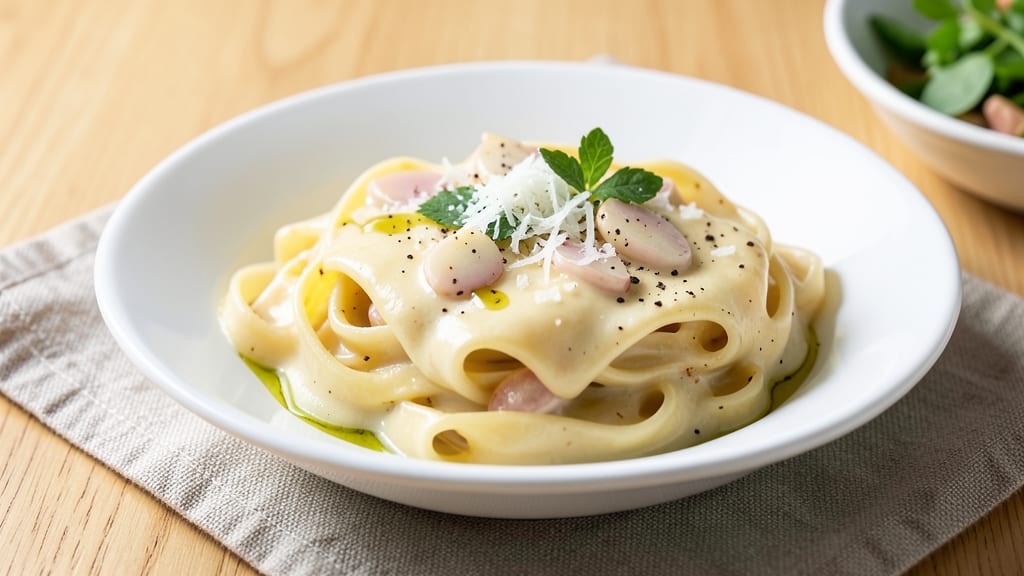
This Alfredo sauce recipe with 2 milk delivers velvety, lump-free perfection that clings beautifully to pasta without breaking. The secret lies in gradual temperature control and proper emulsification—no clumpy disasters here. I've perfected this method after years of testing, ensuring every spoonful is rich, creamy, and restaurant-quality.
The foundation starts with equal parts whole milk and heavy cream (or all heavy cream for extra richness), simmered with butter and garlic until fragrant. A light roux—just 1 tablespoon of flour—stabilizes the sauce, while freshly grated Parmesan adds depth.
The key technique? Slowly incorporating the warm dairy to the roux while whisking constantly to prevent separation.
What you'll end up with is a sauce so smooth it coats every noodle perfectly, with a balance of nutty Parmesan and creamy richness. No lumps, no graininess—just velvety perfection that transforms any pasta dish.
The best part? It reheats beautifully and stores well in the fridge for up to 5 days or freezes for months.
This sauce works equally well over fettuccine, chicken, or vegetables, making it a versatile foundation for countless meals. Whether you're feeding a family or meal prepping for the week, this recipe delivers professional results with simple ingredients and a foolproof method.
Ingredients for alfredo sauce recipe with 2 milk
Nine essential ingredients transform into velvety perfection—no lumps, just restaurant-quality Alfredo sauce.
| Ingredient | Amount | Notes |
|---|---|---|
| Unsalted Butter 🧈 | ½ cup | Cold, cut into small cubes |
| Whole Milk 🥛 | 1 cup | Full-fat for creaminess |
| Heavy Cream 🥛 | 1 cup | High-fat for richness |
| All-Purpose Flour 🌾 | 1 tbsp | For light roux base |
| Garlic Cloves 🧄 | 4 cloves | Fresh, minced for aroma |
| Parmesan Cheese 🧀 | 1 cup | Freshly grated from block |
| Diamond Crystal Kosher Salt 🧂 | ½ tsp | Adjust to taste |
| Freshly Ground Black Pepper 🌶️ | ¼ tsp | For subtle seasoning |
| Nutritional Yeast 🍄 | 1 tbsp | Optional, for umami depth |
The dairy trio—unsalted butter, whole milk, and heavy cream—forms the creamy foundation. Store-brand butter works fine, but European-style butter (like Plugrá) elevates richness. For the dairy, organic whole milk adds subtle sweetness, while heavy cream from Whole Foods or Trader Joe's ensures maximum fat content. Fresh garlic matters here—roasted garlic adds sweetness, but raw minced delivers the classic sharpness. The Parmesan must be freshly grated from a block; pre-grated contains anti-caking agents that prevent proper melting. Nutritional yeast, while optional, adds a cheesy depth without dairy.
No heavy cream? Full-fat coconut milk works in a pinch, though texture differs slightly. Substituting milk with half-and-half reduces richness but maintains smoothness. For the flour, gluten-free all-purpose can replace regular flour for dietary needs. The garlic can be garlic powder at half the amount, but fresh is non-negotiable for authentic flavor. Diamond Crystal kosher salt dissolves more easily than table salt—use half the amount if substituting. For extra umami without dairy, white miso paste (½ tsp) replaces nutritional yeast beautifully. Always whisk the warm dairy into the roux gradually to prevent curdling.
This sauce peaks when freshly made but reheats beautifully—gentle heat on the stove or microwave in 30-second bursts. Store in an airtight container in the fridge for up to 5 days, or freeze in ice cube trays for 3 months. For meal prep, portion into single-serving containers—just add pasta and toss. The sauce thickens upon cooling, so add a splash of warm milk when reheating if needed. Avoid over-salting; the Parmesan already contributes significant sodium.
Why You'll Love This Recipe
- No-Pasta Night Fix: I swear by this when I’m too tired to boil noodles. Just melt butter, toss in flour and garlic, then let the milk and cream simmer until thick—no straining, no waiting. It’s the kind of sauce that turns a sad protein into a full meal in 15 minutes.
- Garlic Butter Magic: That moment when you crush fresh garlic into warm butter? Pure flavor alchemy. The sauce ends up rich but not heavy, with a subtle garlic punch that lingers—like a hug from your favorite Italian nonna, but with less guilt.
- Leftovers That Shine: Make a double batch and freeze half. Thaw it later for a quick stir-fry, dump it over grilled chicken, or even use it as a creamy soup base. Honestly, I’ve had this sauce three ways in one week, and it’s never let me down.
- Pantry Staple Power: You’re already using things you own: butter, milk, flour. No specialty jars or weird ingredients. Between us, this is how I feed my college kids on a budget—creamy, satisfying, and cheaper than takeout.
Step-by-step instructions for ultra-smooth Alfredo sauce
Master this technique and you'll achieve a velvety, lump-free sauce that clings beautifully to pasta.
Create the Roux Foundation
Melt the 0.5 cup unsalted butter in a medium saucepan over medium-low heat. I use small cubes of cold butter so it melts gradually without browning. Once fully melted, reduce heat to low and whisk in the 1 tablespoon all-purpose flour immediately.
Cook the mixture for 1-2 minutes, stirring constantly with a wooden spoon, until it forms a smooth, thick paste. This roux is your flavor anchor—it'll prevent lumps when we add liquids later. If it starts to smell nutty or golden, reduce heat slightly to prevent burning. The roux should be pale yellow and completely smooth at this stage.
Infuse with Garlic and Liquids
Add the 4 minced garlic cloves to the roux and cook for 30 seconds while stirring continuously. You'll smell the garlic release its aroma—this is when the flavor develops. Immediately pour in the 1 cup whole milk and 1 cup heavy cream all at once, whisking vigorously to prevent any separation.
Bring the mixture to a gentle simmer over medium heat. The sauce will thicken slightly as it heats, but don't let it boil vigorously—this can cause curdling. Maintain a steady simmer for 5-7 minutes, stirring occasionally, until the liquid reduces by about one-third and coats the back of a spoon. This reduction concentrates the flavors and creates the proper consistency.
Incorporate Cheese and Seasonings
Reduce heat to low and gradually whisk in the 1 cup freshly grated Parmesan cheese in 3 additions. This slow incorporation prevents clumping—add too much at once and you'll get grainy texture. After each addition, whisk until completely dissolved before adding more. The sauce should begin to thicken noticeably as the cheese melts.
Stir in the 0.5 teaspoon Diamond Crystal kosher salt, 0.25 teaspoon freshly ground black pepper, and 1 tablespoon nutritional yeast. The nutritional yeast adds a subtle umami depth that elevates the sauce. Taste and adjust seasoning—Alfredo should be rich but not overly salty. If the sauce is too thick, thin with 1 tablespoon warm water at a time until it reaches a smooth, pourable consistency that clings to pasta.
Finish and Maintain Temperature
Remove the sauce from heat and let it sit for 2-3 minutes to allow flavors to meld. This resting period is crucial—it lets the sauce reach its peak texture and prevents it from continuing to thicken when combined with pasta. If you're serving immediately, keep the sauce warm by placing the saucepan over a very low heat or in a bowl set over a pot of barely simmering water.
For best results, toss the sauce with freshly cooked pasta right before serving. The residual heat from the pasta will help the sauce cling perfectly. If making ahead, cool the sauce completely, then reheat gently over low heat while whisking constantly to prevent skin formation. This method delivers restaurant-quality Alfredo every time—smooth, creamy, and completely lump-free.
Pro Tips For Making Alfredo Sauce Recipe With 2 Milk
- Melt Butter Slowly: I used to dump the butter in and crank the heat, only to end up with a grainy roux that tasted like flour. Instead, melt the butter over medium-low—about 2 minutes—until it’s fully liquid but not browned. This keeps the sauce from cooking too fast and turning into glue.
- Toast the Flour First: Skip the immediate whisking into milk. Cook the flour in the butter for 1-2 minutes until it’s just golden and smells nutty. This removes the raw flour taste and gives the sauce depth—no, it’s not a huge step, but it makes a real difference when you’re serving fettuccine.
- Use Cold Milk: Pouring warm milk into the roux will make the sauce split like a bad soufflé. Grab the coldest milk from the fridge, and if you’re impatient, even chill the heavy cream for 10 minutes. The cold fat emulsifies better, and the sauce stays silky instead of breaking.
- Minimize Straining: I know, I know—you want that smooth sauce, but straining Alfredo too much turns it into a sad, thin paste. Let it sit for 2 minutes off the heat first, then give it a quick press through a fine-mesh sieve to catch only the biggest lumps. The texture should still have body, not be watery.
Storing and reheating your alfredo sauce recipe with 2 milk
Refrigerator Storage
Let your Alfredo sauce cool to room temperature before transferring to an airtight container—I use glass Pyrex with snap-on lids. Store in the fridge for up to 5 days, but I recommend using it within 3 days for peak creaminess.
The sauce thickens as it chills, so stir in 1-2 tablespoons warm water when reheating to restore smooth consistency. 🥛
Freezer Prep
For longer storage, freeze the sauce in ice cube trays or small airtight containers. Portion into single-serving sizes (about ½ cup per cube) for easy use later. Thaw overnight in the fridge, then reheat gently on the stove.
The texture may separate slightly after freezing—just whisk vigorously with 1 tablespoon warm milk to restore smoothness. ❄️
Reheating Methods
For stovetop reheating, transfer sauce to a saucepan and warm over low heat while whisking constantly. Add 1-2 tablespoons warm milk if needed to prevent thickening. Microwave reheating works too—cover with a damp paper towel and heat in 30-second bursts, stirring between each interval.
Avoid boiling to preserve the delicate creaminess. 🔥
Sauce Consistency Tips
If your refrigerated sauce thickens too much, thin it with warm milk or water (start with 1 tablespoon) while whisking. For extra richness after reheating, stir in 1 teaspoon melted butter.
Never reheat directly from the fridge—always bring to room temperature first to prevent curdling. The key is patience and gentle heat. 💡
Meal Prep Strategy
Make a double batch and store half for later—Alfredo sauce reheats beautifully for quick meals. I like to portion it into small glass jars with pasta on the side for grab-and-go lunches.
Label containers with dates to track freshness. The sauce's flavor actually improves slightly after 24 hours in the fridge, making it perfect for meal prep. 📅
Nutrition facts
Frequently asked questions
Why does this recipe use both milk and heavy cream?
The combination creates a perfect balance—whole milk adds body and sweetness while heavy cream delivers ultra-rich creaminess. This blend prevents the sauce from becoming too heavy (like all cream) or too thin (like all milk). For a lighter version, substitute half the cream with half-and-half—just expect slightly less richness.
Can I make this sauce without flour?
Yes! Replace the 1 tablespoon flour with 1 tablespoon cornstarch or 1 tablespoon cold butter (whisked in at the end). For a gluten-free option, use 1 tablespoon arrowroot powder—just whisk it into the warm dairy first to dissolve completely. The sauce will still be smooth, though the roux method creates the best texture for clinging to pasta.
What if my sauce gets too thick after refrigerating?
This happens naturally as the sauce cools. Thin it by whisking in 1 tablespoon warm water or milk at a time until you reach a smooth, pourable consistency. For extra richness, add 1 teaspoon melted butter while reheating. Always reheat gently over low heat while whisking constantly to prevent separation.
How do I prevent lumps in my Alfredo sauce?
Lumps form when cheese or roux isn't fully incorporated. Always whisk vigorously when adding the Parmesan cheese in 3 small batches, and never let the sauce boil. For extra insurance, strain the finished sauce through a fine-mesh sieve before serving. The key is patience—gradual additions and constant whisking are your best tools.
Can I use powdered milk instead of fresh?
Not recommended for this recipe. Powdered milk lacks the fat content needed for proper emulsification, which can lead to a grainy or separated sauce. If you must substitute, use evaporated milk (1 cup) instead of whole milk, but expect slightly less creaminess. The heavy cream portion should always remain fresh for optimal texture.