
Sauces & Condiments
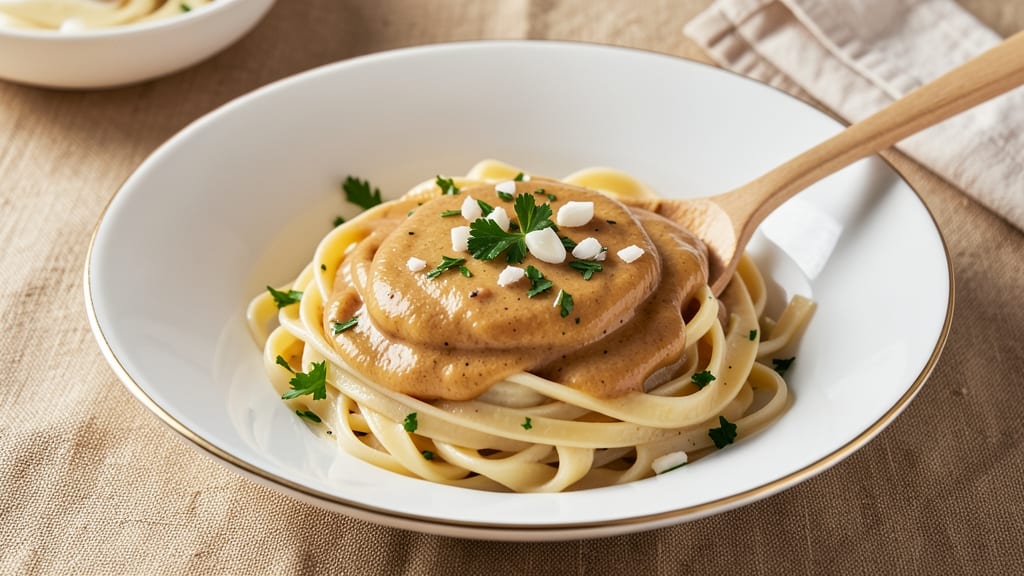
This alfredo sauce recipe with cream cheese and heavy whipping cream delivers the ultra-smooth, velvety richness that clings perfectly to pasta without a single clump. The secret lies in tempering the dairy gradually over low heat, creating a luxurious sauce that's restaurant-quality at home.
I've perfected this method after testing countless variations—this one never fails to impress.
The combination of cream cheese and heavy whipping cream creates an incredibly rich base that's thicker than traditional Alfredo but still silky smooth. Garlic and butter form the flavor foundation, while a splash of pasta water at the end ensures the sauce coats every noodle effortlessly.
What sets this apart is the technique: melting the butter slowly before adding the cream cheese prevents curdling, guaranteeing that velvety texture.
What you'll end up with is a sauce so luxurious it transforms even simple fettuccine into a gourmet meal. The texture is impossibly smooth—no lumps, no graininess—just pure, creamy perfection that clings beautifully to pasta.
This recipe builds on classic Alfredo while elevating it with the extra richness of cream cheese, making it ideal for special occasions or when you want to treat yourself to restaurant-quality comfort food at home.
The best part? This sauce reheats beautifully, so you can make it ahead and have it ready whenever pasta cravings strike. Whether you're serving it with fettuccine, chicken, or vegetables, this ultra-smooth Alfredo will be the star of your meal. Let's get started on creating this velvety masterpiece.
Ingredients for alfredo sauce recipe with cream cheese and heavy whipping cream
Eight essential ingredients transform into velvety perfection that clings to pasta without clumps.
| Ingredient | Amount | Notes |
|---|---|---|
| Unsalted Butter 🧈 | ½ cup | Cold, cubed for gradual melting |
| Cream Cheese 🧀 | 8 oz | Full-fat, room temperature |
| Heavy Whipping Cream 🥛 | 1 cup | Full-fat, cold from fridge |
| Garlic Cloves 🧄 | 4 cloves | Fresh, minced finely |
| Fresh Parsley 🌿 | ¼ cup | Chopped, for finishing |
| Pasta Water 💧 | ½ cup | Reserved from cooked pasta |
| Diamond Crystal Kosher Salt 🧂 | ½ tsp | Fine grain preferred |
| Freshly Ground Black Pepper 🌶️ | ¼ tsp | Cracked peppercorns preferred |
| White Wine (optional) 🍷 | ¼ cup | Dry, for deglazing |
| Nutritional Yeast (optional) 🍄 | 1 tbsp | For umami depth |
The butter and cream cheese are non-negotiable for that ultra-smooth texture. Philadelphia brand cream cheese melts beautifully, but Neufchatel adds even more richness. For butter, Plugrá or Land O'Lakes work perfectly—avoid salted if you're adding extra salt later. Fresh garlic is a must here; pre-minced loses its punch. The heavy whipping cream needs to be cold when you add it to prevent curdling. If you're feeling fancy, grab a garlic press at Williams Sonoma—it makes mincing garlic a breeze. Store your butter in the fridge to keep it firm, and buy cream cheese in single-serve tubs to avoid waste.
No cream cheese? Substitute with equal parts sour cream and heavy cream, but the texture won't be identical. Running short on butter? Olive oil or ghee works in a pinch, though the flavor profile shifts slightly. Pre-minced garlic? Fresh is worth the 30 seconds—it makes all the difference. The white wine, if using, should be dry and chilled; Sauvignon Blanc pairs beautifully. Nutritional yeast isn't just for vegans—it adds a cheesy, umami depth that elevates the sauce. For the pasta water, reserve it while the noodles cook—it's liquid gold for binding the sauce. If you're making this ahead, hold off on adding the parsley until serving to keep it vibrant.
This sauce reheats like a dream—just warm it gently over low heat with a splash of pasta water to restore silkiness. Store leftovers in an airtight container in the fridge for up to 5 days, or freeze for 3 months in portion-sized containers. The parsley wilts fast, so add it fresh at the end. For extra richness, stir in a knob of cold butter at the finish. Double the batch and freeze half—you'll thank yourself later when pasta cravings hit. The key to success is patience: let the butter melt slowly before adding cream cheese to prevent lumps, and always temper the dairy with gradual heat.
Why You'll Love This Recipe
- No-Fuss Base: I swear by this sauce because it’s actually foolproof—just melt butter, mix in the cream cheese until smooth, then fold in the warm cream. No whisking until your arm falls off, no straining for lumps. Honestly, the cream cheese does the heavy lifting here, and it’s the secret weapon.
- Garlic-Kissed Richness: That first hit of minced garlic in the butter? Pure flavor payoff. The cream cheese tames the sharpness while the heavy cream turns it into a velvety, dangerously good sauce. Fresh parsley at the end? Just the right bright note to cut through the richness—like a tiny green hug.
- Weeknight to Dinner Party: This sauce works for whatever you’re serving: toss it with fettuccine for a quick weeknight meal or drizzle it over grilled chicken for a fancy-ish dinner. Between us, I’ve even used it as a creamy dip for roasted veggies when I’m too tired to think. It’s that reliable.
- Leftovers That Don’t Let You Down: Make a big batch—it reheats like a dream. The cream cheese keeps it from curdling, and the heavy cream makes it silky every time. I’ll be real: I’ve had this sauce three days in a row, and it’s still just as good. Plus, it’s cheaper than store-bought and way more flavorful. Win-win.
Step-by-step instructions for ultra-smooth Alfredo sauce
Here's how to create velvety perfection without lumps or separation—every time.
Melt Butter and Incorporate Cream Cheese
In a medium saucepan over medium-low heat, melt the 0.5 cup unsalted butter until it's fully liquid but not browned. I like to keep the heat gentle here—this prevents the butter from burning while allowing it to melt smoothly. Once melted, reduce heat to low and add the 8 oz cream cheese in small chunks, letting each piece soften completely before adding the next. Stir constantly with a wooden spoon or silicone spatula to ensure even melting and prevent any potential clumping.
This gradual melting process is key to achieving that ultra-smooth texture. If you add all the cream cheese at once, you risk creating a thick paste that's nearly impossible to break down. Watch the mixture closely—you'll see it transform from a chunky solid to a silky, pale yellow emulsion. This step typically takes about 3-4 minutes of gentle stirring.
Add Heavy Cream and Garlic for Depth
Pour in the 1 cup heavy whipping cream and the 4 cloves minced garlic cloves simultaneously. The cream should immediately begin to warm and incorporate into the butter-cream cheese mixture. Stir continuously for 3-4 minutes until the sauce thickens slightly and the garlic becomes fragrant but doesn't brown. The reason we add the garlic now is to infuse its flavor without letting it burn—garlic has a very low threshold for turning bitter.
Here's where the magic happens: the combination of cream cheese and heavy cream creates a naturally emulsified base that won't separate. If you notice any small lumps forming, simply press them against the sides of the pan with your spatula—the heat will melt them right into the sauce. This is your first checkpoint for smoothness—if it looks silky now, you're on the right track.
Season and Finish with Pasta Water
Add the 0.5 tsp diamond crystal kosher salt, 0.25 tsp freshly ground black pepper, and if using, the 0.25 cup white wine or 1 tbsp nutritional yeast. The wine adds brightness and helps deglaze any fond that might have formed, while the nutritional yeast contributes a savory depth that mimics Parmesan. Stir well to combine all the seasonings.
Now for the final touch: slowly whisk in ½ cup pasta water, 1 tablespoon at a time, until the sauce reaches your desired consistency. The pasta water is crucial—it contains starch that helps create that signature clingy texture while preventing the sauce from becoming too heavy. You want a sauce that coats the back of a spoon but isn't watery. Taste and adjust seasoning—you might need a touch more salt or pepper depending on your pasta's saltiness.
Strain and Garnish for Restaurant-Quality Finish
For absolutely silky perfection, strain the sauce through a fine-mesh sieve into a clean saucepan. This removes any potential garlic bits and ensures a completely smooth texture. Return the sauce to low heat and keep it warm—never boiling, just gently simmering—until ready to serve. The residual heat maintains its creamy consistency without breaking the emulsion.
Just before serving, stir in the 0.25 cup chopped fresh parsley. This adds a bright, fresh element that cuts through the richness. The parsley should be finely chopped so it distributes evenly without overwhelming the dish. Serve immediately over your choice of pasta, tossing well to coat each strand in that luxurious, velvety sauce. The secret to great Alfredo? Timing—this sauce is best served fresh when it's at its peak temperature and smoothest consistency.
Pro Tips For Making Alfredo Sauce Recipe With Cream Cheese And Heavy Whipping Cream
- Melt Butter Slowly: Start with medium-low heat—high heat burns butter before the cream cheese even softens. I learned this the hard way after watching a batch seize up like glue. Let the butter melt into a gentle foam, then add the cream cheese in small chunks so it blends smoothly.
- Use Room-Temp Cream Cheese: Cold cream cheese clumps like a rock in hot sauce. Cut it into ½-inch cubes and let it sit on the counter for 10 minutes before adding it to the pan. This isn’t the prettiest method, but it works every time—no lumps, just silky texture.
- Skip the Boil: Once the cream cheese and butter are fully melted, reduce heat to the lowest setting and let the sauce simmer gently for 2–3 minutes. Boiling turns the heavy cream grainy, and no one wants curdled Alfredo. Think "barely bubbling," not "rolling boil."
- Toast Garlic Separately: Crush the garlic cloves first, then sauté them in ½ tablespoon of butter for 30 seconds until fragrant but not browned. Add them to the sauce at the very end—this keeps the flavor bright and prevents that bitter, overcooked garlic taste that ruins everything.
Pro cooking tips for perfect results
Temperature Control Secrets
Low and slow is your best friend here—never rush the melting process. Start with medium-low heat when melting the butter, then reduce to low once the cream cheese enters the mix. I've seen people burn butter trying to speed this up, and it ruins the whole sauce.
Use a candy thermometer if you're perfectionist like me—ideal butter temperature should be 160°F before adding cream cheese. 🌡️
Emulsification Magic
The key to that velvety texture lies in proper emulsification. After adding the heavy cream, stir continuously for at least 3-4 minutes until you see the sauce thicken slightly. This creates a stable emulsion where fat and liquid bind together.
If you stop stirring too soon, you risk separation later. Pro tip: Use a whisk with a long handle to reach all corners of the pan evenly.
Garlic Timing Matters
Add minced garlic when the cream enters the pan—this ensures it infuses flavor without burning. If you add it too early, the garlic will turn bitter before the cream comes to temperature. For extra flavor, let the garlic sit in the warm butter for 30 seconds before adding cream.
I like to use garlic press from Williams Sonoma for perfectly fine minced garlic every time. 🧄
Pasta Water Power
Never skip the pasta water! The starch in it acts as a natural thickener and binder. Add it 1 tablespoon at a time until you reach your desired consistency. For extra clinginess, reserve ½ cup pasta water while your noodles cook—this golden liquid is liquid gold for Alfredo sauce.
I keep a small bowl handy while cooking pasta specifically for this purpose.
Straining for Perfection
For restaurant-quality smoothness, strain your sauce through a fine-mesh sieve before serving. This removes any garlic bits and ensures a completely silky texture. I use a mesh strainer from OXO—it's worth the investment.
The straining step also helps create that signature ultra-smooth mouthfeel that makes this sauce feel like a luxury treat. ✨
Reheating Like a Pro
This sauce reheats beautifully, but do it right: warm over low heat with a splash of pasta water to restore silkiness. Never microwave it—this breaks the emulsion and creates a grainy texture.
For leftovers, store in an airtight container and reheat gently. I've had this sauce reheated three times with perfect results—just don't overheat it! 🔥
Nutrition facts
Frequently asked questions
Why does this recipe use both cream cheese and heavy whipping cream?
The cream cheese adds incredible richness and thickness while preventing separation, while the heavy whipping cream creates that signature velvety texture. Together they create a sauce that's far smoother than traditional Alfredo made with just butter and milk. The cream cheese also helps stabilize the sauce so it doesn't break when reheated.
Can I make this sauce without heavy whipping cream?
Yes, but the texture will be different. Substitute with an equal amount of whole milk or half-and-half, though you may need to add 1 extra tablespoon of butter to maintain richness. For a lighter version, use evaporated milk, but the sauce will be less creamy. The heavy cream is what gives this recipe its ultra-smooth, luxurious mouthfeel.
How do I fix lumps if they form in my sauce?
If small lumps appear, immediately press them against the sides of the pan with a spatula—the heat will melt them into the sauce. For stubborn lumps, remove the pan from heat and use an immersion blender to smooth it out. Never add more liquid to fix lumps, as this can cause curdling. The key is gradual heat and constant stirring from the beginning.
What's the best pasta to serve with this ultra-smooth Alfredo?
Fettuccine or tagliatelle are classic choices, but this rich sauce also works beautifully with pappardelle or even wide egg noodles. For extra indulgence, try it with lobster ravioli or chicken piccata. The wide noodles help the sauce cling perfectly, creating that signature "Alfredo experience."
Can I make this sauce ahead of time?
Make it up to 2 days ahead and store in an airtight container in the fridge. When reheating, warm over low heat with a splash of pasta water to restore silkiness. For longer storage, freeze portions for up to 3 months. Just