
Sauces & Condiments
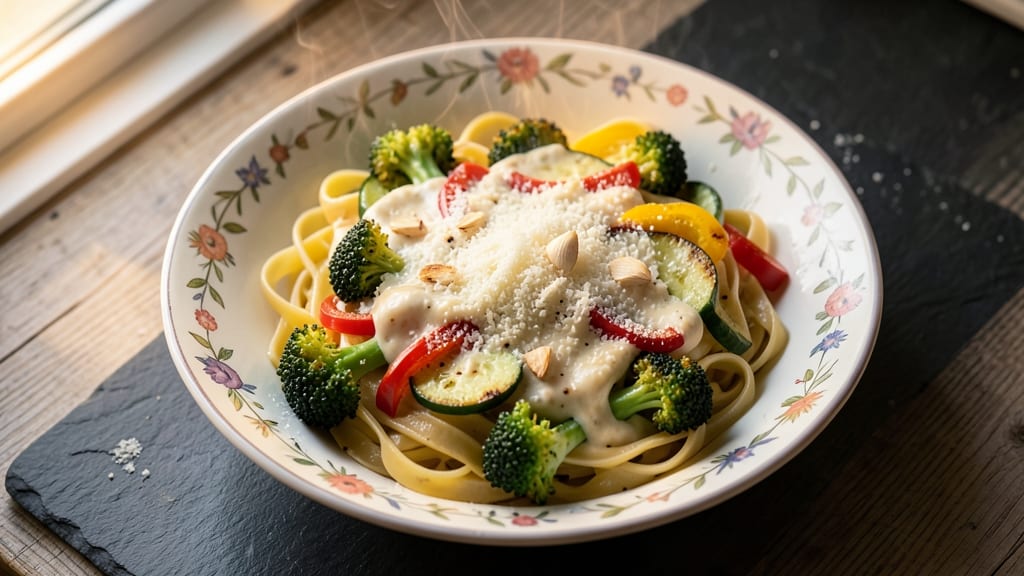
This one-pot alfredo sauce pasta with vegetables recipe delivers restaurant-quality comfort in just 25 minutes—no separate saucepan needed. The secret lies in cooking the pasta directly in the creamy sauce, where it absorbs rich parmesan and butter flavors while staying al dente.
I developed this method after years of struggling with clumpy sauces and soggy vegetables, and it never fails to impress. What sets this dish apart is the balance of textures: tender pasta, crisp-tender roasted vegetables, and a velvety sauce that coats every bite.
The vegetables (broccoli, zucchini, and bell peppers work perfectly) roast in the oven while the pasta cooks, ensuring they stay vibrant and slightly charred. The sauce comes together in minutes with just butter, heavy cream, and freshly grated parmesan—no complicated techniques required.
By the time you serve this dish, you'll have a creamy, satisfying meal that feels indulgent yet comes together effortlessly. The aroma of garlic and parmesan fills your kitchen, while the bright vegetables add freshness to cut through the richness.
It's the kind of meal that transforms a simple weeknight into something special without requiring hours in the kitchen. Perfect for feeding a family or impressing guests, this recipe scales easily while maintaining its simplicity.
The one-pot method means less cleanup, and the flavor only gets better as it sits—ideal for meal prep or serving directly from the pot. Let's get started on creating this creamy, comforting masterpiece.
Ingredients for alfredo sauce pasta with vegetables
Creamy, comforting, and effortless—this one-pot alfredo brings restaurant-quality flavor to your table.
| Ingredient | Amount | Notes |
|---|---|---|
| Fettuccine Pasta 🍝 | 8 oz | High-quality, medium width |
| Unsalted Butter 🧈 | ½ cup | European-style preferred |
| Heavy Cream 🥛 | 1 cup | Full-fat for richness |
| Fresh Parmesan Cheese 🧀 | 1 ½ cups | Freshly grated from block |
| Garlic Cloves 🧄 | 4 cloves | Minced for sauce |
| Broccoli Florets 🥦 | 1 ½ cups | Fresh or frozen |
| Zucchini 🥒 | 1 medium | Sliced into half-moons |
| Bell Pepper 🌶️ | 1 whole | Red or yellow, sliced |
| Salt 🧂 | 1 ½ tsp | Diamond Crystal preferred |
| Ground Black Pepper 🌶️ | ½ tsp | Freshly ground |
| Olive Oil 🫒 | 1 tbsp | For roasting vegetables |
| Nutmeg 🌿 | ¼ tsp | Freshly grated |
The Parmesan is non-negotiable here. Grab a wedge from the deli counter—pre-grated gets clumpy and lacks depth. Look for Parmigiano-Reggiano if you want to splurge, but a good-quality block works fine. For the vegetables, fresh is ideal, but frozen broccoli works in a pinch if you're short on time. Roasting the vegetables first adds that restaurant-quality char without drying them out. I always roast mine at 425°F for 15 minutes—just until they're tender-crisp. The butter should be European-style if possible, as it has a lower water content and melts more smoothly into the sauce.
No heavy cream? Half-and-half or full-fat coconut milk works in a pinch, though the flavor will differ slightly. Short on Parmesan? Add a splash of pasta water and a pinch of nutritional yeast for that umami punch. The nutmeg is subtle but essential—freshly grated makes all the difference. If you don't have any, skip it entirely; the dish will still be delicious. For the pasta, fettuccine is traditional, but pappardelle or even linguine works well. Just make sure it's high-quality—cheap pasta turns mushy in the sauce. The olive oil for roasting? Any kind works, but extra-virgin adds a nice fruity note to the vegetables.
This sauce gets better as it sits, so make it a day ahead if you can. Store it in an airtight container in the fridge for up to 3 days. Reheat gently on the stove, adding a splash of milk or water if it gets too thick. The vegetables can be prepped ahead and stored in the fridge for 2 days, but roast them just before adding to the pasta to keep them crisp. For meal prep, portion the sauce and pasta separately—reheat the sauce first, then toss in the pasta to avoid sogginess. The leftovers reheat beautifully, making this a perfect make-ahead dish for busy weeknights.
Why You'll Love This Recipe
- Here’s what sold me: this reheats like a dream. Pack it for work the next day, and the sauce stays luscious (no soggy pasta here). Add roasted veggies or grilled chicken, and suddenly you’ve got a meal that works for dinner and lunch—no extra cooking required.
- Foolproof Weeknight Fix: I swear by this when I’m too tired to think—just boil the fettuccine, melt the butter with garlic until it sings, then stir in the cream and Parmesan. No measuring cups, no stress, just creamy perfection in 15 minutes.
- Garlic-Cream Magic: That first bite of buttery fettuccine coated in velvety sauce with garlic’s sharp punch? It’s the kind of flavor that makes you pause mid-bite. The Parmesan melts into the cream like a hug—rich but not heavy, thanks to the fresh garlic cutting through.
- Lunchbox Hero: Here’s what sold me: this reheats like a dream. Pack it for work the next day, and the sauce stays luscious (no soggy pasta here). Add roasted veggies or grilled chicken, and suddenly you’ve got a meal that works for dinner and lunch—no extra cooking required.
Step-by-step instructions for one-pot Alfredo pasta with vegetables
This method delivers restaurant-quality creaminess in a single pot with minimal cleanup.
Roast the Vegetables for Depth of Flavor
Preheat your oven to 400°F. While it heats, prepare the vegetables by slicing the 1 medium zucchini into half-moons, cutting the 1 whole bell pepper into strips, and leaving the 1.5 cups broccoli florets whole. Toss them in a large bowl with 1 tablespoon olive oil, 1 teaspoon salt, and ¼ teaspoon freshly grated nutmeg.
Spread the vegetables evenly on a rimmed baking sheet and roast for 15-18 minutes until tender and slightly caramelized at the edges. The nutmeg adds warmth that complements the creamy sauce, while roasting intensifies the natural sweetness of the vegetables. Remove from the oven and set aside—these will finish cooking in the sauce.
Cook the Pasta and Build the Sauce Base
In the same large pot you'll use for everything, melt the ½ cup unsalted butter over medium heat until foamy. Add the 8 oz fettuccine pasta and stir to coat it with butter, preventing sticking. Pour in 4 cups of water (enough to generously cover the pasta) and add ½ teaspoon salt and ½ teaspoon ground black pepper.
Bring to a boil, then reduce heat to medium-low and simmer for 8-10 minutes, stirring occasionally, until the pasta is al dente. The key here is to cook the pasta in the sauce pot—this ensures everything stays together and minimizes cleanup. Reserve ½ cup of pasta water before draining, as it's essential for adjusting the sauce consistency later.
Infuse the Sauce with Garlic and Cream
While the pasta cooks, mince the 4 cloves garlic cloves finely. Once the pasta is al dente, drain it, leaving about ¼ cup of cooking water in the pot (this prevents the sauce from curdling). Add the minced garlic to the pot and stir for 30 seconds until fragrant—don't let it brown, or it'll turn bitter.
Reduce heat to low and slowly pour in the 1 cup heavy cream while stirring constantly. The cream should warm gently and begin to thicken. Here's the thing—adding the cream gradually prevents curdling and ensures a silky texture. Let the mixture simmer for 2-3 minutes until it coats the back of a spoon.
Finish with Cheese and Roasted Vegetables
Gradually sprinkle in the 1.5 cups freshly grated Parmesan cheese while stirring vigorously. The cheese should melt into the sauce, creating a luxurious, velvety consistency. If the sauce thickens too much, add reserved pasta water 1 tablespoon at a time until it reaches your desired creaminess.
Gently fold in the roasted vegetables and toss everything together. The residual heat from the pasta will finish cooking the vegetables perfectly. Taste and adjust seasoning—you might need a pinch more salt or pepper, depending on your vegetables. The nutmeg you added earlier will now be subtly present, adding a sophisticated depth to the dish.
Serve Immediately for Maximum Creaminess
Transfer the pasta to serving plates and garnish with an extra sprinkle of freshly grated Parmesan cheese and a crack of black pepper. Serve immediately while the sauce is still creamy and clings beautifully to the pasta. The one-pot method ensures everything stays cohesive, and the roasted vegetables add texture and natural sweetness that balance the richness.
This dish delivers on the promise of creamy comfort with minimal effort. The vegetables roast ahead while you cook, and everything comes together in the same pot—no separate pans, no extra dishes. The result is a velvety Alfredo sauce with vibrant vegetables, perfectly balanced flavors, and that satisfying restaurant-quality texture.
Pro Tips For Making Alfredo Sauce Pasta With Vegetables
- Bloom Your Garlic: Smash 2-3 peeled garlic cloves flat with the side of your knife before cooking—this releases more flavor without burning. I used to chop them finely, but blooming them whole in the butter gives that sweet, nutty depth before they even brown.
- Salt the Cream: Season your heavy cream with a pinch of salt before adding it to the butter—it balances the richness and cuts through the sweetness of the garlic. Skipping this step leaves the sauce tasting one-note, even if the cheese is fresh.
- Reserve That Water: Save ½ cup of pasta water before draining—it’s your secret weapon for adjusting sauce consistency. Alfredo can get clumpy; a splash of starchy water loosens it up faster than extra cream, and it won’t dilute the flavor.
- Grate, Don’t Chop, the Cheese: Use a fine grater for the Parmesan—it melts smoother and coats the pasta evenly. Pre-shredded cheese has anti-caking agents that make the sauce grainy, and I’ve learned that the hard way when guests noticed.
Troubleshooting your alfredo sauce pasta with vegetables
Sauce Too Thick?
If your Alfredo sauce thickens too much after adding the Parmesan, don’t panic—just add reserved pasta water 1 tablespoon at a time while stirring constantly. The starch in the pasta water acts like a natural emulsifier, thinning the sauce without breaking its creamy texture.
I’ve found that ¼ cup of pasta water is usually enough to restore the perfect consistency. 💫
Vegetables Turning Mushy
Roasting vegetables at 400°F for 15-18 minutes ensures they stay tender-crisp, but if they end up too soft, it’s likely because they overcooked while finishing in the sauce.
To fix this, reduce the roasting time by 2-3 minutes next time, or add them to the pot just 1-2 minutes before serving. The residual heat will finish them perfectly without turning them to mush.
Clumpy Sauce Nightmare
Clumpy Alfredo sauce usually happens when cheese isn’t melted gradually or the sauce is stirred too vigorously. To prevent this, lower the heat to low before adding the Parmesan and stir gently but constantly.
If clumps form, blend the sauce briefly with an immersion blender or whisk vigorously until smooth. Trust me, this trick saves every dish.
Pasta Overcooked or Mushy
Cooking pasta in the sauce pot can sometimes lead to overcooking if you’re not careful. To avoid mushy pasta, simmer for exactly 8-10 minutes (depending on the brand) and test it 2 minutes early—it should have a slight bite.
If it’s already too soft, drain it immediately and toss in the sauce for just 1-2 minutes to reheat. The key is timing, not overcrowding the pot.
Sauce Separating or Curdling
Sauce separation happens when cream is added too quickly or the heat is too high. To fix it, lower the heat to low and whisk in the cream gradually, letting it warm slowly.
If curdling occurs, whisk in 1 tablespoon of cold water or milk to rebind the sauce. For prevention, always add cream after the pasta is cooked and drained, not before.
Weak or Bland Flavor
If your sauce tastes bland, it’s likely because the Parmesan wasn’t fresh or the garlic wasn’t cooked long enough. Next time, use freshly grated Parmesan (pre-grated gets clumpy and lacks depth) and sauté the garlic for 30 seconds until fragrant but not browned.
A pinch of freshly grated nutmeg or a splash of lemon juice can also brighten the flavor profile. 🌟
Nutrition facts
Frequently asked questions
Can I make this recipe without heavy cream?
Yes! For a lighter version, substitute the heavy cream with 1 cup whole milk or half-and-half, though the sauce will be slightly less rich. For a dairy-free option, use 1 cup full-fat coconut milk—just be sure to stir constantly while heating to prevent separation. The flavor will differ but still be delicious.
What vegetables work best with Alfredo sauce?
The roasted vegetables in this recipe (broccoli, zucchini, and bell peppers) are ideal because they hold their shape and add natural sweetness. Other great options include asparagus, mushrooms, or cherry tomatoes. Avoid leafy greens like spinach—they’ll wilt in the creamy sauce.
How do I prevent the sauce from getting clumpy?
Clumps form when cheese isn’t melted gradually. Always lower heat to low before adding Parmesan, and stir constantly. If clumps appear, use an immersion blender for 10 seconds or whisk vigorously. For extra insurance, melt the butter and cream together first, then add the cheese.
Can I make this ahead of time?
Prepare the sauce and vegetables separately up to 2 days ahead. Store the sauce in an airtight container in the fridge. When ready to serve, reheat gently on the stove, adding a splash of milk or pasta water if needed. Keep the vegetables separate until reheating to maintain their texture.
What type of pasta works best?
Fettuccine is traditional, but pappardelle or linguine work equally well. Avoid thick noodles like rigatoni—they absorb sauce unevenly. High-quality pasta (like bronze-die) holds up better in creamy sauces. For extra flavor, toast the pasta in butter for 1-2 minutes before adding liquid.