
Sauces & Condiments
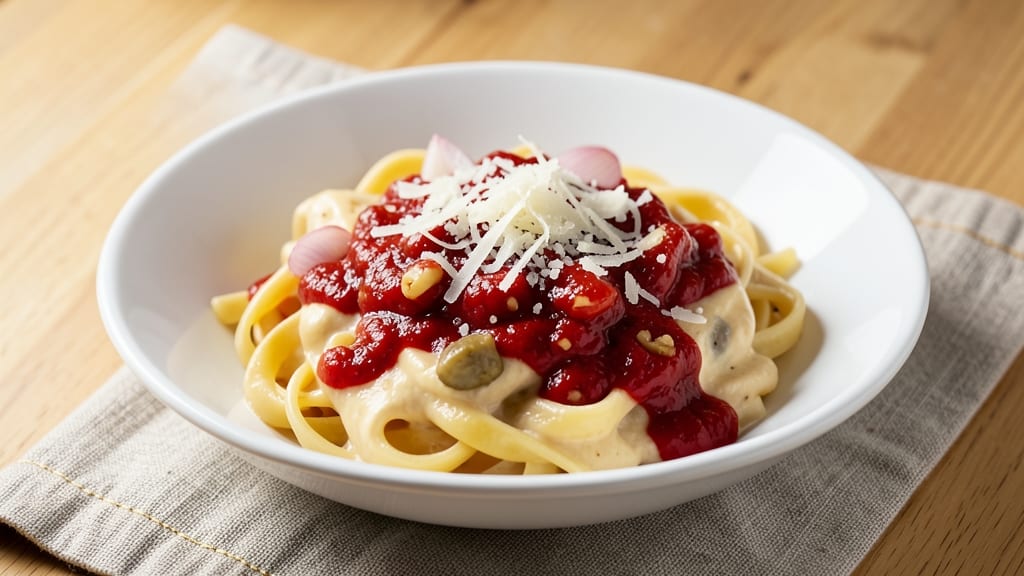
This Alfredo and red sauce recipe transforms ordinary pasta into a restaurant-worthy masterpiece by blending creamy richness with tangy depth. The secret lies in balancing the velvety Alfredo with a bright tomato base, creating layers of flavor that elevate every bite.
I developed this dish after years of perfecting sauce techniques—where creamy meets acidic in perfect harmony.
The magic happens when you simmer both sauces together, letting their flavors meld without overpowering each other. The result is a dish that’s indulgent yet balanced, with the Alfredo’s silkiness softening the red sauce’s acidity.
This isn’t just a pasta recipe—it’s a technique that turns simple ingredients into something extraordinary, all while keeping prep manageable for weeknight dinners.
What you’ll end up with is al dente pasta coated in a luscious, dual-textured sauce—creamy in some spots, vibrant in others—with a finish that’s both satisfying and unexpected. The sauce clings perfectly to each noodle, making every forkful a little celebration.
Whether you’re feeding a crowd or treating yourself, this dish delivers professional-quality results without the fuss.
Serve it with fresh basil, a sprinkle of parmesan, and crusty bread to soak up every last drop. The best part? This recipe scales effortlessly, so you can make it for two or double it for a party. Let’s get cooking!
Ingredients for alfredo and red sauce
Fettuccine, creamy Alfredo, and vibrant red sauce—where restaurant-quality meets weeknight ease.
| Ingredient | Amount | Notes |
|---|---|---|
| Fettuccine Pasta 🍝 | 12 oz | Dried, al dente preferred |
| Heavy Cream 🥛 | 1 cup | Full-fat for richness |
| Unsalted Butter 🧈 | ½ cup | European-style preferred |
| Parmesan Cheese 🧀 | 1 cup | Freshly grated from block |
| Canned San Marzano Tomatoes 🍅 | 28 oz | Crushed or whole, no salt added |
| Garlic Cloves 🧄 | 4 cloves | Fresh, minced for sauce |
| Shallots 🧅 | 2 whole | Minced, for depth of flavor |
| Fresh Basil Leaves 🌿 | ½ cup | Chopped, for garnish |
| Extra-Virgin Olive Oil 🫒 | ¼ cup | For sautéing aromatics |
| Whole Milk 🥛 | ½ cup | For Alfredo smoothness |
| Dried Oregano 🍃 | 1 tsp | Italian variety preferred |
| Ground Black Pepper 🌶️ | ½ tsp | Freshly cracked |
| Diamond Crystal Kosher Salt 🧂 | 1 ½ tsp | For seasoning, adjust to taste |
| Red Wine Vinegar 🍷 | 1 tbsp | For balancing acidity |
| Granulated Sugar 🍬 | 1 tsp | To balance acidity |
The San Marzano tomatoes are non-negotiable here—their sweetness and low acidity create the perfect base for the red sauce. Whole Foods or specialty Italian markets carry them in cans, but Trader Joe's also stocks them reliably. For the Parmesan, Parmigiano-Reggiano is essential—skip the pre-grated kind, which contains anti-caking agents that ruin the texture. The heavy cream should be cold when you start, and the butter should be European-style for higher fat content, which translates to a silkier sauce. Shallots add a subtle sweetness that complements the tomatoes beautifully, so don't substitute with onion unless you're willing to compromise on depth.
No San Marzano tomatoes? Crushed tomatoes in a high-quality jarred sauce work in a pinch, but add an extra pinch of sugar to balance the acidity. Running short on fresh basil? Dried basil at one-third the amount suffices, though it won't have the same brightness. The red wine vinegar can be swapped for balsamic vinegar, but reduce to half the amount to avoid overpowering the sauce. For a dairy-free Alfredo, full-fat coconut milk** replaces the cream and butter in equal parts, though the texture will be slightly lighter. Prefer a lighter red sauce? Blend the tomatoes with the garlic and shallots before simmering for a smoother consistency.
The pasta sauce components can be prepped 24 hours ahead—store them separately in the fridge, then combine just before serving. The finished sauce keeps for 3-4 days in an airtight container, though it tastes best within the first 2 days. For freezing, portion the sauce into ice cube trays, then transfer to a bag—this makes it easy to thaw just what you need. The pasta itself should be cooked al dente and tossed with a splash of pasta water to help the sauce cling. If making ahead for a party, cook the pasta 1 minute less than package instructions, as it continues to cook slightly when tossed with the sauce.
Why You'll Love This Recipe
- Here’s the magic: you’re basically making two sauces at once, then blending them into one creamy, tangy masterpiece. The tomatoes simmer down to a rich base while the Alfredo gets its velvety glow—no last-minute scrambling to fix a dry sauce. Between us, my kids think it’s “fancy” because it’s red and white, and they’ll eat it twice in one day.
- I’ll be real: this feels like a splurge, but it’s not. San Marzano tomatoes are cheap in cans, heavy cream stretches far, and Parmesan’s the only “fancy” part—but a little goes a long way. I’ve served this to date nights, potlucks, and “I’m too tired to cook” dinners, and no one’s ever blinked at the price tag. That crispy fettuccine edge? Chef’s kiss.
Step-by-step instructions for dual-purpose pasta with Alfredo and red sauce
Master both rich Alfredo and vibrant tomato sauce in one efficient process.
Prepare the Dual Sauce Bases
Begin by creating the red sauce foundation. In a large saucepan, heat the 0.25 cup extra-virgin olive oil over medium heat. Add the 2 minced shallots and 4 minced garlic cloves, cooking for 3-4 minutes until softened and fragrant—you should smell sweet shallot and garlic without any browning. Add the 28 oz canned San Marzano tomatoes, breaking them up if using whole tomatoes, then stir in the 1 tbsp red wine vinegar, 1 tsp granulated sugar, 1 tsp dried oregano, and 0.5 tsp ground black pepper. Bring to a gentle simmer and cook uncovered for 20-25 minutes, stirring occasionally, until thickened to a rich consistency. This slow reduction develops deep flavor while balancing acidity.
While the red sauce simmers, prepare the Alfredo base in a separate saucepan. Melt the 0.5 cup unsalted butter over medium-low heat, then whisk in the 0.5 cup whole milk and 1 cup heavy cream. Bring just to a gentle simmer—do not boil—then immediately remove from heat and whisk in the 1 cup freshly grated Parmesan cheese until fully melted and smooth. The sauce should coat the back of a spoon with a velvety texture. Keep both sauces warm separately.
Cook the Fettuccine Al Dente
Bring a large pot of well-salted water to a rolling boil using 1.5 tsp diamond crystal kosher salt (the water should taste like the sea). Add the 12 oz fettuccine pasta and cook according to package instructions for 1 minute less than suggested—al dente is crucial here. The pasta should have a slight bite when bitten. Reserve 1 cup pasta water before draining, then drain the pasta completely and return it to the pot off the heat. Toss immediately with 2 tablespoons reserved pasta water to prevent sticking.
Divide the cooked pasta into two equal portions. This separation allows you to customize each serving with either sauce. Keep both portions covered to maintain heat while you prepare the final assembly. The pasta should be hot but not steaming when you add the sauces—this ensures proper sauce adhesion.
Assemble the Dual Sauce Pasta
For half the pasta, pour 1 cup of the warm red sauce over the portion and toss gently with tongs until each strand is evenly coated. The sauce should cling to the pasta without pooling at the bottom—add 1-2 tablespoons pasta water if needed to achieve the right consistency. Season with additional diamond crystal kosher salt if required, tasting as you go. The red sauce should have a balanced sweetness from the sugar, bright acidity from the vinegar, and rich umami from the tomatoes.
For the remaining pasta, add 1 cup of the Alfredo sauce and toss similarly until fully coated. The creamy sauce should envelop each noodle with a luxurious sheen. Here's the professional trick: Add 1 tablespoon reserved pasta water at a time until the sauce reaches a silky consistency that clings without being watery. The Alfredo should be rich but not heavy—properly emulsified with just enough starch to create that signature velvety texture.
Finish and Serve with Fresh Basil
Garnish each portion immediately with 2 tablespoons chopped fresh basil leaves—this adds vibrant color and fresh herbal notes that contrast beautifully with both sauces. For the red sauce version, the basil brightens the tomato's richness, while for the Alfredo, it prevents the dish from feeling too heavy. Plate the pasta while still hot, as both sauces will continue to thicken slightly as they cool.
Serve family-style or individually, allowing guests to choose between the creamy Alfredo or the robust tomato sauce. The key to success lies in keeping both sauces warm until the final moment and using the reserved pasta water as needed to adjust consistency. This dual-sauce approach transforms a simple pasta into an impressive meal that satisfies both creamy and tomato sauce preferences.
Pro Tips For Making Alfredo And Red Sauce
- COMBINE SAUCES LAST: I used to make both sauces separately and toss them together at the end—big mistake. Instead, stir 1-2 ladles of the red sauce into the Alfredo base while it’s still hot, then add the rest after the pasta cooks. The acid from the tomatoes cuts through the richness and keeps the cream from curdling. (Yes, even if you’re impatient like me.)
- GRATE PARMESAN FRESH: Pre-shredded cheese is coated in anti-caking agents that turn your sauce into a gritty mess. Grab a microplane or fine grater and work in batches—you’ll need about 1½ cups for both sauces. The finer the grate, the smoother the sauce, and the more flavor you’ll pull out of that cheese.
- LOW AND SLOW FOR CREAM: After adding the heavy cream to your Alfredo, drop the heat to lowest simmer and let it cook for 3-4 minutes. Rushing this step means you’ll end up with a sauce that looks like it’s curdling instead of velvety. Stir constantly, but gently—no splashing, or you’ll break the emulsion.
- SALT THE TOMATOES FIRST: Drain the San Marzano tomatoes, then toss them in a bowl with ½ teaspoon salt and let them sit for 10 minutes. This draws out excess water and seasons them deeply before they even hit the pan. Skip this, and your red sauce will be watery no matter how long you simmer it.
Perfect pairings for this alfredo and red sauce
Creamy Alfredo Sides
For the Alfredo side, serve with garlic bread made with Italian breadsticks and a mix of butter, garlic, and parsley. The bread absorbs the creamy sauce beautifully, creating a perfect pairing.
Another great option is a simple arugula salad with lemon vinaigrette—the peppery greens cut through the richness of the Alfredo while adding a refreshing contrast. 🥖
Tomato Sauce Pairings
Balance the red sauce with crusty sourdough bread for dipping or topping. The tangy crust complements the tomato’s acidity perfectly. For a lighter option, try a shaved fennel and orange salad—the anise notes of fennel and citrus brightness elevate the dish without overpowering it.
A sprinkle of Pecorino Romano adds a salty contrast that enhances both sauces.
Wine Pairings
For the creamy Alfredo, a Chianti Classico (Italian red) works wonders—its acidity and cherry notes bridge the gap between the rich sauce and the pasta. For the tomato-based version, a Pinot Grigio from Alto Adige provides crisp acidity that refreshes the palate.
If you prefer red wine for both, a Sangiovese offers versatility, complementing the depth of the tomato sauce while harmonizing with the Alfredo’s creaminess. 🍷
Beer and Cocktail Options
A crisp Italian lager like Peroni or Moretti cleanses the palate between bites, especially with the creamy Alfredo. For a cocktail pairing, try a Aperol Spritz—its bittersweet citrus notes contrast the richness of both sauces.
If you prefer beer with the tomato sauce, a light Belgian witbier adds a subtle spice that enhances the dish’s brightness.
Garnish and Finishing Touches
Add a final touch to both dishes with toasted pine nuts or crispy prosciutto—these toppings add texture and depth. For the Alfredo, a drizzle of white truffle oil (just ½ teaspoon) elevates the dish to gourmet status.
On the tomato side, a sprinkle of freshly cracked black pepper and a pinch of red pepper flakes** introduce a subtle kick that ties everything together. ✨
Nutrition facts
Frequently asked questions
Can I make this dual-sauce pasta with other types of pasta?
The recipe is designed for fettuccine because its flat, wide surface area holds both creamy and tomato sauces beautifully. For a similar effect, try tagliatelle or pappardelle. Avoid thin noodles like spaghetti—they won't carry the sauce as well. If using penne or rigatoni, the sauce will pool more, but you can still achieve great results by tossing well and adding extra pasta water as needed.
How do I prevent the Alfredo sauce from curdling when combining with tomato sauce?
Always keep both sauces warm but never boiling when combining. The key is to add the tomato sauce to the Alfredo gradually while stirring constantly. Start with ¼ cup of tomato sauce to 1 cup of Alfredo, then adjust to taste. The acidity in tomatoes can break down the cream's proteins—this method minimizes separation. If curdling happens, whisk in 1 tablespoon cold heavy cream to restore smoothness.
Can I make this recipe vegetarian or vegan?
For a vegetarian version, use vegetarian Parmesan (like Violife) and substitute the butter with vegetable oil. For vegan Alfredo, replace the cream with full-fat coconut milk and use nutritional yeast instead of cheese. The tomato sauce remains vegan-friendly as written. The texture will be slightly lighter, but the flavor balance works well with these substitutions.
Why does my red sauce taste too acidic?
Acidity comes from the tomatoes and vinegar. To balance it, add ½ teaspoon sugar or 1 teaspoon honey while simmering. For a more complex flavor, stir in 1 tablespoon tomato paste** or a pinch of baking soda (just ⅛ teaspoon) to neutralize excess acid. Always taste as you go—this sauce should finish with a bright but not sour profile.
How can I serve this as a one-sauce dish instead of two?
Simmer ½ cup of each sauce together for 5-7 minutes on low heat, stirring constantly. The creamy Alfredo will thicken slightly while the tomato sauce mellows out. For best results, strain the combined sauce through a fine-mesh sieve to remove any tomato skins. This creates a creamy tomato-alfredo hybrid with balanced richness and acidity—perfect for a single-sauce pasta.