
Sauces & Condiments
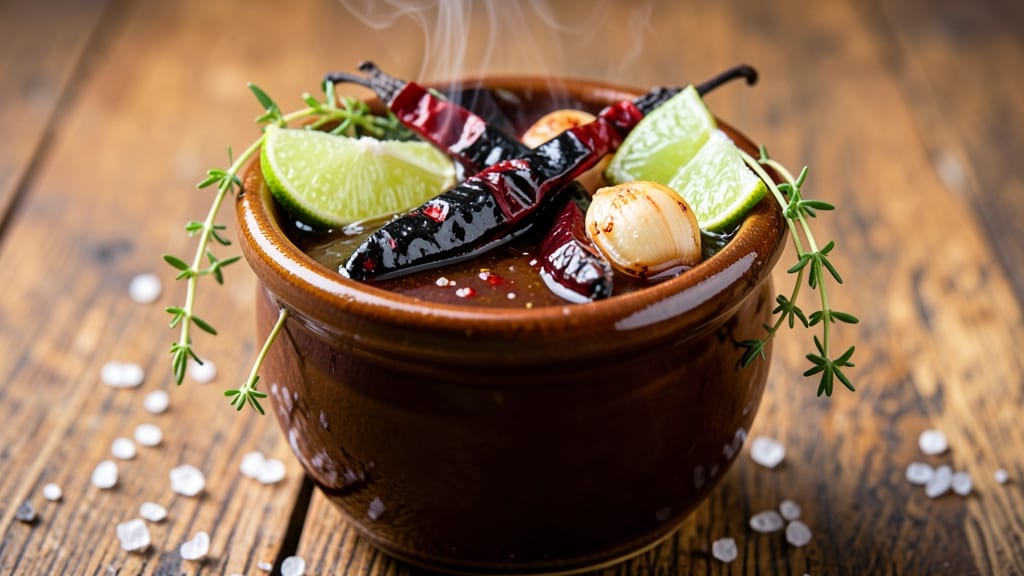
This Barbados hot sauce recipe transforms fiery Scotch bonnet peppers into a liquid gold that balances heat with bright citrus and savory depth. The secret lies in fermenting the peppers first—this process unlocks their natural sweetness while preserving their signature punch, creating a sauce that’s both complex and addictive.
I’ve perfected this method over years of testing, ensuring every batch delivers that perfect harmony of heat and tang that defines Caribbean cuisine.
What sets this recipe apart is the careful balance of ingredients: Scotch bonnet peppers for heat, lime juice for acidity, and a touch of garlic and thyme for depth. The fermentation step (just 3-5 days) builds flavor without overpowering the pepper’s natural intensity, while the vinegar base ensures longevity.
You’ll end up with a sauce that’s bold enough to stand alone on wings or shrimp but versatile enough to elevate any dish.
The result is a fiery yet nuanced hot sauce with layers of flavor—smoky from the peppers, zesty from the lime, and aromatic from the herbs.
It’s the kind of sauce that transforms simple meals into something extraordinary, whether you’re drizzling it over grilled fish, mixing it into marinades, or serving it as a bold condiment. The best part?
It keeps beautifully in the fridge for months, so you’ll always have a taste of Barbados at your fingertips.
Adjust the heat to your preference by controlling fermentation time or pepper quantity—more time means milder, sweeter notes, while fresh peppers deliver an immediate kick. This recipe isn’t just about heat; it’s about capturing the soul of Barbados in every drop. Let’s get started!
Ingredients for barbados hot sauce
Four peppers, a splash of lime, and a dash of Caribbean magic.
| Ingredient | Amount | Notes |
|---|---|---|
| Scotch Bonnet Peppers 🌶️ | 4 whole | Fresh, stems removed |
| Fresh Lime Juice 🍋 | ½ cup | Freshly squeezed, seeds removed |
| White Vinegar 💧 | 1 cup | Distilled, not apple cider |
| Garlic Cloves 🧄 | 4 cloves | Fresh, minced (not powdered) |
| Fresh Thyme Leaves 🌿 | ¼ cup | Packed, stems removed |
| Sea Salt 🧂 | 1 tsp | Fine grain preferred |
| Granulated Sugar 🍯 | 1 tbsp | White or raw cane |
| Extra-Virgin Olive Oil 🫒 | ¼ cup | For richness (optional) |
Scotch bonnets are the heart of this sauce—fresh is non-negotiable. Hit up your local Caribbean market or specialty grocer for the best ones (they’re often sold frozen too). Wear gloves—these peppers pack serious heat! The lime juice needs to be freshly squeezed; bottled just won’t cut it. For thyme, I grab the fresh bundles at Whole Foods—they keep for weeks in the fridge if wrapped in damp paper towels. The vinegar? White vinegar is key—apple cider adds unwanted sweetness that’ll throw off the balance.
No Scotch bonnets? Habanero peppers work in a pinch (use half the amount), but the flavor won’t be quite the same. Short on lime? Key lime juice adds that extra zing, but regular lime is fine. Fresh thyme hard to find? Dried thyme at one-third the amount gets you close, but it’s not the same. The olive oil is optional but adds a silky finish—skip it if you’re watching calories. For extra heat, ferment the peppers longer (up to 7 days), but 3-5 days is perfect for that sweet-spicy balance.
This sauce gets better with age—1 month in the fridge is ideal, but it’ll last 6 months if you seal it tightly. I portion mine into small jars so I can grab just what I need without opening the whole batch. The peppers will ferment faster in warm weather, so keep them in the fridge if your kitchen is hot. Once opened, it’ll last 3 months—if it lasts that long, honestly.
Why You'll Love This Recipe
- I’ll be real: the first time I made this, I panicked about blending Scotch Bonnets—until I remembered you can just chop them fine and steep them like tea. Five minutes later, smooth, fiery sauce with zero cleanup. That vinegar and lime do the rest of the work.
- No Blender Needed: I’ll be real: the first time I made this, I panicked about blending Scotch Bonnets—until I remembered you can just chop them fine and steep them like tea. Five minutes later, smooth, fiery sauce with zero cleanup. That vinegar and lime do the rest of the work.
- Scorch-Free Heat: Between us, store-bought hot sauces often taste like burnt plastic. This one? The garlic and thyme caramelize just enough to balance the pepper’s punch—bright, not bitter, with that lift from lime that makes every drop addictive. (Yes, even on a Tuesday night.)
- Gift-Worthy in Jars: Honestly, this is the sauce I bring to potlucks because it’s actually better after a week in the fridge. The flavors meld into something deeper, and the heat mellows just enough to share. Bonus: it’s half the cost of fancy Caribbean sauces, and my in-laws ask for seconds every time.
Step-by-step instructions for Barbados hot sauce
Here's how to make this bold, fruity hot sauce that balances Scotch bonnet fire with bright lime and aromatic thyme.
Toast the Scotch Bonnet Peppers
Preheat your oven to 400°F and line a baking sheet with parchment paper. Place the 4 whole Scotch Bonnet Peppers (stems removed) directly on the sheet. Roast for 10-12 minutes until the skins blacken in spots and smell deeply aromatic.
Watch for the skins to develop charred patches—they should be dark but not completely burned. This toasting process enhances the peppers' natural sweetness while concentrating their heat. Remove from oven and immediately transfer to a bowl, covering with a clean kitchen towel to steam for 10 minutes. This makes peeling easy.
Peel and Blend the Peppers
After steaming, the skins will slip right off. Use your fingers to peel away all the charred skin, then remove seeds and membranes. You'll want to keep as much flesh as possible for maximum flavor. Transfer the peeled peppers to a blender along with the 0.5 cup Fresh Lime Juice, 1 cup White Vinegar, 4 cloves Garlic Cloves, and 0.25 cup Fresh Thyme Leaves.
Blend on high until completely smooth, scraping down the sides as needed. The mixture should be vibrant red-orange with no visible chunks. Taste at this point—you'll notice the raw heat from the Scotch bonnet combined with the bright acidity of lime. This is the flavor foundation you'll build on.
Simmer and Season
Transfer the blended mixture to a small saucepan and add the 1 tsp Sea Salt and 1 tbsp Granulated Sugar. Bring to a gentle boil over medium heat, then immediately reduce to a simmer. Cook uncovered for 15-20 minutes until the sauce reduces by about 25% and thickens slightly.
Stir occasionally to prevent sticking, and taste frequently. The sugar helps balance the acidity while the salt enhances all the flavors. You're looking for a sauce that's thick enough to coat the back of a spoon but still pourable. Remove from heat once you reach this consistency.
Finish with Olive Oil
Let the sauce cool slightly, then stir in the 0.25 cup Extra-Virgin Olive Oil. This adds richness and helps emulsify the sauce for a silky texture. The oil should be fully incorporated, creating a glossy finish. Taste again and adjust seasoning if needed—you might want to add a pinch more salt or sugar to perfect the balance.
Transfer to a clean glass jar and let cool completely before sealing. The sauce will continue mellowing and developing flavor over the next 24 hours, so make it a day ahead if possible. Store in the refrigerator for up to 2 months, shaking well before each use to redistribute the oil.
Pro Tips For Making Barbados Hot Sauce
- STEAM THE PEPPERS FIRST: I learned this the hard way—blending raw Scotch Bonnets straight into the sauce leaves you with a bitter, uneven burn. Instead, blanch whole peppers in boiling water for 30 seconds, then shock in ice water. The skins slip off easily, and the heat mellows into a smoother, fruitier punch without losing intensity.
- USE A MORTAR AND PESTLE: Skip the blender for the garlic and thyme—crush them first with a mortar and pestle. The texture makes a real difference: you get that old-school, textured depth in the sauce. (Yes, even if you’re impatient like me.) Plus, it releases more flavor than chopping.
- DILUTE THE VINEGAR GRADUALLY: My first batches turned out too sharp because I dumped all the vinegar in at once. Instead, add it in stages while tasting—start with half the amount, let it sit 10 minutes, then adjust. You’ll hit that perfect balance between tang and heat without overpowering the lime or peppers.
- STRAIN OUT SEEDS AND MEMBRANES: I was skeptical until I tried it: removing the white membranes and seeds from the peppers before blending cuts the heat’s harsh edge while keeping the sweetness. Use a fine-mesh sieve—it’s a little extra work, but the sauce tastes noticeably cleaner and more refined. (Your future self will thank you.)
Perfect pairings for these flavors
Caribbean Dishes
This hot sauce shines on grilled jerk chicken—drizzle 2 tablespoons over the finished dish and let the smoky flavors meld. For conch fritters, mix 1 tablespoon into the batter before frying for a spicy kick.
I love using it as a marinade base for shrimp skewers—toss 1 pound shrimp with 3 tablespoons sauce and 2 tablespoons olive oil for 30 minutes before grilling. 🌶️
Protein Pairings
Grilled mahi-mahi gets a serious upgrade with this sauce—brush 1 tablespoon on each fillet before the last 5 minutes of cooking. For beef patties, mix 2 tablespoons into the meat mixture before forming patties. I also use it as a slather for pork chops—coat them with sauce and grill until caramelized. The vinegar base helps tenderize the meat while the peppers add heat.
Vegetable Sides
Toss roasted plantains with 1 tablespoon of this sauce and a pinch of salt for a sweet-spicy contrast. Grilled bell peppers become irresistible when brushed with sauce and charred over an open flame.
For black beans, stir in 1 tablespoon per 1 cup cooked beans and simmer for 5 minutes to let flavors blend. The lime brightens the dish while the heat cuts through richness.
Breakfast Boost
Add a dash to scrambled eggs for a Caribbean-inspired breakfast—just ½ teaspoon per 2 eggs adds heat without overpowering. Mix 1 tablespoon into homemade pancake batter for a spicy twist.
I also drizzle it over fried plantains or ackee and saltfish (a Jamaican classic) for an instant flavor upgrade. The thyme in the sauce adds depth that complements breakfast proteins.
Drink Pairings
Use this sauce to rim rum punch glasses—dip the rim in lime juice, then dip in sauce before filling with dark rum, pineapple juice, and soda water. For beer lovers, try adding 1 teaspoon to a pilsner or IPA for a spicy-sweet contrast.
I also mix 1 tablespoon into mojitos—the lime in the sauce enhances the cocktail’s citrus notes while adding a fiery finish. 🍹
Storage Hacks
Keep a small shot glass of sauce in your fridge for easy access—it’s perfect for quick flavor boosts. Freeze 1-tablespoon portions in ice cube trays for single-use additions to soups or marinades.
The sauce’s longevity means you can make a big batch and use it over months—just shake well before each use to redistribute the oil. 💡
Nutrition facts
Frequently asked questions
Can I adjust the heat level in this Barbados hot sauce?
For milder heat, ferment the peppers for 5-7 days instead of 3-5 days—the longer fermentation mellows the Scotch bonnet's natural sweetness. For extra heat, use 5-6 peppers instead of 4, or add 1 extra tablespoon of lime juice to balance the intensity. Always taste as you go!
What's the difference between fermenting and cooking the peppers?
Fermenting (3-5 days) develops complex flavors by letting natural yeasts and bacteria work their magic, creating a sweeter, more nuanced heat. Cooking (toasting + simmering) concentrates the flavors and adds depth through caramelization. Together, they create a sauce that's both fiery and layered—fermentation softens the raw pepper bite while cooking intensifies the overall flavor profile.
Can I substitute Scotch bonnet peppers with something else?
Yes! For habanero peppers, use half the amount (2 peppers) since they're milder. For jalapeños, use 6-8 peppers (remove seeds for less heat). For maximum heat, try ghost peppers—use 1 pepper with caution! Remember, the vinegar and lime will balance the heat, but these substitutions will change the sauce's fruity depth.
How do I know when the sauce is ready?
The sauce is done when it's reduced by 25% (about 15-20 minutes of simmering) and coats the back of a spoon. It should smell vibrant, with notes of lime, thyme, and charred pepper. Taste it—there should be a perfect balance of heat, acidity, and sweetness. If it's too thin, simmer uncovered for 5 more minutes. If too thick, add 1 tablespoon water and stir.
Why does my sauce separate after storing?
This happens when the oil and vinegar-based liquid separate naturally over time. Simply shake the jar vigorously before using to re-emulsify. For a smoother texture, stir in ½ teaspoon xanthan gum or 1 teaspoon cornstarch mixed with 1 tablespoon water and simmer for 2 minutes. The olive oil adds richness but can cause separation—if you prefer a more stable sauce, reduce the oil to 2 tablespoons next time.