
Main Courses
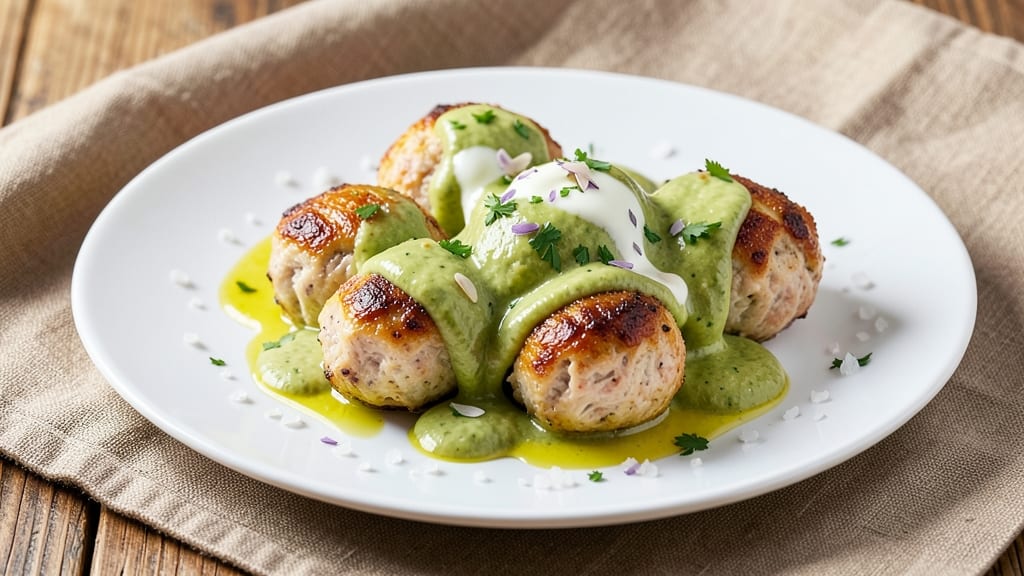
This baked salmon meatballs recipe with creamy avocado sauce delivers restaurant-quality results at home—flaky salmon centers and a velvety sauce that balances rich avocado with bright citrus notes. 🌟 The secret lies in gently baking the meatballs to maintain moisture while developing a crisp exterior, paired with a sauce that's both luxurious and light.
I've perfected this dish after years of testing, ensuring every bite achieves that perfect harmony of textures and flavors. What sets this recipe apart is the avocado sauce, which transforms a simple protein into something extraordinary.
Instead of heavy cream, we use ripe avocado for natural creaminess, Greek yogurt for tang, and a touch of lemon to brighten the richness. The sauce clings beautifully to the salmon meatballs, creating a dish that's both satisfying and elegant.
The result is a plate that's as visually appealing as it is delicious—golden-brown meatballs nestled in a vibrant green sauce, garnished with fresh herbs. Each bite delivers tender, flaky salmon with a crisp exterior, perfectly complemented by the cool, creamy sauce.
This is the kind of dish that elevates weeknight dinners to something special, without requiring advanced skills. Serve with a side of roasted asparagus or a simple arugula salad to round out the meal.
The combination of textures and flavors makes this recipe perfect for pescatarians or anyone looking for a lighter yet indulgent main course. Let's get started!
Ingredients for baked salmon meatballs with creamy avocado sauce
Fresh salmon and ripe avocado create this elegant dish with flaky centers and velvety sauce.
| Ingredient | Amount | Notes |
|---|---|---|
| Fresh Salmon Fillet 🐟 | 1 ½ lb | Skinless, boneless, sushi-grade preferred |
| Ripe Avocados 🥑 | 2 whole | Firm but yielding, Hass variety |
| Plain Greek Yogurt 🧀 | ½ cup | Non-fat or full-fat, unsweetened |
| Fresh Lemon Juice 🍋 | 2 tbsp | From 1 medium lemon, freshly squeezed |
| Extra-Virgin Olive Oil 🫒 | ¼ cup | Light, fruity variety preferred |
| Garlic Cloves 🧄 | 4 cloves | Fresh, minced for sauce |
| Fresh Cilantro 🌿 | ¼ cup | Chopped, stems removed |
| Fresh Dill 🌿 | 0.1 cup | Chopped, for garnish |
| Panko Breadcrumbs 🍞 | ½ cup | For meatball structure |
| Large Egg 🥚 | 1 whole | Beaten for binding |
| Diamond Crystal Kosher Salt 🧂 | 1 tsp | For seasoning |
| Ground Black Pepper 🌶️ | ½ tsp | Freshly cracked |
| Lemon Zest 🍋 | 1 tsp | From 1 lemon, for brightness |
| Fresh Parsley 🌿 | 0.1 cup | Chopped, for garnish |
The salmon quality is non-negotiable here—sushi-grade ensures tender, flaky texture. I always grab mine from Whole Foods or the seafood counter at Trader Joe's, where they cut it fresh daily. Look for bright pink flesh with no grayish edges, and ask for skinless fillets to save time. For the avocados, Hass variety is ideal—they're creamy and hold up well to blending. Ripe ones should yield slightly to gentle pressure, but not be mushy. If you're prepping ahead, store avocados at room temperature until ready to use, then refrigerate the pits in the avocados to slow further ripening.
No fresh dill? Substitute with extra parsley or basil, though the flavor will differ slightly. For the Greek yogurt, full-fat works best for creaminess, but non-fat is fine if you prefer lighter texture. The olive oil matters—light, fruity varieties like California Extra Virgin add brightness without overpowering. If you can't find panko, regular breadcrumbs toasted in the oven work too. The lemon juice should be freshly squeezed—bottled juice lacks the bright acidity needed to balance the richness. For extra flakiness in the meatballs, chill the mixture for 20 minutes before baking.
This sauce keeps for 2 days in the fridge, stored in an airtight container with a thin layer of olive oil on top to prevent browning. The meatballs reheat beautifully—350°F for 10 minutes until warmed through. For meal prep, assemble the meatballs and sauce separately, then combine just before serving to maintain texture. Garnish with fresh herbs right before eating to keep them vibrant. Leftovers freeze well for 1 month—just thaw overnight in the fridge before reheating.
Why You'll Love This Recipe
- No-Fuss Baking: I swear by the oven method here—no frying, no flipping, just toss the salmon chunks with yogurt, lemon, and olive oil, then bake until flaky. Honestly, my salmon meatballs stay together better than any pan-seared version I’ve tried, and the avocado sauce just melts into them.
- Creamy-Lemon Magic: That avocado-yogurt sauce? It’s where this dish shines. The Greek yogurt keeps it light, the avocado adds richness, and the lemon cuts through the richness like a bright summer breeze. Between us, it’s the kind of sauce that makes you want to eat it straight from the bowl.
- Meal-Prep MVP: These meatballs reheat like a dream—toss a handful in the microwave for 30 seconds, and they’re ready. I make a big batch on Sundays, portion them out, and they’re my go-to for lunches or even a quick dinner when I’m too tired to cook.
- Budget-Smart Protein: Salmon fillets are pricey, but using them for meatballs stretches them further than you’d think. Plus, avocados and yogurt are affordable staples, so you’re getting a restaurant-quality dish without the markup. (Yes, even on a Tuesday night.)
Step-by-step instructions for baked salmon meatballs with creamy avocado sauce
Here's how to transform delicate salmon into tender meatballs paired with velvety avocado sauce.
👨🍳 Step 1: Prepare the Salmon Mixture
In a food processor, combine the 1.5 lb fresh salmon fillet with the 0.5 cup panko breadcrumbs, 1 whole large egg, 1 tsp diamond crystal kosher salt, 0.5 tsp ground black pepper, and 1 tsp lemon zest. Pulse until the mixture becomes coarse but still holds texture—you want visible salmon pieces, not a paste. This ensures tender meatballs that stay together while baking.
Transfer the mixture to a bowl and gently fold in 2 tbsp fresh lemon juice using a silicone spatula. The acidity helps tenderize the salmon while preventing the meatballs from becoming too dense. Cover and refrigerate for 15 minutes—this chilling step makes handling easier and promotes better binding when forming the meatballs.
🥘 Step 2: Form and Bake the Meatballs
Preheat your oven to 375°F and line a baking sheet with parchment paper. Using your hands, roll the chilled salmon mixture into 16 equal-sized meatballs (about 1.5 inches in diameter). Place them on the prepared baking sheet, spacing them 1 inch apart to allow for even browning.
Bake for 12-15 minutes until the meatballs reach an internal temperature of 145°F and develop a delicate golden crust. You'll know they're ready when they release cleanly from the parchment and have a slight spring to their touch. Don't overbake—they'll continue cooking slightly from residual heat. Remove from the oven and keep them warm while you prepare the sauce.
🍳 Step 3: Create the Creamy Avocado Sauce
In a blender or food processor, combine the 2 whole ripe avocados, 0.5 cup plain Greek yogurt, 0.25 cup extra-virgin olive oil, 4 cloves minced garlic cloves, 0.25 cup fresh cilantro, 0.1 cup fresh dill, 0.1 cup fresh parsley, and an additional 1 tbsp fresh lemon juice (from the original 2 tbsp). Blend until completely smooth, scraping down the sides as needed. The sauce should be thick but pourable—if it's too thick, add 1-2 tbsp water to reach your desired consistency.
Taste and adjust seasoning with more diamond crystal kosher salt or lemon juice as needed. The avocado should be the star, so the sauce should be bright, creamy, and slightly tangy. Transfer the sauce to a serving bowl and cover with plastic wrap, pressing directly on the surface to prevent browning.
🍽️ Step 4: Assemble and Serve
Just before serving, gently warm the avocado sauce in the microwave for 20-30 seconds to enhance its aroma and bring out the flavors. Arrange the baked salmon meatballs on a platter and spoon the creamy avocado sauce over and around them. Garnish with additional fresh dill and parsley for a pop of color and freshness.
Serve immediately while the meatballs are still warm and the sauce is at its peak creaminess. The contrast between the flaky, baked salmon meatballs and the rich, velvety avocado sauce creates a perfect balance of textures and flavors. For best results, serve with crusty bread or over a bed of mixed greens to soak up every last bit of sauce.
Pro Tips For Making Baked Salmon Meatballs With Creamy Avocado Sauce
- USE COLD SALMON: Pull your salmon fillet straight from the fridge—no thawing, no pre-warming. The cold protein holds its shape better when forming meatballs, and it bakes more evenly without risking overcooking on the outside while staying raw inside. I learned this the hard way after making mushy salmon patties that fell apart like overworked dough.
- SALT THE YOGURT: Mix a pinch of salt (about ¼ teaspoon) directly into your Greek yogurt before blending it with avocado—it brightens the sauce and balances the richness. I used to skip this, and the sauce always tasted flat until I realized the yogurt was the unsung hero holding everything together.
- BAKE LOW AND SLOW: Set your oven to 350°F (175°C) and bake the meatballs for 12–15 minutes, not until they’re golden but until they’re just set through the center. Salmon cooks fast, and high heat turns it rubbery. I was skeptical until I tried it—now I never rush it.
- MASH AVOCADO ROUGH: Leave your avocado sauce slightly chunky—don’t over-blend it into a smooth paste. The texture mimics traditional creamy sauces while keeping the dish light, and it’s easier to adjust if the avocado is extra ripe. Sounds weird, but it works: the contrast of soft and slightly firm bits makes every bite better.
Storing and reheating your baked salmon meatballs with creamy avocado sauce
Refrigerator Storage
Store the baked salmon meatballs in an airtight container with parchment paper between layers to prevent sticking. They'll keep fresh in the fridge for up to 3 days while maintaining their delicate texture.
The avocado sauce should be stored separately in a sealed container with a thin layer of extra-virgin olive oil on top to prevent browning—this keeps it vibrant for 2 days. 🌟
Freezer Prep Tips
For long-term storage, freeze the meatballs and sauce separately. Place the meatballs on a baking sheet, freeze solid for 1 hour, then transfer to a freezer bag with parchment between layers.
The sauce freezes beautifully for 1 month—just press plastic wrap directly on its surface before sealing. Thaw overnight in the fridge for best results. ❄️
Reheating Perfection
To reheat meatballs, bake at 350°F for 10-12 minutes until warmed through. For the sauce, gently heat in a saucepan over low heat for 2-3 minutes, stirring constantly to maintain smoothness.
Never microwave the sauce—it can turn grainy. I like to reheat both together in the oven to keep flavors cohesive. 🔥
Meal Prep Strategy
Assemble the sauce and meatballs separately when prepping ahead. Store components in glass containers (they're microwave-safe) and combine just before serving. This prevents soggy meatballs and keeps the sauce's bright texture intact. Label containers with dates—this system works perfectly for 2-3 servings. 📅
Sauce Refresh
If the sauce looks dull after refrigeration, blend it again briefly to restore creaminess. Add 1 tsp fresh lemon juice or a pinch of salt to revive flavor.
For extra richness, stir in 1 tbsp extra olive oil before serving. This trick makes reheated sauce taste almost as good as fresh! 💫
Garnish Last
Always add fresh herbs like dill and parsley right before serving—they wilt quickly when exposed to heat. For extra flair, sprinkle with toasted sesame seeds or a drizzle of chili oil for a restaurant-worthy finish. Presentation matters just as much as taste! ✨
Nutrition facts
Frequently asked questions
Why does my salmon meatball recipe turn dry?
Overmixing or overbaking are the most common culprits. Keep the salmon mixture coarse (not paste-like) and bake only until the internal temp hits 145°F—no longer! The meatballs will stay warm from residual heat. Also, avoid using lean salmon fillets; slightly fattier cuts (around 10% fat) stay moist longer.
Can I make this recipe ahead of time?
Prepare the meatballs and sauce separately up to 2 days ahead. Store them in airtight containers—meatballs in the fridge for 3 days and sauce for 2 days (with olive oil on top). Reheat gently in the oven to maintain texture. The flavors actually deepen overnight!
What if my avocado sauce is too thick?
Simply add 1-2 tablespoons water or lemon juice and blend again. For extra creaminess without thinning, stir in 1 teaspoon olive oil. The sauce should coat the back of a spoon but still be pourable. If it separates, blend briefly to restore smoothness.
How do I prevent the meatballs from falling apart?
Chill the mixture for 15 minutes before forming meatballs—this helps the proteins bind. Use panko breadcrumbs (not regular) for better structure, and handle them gently when shaping. For extra strength, add 1 tablespoon cornstarch to the mixture.
Can I use frozen salmon for this recipe?
Not ideal—frozen salmon can become mushy when baked. If you must, thaw it completely in the fridge overnight (never at room temperature) and pat it very dry before processing. For best results, always use fresh, sushi-grade salmon to maintain that perfect flaky texture.