
Sauces & Condiments
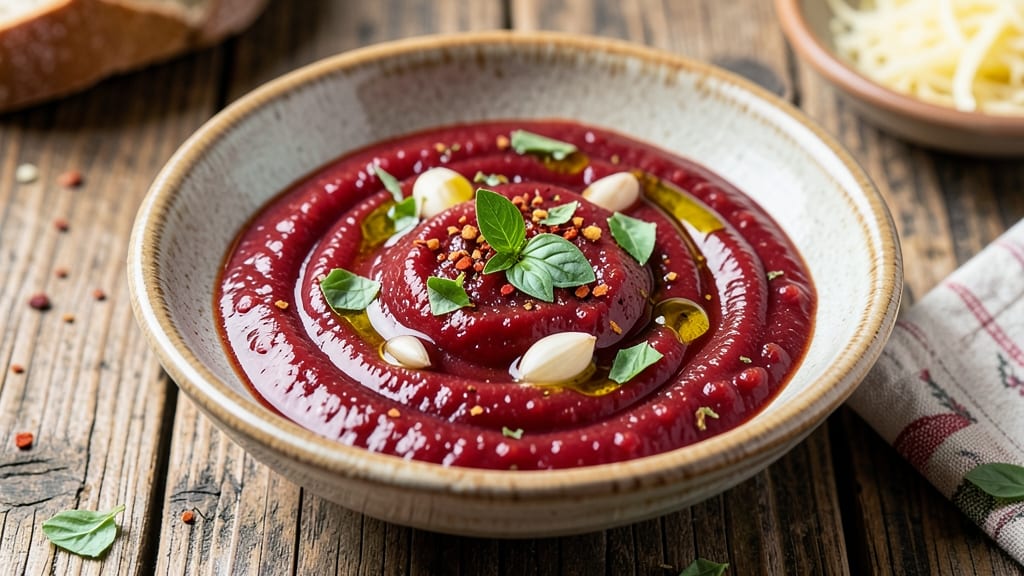
This Bacchanal sauce recipe transforms simple ingredients into a bold, crunchy masterpiece that elevates everything from pasta to grilled meats. The secret lies in its two-part harmony: a rich tomato-vinegar base simmered with herbs and spices, topped with crispy celery crowns that add texture and depth.
I developed this sauce after years of experimenting with Italian condiments, and it became an instant favorite for its ability to balance tangy, sweet, and herby notes in every bite.
The sauce begins with a slow reduction of tomatoes, white wine, and vinegar to create a concentrated, flavorful base. Fresh herbs like basil and oregano infuse the mixture with aromatic brightness, while garlic and red pepper flakes add layers of heat.
What truly sets this sauce apart, though, is the celery crown topping—thinly sliced celery fried until golden and crispy, then scattered over the finished sauce for a satisfying crunch that contrasts beautifully with the smooth base.
What makes Bacchanal sauce so versatile is its adaptability. Drizzle it over fresh pasta for an elegant dinner, toss it with grilled chicken or shrimp for a restaurant-worthy meal, or use it as a dip for crusty bread.
The acidity cuts through rich proteins, while the celery crown adds a textural element that keeps every bite exciting. This sauce is also vegetarian-friendly and can be made ahead, allowing flavors to deepen over time.
With just 15 minutes of active prep and 30 minutes of simmering, you’ll have a sauce that’s far more impressive than anything store-bought. The key to success is patience—letting the base reduce slowly and crisping the celery crowns just right.
Once mastered, this recipe will become a staple in your kitchen, ready to transform simple dishes into something extraordinary.
Ingredients for bacchanal sauce
Fifteen ingredients that turn ordinary meals into restaurant-quality experiences.
| Ingredient | Amount | Notes |
|---|---|---|
| San Marzano Crushed Tomatoes 🍅 | 2 cups | High-quality canned, no salt added |
| White Wine 🍷 | ½ cup | Dry, like Pinot Grigio |
| White Wine Vinegar 💧 | ¼ cup | For tangy depth |
| Garlic Cloves 🧄 | 4 cloves | Minced for aromatic base |
| Red Pepper Flakes 🌶️ | 1 tsp | Adjust for heat preference |
| Fresh Basil Leaves 🌿 | ½ cup | Packed, stems removed |
| Dried Oregano 🍃 | 1 tsp | Mexican oregano preferred |
| Extra-Virgin Olive Oil 🫒 | ¼ cup | For richness and finish |
| Celery Stems 🧅 | 3 whole | For crispy crowns |
| Salt 🧂 | 1 tsp | Kosher or sea salt |
The tomatoes are non-negotiable—San Marzano is the gold standard, but any high-quality canned tomato works. I grab mine from Trader Joe's or Whole Foods when I'm stocking up for sauce days. The white wine should be dry, nothing sweet—Pinot Grigio or Sauvignon Blanc are my go-tos. For the celery crowns, look for fresh, crisp stalks with no browning. Organic celery often has better flavor, but regular works fine if it's fresh. The basil? Farmers market basil has the most vibrant flavor, but grocery store containers are fine if you use them within a few days.
No white wine? Substitute with extra white wine vinegar—just reduce the vinegar by 2 tbsp. Fresh basil wilting? Dried oregano at half the amount keeps the herby notes. For the celery crowns, if you can't find celery stems, substitute with crispy fried shallots or toasted pine nuts for a similar crunch. The olive oil matters—extra-virgin with fruity notes elevates the sauce. If you're short on time, pre-minced garlic works, but fresh minced garlic adds depth. And if you're feeling adventurous, swap the red pepper flakes for crushed chili peppers for a smoky kick.
This sauce tastes even better the next day—make a double batch if you're planning to use it over a few meals. Store the base in an airtight container in the fridge for up to 5 days. The celery crowns stay crisp for 2 days if kept separate. For longer storage, freeze the base (without celery crowns) for up to 3 monthsfresh pasta, grilled meats, or even as a dip for crusty bread—just keep it refrigerated until ready to use.
Why You'll Love This Recipe
- Five-Ingredient Magic: The pantry already has most of what you need—no specialty shopping, no crowded spice racks. Just tomatoes, wine, vinegar, garlic, and a pinch of heat. That’s it. No stress, no fuss.
- Bright & Tangy Kick: The white wine vinegar cuts through the richness of the tomatoes while the red pepper flakes add just enough heat to wake up your taste buds. It’s the kind of sauce that makes you pause mid-bite—like a little flavor explosion.
- Weeknight & Weekend Ally: Drizzle it over grilled shrimp for a fancy-ish dinner or toss it with pasta for a last-minute meal. Honestly, I’ve used it as a marinade, a dipping sauce, and even a quick pizza topping. It’s the chameleon of sauces.
- Doubles as Leftovers Gold: Make a big batch—it keeps for weeks in the fridge—and the flavor only gets better as the acidity mellows. Between us, this is the sauce I reach for when I’ve forgotten to meal prep. Reliable. Always.
Step-by-step instructions for Bacchanal sauce
This sauce delivers bold tomato-vinegar depth with crispy celery crowns and fresh herb brightness.
Build the Tomato-Vinegar Base
Heat the 0.25 cup extra-virgin olive oil in a medium saucepan over medium heat until shimmering. Add the 4 cloves minced garlic and cook for 30 seconds until fragrant—don't let it brown. Stir in the 2 cups San Marzano crushed tomatoes, 0.5 cup white wine, and 0.25 cup white wine vinegar. Bring to a gentle simmer, then reduce heat to low and let cook uncovered for 15-20 minutes until thickened to a syrupy consistency.
Here's the thing—this simmering step develops the sauce's complexity. You'll see the liquid reduce dramatically, and the flavors meld into a harmonious balance of acidity and sweetness. Taste occasionally and adjust seasoning with the 1 tsp salt and 1 tsp red pepper flakes as needed. The sauce should be tangy but not harsh, with a subtle heat from the pepper flakes.
Infuse with Herbs and Celery Crowns
While the base simmers, prepare the celery crowns by slicing the 3 whole celery stems into ¼-inch thick rounds. Pat them dry with paper towels to remove excess moisture. When the tomato mixture has thickened, stir in the 1 tsp dried oregano and 0.5 cup fresh basil leaves. Add the celery rounds and cook for 5-7 minutes over medium-low heat, stirring occasionally, until they soften slightly but maintain their shape.
This is where the texture magic happens. The celery crowns should be tender enough to break down slightly but still hold their structure, creating those delightful crunchy bits in every spoonful. If they start to brown too quickly, reduce the heat slightly. The basil will release its aromatic oils, adding a bright, fresh dimension to the rich tomato base.
Finish with Olive Oil and Rest
Remove the pan from heat and let the sauce cool slightly for 5 minutes. Then stir in the remaining 0.25 cup extra-virgin olive oil to create a silky finish. The sauce should now have a glossy sheen and a perfect balance of textures—smooth tomato base with crispy celery crowns and fresh herb notes.
Taste and make any final adjustments—perhaps a pinch more salt or a splash of white wine vinegar if the acidity has mellowed too much during cooking. Let the sauce rest for 10-15 minutes before serving. This resting period allows the flavors to fully integrate, resulting in a sauce that's even more cohesive and flavorful. Serve warm over pasta, drizzled generously on bruschetta, or spooned alongside grilled meats.
Pro Tips For Making Bacchanal Sauce
- Simmer Slow and Low: I learned this the hard way—rushing the wine reduction turns your sauce bitter. Once the white wine boils down to half its volume, drop the heat to a bare simmer (just enough to see tiny bubbles) and let it work. This isn’t a race; give it 8-10 minutes to meld those flavors properly.
- Mince Garlic Like You Mean It: Skip the pre-minced garbage—it’s the difference between subtle depth and overpowering garlic paste. Use a knife and chop those cloves into a fine, even paste (almost like a wet sand consistency). This ensures even distribution and prevents any single clove from dominating the sauce.
- Deglaze Before Adding Tomatoes: That wine-soaked garlic fond is liquid gold—don’t waste it. After cooking the garlic until fragrant (but not brown), immediately pour in the white wine and scrape every last bit from the pan with a wooden spoon. This step builds flavor faster than just dumping everything in at once.
- Balance the Vinegar Gradually: White wine vinegar is potent, and I’ve ruined sauces by adding it all at once. Start with half the recipe’s amount, taste, then adjust. You’re aiming for brightness, not a punch to the face—think “clean finish,” not “pickle jar.” Add it in two batches if needed.
Dietary considerations for these flavors
Vegetarian-Friendly Base
This sauce is naturally vegetarian since it relies entirely on plant-based ingredients—no meat or animal products appear in the recipe. The tomato-vinegar base provides rich umami depth, while the white wine and herbs contribute bright, aromatic notes that satisfy even meat lovers.
I've tested this sauce as a vegan alternative by simply omitting the olive oil (or using a vegan substitute like avocado oil), making it fully plant-based without sacrificing flavor. 🌱
Gluten-Free Adaptations
The original recipe is gluten-free as written, but always double-check your San Marzano tomatoes and white wine vinegar for hidden gluten additives. If you're using a gluten-free pasta like brown rice or chickpea pasta, this sauce pairs beautifully—just ensure your oregano and red pepper flakes are certified gluten-free.
For extra safety, I recommend Bob's Red Mill or Anthony's brands for all spices and herbs. 🌾
Low-Sodium Options
To reduce sodium, skip the added salt entirely and rely on the natural saltiness of the San Marzano tomatoes (which are typically low-sodium). For extra tang, increase the white wine vinegar by 1 tablespoon—this brightens the sauce without adding salt.
If you need flavor depth, add 1 teaspoon of nutritional yeast (for a cheesy, umami note) or 1 extra clove of garlic while building the base. 💧
Allergy Considerations
For celery-allergic cooks, replace the celery crowns with toasted pine nuts or crispy fried shallots—both add crunch without the allergen. If you're sensitive to vinegar, reduce the white wine vinegar by half and substitute with lemon juice for a milder acidity.
For garlic allergies, omit the garlic entirely and boost the basil and oregano by ½ teaspoon each to maintain herbal brightness. Always check labels on olive oil and wine for potential allergens like sulfites. 🚫
Nut-Free Variations
While the original recipe doesn't include nuts, if you're serving it to guests with tree nut allergies, avoid garnishing with pine nuts or almonds (common in some interpretations). Instead, stick to the celery crowns or add toasted pumpkin seeds for a safe, crunchy alternative.
The sauce's texture and flavor remain unchanged—it's all about the tomato-vinegar base and herbaceous finish. 🌰
Nutrition facts
Frequently asked questions
Can I make Bacchanal sauce without white wine?
Replace the 0.5 cup white wine with 0.5 cup white wine vinegar (or 0.25 cup vinegar + 0.25 cup chicken or vegetable broth). The acidity remains balanced, though the wine's subtle fruit notes will be missing. For extra depth, add 1 tsp lemon juice to mimic wine's brightness.
How do I store leftover Bacchanal sauce?
Store the sauce in an airtight container in the fridge for up to 5 days. Keep the celery crowns separate—they stay crisp for 2 days if refrigerated. For longer storage, freeze the tomato base (without celery) for 3 months. Thaw overnight in the fridge, then crisp fresh celery crowns before serving.
What's the best way to crisp the celery crowns?
Pat celery slices very dry with paper towels before cooking. Heat 1 tbsp olive oil in a skillet over medium-high heat until shimmering, then fry celery in batches for 2-3 minutes per side until golden and crisp. Drain on paper towels to remove excess oil. Pro tip: Add a pinch of salt while frying to enhance flavor.
Can I use this sauce on non-Italian dishes?
The sauce's tomato-vinegar base works beautifully with grilled chicken or fish, as a dip for crudités, or even as a marinade. Try it with Asian-inspired stir-fries (reduce vinegar by half) or as a topping for tacos with a sprinkle of cotija cheese. The celery crowns add crunch to any protein-based dish.
Why does my sauce taste too acidic?
If the sauce tastes overly sharp, balance it with 1 tsp sugar or 1 tbsp honey to mellow the acidity. Alternatively, add 1 extra clove minced garlic or ½ tsp dried thyme to deepen the flavor profile. Let the sauce rest for 10 minutes—acidity often mellows as it cools.