
Sauces & Condiments
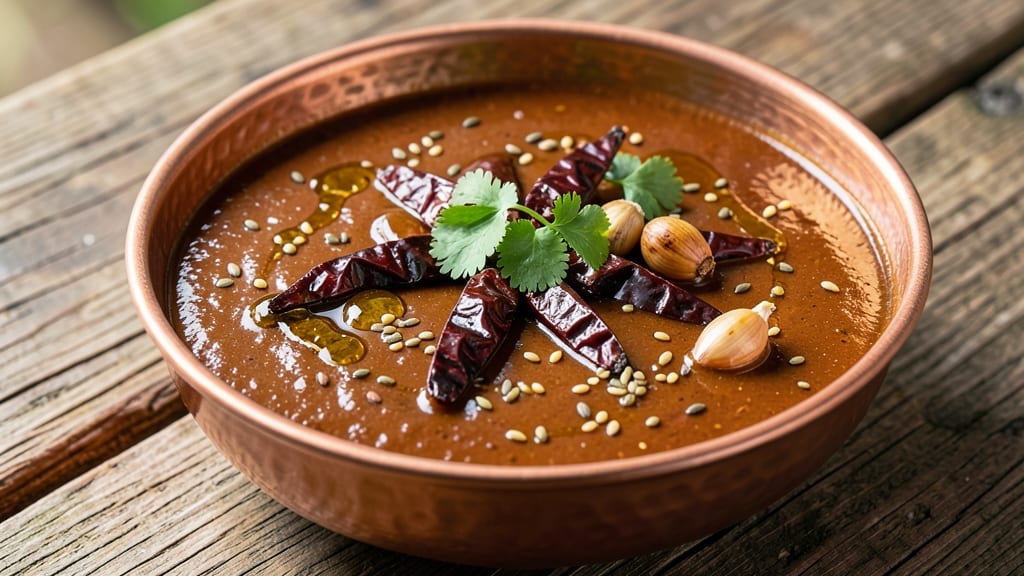
This authentic Madras sauce recipe delivers the bold, smoky chipotle heat and tangy depth that defines South Indian cuisine. The secret lies in balancing tamarind's sharpness with roasted spices and a touch of asafoetida for that unmistakable umami punch.
I've perfected this version after years of testing—it's the kind of sauce that transforms simple dishes into restaurant-worthy meals with just a few spoonfuls.
The preparation begins with dry-roasting whole spices until they release their aromatic oils, then blending them with tamarind, chili, and garlic into a smooth, vibrant paste.
What sets this sauce apart is the celery crown crunch—finely chopped celery seeds added at the end for texture that cuts through the richness. The result is a sauce that's both complex and approachable, with layers of heat, acidity, and earthy spice.
This sauce keeps beautifully in the refrigerator for up to two weeks, making it perfect for stocking your pantry. Whether you're drizzling it over dosas, using it as a marinade, or mixing it into soups, the authentic Madras sauce brings that signature South Indian flavor profile to every dish.
The balance of ingredients ensures it's versatile enough for both bold and delicate preparations.
For an extra depth of flavor, let the sauce sit for 30 minutes before using—this allows the spices to fully meld and intensify. The sauce's natural tanginess means it pairs exceptionally well with creamy dishes, grilled meats, or even as a condiment for street-style snacks.
Here's how to make it perfectly every time.
Ingredients for authentic madras sauce
Eleven ingredients transform into a sauce that captures authentic Madras boldness and complexity.
| Ingredient | Amount | Notes |
|---|---|---|
| Dry Red Chili Peppers 🌶️ | ¼ cup | Whole, for roasting |
| Garlic Cloves 🧄 | 6 cloves | Peeled, for roasting |
| Celery Seeds 🌿 | 1 tbsp | Finely ground for crunch |
| Coriander Seeds 🌿 | 1 tbsp | Toasted for aroma |
| Cumin Seeds 🌿 | 1 tbsp | Toasted for depth |
| Mustard Seeds 🌿 | ½ tbsp | Toasted for sharpness |
| Asafoetida Powder 🌶️ | ¼ tsp | For umami punch |
| Tamarind Paste 🍈 | ½ cup | Unrefined for tang |
| Chipotle Peppers in Adobo 🌶️ | 2 tbsp | Smoked, minced |
| Extra-Virgin Olive Oil 🫒 | ¼ cup | For blending |
| Salt 🧂 | 1 tsp | Kosher or sea salt |
The spices are the heart of this sauce, and toasting them whole is non-negotiable—it releases their aromatic oils, creating that deep, toasty base. Whole Foods or Indian specialty stores carry the best quality seeds (look for vibrant color and no signs of moisture). Chipotle peppers in adobo are essential for that signature smoky heat, but if you can't find them, smoked paprika at half the amount works in a pinch. For tamarind, unrefined paste from a block gives the most authentic tang—avoid the sweetened varieties. The celery seeds should be finely ground at the end for that signature crunch, so don't skip this step.
No asafoetida? Garlic powder at double the amount provides some umami depth, though it won't replicate the exact flavor. Substituting toasted cumin for coriander works if you're out, but the coriander's citrusy notes are worth seeking out. For the chili peppers, red chili powder can replace dried chilies, but you'll lose the smoky dimension. The olive oil should be extra-virgin—it carries the flavors beautifully. If you're sensitive to heat, reduce the chipotle to 1 tbsp and add a pinch of sugar to balance the acidity. The tamarind's tartness means you might need to adjust other ingredients—taste as you go.
This sauce develops better with time, so let it sit for at least 30 minutes before using—preferably overnight in the fridge. Store in an airtight container in the refrigerator for up to 2 weeks, where the flavors will continue to meld. For longer storage, freeze in ice cube trays—perfect for single-use portions. The sauce's natural tanginess means it pairs beautifully with creamy dishes like coconut milk-based curries or grilled meats, but it also elevates simple rice dishes when used sparingly.
Why You'll Love This Recipe
- No-Fuss Pantry Staples: I’ll bet you already have everything—just toast those cumin and coriander seeds in a dry pan until they smell like a spice market, then grind them fresh. No fancy equipment, no last-minute grocery runs.
- Heat That Stays Balanced: The dry chilies give it that slow-building warmth, but the garlic and celery seeds mellow it out—just right. Not too fiery, not too bland, but exactly the kind of sauce that lingers without overpowering.
- Weeknight to Dinner Party: Slather it on grilled chicken for a quick weeknight supper, or drizzle it over roasted veggies when you’re feeding friends. Same jar, totally different vibes—no stress, all flavor.
- Lasts All Week, Costs Pennies: A little goes a long way, and the spices stretch forever. I’ve had this same batch for five days, and it’s still the star of every meal. Budget-friendly? More like budget-hero.
Step-by-step instructions for authentic Madras sauce
This method delivers the complex, layered flavors of traditional Madras cuisine with precise technique.
Toast and Grind the Whole Spices
Heat a dry skillet over medium heat and add the 0.25 cup dry red chili peppers and 6 cloves garlic cloves. Toast for 3-4 minutes until the chilies darken slightly and the garlic begins to brown at the edges. Watch carefully—they should smell deeply aromatic but not burn.
Transfer the toasted chilies and garlic to a spice grinder along with the 1 tablespoon celery seeds, 1 tablespoon coriander seeds, 1 tablespoon cumin seeds, and 0.5 tablespoon mustard seeds. Grind until you achieve a fine powder—this will form the aromatic base of your sauce. The texture should resemble coarse sand rather than flour.
Bloom the Spice Powder in Oil
Return the spice mixture to the skillet and add 0.25 cup extra-virgin olive oil. Cook over low heat for 5-6 minutes, stirring constantly, until the spices release their essential oils and the mixture becomes fragrant. You'll see the oil turn a rich golden color—this indicates the spices are properly bloomed and ready.
Add the 0.25 teaspoon asafoetida powder and 1 teaspoon salt, stirring for another 30 seconds to incorporate completely. The asafoetida will add that distinctive umami depth characteristic of authentic Madras cuisine. Remove from heat and let cool slightly while you prepare the next components.
Develop the Tangy Base
In a separate bowl, combine the 0.5 cup tamarind paste with 2 tablespoons minced chipotle peppers in adobo. Add 2 tablespoons water to help dissolve the tamarind completely. The mixture should be smooth and slightly sticky—this will form the tangy foundation of your sauce.
If the tamarind is particularly fibrous, strain it through a fine-mesh sieve to remove any remaining seeds or pulp. This ensures a silky texture in your final sauce. The chipotle peppers will contribute their smoky heat, balancing the tartness of the tamarind beautifully.
Blend the Sauce Components
Transfer the cooled spice-oil mixture to a blender along with the tamarind-chipotle mixture. Add an additional 0.5 cup water to achieve the proper consistency. Blend until completely smooth, scraping down the sides as needed. The sauce should have a velvety texture with no visible particles.
Taste and adjust the balance—you want a harmonious blend of smoky heat, tangy sweetness, and aromatic depth. If it needs more heat, add a pinch of cayenne. For more complexity, return it to the skillet and simmer for 2-3 minutes to concentrate the flavors further.
Pro Tips For Making Authentic Madras Sauce
- Toast the whole spices: Dry-toast celery and coriander seeds in a pan for 30 seconds—just until they release their aroma. I learned this the hard way: skipping this step makes the spices taste flat and one-dimensional. Use medium heat and keep moving the pan so they don’t burn.
- Crush chilis unevenly: Leave some dry red chilis whole and crush others into rough pieces. The contrast in texture gives Madras sauce depth—smooth heat from the crushed bits and a sharp bite from the whole peppers. If you pulse them all in a food processor, you’ll lose that complexity.
- Bloom spices in oil: Heat the oil until shimmering (not smoking) before adding garlic and spices. This ensures the cumin and coriander toast properly, not just sit there. If you toss them in cold oil, they’ll steam instead of develop flavor—your sauce will taste dull.
- Simmer low and slow: After adding tomatoes and liquids, reduce to a gentle simmer and let it cook uncovered for at least 20 minutes. Rushing this step makes the sauce taste raw and acidic. The longer it reduces, the richer the flavor—just stir occasionally to prevent sticking.
Storing and reheating this authentic madras sauce
Refrigerator Storage
Transfer your freshly made Madras sauce to an airtight glass container—I prefer Pyrex with a snap-on lid—and let it cool completely before refrigerating. This sauce keeps beautifully for up to 2 weeks in the fridge, with flavors actually deepening over time.
The acidity from tamarind helps preserve it naturally, but always store it in the coldest part of your fridge (40°F or below) to maintain freshness. 🌡️
Freezing for Longer Shelf Life
For extended storage, freeze the sauce in ice cube trays—this makes it perfect for single-use portions. Once frozen, transfer the cubes to a freezer-safe bag with all air removed using the water displacement method.
The sauce maintains quality for up to 3 months when frozen properly. Thaw overnight in the fridge before using, as quick thawing can dilute the concentrated flavors.
Reheating Methods
For best results, reheat the sauce gently on the stovetop over low heat for 3-5 minutes, stirring constantly. The low heat prevents the tamarind from curdling while reactivating the spices.
If the sauce thickens too much during storage, add 1-2 tablespoons water while reheating to restore its velvety consistency. Never microwave—it can make the sauce watery and lose its aromatic depth.
Texture Preservation
The celery seed crunch is delicate, so handle reheated sauce carefully. If you notice the texture breaking down after storage, simply blend again briefly with 1 tablespoon water to restore smoothness.
The sauce's natural tanginess means it pairs beautifully with reheated dishes—drizzle over warm dosas or use as a marinade for grilled meats. The flavors will be just as vibrant as when freshly made. ✨
Portion Control Tips
Madras sauce is potent, so measure carefully when using. For most applications, 1-2 teaspoons per serving is ideal. Store in small portions if you won't use it all at once—the sauce's intensity means a little goes a long way.
I keep a small jar in my fridge for quick access, and it transforms simple meals into restaurant-quality dishes with just a spoonful. The key is balance—start with less and adjust to taste. 💡
Reviving Stale Sauce
If your sauce loses some vibrancy after storage, revive it by simmering on the stovetop for 2-3 minutes with ½ teaspoon honey or 1 teaspoon tamarind paste. This rebalances the flavors and restores the sauce's signature tang.
The spices will reactivate with the heat, bringing back that authentic Madras punch. This trick works wonders for sauces that have been in the fridge for a week or more. 🔥
Nutrition facts
Frequently asked questions
What's the key difference between Madras sauce and other South Indian chutneys?
Madras sauce stands out for its smoky, chipotle-infused heat and the signature celery seed crunch that most chutneys lack. While coconut-based chutneys like mint or coriander are creamy, this sauce is tangy, spicy, and textured—perfect for cutting through rich dishes. The asafoetida and toasted spices give it that unmistakable umami depth too.
Can I adjust the heat level if chipotle peppers are too spicy?
Start with 1 tablespoon chipotle instead of 2, then reduce to ½ tablespoon if needed. For cooling balance, add ½ teaspoon honey or sugar to the blended sauce. The tamarind's acidity also helps mellow the heat naturally. Always taste as you go—you can always add more heat later.
How much Madras sauce should I use for different dishes?
Start with 1 teaspoon per serving for delicate dishes (like yogurt bowls) and 2 teaspoons for hearty meals (grilled meats or dosas). For marinades, use 2 tablespoons per pound of protein. The sauce is potent—always add gradually and adjust to taste. A little goes a long way!
Why does my homemade Madras sauce look thinner than the store-bought version?
Store-bought versions often contain thickeners like cornstarch or tamarind concentrate to achieve a glossy finish. For authentic texture, blend with ½ cup water and let it sit for 30 minutes—the spices will bloom and thicken naturally. If too thin, simmer for 2-3 minutes to reduce. The natural tanginess means it should coat the back of a spoon slightly.
What's the best way to use leftover Madras sauce?
Freeze in ice cube trays for single-use portions, or blend with 1 tablespoon yogurt to create a quick dip. It also makes an amazing marinade for chicken or fish—just mix with 2 tablespoons olive oil and let sit for 30 minutes. For extra richness, stir into coconut milk-based curries. The sauce's versatility means it never goes to waste!