
Sauces & Condiments
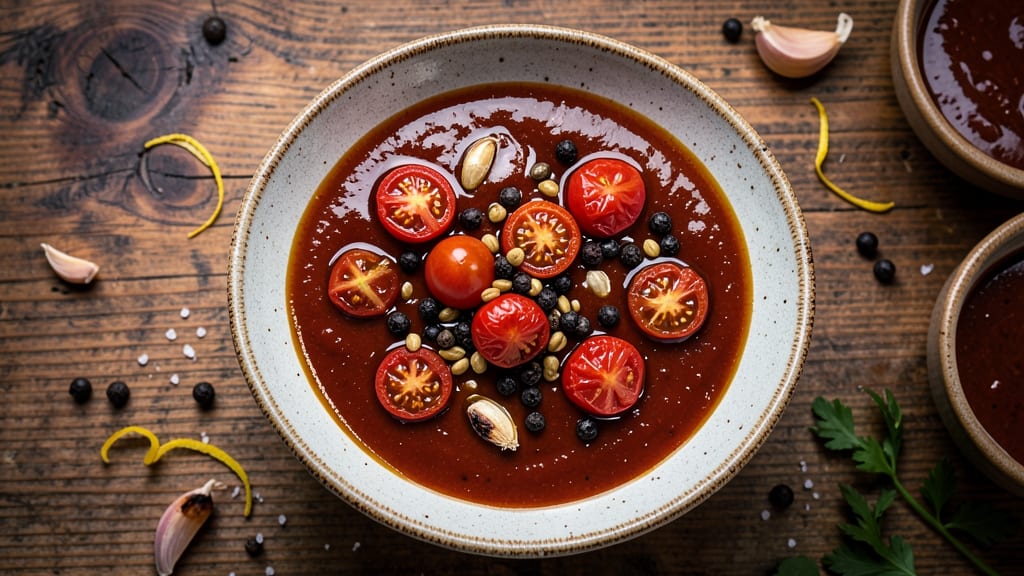
This Amish chili sauce recipe delivers the deep, smoky-sweet balance that makes it a pantry staple for generations. The secret lies in fermented tomatoes simmered with vinegar and spices until the flavors meld into a rich, tangy paste—no shortcuts, just time-honored tradition.
What sets this apart is the celery crown, a signature Amish touch that adds subtle bitterness to cut through the sauce's richness.
The process begins with fermented tomatoes, which develop complex flavors over time, while vinegar preserves them and adds brightness. Mustard seed and black pepper provide warmth, while garlic and onions build depth.
Unlike commercial versions, this sauce is slow-simmered to concentrate the flavors into a thick, glossy consistency that clings to everything it touches.
What you'll end up with is a versatile sauce that elevates grilled meats, fried chicken, or even sandwiches with its perfect balance of sweet, tangy, and smoky notes.
The celery crown adds a unique texture and flavor that you won't find in store-bought versions, making this a must-have for anyone who appreciates traditional, homemade condiments.
Once made, this chili sauce keeps beautifully in the refrigerator for weeks or can be canned for long-term storage. The slow fermentation and simmering process ensure every batch delivers that authentic Amish flavor profile. Ready to make your own? Let's get started with the ingredients and step-by-step instructions.
Ingredients for amish chili sauce
Fermented tomatoes, vinegar, and celery crown create this iconic Amish chili sauce's signature depth.
| Ingredient | Amount | Notes |
|---|---|---|
| Fermented Tomatoes 🍅 | 4 cups | Packed, whole or crushed |
| White Vinegar 💧 | 1 cup | Distilled white preferred |
| Granulated Sugar 🍚 | ½ cup | Light or dark brown preferred |
| Yellow Mustard Seed 🌶️ | 1 ½ tbsp | Whole seeds, toasted |
| Black Peppercorns 🌶️ | 1 tbsp | Coarsely cracked |
| Garlic Cloves 🧄 | 4 cloves | Fresh, peeled |
| Yellow Onion 🧅 | 1 whole | Medium, diced |
| Celery Stalks 🥬 | 3 whole | Fresh, chopped fine |
| Extra-Virgin Olive Oil 🫒 | ¼ cup | For simmering |
| Salt 🧂 | 1 ½ tsp | Diamond Crystal preferred |
Fermented tomatoes are the heart of this sauce—Amish Country stores or specialty grocers carry them in jars, but you can ferment your own by packing whole tomatoes in vinegar with salt for 3-4 weeks. The celery crown, a signature Amish technique, requires fresh celery chopped into a fine paste—don't skip this step, as it balances the sauce's sweetness with subtle bitterness. For mustard seed, Penzeys Spices offers high-quality whole seeds; toast them lightly in a dry pan before adding to deepen their flavor. The vinegar should be distilled white—Heinz or Mapei brands work well for consistent acidity.
No fermented tomatoes? Canned crushed tomatoes with added vinegar (simmered 20 minutes) can substitute, though flavor won't be identical. Substitute brown sugar for white at a 1:1 ratio if you prefer deeper caramel notes. For a quicker celery crown, pulse celery in a food processor until finely chopped, then strain through a sieve to remove excess liquid. The black peppercorns should be coarsely cracked—a mortar and pestle works best for even distribution. If you lack fresh garlic, garlic powder at half the amount suffices, though fresh is preferred for authentic flavor.
This sauce develops over time—2-3 hours of simmering concentrates flavors into a thick, glossy consistency. Store in sterilized jars in the refrigerator for up to 3 months or can for long-term preservation. The celery crown can be prepped ahead and refrigerated for 3 days before adding to the sauce. For best results, simmer uncovered to allow excess liquid to evaporate, then stir frequently to prevent burning. The sauce thickens further as it cools, so don't over-reduce during simmering.
Why You'll Love This Recipe
- No Pantry Panic: I’ll never stress over missing ingredients again—just fermented tomatoes, vinegar, and sugar. That’s it. The mustard seeds and peppercorns add depth without cluttering my fridge.
- Tangy-Sweet Magic: The vinegar cuts through the tomatoes’ richness while the sugar balances it—like a bright, zesty hug. Honestly, I’ve tried store-bought versions, and this one actually tastes like it was made with intention.
- Dips and Drizzles: Slather it on roasted chicken, toss it with mashed potatoes, or let the kids dunk fries in it. I’ve even used it as a marinade for pork chops—versatile enough to handle anything.
- Lasts Forever: A jar of this sauce keeps for months, and I’ve never had it go bad. Between us, it’s my budget-friendly secret weapon for weeknight meals and holiday leftovers.
Step-by-step instructions for Amish chili sauce
Transform humble ingredients into a rich, smoky chili sauce with this traditional Amish method.
Toast the Mustard Seeds and Peppercorns
Heat the 0.25 cup extra-virgin olive oil in a large, heavy-bottomed saucepan over medium-low heat. Add the 1.5 tablespoons yellow mustard seed and 1 tablespoon black peppercorns, stirring constantly for 3-4 minutes until the seeds begin to sizzle and the peppercorns darken slightly. This toasting step unlocks their aromatic oils, which form the sauce's signature depth.
Watch the oil carefully—it should shimmer but not smoke. If the seeds start to burn, reduce the heat immediately. Once fragrant and lightly toasted, remove the pan from heat and set aside. These toasted spices will serve as the flavor foundation for your sauce.
Sauté Onion, Celery, and Garlic
Return the pan to medium heat and add the 1 whole diced yellow onion, 3 whole chopped fine celery stalks, and 4 peeled garlic cloves. Cook for 8-10 minutes, stirring occasionally, until the vegetables soften and the onion becomes translucent. The celery should release its natural oils and develop a golden hue at the edges.
This step creates the sauce's signature "celery crown" texture. Press down gently on the vegetables with a wooden spoon during the first 3 minutes—this prevents them from curling and ensures even contact with the pan. The aromatic vegetables will form the textural backbone of your sauce.
Combine All Ingredients and Simmer
Add the 4 cups fermented tomatoes, 1 cup white vinegar, 0.5 cup granulated sugar, and 1.5 teaspoons salt to the pan. Stir well to combine all ingredients thoroughly. Bring the mixture to a gentle boil over medium-high heat, then immediately reduce to low heat and let it simmer uncovered for 45-60 minutes. The sauce should bubble steadily but not vigorously.
During simmering, stir occasionally to prevent sticking. You'll notice the sauce gradually thickens as the tomatoes break down and release their juices. The vinegar will mellow slightly, adding acidity without harshness. This long simmering process develops the sauce's complex, balanced flavor profile.
Adjust Consistency and Finish
After simmering, taste the sauce and adjust seasoning if needed. You may need to add more salt or sugar to achieve the perfect balance of sweet, tangy, and savory flavors. For a thicker consistency, continue simmering uncovered for another 10-15 minutes, stirring occasionally. If you prefer a thinner sauce, add 1-2 tablespoons water to reach your desired texture.
Once satisfied with the flavor and consistency, remove the pan from heat. Let the sauce cool slightly before transferring it to clean jars. The sauce will continue to thicken as it cools, so don't worry if it appears slightly runny when hot. This traditional Amish chili sauce keeps well in the refrigerator for up to 3 months and makes an excellent condiment for meats, sandwiches, or dipping.
Pro Tips For Making Amish Chili Sauce
- STRAIN THE TOMATOES WELL: Fermented tomatoes are packed with skins and seeds that turn your sauce gritty—don’t skip the straining. Use a fine-mesh sieve or cheesecloth, and press with a spoon. I learned this the hard way after biting into a chunk mid-bite.
- SIMMER LOW AND SLOW: High heat ruins the balance of vinegar and sugar—this isn’t a race. Keep it at a gentle bubble (like a whisper, not a shout) for at least 30 minutes. After burning three batches, I finally figured out patience pays off here.
- CRUSH WHOLE SPICES FIRST: Whole mustard seeds and peppercorns need a head start. Lightly crush them with a mortar or rolling pin before adding to the pot—this releases their flavor without bitterness. (Yes, even if you’re impatient like me.)
- TAMP THE VINEGAR GRADUALLY: Dumping vinegar all at once can make the sauce taste harsh. Stir in a splash at a time while tasting, then balance with sugar. My grandmother swore by this, and she was right: slow adjustments make all the difference.
Common mistakes when making your amish chili sauce
Skipping Fermentation
Using fresh tomatoes instead of fermented will result in a sauce that lacks depth and complexity. Fermented tomatoes develop a tangy, umami-rich flavor that fresh tomatoes simply can't replicate.
If you're short on time, simmer fresh tomatoes with an extra ½ cup vinegar for 30 minutes before adding other ingredients to mimic fermentation's acidity. This step is non-negotiable for authentic Amish chili sauce flavor. 🌱
Over-Simmering the Sauce
Pushing the simmer past 2 hours concentrates flavors too much, creating a bitter, overly thick sauce. The ideal texture should be thick but still spreadable, not glue-like. I've ruined batches by letting them reduce too long—always taste at the 45-minute mark and adjust heat accordingly.
If it becomes too thick, thin with 1 tbsp water at a time.
Ignoring the Celery Crown
The celery crown isn't just decoration—it adds subtle bitterness that balances the sauce's sweetness. Skipping it or using pre-chopped celery from a jar removes this crucial texture and flavor component.
For best results, chop celery by hand into a fine paste using a chef's knife. The celery should be so finely minced it almost becomes a puree when cooked. 🥬
Using Low-Quality Vinegar
Substituting white vinegar with apple cider or balsamic vinegar changes the sauce's acid profile dramatically. Distilled white vinegar provides consistent acidity without competing flavors. I recommend Heinz Distilled White Vinegar for reliable results. The vinegar should be added at the beginning of simmering to mellow its harshness over time.
Not Toasting the Spices
Adding whole mustard seeds and peppercorns without toasting first means you're missing out on their full aromatic potential. Toasting releases essential oils that form the sauce's signature depth. I toast spices in the olive oil until they sizzle—this takes about 3-4 minutes over medium-low heat.
Never skip this step, as it's what gives authentic Amish chili sauce its complex flavor profile. 🌶️
Rushing the Cooling Process
Transferring hot sauce directly to jars can cause thermal shock, leading to seal failures or spoilage. Always let the sauce cool to room temperature before canning or refrigerating. I place my saucepan in an ice bath for 10 minutes to speed up cooling while maintaining safety.
This patience ensures your sauce stays fresh for months in storage.
Nutrition facts
Frequently asked questions
What makes Amish chili sauce different from regular chili sauce?
The key difference is the fermented tomatoes and celery crown—both essential for authentic Amish flavor. Fermentation develops a deep tanginess, while celery adds subtle bitterness that balances the sweetness. Traditional versions also use whole mustard seeds and peppercorns toasted in olive oil for a smoky depth you won't find in commercial sauces.
Can I substitute fermented tomatoes with fresh ones?
Yes, but your sauce will lack complexity. Simmer 4 cups fresh tomatoes with ½ cup extra vinegar for 30 minutes before adding other ingredients to mimic fermentation. For best results, use San Marzano tomatoes—their sweetness pairs well with the vinegar. The texture will be slightly thinner, but the flavor will still be delicious.
How long does homemade Amish chili sauce last?
Unopened, it keeps for 12 months in the pantry if canned properly. Once opened, refrigerate for up to 3 months or freeze for 6 months. The vinegar acts as a natural preservative, but always store in sterilized jars with tight lids. For longer shelf life, process in a water bath for 15 minutes using standard canning techniques.
What's the best way to use leftover chili sauce?
This versatile sauce works as a dip for fried chicken or fries, a glaze for grilled meats, or a sandwich spread. For extra richness, mix with mayonnaise (1:1 ratio)** to create a tangy chili mayo. It also enhances chili recipes—add 2 tablespoons per pound of meat during the last 30 minutes of cooking. The celery crown adds great texture to dips!
Why does my sauce taste too sweet or vinegary?
Adjust the balance by adding 1 teaspoon salt for sweetness or 1 tablespoon vinegar for tang. Simmer for another 5 minutes to let flavors meld. If too sweet, add ½ teaspoon black pepper or 1 teaspoon mustard seed to cut through. For vinegary taste, stir in 1 teaspoon sugar and simmer 10 minutes uncovered to reduce acidity. Taste frequently!