
Sauces & Condiments
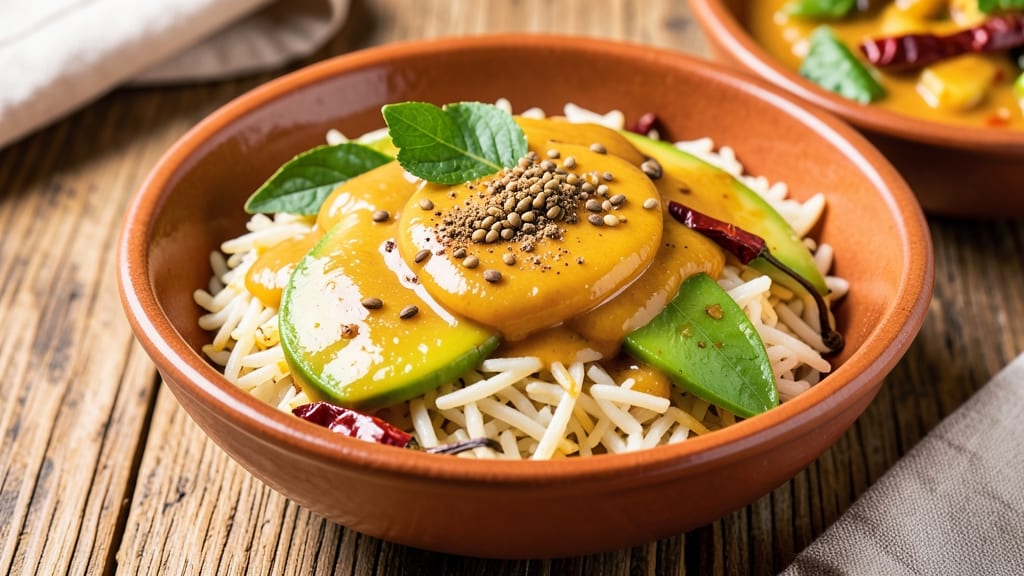
Amba mango sauce recipe transforms simple ingredients into a vibrant, tangy-sweet condiment that elevates everything from curries to street food snacks. This traditional Indian sauce balances sour, sweet, and spicy notes perfectly, creating a versatile dip or marinade that's as easy to make as it is delicious. The secret lies in fermenting green mangoes with mustard seeds and spices, developing complex flavors over time.
What makes this sauce special is its ability to enhance any dish—drizzle it over samosas for extra zing, mix it into curries for depth, or serve it as a dip with crispy papads.
The process involves grinding fresh green mangoes with spices, then letting the mixture ferment for 2-3 days to develop that signature tangy punch. Don't worry about precision; the fermentation does most of the work while you focus on other dishes.
By the time you're done, you'll have a glossy, aromatic sauce that's bright green with flecks of mustard seeds and curry leaves.
The texture is smooth yet slightly chunky, with a flavor profile that's both refreshing and complex—sour from the mango, spicy from the mustard seeds, and sweet from the natural sugars. It's the kind of condiment that makes every bite more exciting.
This sauce keeps well in the refrigerator for up to 2 weeks, so you can make a big batch and use it throughout the week.
Whether you're serving it with snacks, drizzling it over rice dishes, or using it as a marinade, this amba mango sauce will quickly become a staple in your kitchen. Let's get started!
Ingredients for amba mango sauce
Simple ingredients transform into vibrant amba mango sauce with just a few days of fermentation.
| Ingredient | Amount | Notes |
|---|---|---|
| Green Mangoes 🍈 | 2 cups | Pitted, chopped into chunks |
| Mustard Seeds 🌱 | 1 tbsp | Lightly toasted for aroma |
| Dried Red Chilies 🌶️ | 4 whole | Kashmiri or red chili |
| Curry Leaves 🌿 | ¼ cup | Fresh, lightly crushed |
| Cumin Seeds 🌱 | ½ tsp | Toasted for depth |
| Asafoetida Powder 🌿 | ¼ tsp | Hing powder, optional |
| Salt 🧂 | ¾ tsp | Adjust to taste |
| Sugar 🍚 | ¼ cup | Balances sourness |
| Water 💧 | ½ cup | For grinding consistency |
Green mangoes are the heart of this sauce—look for firm, unripe ones with bright green skin. Indian grocery stores or specialty markets usually have them year-round, but if you can't find them, substitute with a mix of lime and green apple (though it won't ferment the same). Toast the mustard seeds and cumin in a dry pan until fragrant—that aroma is essential. Curry leaves add a unique floral note, so don't skip them if you can find fresh ones at Whole Foods or local Indian markets. For the red chilies, Kashmiri chilies are ideal (they're mild and add color), but any dried red chili will work.
No mustard seeds? Skip them entirely—the sauce will still be delicious. Running out of curry leaves? Fresh bay leaves or even a pinch of ground coriander can stand in. The asafoetida (hing) is optional but adds that signature umami depth—if you've never used it, start with half the amount to test your tolerance. Sugar balances the sourness, but adjust to taste—some mangoes are sweeter than others. For fermentation, use a clean glass jar and leave it out at room temperature for 2-3 days, stirring once daily. The sauce should bubble slightly and develop a tangy aroma.
Once fermented, transfer to a clean jar and store in the fridge for up to 2 weeks. The sauce thickens as it ferments, so add a splash of water if needed for consistency. Use within 2 weeks for best flavor—after that, the tang becomes too sharp. This sauce freezes beautifully too, though the texture may change slightly. Make a big batch—it disappears fast when drizzled over curries or used as a marinade for grilled meats. The longer it sits, the more complex the flavors become, so don't rush it.
Why You'll Love This Recipe
- Pantry Magic: I swear by this recipe when I’m staring at my fridge wondering what to make. Green mangoes, a handful of spices, and 15 minutes—that’s it. No fancy prep, no last-minute grocery runs.
- Tangy Kick: That first bite? The mustard seeds sizzle, the dried chilies add heat, and the green mango brings this perfect tangy bite. It’s not sweet, not spicy—just right, like a flavor puzzle that clicks.
- Dosa’s Secret Weapon: Serve it with dosas, drizzle it on rice, or even use it as a dip. Honestly, I’ve spread it on toast when I was too tired to cook. Works every time, no excuses.
- Budget-Friendly Staple: A few green mangoes and basic spices go a long way. I’ve stretched one batch into three meals—curry, chutney, and even a quick stir-fry. Zero waste, all flavor.
Step-by-step instructions for amba mango sauce
This vibrant sauce transforms simple ingredients into a tangy-sweet masterpiece perfect for curries, dips, and marinades.
Toast Whole Spices for Maximum Flavor
Heat a dry skillet over medium heat and add the 1 tablespoon mustard seeds and 4 whole dried red chilies. Toast for 30 seconds until the mustard seeds begin to pop and release their nutty aroma. You'll see tiny sparks and hear a crackling sound—this is your cue that they're ready.
Remove the skillet from heat immediately to prevent burning. Add the 0.25 cup curry leaves and 0.5 teaspoon cumin seeds to the same pan, then return to medium-low heat for another 10 seconds until fragrant. The curry leaves should wilt slightly and release their citrusy scent. Let everything cool for 2 minutes before grinding.
Grind Spices with Green Mangoes
Transfer the toasted spices to a blender or food processor along with the 2 cups chopped green mangoes, 0.25 teaspoon asafoetida powder, 0.75 teaspoon salt, and 0.25 cup sugar. Blend on high speed for 30-45 seconds until you achieve a smooth, chunk-free paste. The mixture should be thick but pourable—like a vibrant green fruit butter.
If the mixture seems too dry, add the 0.5 cup water gradually while blending. You want a consistency that's thick enough to coat the back of a spoon but still smooth enough to drizzle. Taste the mixture—it should balance sweet, sour, and spicy notes perfectly. Adjust with more salt if needed, or a touch more sugar if the tanginess overpowers.
Simmer for Depth of Flavor
Transfer the blended mixture to a clean saucepan and cook over medium-low heat for 8-10 minutes, stirring frequently with a wooden spoon. You'll notice the sauce thicken as moisture evaporates and the flavors meld together. The color will deepen from bright green to a rich, vibrant green with golden undertones.
Here's the thing—don't rush this step. The slow simmering allows the raw flavors of the green mangoes to soften and develop complexity. You're looking for a sauce that coats the spoon but still has a slight sheen, indicating it's reached the perfect consistency. When you lift the spoon, the sauce should leave a thin, even layer on the surface.
Cool and Store for Best Results
Remove the saucepan from heat and let the sauce cool completely at room temperature. This cooling process is crucial—it allows the flavors to fully settle and the texture to set properly. Once cooled, transfer the sauce to a clean, airtight container and refrigerate for at least 1 hour before using.
The sauce will thicken further as it chills, becoming almost jam-like in consistency. This is perfect for dipping, spreading, or mixing into curries. When ready to use, give it a good stir to restore its smooth texture. The cooled sauce should have a vibrant green color with subtle red specks from the chilies, and a perfect balance of sweet, sour, and spicy flavors that make it irresistible.
Pro Tips For Making Amba Mango Sauce
- Peel Mangoes First: I learned this the hard way—peeling the green mangoes before chopping saves time and keeps your hands clean. The skin sticks to the knife like glue when it’s raw, and you’ll end up with more mess than sauce.
- Bloom Spices Slowly: Start with a dry roast of mustard seeds and cumin on medium heat—don’t blast them or they’ll burn before the flavors develop. After 30 seconds, add dried chilies and curry leaves; this layered approach prevents bitterness and makes the spices sing.
- Grind in Batches: If your mango pile is big, split the grinding into two rounds. First, grind the soaked mangoes with salt and turmeric until smooth, then mix in the tempered spices separately. This keeps the texture consistent and avoids a gritty, uneven sauce.
- Temper Over Low Heat: After adding the spice tempering to the mango puree, simmer on low for 5–7 minutes. This lets the flavors meld without curdling the sauce—high heat here turns it into a sad, separated mess. (Yes, even if you’re impatient like me.)
Make-ahead tips for this dish
Fermentation Timeline
Let your amba mango sauce ferment for 2-3 days at room temperature for optimal flavor development. I place my jar in a warm spot like near the oven (with the oven off) to encourage fermentation.
Stir the mixture once daily to distribute flavors evenly and prevent mold—this is especially important in humid climates. 🌡️
After 24 hours, you'll notice bubbles forming on the surface and a tangy aroma developing. This is when the magic happens—the natural sugars in the mango begin converting to lactic acid, creating that signature tang.
If you're short on time, 1 day of fermentation still works, though the flavor will be milder. For maximum depth, push it to 3 days—the longer it ferments, the more complex the taste becomes.
Storage Containers
Use only glass or food-grade plastic containers with tight-sealing lids to store your fermented sauce. I prefer mason jars because they're airtight and easy to clean. Before storing, ensure all utensils and containers are thoroughly sanitized—this prevents contamination during fermentation. Label your jar with the date to track freshness.
For long-term storage, divide the sauce into smaller portions (like 4-ounce jars) so you only thaw what you need. The sauce freezes beautifully for up to 3 months, though texture may soften slightly. Thaw overnight in the fridge before using to preserve consistency.
Batch Prep Tips
Double the recipe and freeze half immediately—this saves time when you need sauce in a hurry. I like making 4 cups at a time so I always have some on hand. The sauce thickens as it ferments, so add 1-2 tablespoons water when reheating or using to restore smoothness.
If you notice mold after fermentation, discard the batch immediately—it's a sign of contamination. Trust me, the 2-3 day window is perfect for safe, flavorful results. For busy weeks, prep 2 batches simultaneously and alternate between them to keep freshness consistent.
Reusing Ingredients
Save any leftover green mango chunks or spices after grinding by storing them in small airtight containers in the fridge for up to 3 days. These can be repurposed for chutneys or curries—just blend with fresh ingredients.
The toasted mustard seeds and cumin keep their flavor for 1 week in the pantry.
If your sauce separates after refrigeration, simply stir vigorously to recombine. The fermentation process sometimes causes slight separation, but this doesn't affect taste. For a smoother texture, blend briefly before using—this works especially well for drizzling over dishes.
Nutrition facts
Frequently asked questions
Can I make amba mango sauce without fermenting?
Yes! For a quicker version, skip fermentation and simply blend the ingredients, then simmer for 10-15 minutes until thickened. The flavor will be milder but still delicious—great for last-minute use. Just reduce the sugar slightly (2 tablespoons) since unfermented mangoes are sweeter.
What if I can't find green mangoes?
Use a mix of 1 cup lime juice and 1 cup grated green apple for a similar tangy-sweet profile. For best results, add 1 teaspoon citric acid to enhance sourness. The texture won't ferment the same, but it works well as an instant chutney.
How do I know when the sauce is fermented enough?
Look for visible bubbles and a tangy aroma (like yogurt). Taste a small amount—it should be pleasantly sour with balanced sweetness. If it smells sharp or alcoholic, it's over-fermented. The ideal window is 2-3 days at room temperature.
Can I adjust the spice level?
For milder heat, reduce dried chilies to 2-3 or remove seeds. For extra spice, add ½ teaspoon cayenne powder during blending. Remember: fermenting intensifies flavors, so start conservative if you're sensitive to heat.
What are the best ways to use this sauce?
Drizzle over samosas or pakoras, mix into curries, or use as a marinade for grilled chicken. It also pairs perfectly with dal tadka or as a dip for vegetable fritters. The sauce's versatility comes from its balanced sweet-sour-spicy profile that complements both savory and spicy dishes.