
Sauces & Condiments
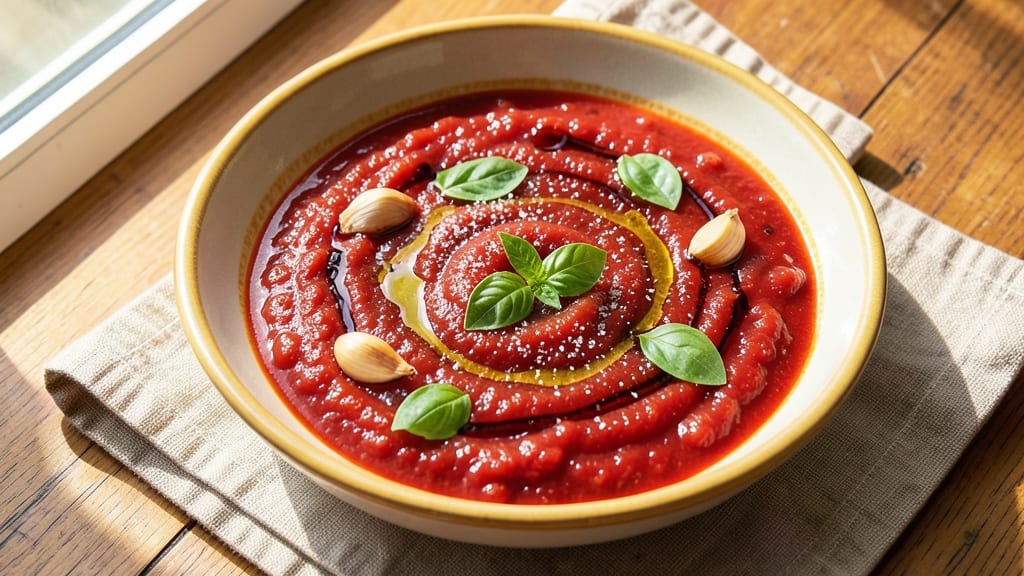
This amazing pizza sauce recipe transforms store-bought canned sauce into something vibrant, complex, and full of real tomato flavor—no cooking skills required. I’ve been making this version for years, and it’s the secret behind my crispy-crust pizzas that taste like they came from a Neapolitan trattoria.
The key? Simmering fresh tomatoes with aromatic garlic and herbs until the flavors meld into something deeper than anything from a jar.
What makes this sauce special is the balance of sweetness, acidity, and umami—achieved with just a handful of ingredients and 30 minutes of hands-off cooking. No blenders, no fancy techniques, just a pot, a wooden spoon, and a little patience.
The sauce thickens naturally as it simmers, creating that perfect spreadable consistency that clings to dough without making it soggy.
By the end, you’ll have a rich, glossy sauce with layers of flavor—sweet from the tomatoes, bright from the basil, and deep from the garlic.
It’s the kind of sauce that makes every pizza taste like a restaurant-quality masterpiece, whether you’re topping a classic Margherita or a loaded meat lover’s pie. Plus, it keeps beautifully in the fridge for up to a week, so you can make a big batch and enjoy it all month.
Ready to ditch the canned stuff? This sauce is foolproof, versatile, and will change how you think about homemade pizza forever. Let’s get started—your first bite will be the proof.
Ingredients for amazing pizza sauce
Nine ingredients, thirty minutes—this sauce transforms canned tomatoes into restaurant-quality depth.
| Ingredient | Amount | Notes |
|---|---|---|
| San Marzano Tomato Crushed 🍅 | 28 oz | Canned, no salt added |
| Extra-Virgin Olive Oil 🫒 | ¼ cup | High-quality, fruity variety |
| Garlic Cloves 🧄 | 4 cloves | Fresh, minced for depth |
| Fresh Basil Leaves 🌿 | ½ cup | Packed, stems removed |
| Red Wine Vinegar 🍷 | 1 tbsp | Dry, bold variety |
| Granulated Sugar 🍬 | 1 tsp | Balances acidity |
| Diamond Crystal Kosher Salt 🧂 | 1 tsp | Fine grain preferred |
| Ground Black Pepper 🌶️ | ¼ tsp | Freshly cracked |
| Dried Oregano 🍃 | ½ tsp | Italian preferred |
San Marzano tomatoes are the secret weapon here. Trader Joe's and Whole Foods carry them year-round, but if you can't find them, any high-quality canned tomatoes work—just look for 'no salt added' to avoid flavor interference. The garlic? Fresh is non-negotiable—jarred minced garlic lacks the aromatic complexity. For basil, I always grab extra because half gets torn over the sauce while it simmers. If you're using dried oregano, Italian or Mexican varieties have that distinct pizza flavor that regular oregano can't match. The olive oil should be fruity and peppery—California varieties from Costco or Gourmet Garage are my go-tos.
No red wine vinegar? Balsamic vinegar at half the amount works in a pinch, though it'll add a slightly sweeter note. Running low on fresh basil? Dried basil at one-third the quantity gets you close, but you'll miss that bright freshness. The sugar might seem odd, but it's essential—it balances the acidity from the tomatoes and vinegar, rounding out the flavors. If you're worried about sweetness, start with just 0.5 tsp and adjust to taste. The sauce thickens as it simmers, so if you prefer it thinner, just add a splash of water or tomato paste. For extra umami depth, a pinch of fish-free Worcestershire sauce (like Annie's) adds complexity without overpowering.
This sauce keeps beautifully—1 week in the fridge or 3 months in the freezer. I always make a double batch because it disappears fast. For freezing, portion it into ice cube trays, then transfer to a bag—perfect for pizza nights. The flavor actually improves after the first day as the ingredients meld. If you're making a big batch, simmer it uncovered for the first 15 minutes to evaporate excess moisture, then reduce heat and cover. The sauce should coat the back of a spoon but still be spreadable—like a thick, glossy syrup. Trust the process, and you'll have sauce that tastes like it came from a Neapolitan trattoria.
Why You'll Love This Recipe
- No-Fuss Simplicity: I swear by this recipe because it’s actually simple—just crush those San Marzano tomatoes by hand (or grab a can), toss in garlic and olive oil, and let it simmer. No blenders, no straining, no stress. The vinegar brightens it up in one minute of active work.
- Garlic-Basil Magic: That first bite? Chef’s kiss. The crushed tomatoes caramelize just enough, while the raw garlic and basil—added at the end—give it a fresh, herby punch. Honestly, it’s the kind of flavor that makes store-bought sauce taste like a sad afterthought.
- Pantry-to-Pizza Flex: This sauce is my go-to for everything—pizza, bruschetta, even as a marinade. I keep a jar in the fridge because it’s so versatile. (Yes, even on a Tuesday night, when I’m craving something but don’t want to cook.)
- Budget-Friendly Staple: A single can of San Marzano tomatoes and a few cloves of garlic stretch forever. I make a big batch, freeze half, and use it for months. Between us, this is the kind of recipe that saves money and time—no takeout needed.
Step-by-step instructions for homemade pizza sauce
Transform simple ingredients into a vibrant, restaurant-quality sauce that elevates every pizza.
Sauté Garlic in Olive Oil Until Fragrant
Heat the 0.25 cup extra-virgin olive oil in a medium saucepan over medium-low heat. Add the 4 minced garlic cloves and cook for 1-2 minutes until they become golden and release their aromatic oils. Be careful not to let them brown—burnt garlic adds bitterness that overpowers the delicate tomato flavor.
This step builds the flavor foundation. The olive oil carries the garlic's essence into the sauce, creating depth that canned sauces simply can't match. I like to stir constantly during this phase to ensure even cooking and prevent any hot spots that could scorch the garlic.
Add Tomatoes and Simmer Gently
Pour in the 28 oz San Marzano tomato crushed and stir to combine with the garlic oil. Bring the mixture to a gentle simmer over medium heat, then reduce to low heat and let it cook uncovered for 20-25 minutes. You'll see the sauce gradually reduce and thicken as moisture evaporates.
The key here is patience. You're not just cooking tomatoes—you're developing complex flavors through slow evaporation. Stir occasionally to prevent skin formation, but don't over-stir as this can break down the tomato texture. The sauce should reduce by about 1/3 of its original volume, becoming thick enough to coat the back of a spoon.
Balance Flavors with Acid and Sweetness
Add the 1 tbsp red wine vinegar, 1 tsp granulated sugar, 1 tsp Diamond Crystal kosher salt, and 0.25 tsp ground black pepper. Stir well to distribute these ingredients evenly. Let the sauce simmer for another 5 minutes to allow the flavors to meld completely.
The vinegar brightens the sauce and cuts through the natural sweetness of the tomatoes, while the sugar balances the acidity. The salt enhances all flavors, and the pepper adds subtle warmth. Taste the sauce at this stage—it should be vibrant with tomato flavor, slightly sweet, and tangy but not sour. Adjust any component if needed, remembering that the basil will add freshness in the next step.
Incorporate Fresh Basil and Oregano
Remove the saucepan from heat and stir in the 0.5 cup fresh basil leaves (stems removed) and 0.5 tsp dried oregano. Let the mixture steep off the heat for 5 minutes, allowing the basil's essential oils to infuse the sauce. Then, use an immersion blender or carefully transfer to a blender to purée until smooth.
The fresh basil adds a bright, herbal note that canned sauces lack, while the oregano contributes earthy depth. The off-heat steeping ensures you capture maximum flavor without cooking the basil, which would turn bitter. For a truly silky texture, strain the sauce through a fine-mesh sieve if you prefer a smoother consistency—though I often leave it slightly rustic for better texture.
Cool and Store Properly
Let the sauce cool to room temperature, then transfer it to an airtight container. It will continue to thicken as it cools, developing even more concentrated flavor. This sauce keeps well in the refrigerator for up to 5 days or can be frozen for up to 3 months—though I find it's best used within a week for peak freshness.
When ready to use, simply reheat gently in a saucepan over low heat until warmed through. The sauce should be vibrant red with a glossy sheen, carrying all those developed flavors you worked so hard to create. This isn't just pizza sauce—it's the difference between good pizza and extraordinary pizza.
Pro Tips For Making Amazing Pizza Sauce
- Cook Low and Slow: I learned this the hard way—boiling crushed San Marzano tomatoes on high heat turns them mushy and one-dimensional. Instead, simmer them gently at 160°F (70°C) for 20-25 minutes. The sauce will thicken naturally, and the sweetness of those tomatoes will shine without bitterness. (Yes, even if you're impatient like me.)
- Crush Garlic, Don’t Mince: Minced garlic burns in seconds and adds a harsh, bitter edge to the sauce. Instead, smash 3-4 cloves with the flat side of your knife, leaving them whole but broken. They’ll infuse flavor without dominating—just let them cook until fragrant but not browned. (Your future self will thank you.)
- Salt the Tomatoes Early: Adding salt at the end makes the sauce taste flat. Instead, dissolve 1 teaspoon of fine sea salt into the crushed tomatoes right at the start. This breaks down the pectin and lets the flavors meld properly. I know, I know—it sounds counterintuitive, but trust the process.
- Strain for Smoothness: Fresh basil and any stray tomato skins can turn your sauce gritty. After simmering, pour the sauce through a fine-mesh sieve into a bowl, pressing gently with a spoon. It’s not the prettiest method, but it’s the tastiest. (And yes, you can save the pulp for bruschetta.)
Wine and beer pairings for these flavors
Italian White Wines
For this vibrant pizza sauce, I reach for crisp Italian whites that complement its bright acidity and herbal notes.
A Vermentino from Sardinia—like Cantina Mesu 'e Mesus—cuts through the richness with its citrus and mineral finish, while a Pinot Grigio from Alto Adige (such as Santa Maddalena) offers delicate pear and almond undertones that harmonize beautifully.
These wines enhance the sauce's natural brightness without overpowering its tomato depth. 🍷
Crisp Lager Pairings
If you prefer beer, a Peroni or Moretti Italian lager provides the perfect clean, crisp contrast to the sauce's intensity. The subtle malt sweetness balances the acidity, while the effervescence refreshes your palate between bites.
For a craft option, try a Belgian witbier like Hoegaarden, whose coriander and orange peel notes create an unexpected but delightful pairing with the basil and garlic in the sauce. 🍺
Red Wine for Heartier Pizzas
If your pizza includes meat or robust toppings like sausage or pancetta, a medium-bodied red like Chianti (such as Castello di Volpaia) or a Sangiovese from Tuscany works beautifully.
The wine's cherry and earthy notes stand up to the sauce's acidity while complementing the umami from meat toppings. Avoid heavy Cabernets—they can overpower the delicate tomato flavors. 🍇
Sparkling Wine for Celebrations
For special occasions, a glass of Prosecco or Franciacorta adds a festive touch while cleansing your palate. The bubbles and slight sweetness contrast the sauce's richness, making each bite feel like a celebration.
I love pairing this with a Margherita pizza topped with fresh mozzarella and basil. The effervescence makes the flavors sing even more. ✨
Non-Alcoholic Options
Don't drink alcohol? No problem! A sparkling blood orange soda like San Pellegrino Aranciata Rossa mirrors the acidity and sweetness of the sauce beautifully. For a savory option, try a ginger beer with a squeeze of lemon—its spicy kick complements the garlic and basil notes.
Both options keep the meal refreshing without alcohol. 💧
Nutrition facts
Frequently asked questions
Can I use regular canned tomatoes instead of San Marzano?
Yes, but you might notice a difference in flavor. San Marzano tomatoes are sweeter and less acidic, giving that authentic Italian taste. For a budget-friendly version, use no salt added crushed tomatoes and add an extra 0.5 tsp sugar to balance any tartness. The texture will be slightly chunkier, but it'll still taste delicious!
How do I adjust this sauce for a meat lover's pizza?
For a richer, meatier flavor, add 1 tsp soy sauce or 1/2 tsp smoked paprika while simmering the tomatoes. The soy sauce adds umami depth, while smoked paprika complements sausage or pepperoni. Stir it in during the 5-minute flavor-balancing step for even distribution.
Why does my homemade sauce taste too acidic?
Too much acidity usually means the tomatoes were underripe or you used too much vinegar. Fix it by adding 0.5 tsp sugar or a pinch of brown sugar to sweeten it out. For future batches, reduce the vinegar to 0.5 tbsp or use balsamic vinegar instead—it's sweeter and less sharp.
Can I make this sauce in a slow cooker? Follow the same steps, but simmer on low heat for 2-3 hours instead of 25 minutes. The slow cooking enhances the flavors even more. Just
What's the best way to reheat leftover sauce?
Gently reheat in a saucepan over low heat for 3-5 minutes, stirring occasionally. Avoid high heat—it can make the sauce separate or lose its glossy texture. If it thickens too much, add 1 tbsp water or tomato paste to restore consistency. Never microwave it directly, as this can break down the flavors.