
Sauces & Condiments
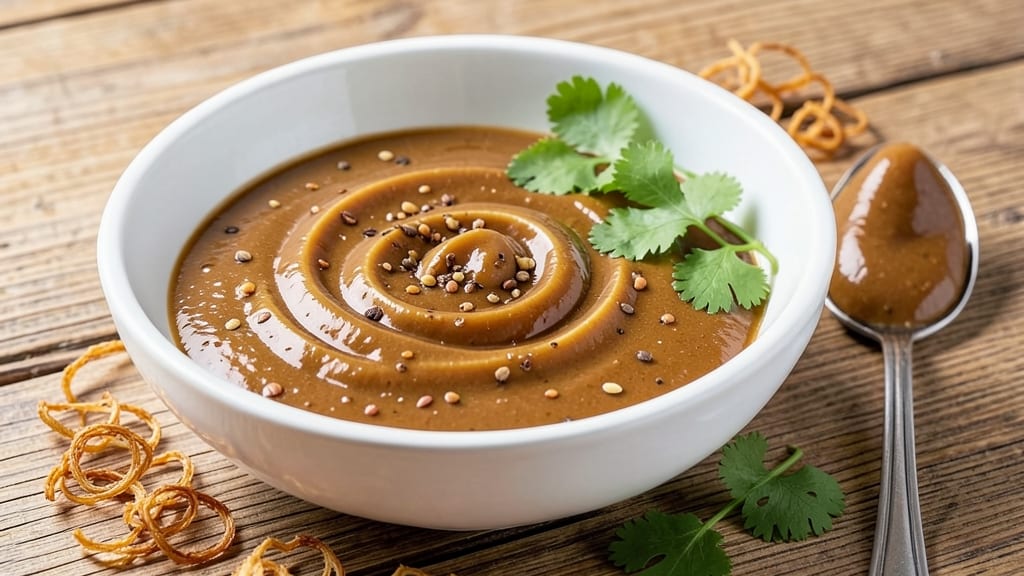
This almond butter satay sauce recipe transforms ordinary grilled dishes into bold, nutty-sweet masterpieces with just 10 minutes of prep. The rich, velvety texture comes from blending almond butter with coconut milk and tamarind, creating a sauce that’s equally perfect for marinating skewers or dipping crispy fries.
I developed this version after struggling to find a vegan-friendly satay sauce that delivered the same depth of flavor as traditional recipes—this one does, every time.
The secret lies in balancing sweetness with tangy tamarind and aromatic spices like cumin and coriander. Unlike store-bought versions, this sauce stays smooth and cohesive without separating, thanks to a simple cornstarch slurry that thickens it just enough for dipping or glaze consistency.
The almond butter adds a luxurious richness that pairs beautifully with grilled meats, tofu, or even roasted vegetables.
What makes this sauce truly perfect is its versatility—use it as a marinade for satay skewers, a dipping sauce for spring rolls, or a glaze for grilled chicken or shrimp.
The flavor develops even more after 30 minutes of resting, so plan ahead for maximum impact. With just 7 simple ingredients, you’ll achieve restaurant-quality results that taste homemade.
For extra depth, toast the spices in a dry pan before blending to intensify their aroma. Store any leftovers in the fridge for up to 5 days, or freeze for longer shelf life.
This sauce is the game-changer your grilling sessions have been waiting for—rich, balanced, and impossible to resist.
Ingredients for almond butter satay sauce
Seven ingredients blend into velvety, nutty-sweet satay sauce that elevates grilling and dipping.
| Ingredient | Amount | Notes |
|---|---|---|
| Creamy Almond Butter 🥜 | ½ cup | Natural, unsweetened preferred |
| Full-Fat Coconut Milk 🥥 | 1 can | 13.5 oz can, well-shaken |
| Tamarind Paste 🍯 | ¼ cup | Or 2 tbsp tamarind concentrate |
| Cornstarch 🌾 | 1 tbsp | For smooth thickening |
| Ground Cumin 🌿 | 1 tsp | Toasted for deeper aroma |
| Ground Coriander 🌿 | 1 tsp | Freshly ground preferred |
| Lime Juice 🍋 | 2 tbsp | Freshly squeezed |
| Cane Sugar 🍯 | 2 tbsp | Or coconut sugar |
| Red Chili Flakes 🌶️ | ½ tsp | Adjust for heat preference |
The almond butter is non-negotiable—creamy, natural, and unsweetened delivers that luxurious richness. Trader Joe's and Whole Foods carry excellent options, but any reputable brand works. For tamarind, Asian markets have the best selection (look for blocks or paste), but the concentrate from Thai Kitchen is a solid shortcut. Coconut milk? Full-fat only—the creaminess is key. Toast your spices in a dry pan for 30 seconds before blending—game-changer for aroma. I always double-check my tamarind paste isn't clumpy, and if it is, I whisk it with a splash of warm water first.
No tamarind? Lemon juice plus 1 tbsp maple syrup mimics the tang-sweet balance (though not identical). Running low on almond butter? Cashew butter works too, though it's slightly milder. Chili flakes too spicy? Swap for smoked paprika—it adds depth without heat. The cornstarch slurry (mix with 1 tbsp cold water) prevents separation, but if you're short, arrowroot powder does the same job. For extra richness, add 1 tbsp vegan peanut butter—trust me, it's amazing. And if you're making this ahead, toast the spices fresh right before blending for maximum punch.
This sauce keeps beautifully—5 days in the fridge sealed tightly, or 3 months frozen in ice cube trays for perfect portions. For grilling, let it sit at room temp for 30 minutes before using—flavor develops like a fine wine. I always make double batches because it disappears fast. Freeze extras in 2-tbsp portions for quick marinades or dipping sauces later. The cornstarch slurry makes it stable enough for dipping, but if it thickens too much, just whisk in a splash of water. Leftovers? Perfect for stir-fries or drizzling over roasted veggies.
Why You'll Love This Recipe
- Five-Ingredient Magic: I swear, this sauce comes together with fewer ingredients than my grocery list for coffee. Just heat, stir, thicken—no fancy techniques, no hidden pantry raids. That tamarind paste might sound intimidating, but a splash is all it takes to unlock that tangy depth.
- Rich Nutty Kick: The almond butter doesn’t just add creaminess—it brings this sauce a velvety, toasted richness that sticks to everything like a dream. Honestly, I’ll take this over store-bought satay sauce any day, especially when the cumin warms up the whole dish like a hug.
- Weeknight to Party: Slather it on grilled chicken for Tuesday dinner, drizzle it over noodles for a lazy Sunday, or serve it in little bowls at your next potluck. The coconut milk keeps it luscious without being heavy, and the cornstarch gives it that perfect, clingy consistency—no one will guess it’s this simple.
- Leftovers That Shine: Make a double batch—trust me, you will—and store it in the fridge for up to a week. The flavors only get better as the tamarind and cumin meld together. I’ve reheated this cold sauce straight from the fridge and it’s still spot-on, which means fewer takeout nights and more money in my pocket.
Step-by-step instructions for almond butter satay sauce
Here's how to craft a perfectly balanced satay sauce with rich nutty depth and tangy brightness.
Bloom the Spices in Coconut Milk
In a medium saucepan, combine the 1 can full-fat coconut milk with the 1 teaspoon ground cumin and 1 teaspoon ground coriander. Place over medium-low heat and let simmer gently for 5 minutes, stirring occasionally. You'll notice the spices release their aromatic oils into the milk, creating a fragrant base.
This step develops the warm, earthy foundation of the sauce. Keep the heat low to prevent the coconut milk from curdling—you want it to gently infuse rather than cook aggressively. The spices should be fully dissolved and the mixture should smell richly spiced, like a cross between toasted nuts and citrus.
Incorporate Tamarind and Sweetener
Add the 0.25 cup tamarind paste and 2 tablespoons cane sugar to the saucepan. Stir vigorously to dissolve the tamarind completely—it should create a smooth, slightly thick paste when mixed with the coconut milk. Let the mixture simmer for another 3-4 minutes until the sugar dissolves and the tamarind's signature tangy flavor emerges.
The tamarind is where the sauce gets its signature complexity. If you're using tamarind concentrate instead of paste, reduce the amount slightly (about 2 tablespoons) since it's more concentrated. You're aiming for a balance between sweet and sour—taste as you go and adjust with a touch more sugar or a splash of lime juice if needed. The sauce should be smooth with no graininess remaining.
Thicken with Almond Butter and Cornstarch
Reduce the heat to low and gradually whisk in the 0.5 cup creamy almond butter until fully incorporated. The sauce will thicken noticeably as the almond butter blends in. In a separate small bowl, mix the 1 tablespoon cornstarch with 2 tablespoons water to create a slurry. Slowly pour this into the simmering sauce while stirring constantly.
Continue simmering for 3-5 minutes until the sauce reaches your desired consistency—it should coat the back of a spoon but still be pourable. The almond butter adds that signature nutty richness while the cornstarch creates the perfect clinging texture for dipping or basting. If the sauce thickens too much, thin it with a splash of hot water or coconut milk. The final texture should be smooth, velvety, and just thick enough to cling to skewers.
Finish with Lime and Chili
Remove the saucepan from heat and stir in the 2 tablespoons lime juice and 0.5 teaspoon red chili flakes. The lime brightens the flavors while the chili adds just a hint of heat. Taste and adjust the seasoning—you might want to add a pinch more salt if needed, though the tamarind and coconut milk should provide enough natural saltiness.
Let the sauce rest for 5-10 minutes at room temperature. This allows all the flavors to meld together perfectly. The final sauce should have a beautiful balance of sweet, tangy, nutty, and slightly spicy notes with a smooth, velvety texture that's perfect for dipping or basting grilled meats. The color should be a rich golden-brown with hints of red from the chili flakes.
Use Immediately or Store Properly
For immediate use, strain the sauce through a fine-mesh sieve to remove any remaining lumps, then transfer to a clean saucepan or serving bowl. If you're not using it right away, let it cool completely before transferring to an airtight container. The sauce will keep in the refrigerator for up to 5 days or can be frozen for 3 months. When reheating, warm gently over low heat, stirring frequently to prevent scorching.
This satay sauce is incredibly versatile—use it as a dipping sauce for grilled chicken or beef skewers, as a marinade for tofu or tempeh, or even as a glaze for roasted vegetables. The nutty almond butter base gives it a depth that sets it apart from traditional satay sauces, while the tamarind keeps it authentically tangy. Serve warm for the best flavor experience.
Pro Tips For Making Almond Butter Satay Sauce
- STIR CONSTANTLY AT FIRST: The almond butter and coconut milk will fight you like glue—lump up, separate, or just refuse to blend smoothly. Whisk vigorously for the first 30 seconds on medium heat until the mixture looks like a single, if slightly oily, puddle. After that, you can ease up, but don’t let it sit idle for even 10 seconds or you’ll regret it.
- TOAST THE CUMIN FIRST: Skip the dry-toasting step, and you’ll end up with a sauce that tastes like someone forgot to wake up. Lightly toast the ground cumin in a dry pan for 30 seconds—just until it smells warm and earthy, not burnt. Then mix it into the sauce while it’s still hot; this releases its aroma and cuts through the richness of the almond butter.
- DILUTE THE TAMARIND PASTE: Store-bought tamarind paste is often thick enough to clog your whisk or sit stubbornly in the sauce. Thin it with 1-2 tablespoons of warm water before adding it to the pot—this ensures it dissolves completely and doesn’t turn your satay sauce into a lumpy mess. (Yes, even if the jar says “ready to use.”)
- THICKEN IN STAGES: Dumping all the cornstarch at once is a one-way ticket to a sauce that’s either gluey or still runny. Mix half the cornstarch with a splash of cold water first, then whisk it into the simmering sauce. Let it thicken for 2 minutes, taste it, then add the remaining slurry if needed. This gives you control—no more frantic stirring or thin sauce disasters.
Troubleshooting perfect results
Grainy Tamarind Solution
If your tamarind paste has clumps, whisk it with 1 tablespoon warm water until smooth before adding to the sauce. I’ve found Thai Kitchen tamarind concentrate works best for beginners—just reduce to 2 tablespoons since it’s more concentrated.
For a smoother texture, strain the finished sauce through a fine-mesh sieve before serving. 🌟
Separation Prevention
The cornstarch slurry keeps the sauce cohesive, but if it still separates, whisk in 1 teaspoon water to loosen the cornstarch. Overheating causes separation, so maintain low heat after adding almond butter. For extra insurance, blend the sauce briefly after cooking to emulsify any oil that rises to the top.
Too Thick or Thin?
If your sauce is too thick, thin it with 1 tablespoon hot water or coconut milk while stirring. For a thicker consistency, simmer an extra 1-2 minutes to drive off excess moisture.
I’ve learned that arrowroot powder works better than cornstarch if you prefer a glossier finish—just reduce to ½ teaspoon and mix with 1 tablespoon water.
Spice Balance Issues
If the cumin or coriander flavors are too strong, reduce them to ½ teaspoon each. For extra depth without overpowering, toast the spices in a dry pan for 30 seconds until fragrant.
If the sauce tastes flat, add ½ teaspoon soy sauce or miso paste for umami. The lime juice is key—always use freshly squeezed for brightness.
Almond Butter Substitutes
No almond butter? Cashew butter works in a pinch, though it’s milder. For a peanut satay twist, replace with ½ cup smooth peanut butter and add ½ teaspoon cinnamon** for warmth. Just remember, almond butter gives that signature nutty richness—substitutes won’t be identical but still delicious. 🥜
Nutrition facts
Frequently asked questions
What's the best way to store leftover almond butter satay sauce?
Store your sauce in an airtight container in the fridge for up to 5 days. For longer storage, freeze it in 2-tbsp portions for easy use later. Thaw overnight in the fridge before reheating gently on low heat, stirring constantly to prevent separation. The sauce thickens slightly when chilled, so thin with a splash of water or coconut milk when reheating.
Can I make this sauce without tamarind?
Yes! For a similar tangy-sweet balance, mix 2 tbsp lemon juice with 1 tbsp maple syrup as a substitute. The sauce will taste slightly different but still delicious. If you prefer a closer match, try 1 tbsp lime juice + 1 tsp rice vinegar for extra complexity. Just remember the tamarind gives that signature depth that's hard to replicate.
How spicy should the sauce be?
The 0.5 tsp red chili flakes provides a mild heat that enhances the nutty flavors without overpowering. For less spice, reduce to ¼ tsp or omit completely. If you love heat, add ½ tsp cayenne pepper or a dash of hot sauce. The lime juice helps balance any spiciness, so always use freshly squeezed for the best flavor contrast.
What's the best way to use this sauce?
This versatile sauce works perfectly as a marinade for grilled meats, tofu, or tempeh skewers (let marinate for 30+ minutes). Use it as a dipping sauce for spring rolls, fries, or veggie sticks. For extra richness, drizzle it over roasted vegetables or use as a glaze for grilled chicken. The nutty depth makes it especially great with savory-sweet dishes like satay skewers.
Why did my sauce separate?
Separation usually happens from overheating after adding almond butter or insufficient stirring. To fix it, whisk in 1 tsp water to reactivate the cornstarch. For prevention, maintain low heat after adding almond butter and stir constantly. If it still separates, blend briefly to emulsify. The cornstarch slurry is key—make sure it's fully dissolved before adding to the sauce.