
Sauces & Condiments
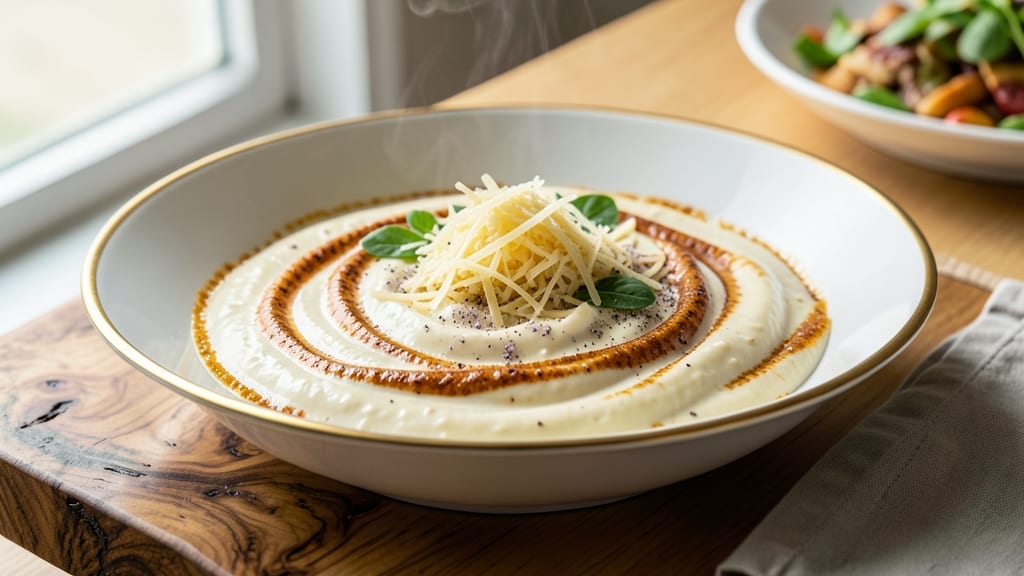
This Alfredo sauce recipe with milk and heavy cream delivers the ultra-smooth, velvety texture you crave without a single clump. The secret lies in proper technique—low and slow heat, precise ingredient ratios, and a method that ensures every spoonful is creamy perfection.
I’ve perfected this version after years of testing, and it’s become my go-to for restaurant-quality results at home.
The foundation starts with equal parts milk and heavy cream, combined with butter and freshly grated Parmesan cheese. The key is melting the butter first, then gradually whisking in the cheese until fully dissolved before adding the dairy.
This gradual process prevents lumps and creates a sauce that’s rich, velvety, and impossibly smooth. Seasoning with garlic powder, onion powder, and a pinch of nutmeg adds depth without overpowering the creamy base.
What sets this recipe apart is its versatility—it works equally well tossed with fettuccine, drizzled over grilled chicken, or used as a dip for roasted vegetables. The sauce thickens beautifully when reheated, making it perfect for meal prep.
Store leftovers in the fridge for up to 5 days or freeze for longer storage, though it’s best enjoyed fresh.
For an even richer flavor, consider adding a splash of white wine or a pat of cold butter at the end for extra shine. This sauce is the ultimate blank canvas, ready to elevate any dish with its luxurious creaminess.
Let’s get started on creating the smoothest Alfredo you’ve ever tasted.
Ingredients for alfredo sauce recipe with milk and heavy cream
Nine simple ingredients transform into the creamiest Alfredo sauce you'll ever make.
| Ingredient | Amount | Notes |
|---|---|---|
| Unsalted Butter 🧈 | ½ cup | Cold, cubed for gradual melting |
| Whole Milk 🥛 | ¾ cup | Full-fat for creaminess |
| Heavy Cream 🥛 | ¾ cup | Equal parts to milk |
| Freshly Grated Parmesan Cheese 🧀 | 1 cup | Block, not pre-grated |
| Garlic Powder 🧄 | 1 tsp | Freshly ground preferred |
| Onion Powder 🧅 | ½ tsp | For subtle depth |
| Ground Nutmeg 🌿 | ¼ tsp | Freshly grated nutmeg |
| Diamond Crystal Kosher Salt 🧂 | ¼ tsp | Adjust to taste |
| White Wine (optional) 🍷 | ¼ cup | Dry variety for richness |
The butter is non-negotiable here—unsalted so you control the seasoning. European-style butter like Plugrá melts smoother, but any good brand works. Grab a wedge of Parmesan from the deli counter (the Parmigiano-Reggiano kind)—pre-grated has anti-caking agents that ruin the texture. The milk and cream should be full-fat, nothing skimmed. For the nutmeg, whole nutmeg seeds are best—grate them fresh with a microplane for maximum aroma. If you're in a pinch, pre-ground works, but it's not the same.
No heavy cream? Half-and-half plus a splash of extra cream gets you close. Fresh Parmesan unavailable? Pecorino Romano works in a pinch—just use half the amount. The wine is totally optional, but if you add it, dry whites like Pinot Grigio won't overpower the sauce. Want extra richness? Add a pat of cold butter at the end—it'll melt into silky perfection. The garlic and onion powders are just for flavor, so don't stress if you're out—just skip them or use half the amount of fresh minced garlic if you've got it.
This sauce is a dream to store. Keep it in an airtight container in the fridge for 5-6 days, or freeze for up to 3 months. When reheating, do it low and slow—never microwave it straight from the fridge or it'll split. I always make extra because it's perfect for meal prep. Toss it with pasta, drizzle over grilled chicken, or use it as a dip—it's that versatile. The sauce actually tastes better the second day as the flavors meld together.
Why You'll Love This Recipe
- Here’s what sold me: the milk and heavy cream combo gives a luxurious texture without being too rich. It coats pasta perfectly—no gloppy mess, no separation—just that silky, cling-worthy sauce that disappears faster than my willpower on a lazy Sunday.
- I’ll be real: my first batch of this sauce lasted three days in the fridge, and it only got richer. The Parmesan settles into the cream like a cozy blanket, and reheating it just makes it smoother. Plus, it freezes like a dream—perfect for when you’re too tired to cook but still crave comfort.
Step-by-step instructions for ultra-smooth Alfredo sauce
This method guarantees velvety perfection with no lumps—just rich, creamy sauce every time.
Melt Butter Gradually Over Low Heat
Place a medium saucepan over low heat and add the 0.5 cup unsalted butter in small cubes. Let it melt slowly, stirring occasionally with a wooden spoon. You want the butter to melt completely but not brown—just until it becomes smooth and liquid. This gradual melting prevents burning and creates a silky base for your sauce.
Here's the thing—if you melt the butter too quickly over high heat, it can scorch and impart a bitter taste. I like to keep the heat low and patiently wait until the butter is fully incorporated before moving to the next step. This is where the foundation of your sauce is built, so don't rush it.
Whisk in Milk and Cream for Creamy Base
Once the butter is fully melted, reduce the heat to medium-low and slowly pour in the 0.75 cup whole milk and 0.75 cup heavy cream. Immediately begin whisking vigorously to prevent any separation. You'll notice the mixture will bubble gently as it heats up—this is normal and indicates it's coming together.
Let the mixture simmer for 3-4 minutes until it begins to thicken slightly. You're looking for a consistency where the sauce coats the back of a spoon but isn't yet thick enough to hold its shape. This step is crucial for creating that signature creamy texture without clumps. If you see any skin forming on top, simply stir it back in.
Add Aromatics and Optional Wine
With the sauce still simmering gently, sprinkle in the 1 tsp garlic powder, 0.5 tsp onion powder, 0.25 tsp ground nutmeg, and 0.25 tsp Diamond Crystal kosher salt. Whisk continuously for 1-2 minutes until the spices are fully dissolved and the flavors meld together. The nutmeg adds a subtle warmth that elevates the sauce, while the garlic and onion powders provide depth without overpowering.
If using, now's the time to add the 0.25 cup white wine. Pour it in slowly while whisking constantly. The wine will bubble vigorously as it heats up, but it will quickly reduce and blend into the sauce, adding a bright, slightly tangy note that balances the richness. Let the sauce simmer for an additional 2 minutes after adding the wine to allow the alcohol to cook off completely.
Incorporate Cheese for Rich, Velvety Texture
Here's where the magic happens: gradually add the 1 cup freshly grated Parmesan cheese to the sauce. The key is to add it slowly—about 2 tablespoons at a time—while whisking vigorously after each addition. This prevents clumping and ensures the cheese melts smoothly into the sauce. I like to use a fine-mesh grater for the Parmesan to make this process even easier.
Continue whisking the sauce for 3-5 minutes until it reaches your desired consistency. It should be thick enough to coat the back of a spoon but still flow smoothly. If the sauce is too thick, you can thin it with a splash of warm milk or pasta water. The goal is a luxurious, velvety texture that clings beautifully to fettuccine or any pasta of choice.
Finish and Serve Immediately
Once the sauce reaches the perfect consistency, remove it from the heat and let it sit for 1-2 minutes to rest. This brief resting period allows the flavors to settle and the sauce to thicken slightly as it cools. Taste and adjust the seasoning if needed—you might want to add a pinch more salt or a dash of nutmeg to suit your preference.
Serve the sauce immediately over cooked pasta, tossing gently to coat each strand evenly. The sauce should cling beautifully to the pasta, creating a rich, creamy blanket with every bite. If you're making this ahead of time, keep in mind that the sauce will thicken as it cools, so you may need to add a splash of warm milk when reheating. Enjoy your restaurant-quality Alfredo sauce!
Pro Tips For Making Alfredo Sauce Recipe With Milk And Heavy Cream
- Melt Butter Slowly: If you dump cold butter into the pan, you’ll end up with greasy clumps instead of a smooth sauce. Lower the heat to medium-low and let the butter melt completely before adding anything else—this prevents scorching and ensures a creamy base.
- Grate Parmesan Fresh: Pre-shredded cheese is coated with anti-caking agents that turn your sauce grainy. Use a microplane or fine grater right before adding it to the sauce—it dissolves better and gives you that rich, velvety texture you’re after.
- Don’t Boil the Cream: Once the milk and cream hit a gentle simmer, take the pan off the heat for a minute to cool slightly before stirring in the Parmesan. Boiling it turns the sauce thin and breaks the cream’s fat, ruining that luxurious mouthfeel.
- Salt the Butter First: Unsalted butter is bland, and if you forget to season it upfront, your sauce will taste flat. Toss in a pinch of salt (about ¼ tsp per 4 tbsp butter) while melting—it blends in perfectly and saves you from over-salting later.
Flavor customization for this recipe
Creamy Variations
For an even richer texture, swap heavy cream for half-and-half and add 2 tablespoons crème fraîche at the end. The tanginess cuts through the richness beautifully. I’ve also had great success using coconut milk (full-fat) for a dairy-free version—just reduce the Parmesan to ½ cup to balance the flavor. 🥥
Cheese Alternatives
No Parmesan? Try Pecorino Romano (use ½ cup) for a sharper, nuttier taste. For a vegetarian option, blend ½ cup cashews with ¼ cup water until smooth, then whisk into the sauce.
If you love cream cheese, add 2 ounces softened cream cheese at the end for a velvety twist.
Spicy Kick
Add ½ teaspoon red pepper flakes or 1 teaspoon hot honey for a subtle heat. For smoky depth, stir in ½ teaspoon smoked paprika with the spices. I love finishing with a pinch of cayenne and a drizzle of chipotle oil for a restaurant-style Alfredo. 🌶️
Herb Infusions
Sauté 1 minced garlic clove in the butter before adding milk for a fresher taste. Stir in 1 tablespoon fresh basil or parsley at the end for brightness. For a Mediterranean twist, add ½ teaspoon dried oregano and a pinch of thyme with the nutmeg.
Wine & Citrus
Replace the white wine with 1 tablespoon lemon juice for a bright, tangy note. A splash of dry vermouth adds complexity without overpowering. For a fruity touch, simmer ½ cup apple cider with the milk and cream before adding cheese. 🍋
Thicker or Thinner
Need thicker sauce? Simmer uncovered for 2-3 extra minutes to reduce. Too thick? Thin with 1-2 tablespoons warm pasta water or milk. For a lighter Alfredo, replace ¼ cup cream with ¼ cup chicken broth—it’s still creamy but less heavy.
Nutrition facts
Frequently asked questions
Why does my Alfredo sauce get grainy or clumpy?
The most common cause is adding cheese too quickly or not whisking enough. Always add freshly grated Parmesan 2 tablespoons at a time while whisking vigorously over low heat. If lumps appear, immediately whisk in 1 tablespoon cold milk and strain through a fine-mesh sieve for ultra-smooth results.
Can I make this sauce without heavy cream?
Yes! Replace the heavy cream with half-and-half or use 1 cup whole milk + 2 tablespoons melted butter instead. For extra richness, stir in 2 tablespoons crème fraîche or 1 tablespoon sour cream at the end. The texture will be slightly lighter but still creamy.
How do I prevent the sauce from curdling?
Curdling happens when dairy hits high heat too quickly. Always use low-medium heat and whisk constantly. Never boil the sauce—keep it at a gentle simmer (180-190°F). If it starts to separate, immediately remove from heat, whisk in 1 tablespoon cold milk, then return to low heat.
What's the best way to reheat leftover Alfredo sauce?
Reheat gently on the stovetop over low heat while stirring frequently. If too thick, thin with 1-2 tablespoons warm milk or pasta water. Never microwave directly from the fridge—this causes separation. For extra shine, stir in 1 tablespoon cold butter at the end while still warm.
Can I use powdered cheese instead of freshly grated?
Not recommended—powdered cheese contains anti-caking agents that prevent proper emulsification. If you must, use half the amount and whisk vigorously for 5-7 minutes to try to dissolve clumps. For best results, always grate your own cheese using a fine-mesh grater or cheese plane.